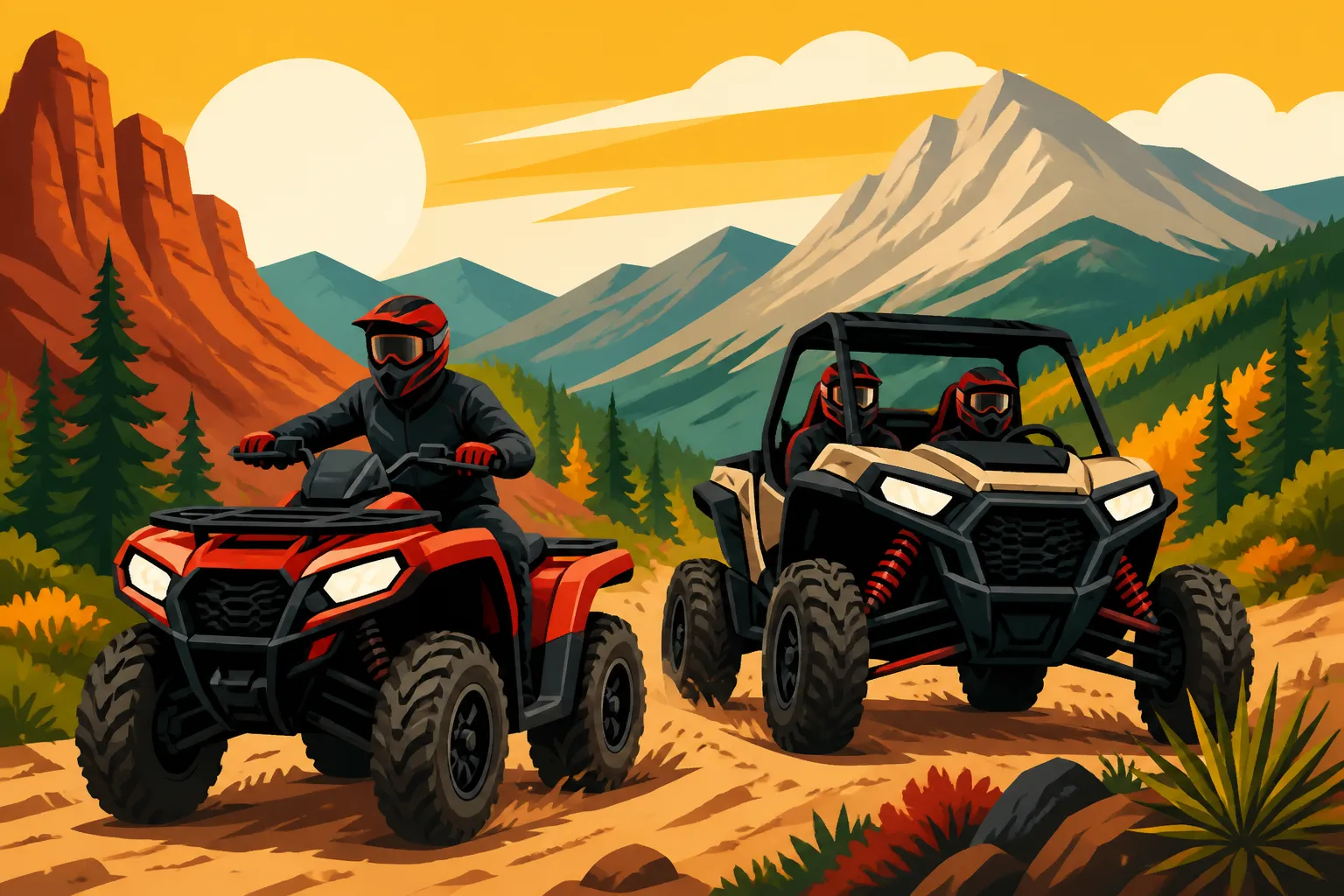
Bighorn Sports in Red River, New Mexico
Bighorn Sports is one option to consider when you want to ride a UTV or ATV from Red River, but the right rental depends on your group, schedule and route permissions. Before booking, compare the ride length and machine capacity, then confirm what the rental includes and where it may go. A little checking helps prevent surprises at pickup.
What to expect from Bighorn Sports
Bighorn Sports is associated with off-road rentals in Red River. The available ride choices, vehicles and booking conditions can change, so treat any advertised option as a starting point rather than an assumption. Confirm the current details with the business before you pay or travel.
A useful distinction is whether you want a machine to ride yourself or a tour with a guide. Self-guided rentals give you more independence, but you are responsible for following the approved route and returning on time. A guided ride provides a planned outing and direction from a guide; it may suit visitors who are new to the area or would rather not navigate on their own. Ask which kind of experience you are booking. A rental does not automatically include a guide.
The ride duration matters as much as the vehicle. Bighorn Sports has an offering described as a four-hour ride, and a full-day option described as nine hours. Confirm what those durations mean for your booking: for example, whether the clock begins at check-in, safety instructions or departure, and whether the scheduled time includes stops. Ask how much riding time to expect after arrival, paperwork and equipment fitting.
| Booking detail | What to clarify before reserving |
|---|---|
| Ride type | Self-guided rental, guided tour or another format |
| Duration | Total booking window and estimated time on the route |
| Vehicle | Seating capacity, passenger limits and vehicle type |
| Route | Permitted roads and trails, plus any areas that are off limits |
| Included gear | Helmets, eye protection and any other equipment |
| Fuel | Whether fuel is included and what happens if you need more |
| Payment and damage | Deposit or card hold, damage responsibility and available options |
| Changes | Cancellation, weather-closure and late-return policies |
Do not rely on the vehicle name alone to identify what you are getting. A two-seat UTV, a four-seat machine and an ATV are different experiences. They can have different passenger limits, controls, size and route suitability. Confirm the exact machine reserved, not just the general category.
If you are comparing operators, Red River Offroad and Its New Mexico Fleet and Weezie’s Wild Rides and Its Hours may help you understand other local rental choices. Compare the actual terms for the same dates and group size; a similar listing does not guarantee the same route, support, equipment or booking conditions.
Choose a vehicle and ride length that fit your group
Start with the people who will actually ride. Count drivers and passengers, consider the youngest rider, and tell the rental business about any mobility, comfort or experience needs. A vehicle advertised for a certain number of seats may still have restrictions on who can drive, how children can ride or whether a passenger is allowed. Get those details directly from the operator.
ATV or UTV
An ATV is generally ridden astride, while a UTV has a seated cabin-style layout and steering wheel. That basic difference affects comfort and handling, but neither vehicle is automatically right for every group. An ATV may work for a rider seeking an individual machine and direct control. A UTV can make it easier for a group to ride together, but a larger vehicle needs space and may not be permitted on every route.
If you have never driven either type, say so when you book. Ask whether the operator recommends a guided ride, what the pre-ride briefing covers and whether you can practice controls before setting out. Do not assume a larger UTV is easier to handle simply because it has a steering wheel. Ask about turning, braking, terrain and any specific limits on where the machine can be taken.
For a family or group, compare Renting a Two-Seater for a Couple, Renting a Four-Seater for a Family and Renting a Six-Seater for a Group. These topics can help you frame the questions, but the available models and seating arrangements at Bighorn Sports should be confirmed directly. Do not book based on a seat count until the operator confirms that your passengers meet its requirements.
Pick a duration that leaves room for the day
A four-hour ride can be a practical choice when you have other plans or want to try a shorter outing. A longer booking may suit a group that wants more time outside town, but “full day” does not necessarily mean an uninterrupted day of riding. Ask whether the nine-hour option includes check-in, safety briefing, meal or rest stops, and the return process.
Build in time before and after the ride. Arrive early enough to complete paperwork and get fitted for equipment. Leave a buffer for traffic, weather or a delayed return, particularly if you have a dinner reservation or another activity. If the booking has a firm return time, ask what the operator expects if you are running late and what charges or other consequences may apply.
If your group is unsure how long it wants to ride, ask the business what route options fit each duration. The appropriate answer may depend on trail access, current conditions and the group’s ability, not just the number of hours. How Far You Get on a Four-Hour Half Day and Why the Full Day Is Longer Than Most offer useful context for thinking through time, but confirm the specific schedule for your reservation.
Match experience to the route, not just the machine
New riders should be honest about their experience. A route that feels manageable to a confident local rider may be stressful for someone who has never driven a UTV on uneven ground. Ask whether the route is suitable for beginners, what surfaces to expect and whether there are steep, narrow or exposed sections. If you are uncomfortable with the answer, choose a shorter or guided option, or ask whether another route is available.
Group members do not have to share the same skill level. Make that clear when you book. If the operator places a group on a route based on its least experienced rider, that can be safer and more enjoyable than trying to keep up with a faster driver. Do not let passengers pressure a new driver into taking a difficult route.
Questions to ask before reserving
A booking page may explain the basics but leave important practical details unclear. Calling or messaging the business before you reserve is worthwhile if your group has children, needs several machines or has a fixed schedule.
Use a short checklist:
- What exactly is included? Ask whether the booking covers the vehicle, safety briefing, helmets and eye protection, fuel, route guidance and any required permits. Do not assume that an item is included because it is common at other rental businesses.
- Who may drive and ride? Confirm minimum age, license requirements, passenger rules and any restrictions for minors. Ask whether the person making the booking must be a driver.
- What does the price cover? Request the current total for your party and ask what could be added. Rental businesses may structure charges differently, and costs can change. Check the operator for current figures rather than relying on an old listing.
- Is there a deposit or card hold? Ask how much may be held, when it is released and what circumstances can affect the final charge. Understand whether a damage waiver or other protection is optional and what it does not cover.
- What happens if plans change? Clarify cancellation, rescheduling, late arrival, late return and weather-closure policies before paying. Ask whether the policy differs for a closure imposed by the operator or land manager.
- Where may you ride? Get the approved route or riding area in plain terms. Ask whether the machine may leave town, which roads are off limits and whether you need to trailer it to a trailhead.
- What should you bring? Ask about clothing, closed-toe footwear, eye protection, water and any identification or payment method required at check-in.
Questions about damage deserve particular attention. Ask what the renter is responsible for if a tire goes flat, a vehicle becomes stuck, a machine is damaged or the group needs recovery assistance. Find out whether the rental includes roadside support and how to contact the business during the ride. A waiver is not a promise that every repair or recovery cost is covered. Read the agreement rather than relying on a short verbal description.
Before leaving the lot, inspect the vehicle with the staff member. Check the body, lights, tires, windshield or protective panels, seat belts and controls. Take clear photos or a brief video of existing marks, and make sure staff record any damage on the rental form. Ask for a demonstration of the controls, parking brake, lights and emergency procedures. If something does not work as expected, ask for help before departing.
If you are comparing a direct booking with a marketplace, look at the actual operator and terms. Polaris Adventures may help travelers find participating off-road experiences, while Viator can be useful for comparing activities and tour formats. Neither name by itself confirms that Bighorn Sports has availability on a particular platform or that the platform listing has the same inclusions as a direct reservation. Check who operates the experience, what is included and which cancellation terms apply.
For a more detailed checklist, see New Mexico Rental Damage Waiver Cost, How Much a Rental Holds on Your Credit Card and Photographing a Machine at Pickup. Those topics can help you understand the questions to ask before signing.
Plan for Red River rules, route access and mountain conditions
Booking a vehicle does not grant permission to ride everywhere. Red River has local rules affecting off-highway vehicles, and access can depend on the type of machine, the street and the route. A rental business should explain where its vehicles are allowed, but it is still your responsibility to follow the instructions and posted restrictions.
Do not assume that a street connection is allowed just because it appears to lead toward a trail. Ask whether the machine may be driven on town streets, whether it must be trailered to a staging area and which roads or sections are prohibited. This is especially important if you are booking an ATV, because local rules can distinguish between vehicle types. Red River’s ROV-Only Streets and Why Red River Bans ATVs but Allows ROVs explain why it is important to check the rule for your specific machine rather than treating every off-road vehicle alike.
Confirm the return-time rules if your route passes near town. Local restrictions may affect when and where a rental can be operated. The operator can tell you what applies to its route, but posted signs and current instructions take priority. Red River’s 7 p.m. to 8 a.m. Curfew and Riding Into Red River on a Side-by-Side provide more context on local access. If the business tells you to trailer the vehicle to a trailhead, do not drive it through town instead.
The terrain and weather can change the ride considerably. Red River sits in a mountainous setting, so a route may feel different from a flat desert trail. A sunny start does not guarantee steady conditions all day. Ask the rental business about current weather, trail conditions and any closures before departing. If rain, lightning, snow or other conditions make the route unsafe, follow the operator’s direction and the land manager’s restrictions.
Wear clothing that suits the forecast and protects you from dust, wind and changing temperatures. Closed-toe shoes are a sensible baseline; ask the operator whether it requires particular footwear or clothing. Bring water and any personal medication you may need. A helmet and eye protection are essential considerations, but confirm what the rental supplies and what riders must bring themselves. Children and passengers should have properly fitting equipment, not gear that is merely available in a general size.
Stay on the route you are given. Do not cut across a meadow, bypass a closure, enter private property or follow an unmarked track just because another vehicle has left tire marks there. A rental machine does not give you permission to cross land boundaries. If a route is blocked or conditions change, stop somewhere safe and contact the operator rather than improvising a detour.
Before booking, also ask about phone coverage and emergency support. A route may pass through areas where service is unreliable. Know how the business wants you to report a breakdown or delay, and do not rely on a phone alone for navigation or emergency contact. Keep the operator’s contact details accessible and make sure every driver understands the return instructions.
Make the booking and pickup go smoothly
Once you have settled on a ride, confirm the date, arrival time, vehicle, passenger count and total cost in writing. Save the confirmation and review its conditions before travel. If you have more than one machine, confirm that each is reserved for the same time and that the group will receive compatible instructions. Do not assume that a reservation for one vehicle guarantees a matching second vehicle.
Arrive with enough time to check in without rushing. Bring the identification, license or other documents the operator has requested. If a minor is riding, ask in advance whether a parent or guardian must sign forms and whether the adult needs to be present. These are operator-specific details; do not rely on a general age rule from another rental company.
During the safety briefing, ask questions until you can explain the controls and boundaries back clearly. Make sure every driver knows:
- How to start, stop and park the vehicle
- How to use seat belts and any required protective equipment
- Which route to follow and where the vehicle may not go
- What to do if the group becomes separated
- How to contact the operator for a breakdown or emergency
- When and where the vehicle must be returned
If the explanation feels rushed or a control is unfamiliar, ask for another demonstration. Do not depart with a mechanical concern, a missing item or uncertainty about route limits. A few extra minutes at pickup are better than trying to resolve a preventable problem on the trail.
Drive at a pace that allows you to stop within the space you can see. Keep the group together without tailgating, and leave room for dust and sudden stops. Yield appropriately to other trail users and avoid kicking up dust toward people, homes or wildlife. Do not drive impaired, and do not let passengers interfere with the driver.
On return, report any issue honestly, including a flat tire, warning light, stuck vehicle or new damage. If you are delayed, contact the operator as soon as you know rather than waiting until the scheduled return time has passed. Keep a copy of the final paperwork and ask about any pending card hold or damage review before leaving.
Frequently Asked Questions
Does Bighorn Sports offer a four-hour ride?
A four-hour ride is among the offerings associated with Bighorn Sports. Confirm current availability, start times, route and what the duration includes directly with the business before booking.
How long is the full-day rental?
The full-day option is described as nine hours. Ask whether that is the complete booking window or the expected time away from the pickup point, and confirm the current schedule.
Can an ATV rental be driven on Red River streets?
Do not assume so. Local rules may distinguish between ATVs and side-by-sides, and some street access is restricted. Ask Bighorn Sports where its specific vehicle may operate and whether it must be trailered to the route.
Should I book a rental or a guided tour?
Choose a rental if you want to drive yourself and are comfortable navigating within the approved route. A guided tour may be a better fit if you are new to off-road riding or want a guide to lead the outing. Confirm which type of experience is actually being offered.
Disclaimer
This article is for general informational purposes only and does not constitute professional advice. Laws, prices and regulations vary by location and change over time. Consult a qualified professional for guidance on your specific situation.