Renting a Side-by-Side in New Mexico
Renting a side-by-side in New Mexico can mean anything from an easy forest-road outing to a demanding ride over sand, rock, or high-elevation trails. The challenge is choosing a machine and route that suit your group while understanding what the rental covers. Use this guide to compare rental options, prepare for local rules and conditions, and avoid surprises at pickup or on the trail.
What renting a side-by-side involves
A side-by-side, also called a UTV or recreational off-highway vehicle, has a steering wheel, seats arranged side by side, and usually a rollover protective structure. Rental fleets may include two-seat, four-seat, or larger machines. A bigger vehicle can fit more people, but passenger capacity alone should not decide which one to book.
The rental experience usually has several parts: selecting a machine, confirming who may drive, reviewing the rental agreement, getting a route or guide, and returning the vehicle under the company’s fuel, cleaning, and damage rules. Some rentals are self-guided, while others include a guide or follow a designated route. What comes with the booking varies by operator, location, and package.
A side-by-side can be a practical choice for a family or group that wants more seating and a steering wheel rather than a quad’s handlebar controls. It also takes up more trail width and needs more room to maneuver. Some narrow routes, trails, or town streets may not be suitable or permitted for the particular vehicle. A rental company can help identify appropriate routes, but riders still need to follow signs, closures, land-manager rules, and local ordinances.
| Rental choice | Often works well for | What to check |
|---|---|---|
| Two-seat machine | A couple or two riders who want more room for gear | Passenger capacity, storage, and whether the driver can manage the terrain |
| Four-seat machine | A small family or group | Seat belts, child passenger rules, and whether the extra seats limit cargo space |
| Larger-capacity machine | A group that wants to ride together | Exact seating capacity, age restrictions, trail width, and operator availability |
| Guided tour | First-time riders or visitors unfamiliar with the area | Tour pace, route difficulty, guide-to-group arrangement, and what gear is included |
| Self-guided rental | Riders who want to travel independently | Route limits, navigation instructions, permitted roads, and what to do if the machine breaks down |
The vehicle’s advertised seating capacity does not settle every passenger question. Children must be able to sit properly and use the restraint system supplied, and a rental company may set age, height, or other safety conditions. Ask which passengers may ride in that specific machine and whether the company provides correctly sized helmets. For general state requirements, see New Mexico Rental Age and License Rules.
Side-by-side, ATV, or guided tour
A side-by-side is not automatically the best rental for every trip. An ATV is smaller and may suit a single rider or a narrow trail, but it requires the rider to steer with handlebars and shift body weight. A side-by-side provides seats and a steering wheel, but it is wider and heavier. A guided tour may be preferable if you do not know the area or are uncomfortable choosing a route and navigating alone.
Consider your least experienced driver, not just your most confident one. If anyone in the group has never driven an off-highway vehicle, ask about a short orientation, practice area, and beginner-friendly route. A guide can explain local trail etiquette and route choices, but a guided booking is not a substitute for knowing what the outing includes or what happens if someone wants to stop early.
Choose a New Mexico area and ride that fit your group
New Mexico’s riding options vary widely by elevation, surface, access rules, and season. A rental based near a mountain town may be focused on forest roads, while a desert outing can involve sand, dust, exposed sun, and long distances between services. Check the precise rental location and route before booking. A town name in an advertisement does not prove that the machine may be driven from the shop onto public streets or directly to a trail.
Red River and nearby mountain roads
Red River is a popular base for visitors looking for mountain scenery and off-highway riding. The surrounding area includes forest roads and routes that change with weather, maintenance, and seasonal closures. If you are renting in town, ask where the machine may be driven and whether it must be trailered to the riding area. Red River has local rules that affect which machines may use town streets, when they may operate, and where they may go. Do not assume that a rental’s street use is allowed simply because the shop is in town.
For local details, start with Renting in Red River, New Mexico. If the trip is organized around a guide rather than a self-guided rental, compare the options in New Mexico Guided UTV Tours. Ask the operator to explain the route in plain terms: expected duration, surface, elevation, stops, and whether the group can turn back.
Ruidoso and southern mountain terrain
Ruidoso-area rides can combine forested scenery with changes in elevation and road conditions. Weather may differ from what you see in town, and a route that feels manageable in warm, dry conditions can become difficult after rain, snow, or a closure. Confirm whether your planned route is open on the day of the ride and whether the rental company’s machines are allowed on it.
If a listing describes a GPS route, ask whether it is a fixed route, a suggested route, or an area where you can choose among approved roads. Find out whether the navigation device is included, whether it works without cell service, and how the operator expects you to report a problem.
Desert and dune riding
Desert routes can be physically demanding even when the terrain looks open and uncomplicated. Loose sand, ruts, dust, rocks, heat, and limited shade all affect the ride. A side-by-side needs enough clearance and suitable tires for the surface, and drivers should leave room to slow down rather than follow closely in dust. Confirm that the rental is intended for the terrain you plan to ride; a machine suitable for a maintained road may not be appropriate for dunes or rougher ground.
At places such as Red Sands, the experience may differ from a forest-road ride. Check the access point, staging arrangements, permitted riding area, and current conditions. A map pin or a route shared by another rider is not proof that the route is open or authorized. Review Where to Ride an ATV in New Mexico when comparing general riding areas, and ask your rental operator to confirm which areas its machines may use.
Match the route to the group
Before you choose a rental location, discuss what everyone actually wants from the outing. A scenic drive with frequent stops is different from a long, rough ride. Consider:
- How long the group can comfortably sit in the vehicle.
- Whether any passenger is nervous about steep grades, rough surfaces, or open terrain.
- Whether the route has shade, restrooms, water, or places to stop.
- How much driving experience the person who will operate the vehicle has.
- Whether the group wants a guide or is comfortable following directions independently.
- Whether children can ride safely in the machine and meet the operator’s rules.
For a first trip, prioritize a clear orientation and manageable route over the longest advertised ride. If you want a beginner-friendly outing, the article [New Mexico Tours for Beginners] can help you think through what to ask.
Compare the full rental arrangement, not just the machine
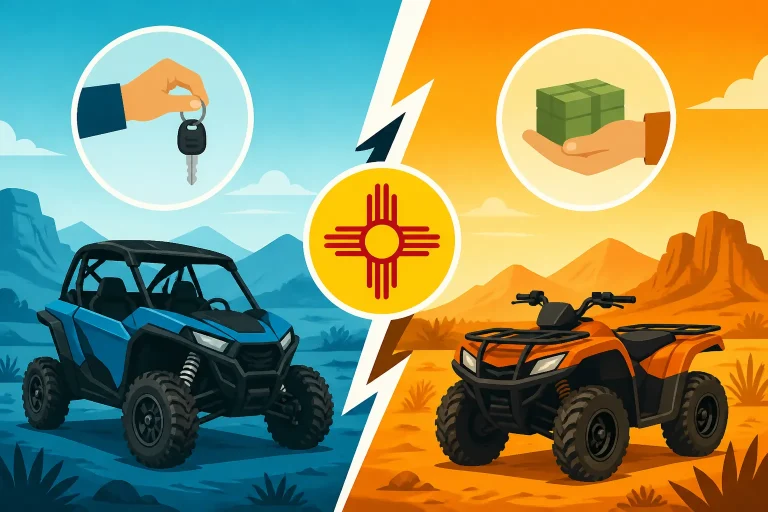
Rental listings can describe similar vehicles while offering very different experiences. Check the total arrangement before paying: machine type, trip length, included equipment, fuel expectations, route access, support, and return conditions. A low base rate, where one is shown, does not tell you what the total will be. For named companies, booking platforms, and rental providers, current prices and terms should be confirmed directly with the provider.
Ask exactly what is included
Confirm whether the rental includes helmets, eye protection, a map or GPS, a safety briefing, fuel, and roadside support. Ask whether equipment is available in sizes suitable for everyone in the group. “Safety gear available” may not mean the same thing as gear included in the booking.
Also ask whether the machine is supplied with the permits or documentation needed for the planned ride. A nonresident’s home-state registration may be recognized in some cases, while riders from states without a qualifying OHV program may need a New Mexico permit. Requirements depend on the rider and the machine, so do not assume that a rental company’s vehicle paperwork covers every visitor’s obligations. See New Mexico OHV Permits Explained and ask the operator which requirements apply to your exact booking.
A booking through a marketplace such as Viator may make it convenient to compare experiences, but the listing and the actual operator’s terms both matter. Check who operates the ride, what the confirmation says is included, and how to contact the operator with route, age, or cancellation questions.
Understand deposits and damage responsibility
The rental agreement should explain the security hold or deposit, what counts as damage, how damage is assessed, and when a hold may be released. Ask about tires, undercarriage, windshield, body panels, rollover damage, recovery, cleaning, late returns, and lost keys. These are common areas where expectations can differ.
Do not treat a damage waiver as a promise that you cannot be charged. Read its exclusions and check whether it changes your responsibility for particular types of damage. Ask how the company handles a mechanical failure that is not caused by the renter, and what support is available if the vehicle becomes stuck or disabled far from the staging area. More detail on questions to ask is available in New Mexico Rental Deposits and Damage Holds.
At pickup, take photos or video of the machine, including visible scratches, tires, wheels, bodywork, windshield, and interior. Ask the staff to note existing damage on the inspection form before you leave. Keep a copy of the agreement and the rental company’s contact information where you can reach them during the ride.
Compare booking channels carefully
You may find rentals through an outfitter’s own website, a lodging provider, or a booking platform. Listings can be useful for comparing locations and trip styles, but the operator’s written rules determine how the ride works. Confirm that the selected date, machine capacity, and tour or rental format match your needs.
Polaris Adventures is one name a visitor may encounter when looking for side-by-side experiences. Treat any listing as a starting point: confirm the actual operator, machine model or class, included items, route, pickup location, and cancellation terms. For any provider, do not rely on photos or a short description to establish that a vehicle can be driven on public roads or taken to a particular riding area.
Ask the operator these practical questions before booking:
- Is the booking guided or self-guided?
- What exact machine and seating capacity are reserved?
- Who is permitted to drive, and what identification or license must they bring?
- What is the minimum age for passengers, and are there other child-safety conditions?
- Which gear, fuel, permits, and route instructions are included?
- Where does the trip begin, and must the machine be trailered to the riding area?
- What charges or responsibilities could apply after damage, a breakdown, or a late return?
- What happens if weather, a road closure, or a fire restriction affects the route?
Check rules, permits, and safety before riding
A rental agreement cannot override public-land rules, traffic laws, local ordinances, or a route closure. In New Mexico, a machine may be allowed on one road and prohibited on another. State highways are generally not open for OHV travel, and paved-road use depends on applicable state requirements and local authorization. A plate, a permit, or a rental company’s directions do not by themselves make every street legal for a side-by-side.
Confirm the legal route
Ask where you may ride, not just where the machine is located. Get the route or approved riding area in writing if possible, and check that it is current. Forest and BLM roads may have travel-management rules, seasonal closures, or restrictions that do not appear in a general-purpose map. Private, tribal, and state trust lands have their own access requirements; a public-looking road does not necessarily grant permission to travel across the land.
If your route includes pavement, ask the operator to identify the exact segment and explain what makes the machine and route eligible. Some local jurisdictions may opt into limited OHV street use under specific conditions, while state highways remain a separate issue. Avoid improvising a paved connection between trails unless the operator confirms that the exact route is permitted. The overview New Mexico Rentals and Where You Cannot Go is useful for framing those questions.
For forest routes, consult [New Mexico Rules for Riding a National Forest] and follow posted signs at the trailhead. A route that was open when a booking was made can close because of weather, maintenance, fire danger, or land-management decisions. If the rental company suggests a detour, verify that it is an authorized route rather than an informal track.
Check permits and passenger requirements
Ask who is responsible for the required OHV permit or registration for the machine and for any rider-specific permit. Requirements may differ for residents, visitors, minors, and machines registered in other states. A rental company may supply a permit for its vehicle, but that does not automatically resolve every requirement attached to a person or a particular public-land ride.
For riders under 18, ask in advance about safety-course or safety-permit requirements, supervision, and the machine’s age rules. Do not leave this question until the counter; a young rider may not be able to participate if the required documentation or supervision is missing. The operator may set stricter limits than the minimum legal requirements.
Prepare for protective equipment and vehicle checks
Use the restraints and protective equipment supplied, and make sure everyone knows how to fasten and adjust them. New Mexico has helmet and eye-protection rules that vary by rider and circumstance. Ask the operator what is required for your ride and what they provide. Even when a particular rider is not required to wear a helmet, it can still be a sensible choice on uneven terrain. Check New Mexico Rentals That Include Safety Gear to compare the kind of equipment questions to ask.
Before departing, have staff explain the controls, four-wheel-drive settings if present, braking, lights, emergency shutoff, and any features specific to that model. Ask how to use the seat belts and what to do if the machine tips, stalls, or becomes stuck. Make sure every passenger knows to keep hands and feet inside the vehicle and to remain buckled while it is moving.
Plan the day around weather, terrain, and logistics
A good rental day is not just a route on a map. It also depends on travel time to the staging area, weather, fuel range, communication, and how much daylight remains. Build in room for an orientation, stops, and an early return. A tight schedule can pressure a driver into going faster or attempting a route that does not suit the group.
Read the forecast for the riding area
Conditions in New Mexico can vary sharply with elevation and distance. A warm day in town may not describe a higher forest road, and a sunny morning does not rule out afternoon storms. Rain can make some routes slippery or create dangerous runoff. In desert country, heat and lack of shade can make an otherwise short ride exhausting.
Ask the rental operator what conditions are typical for the planned route and how it checks closures. On the day of the ride, confirm that the route is open and that the weather has not changed the plan. If the operator recommends postponing or changing areas, take the advice seriously. Do not attempt to ride through a flooded wash or around a closure sign.
Pack for the ride you booked
Follow the operator’s packing instructions, but expect to need water, sun protection, suitable clothing, and closed-toe footwear. Dust can be uncomfortable, so bring eye protection if it is not included. Layers help when the route climbs into cooler conditions. Keep loose straps, scarves, and other items secured away from moving parts.
If you have medication or a medical condition that could affect driving or riding, plan accordingly and tell the operator when relevant. Do not operate the machine while impaired, overly tired, or unable to concentrate. Choose a driver who can remain alert through the full ride, not only the first part.
For longer self-guided outings, ask what to do if cell service is lost. Know the machine’s expected range, where fuel is available, and whether the operator supplies navigation that works offline. Do not assume you can call for help from every trail. Follow the company’s return time and check-in procedure.
Use a cautious driving approach
Drive at a speed that allows you to stop within the distance you can see. Keep more space than usual between vehicles in dust, slow down around blind corners, and yield where required. Stay on authorized routes rather than making a new track to get around a rock, puddle, or another vehicle.
A side-by-side’s width and weight can make a narrow or sloped trail more challenging than it appears. If a section feels beyond the driver’s skill, stop in a safe place and contact the operator rather than attempting it under pressure. Avoid carrying more passengers or cargo than the vehicle permits. Never let an unapproved person take the wheel simply because the group is sharing driving.
Know the return and support process
Before leaving, get a phone number or other contact method for the rental company and ask how it wants you to report a breakdown or incident. Confirm the return location, fuel expectations, return time, and any instructions for cleaning. If a storm, injury, mechanical problem, or closure changes the plan, contact the operator as soon as possible.
If you damage the vehicle or notice a new mechanical issue, stop when it is safe and report it promptly. Do not continue riding a machine that feels unstable or has a problem with steering, braking, tires, or restraints. A quick report can clarify what to do next and create a record of when the issue occurred.
Avoid common booking and riding problems
Many rental frustrations are preventable with a few direct questions. The most common mismatch is booking a vehicle or route based on a photo, then learning that the trip is too rough, too long, too narrow, or not accessible from the advertised pickup point. Confirm the details that affect your actual ride, not just the listing headline.
Don’t assume a town ride is included
A rental shop’s location does not establish that a side-by-side can be driven through town or along a paved road to reach the trail. Local ordinances can limit which machine types may use streets, where they can go, and when. Some rentals may require transportation to a staging area. Ask the operator to explain exactly how the machine gets from pickup to the route.
This is especially important in places where residents and visitors use designated streets to access trail networks. A route that is legal for one class of vehicle may not be legal for another. Do not rely on an old online review or a friend’s experience as current permission.
Don’t confuse a scenic route with an easy route
A route description may emphasize scenery without saying much about difficulty. Ask about steep grades, loose surfaces, ledges, narrow sections, water crossings, exposure, and expected driving time. If the operator cannot explain the route clearly, choose a guided option or another outing with better-defined limits.
For beginners, a short orientation and a conservative route can make the day more enjoyable. For experienced riders, a challenging route still needs to match the group’s weakest driver and passenger. A passenger who is uncomfortable can make even a technically manageable ride difficult.
Read cancellation and weather terms
Rental and tour policies may treat cancellations, late arrivals, no-shows, weather changes, and land closures differently. Check the policy before booking and find out who decides whether conditions are unsafe. Ask what happens if the operator cancels, if a public road closes, or if the group arrives late because of travel delays. Terms vary by provider, so do not assume that a booking platform’s general process answers every question about the actual ride.
If you booked through a marketplace, keep the confirmation and communicate through the channels the booking instructions specify. For more on the questions to ask, see New Mexico Rental Cancellation Policies.
Leave room for conditions to change
A route may be closed or altered after booking because of snow, fire restrictions, flooding, maintenance, or other conditions. Build flexibility into the trip, especially if you are traveling from another part of the state. If the rental is the main activity of the day, consider a backup plan that does not depend on access to a particular road.
Do not treat a posted closure as optional, even if the road appears passable. A closure may protect riders from a hazard that is not visible from the entrance. Ask the operator about another authorized route or rescheduling rather than trying to work around the restriction.
A practical checklist for rental day
Use this sequence to keep the booking and pickup manageable:
- Choose the outing. Decide whether your group wants a guided tour or self-guided rental, and select a terrain type and duration that suit the least experienced person.
- Confirm the vehicle. Ask for the seat count, machine class, passenger limits, and whether the vehicle is suitable for the intended route.
- Check eligibility. Confirm driver identification, minimum-age rules, passenger requirements, and any safety-course documentation needed for minors.
- Verify route access. Get the start point, permitted roads or area, street-use limitations, seasonal restrictions, and trailhead transportation plan.
- Clarify what is included. Confirm permits, fuel, helmets, eye protection, navigation, orientation, and breakdown support.
- Read the contract. Review deposits, damage responsibility, waiver exclusions, cleaning, fuel, recovery, late-return, and cancellation terms.
- Check conditions. Confirm the route is open and suitable for the day’s weather. Adjust or cancel if conditions exceed the group’s ability.
- Inspect and document. Photograph the machine, report existing damage, and make sure the agreement reflects it.
- Listen to the briefing. Learn the controls, passenger safety, emergency procedures, and how to contact the operator.
- Return as instructed. Follow the fuel, cleaning, check-in, and return-time rules, and report problems before leaving the vehicle.
This process takes a little time, but it reduces the chance of discovering a key restriction after the group has arrived or is already on the trail. For a first rental, choosing an operator that gives a clear orientation and a well-defined route is usually more useful than choosing the biggest vehicle or the longest ride.
Frequently Asked Questions
Do I need my own OHV permit to rent a side-by-side in New Mexico?
It depends on the rental, rider, and route. Ask the operator what permit or registration covers the machine and whether visitors or minors have additional requirements. Confirm the rules for the specific public land or route you plan to use.
Can I drive a rented side-by-side on New Mexico streets?
Not automatically. Street use depends on the vehicle, state requirements, and local authorization. State highways are generally not open for OHV travel. Ask the rental company to identify the exact approved route, and do not assume that a rental machine can be driven from the shop to a trailhead.
Is a guided tour better than a self-guided rental?
A guided tour can suit first-time riders or visitors unfamiliar with local routes. A self-guided rental offers more independence but requires you to follow navigation, route limits, and check-in instructions. Compare the actual itinerary and support arrangements before deciding.
What should I ask about children riding in a side-by-side?
Ask the operator about passenger age limits, seat belts, helmet availability, and whether the child can sit securely in that specific machine. Also confirm any state safety-permit, supervision, or other requirements that apply to a minor on the planned ride.
What happens if weather closes the route?
The outcome depends on the provider’s terms and the reason for the change. Ask before booking whether the operator offers a different route, rescheduling, or another remedy when weather or a closure affects the ride. Follow closure notices rather than attempting to ride around them.
Disclaimer
This article is for general informational purposes only and does not constitute professional advice. Laws, prices and regulations vary by location and change over time. Consult a qualified professional for guidance on your specific situation.