Six-Seat Machines for a New Mexico Group
A six-seat UTV can make a New Mexico outing easier for a group that wants to travel together, but the extra seats do not guarantee a comfortable or suitable ride. The right choice depends on passenger ages, luggage, route, rental rules, and how much time you want to spend driving. Here’s how to compare machines and plan a group booking without costly surprises.
When a six-seat UTV makes sense
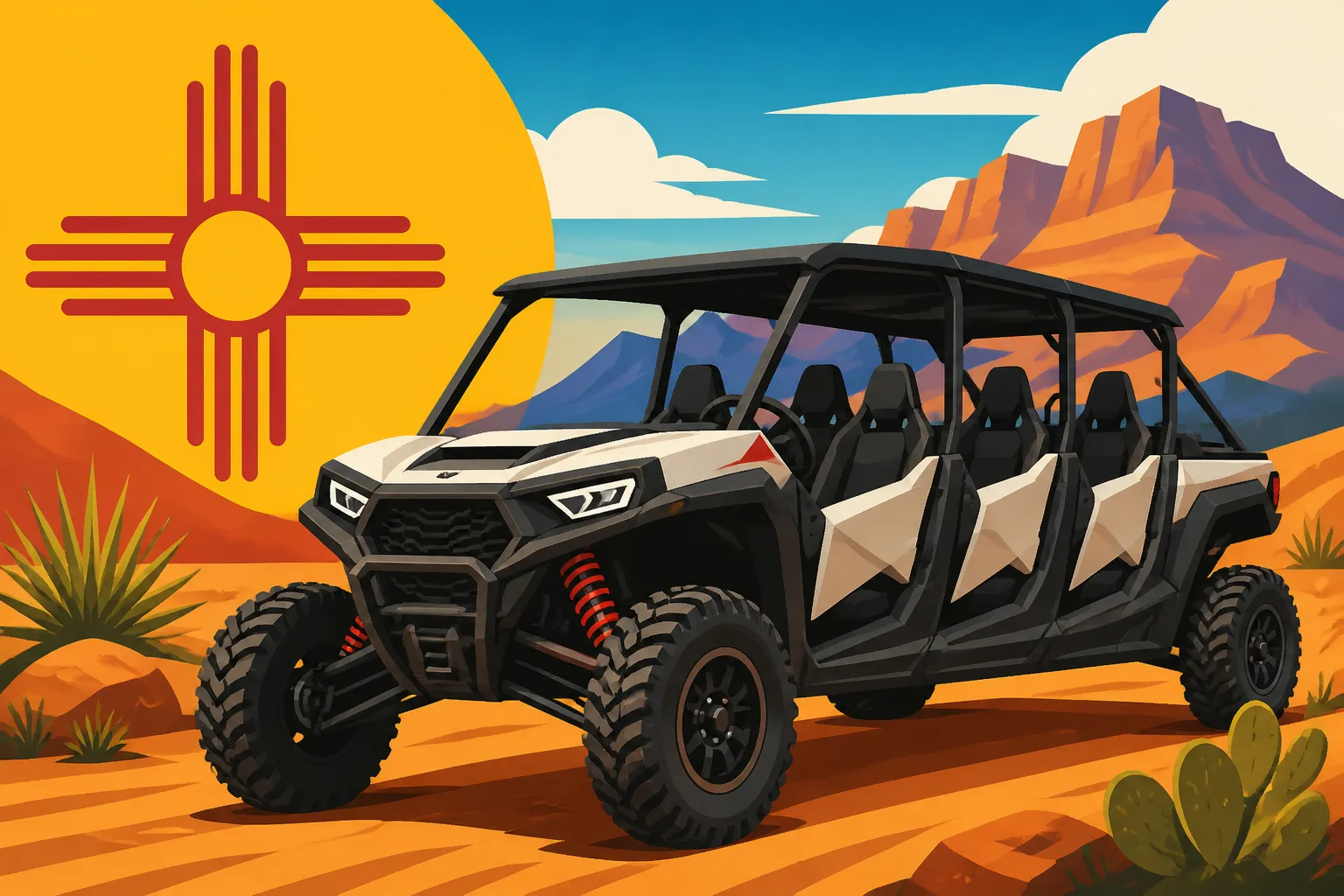
A six-seat side-by-side is built to carry a driver and up to five passengers, subject to the machine’s actual seating configuration and the rental company’s rules. It can suit a family or group that wants to follow one route, share the ride, and avoid coordinating several vehicles.
The main benefit is logistical: one driver handles navigation and controls while passengers travel together. That can be useful on a guided outing, where the group can hear instructions at stops and stay together on the route. It can also simplify a self-guided trip, provided everyone is comfortable riding in one vehicle and the rental company allows the route you have in mind.
But six seats do not automatically mean six adults will be comfortable for hours. A full cabin has less room for personal items, and passengers may have different expectations about speed, stops, terrain, and ride length. A group with several adults, bulky clothing, or substantial gear should ask about the specific model’s seating and storage rather than relying on the “six-seat” description alone.
Consider a different arrangement when:
- Your group wants more individual space or a separate pace.
- One passenger is uneasy about rough ground, steep sections, or long rides.
- You need to carry more bags than the cabin can safely accommodate.
- The rental provider does not allow all members of your group to ride in the same machine.
- The route or town rules restrict where the UTV can go.
In those cases, two smaller vehicles may work better, even if they require more coordination and another qualified driver. Before comparing options, check the basic costs for the whole outing—not just the vehicle. The rental duration, required deposit, fuel arrangements, optional coverage, equipment, taxes, and any route or delivery arrangements can affect the final total. For cost factors to ask about, see New Mexico UTV Rental Cost per Day.
| Option | What works well | Main trade-off |
|---|---|---|
| One six-seat UTV | Keeps a group together and needs only one driver | Less flexibility and potentially limited space for gear |
| Two smaller UTVs | Gives passengers more room and lets drivers adjust pace | Requires a second driver and coordination between vehicles |
| Guided tour | Adds route leadership and instructions | The route and schedule may be less flexible |
| Self-guided rental | Offers more control over stops and pace | The driver is responsible for navigation and following route rules |
The best choice is not necessarily the vehicle with the largest passenger count. Start with the people who will ride, the route they can comfortably handle, and the gear you need to bring. Then confirm the vehicle’s capacity and terms with the provider.
Check passenger, driver, and equipment rules first
The person making a booking is not always the only person whose eligibility matters. Rental companies may set requirements for the driver, and rules for young passengers can differ by provider and activity. Do not assume that every child can ride simply because a vehicle has enough seats. Ask the rental company what ages it accepts, whether it requires a particular form of supervision, and what it expects passengers to wear.
For a New Mexico rental, verify the current driver and age requirements directly with the provider before paying. The general issues to check include the minimum driver age, whether a driver’s license is required, who may operate the machine, and whether the rental company imposes a minimum age for passengers. A booking platform’s summary may not spell out every condition, so ask the local operator when anything is unclear. New Mexico Rental Age and License Rules is useful background, but the provider’s terms for the specific rental still matter.
A six-seat machine also needs to be a good physical fit for the passengers. Ask whether the rear seats have the same belt and support arrangement as the front seats, and whether each passenger has a designated seat and belt. No one should ride in a cargo area or share a seat. If a child’s helmet needs to be supplied, confirm that the provider has an appropriate size rather than assuming that one will be available.
Before booking, make a passenger list and include:
- The driver and every passenger’s age, if the provider asks.
- Any child who may need a smaller helmet or other fitting equipment.
- Passengers who may have difficulty climbing into a tall vehicle.
- Anyone who is uncomfortable with bumps, dust, exposure, or remote travel.
- Any mobility or medical consideration that could affect boarding or riding.
This is not about excluding someone unnecessarily. It is about avoiding a last-minute problem at check-in, when a provider may be unable to change the machine or accommodate a passenger. If anyone has concerns about physical comfort, ask the operator what the boarding process and typical terrain are like. A phone conversation can be more useful than relying on photos of a vehicle.
Confirm what safety equipment is included and what you should bring yourself. Some providers supply helmets, while others may have specific instructions about personal gear. Ask whether eye protection is included, whether helmets are available in children’s sizes, and whether you can use your own equipment if it meets the provider’s requirements. The details can vary, so review New Mexico Rentals That Include Safety Gear before deciding what to pack.
Clothing affects comfort as much as the vehicle. Closed-toe shoes, clothing that can handle dust, and eye protection are sensible starting points, but follow the rental company’s instructions. Weather at the starting point may not represent conditions across the route. A higher or more exposed trail can feel very different from a sunny parking area, and an open-cab vehicle offers limited protection from wind, dust, and changing temperatures.
Also ask how the rental handles a passenger who decides not to continue. A six-seat booking may be charged as one vehicle, not by the number of people who ride, and the provider may not be able to shorten or alter the trip once it begins. Make sure everyone understands the ride length and expectations before the group arrives.
Choose the route and rental style for the group
The machine is only part of the plan. New Mexico has varied riding conditions, and a six-seat UTV that suits a broad, manageable route may be a poor fit for a narrow or demanding one. Ask the provider which routes are permitted for its rental vehicles, whether a guide is required or available, and what terrain the outing is designed for.
Do not assume that a rental can be driven from a shop onto any nearby road or trail. Some rentals must be transported to an approved riding area; others may use a defined route or guided itinerary. Land access and local restrictions can also affect where you may ride. Check New Mexico Rentals and Where You Cannot Go and ask the provider to identify the allowed route in plain terms before departure.
For a group with mixed experience, a guided ride may reduce the burden on the driver. A guide can explain the route, set expectations, and help the group understand where to stop or regroup. It does not remove the need to follow instructions, ride within the group’s ability, or check what the tour includes. Start with New Mexico Guided UTV Tours if you are weighing a guided outing against a self-guided rental.
A self-guided rental can be a better fit when the driver is comfortable following directions and the group prefers to control its own stops. Ask how navigation works: whether the provider supplies a route, gives a briefing, provides a GPS device or app instructions, and explains what to do if the group loses its way. A familiar phone map may not be sufficient in an area with weak reception, so do not treat cell coverage as a given.
When comparing locations, think through the day beyond the riding itself:
- How does the group reach the starting point? Ask whether the rental begins at the trailhead, at the provider’s location, or somewhere else. If the machine must be trailered, plan transportation for both the people and the vehicle.
- How long is the actual ride? Confirm the rental window, check-in time, briefing time, and return deadline. A listed duration may not equal uninterrupted time on the trail.
- What is the route like? Ask about distance, elevation, surface, expected pace, and whether there are steep or rough sections. Describe your least-experienced passenger honestly.
- Where can you stop? Find out whether the route has designated places for breaks and whether the guide or provider sets the schedule.
- What happens if conditions change? Ask how the provider handles closures, storms, fire restrictions, or other conditions that make the planned route unavailable.
A route that looks short on a map can still feel demanding if it is rough, dusty, or exposed. A longer easy drive may be more pleasant for a family group than a shorter route with technical sections. The best outing is one that matches the group’s comfort and the operator’s permitted routes, not one chosen only for scenery or distance.
When you browse rental options, Polaris Adventures may help you identify participating rental locations, while Viator can show bookable experiences in some destinations. Treat either as a starting point for comparison, not as a substitute for checking the local operator’s exact machine, route, requirements, and cancellation terms. Listings can differ in what they include, and availability depends on the location and date.
Compare the full booking terms before paying
The same label—“six-seater”—can describe vehicles with different layouts, storage, comfort, and capabilities. Ask for the make and model, or at least clear photos of the exact style of machine, and confirm whether the vehicle shown is the one your group is likely to receive. A provider may reserve a vehicle class rather than a particular unit, so ask what happens if the assigned machine differs from the description.
Get the complete cost structure in writing before booking. A rental may involve more than the base charge. Depending on the provider, there may be a security hold, taxes, fuel charges, optional damage coverage, delivery costs, or charges for returning the machine late or excessively dirty. Do not rely on an old review or a third-party listing for current terms; ask the provider to confirm the total and what is refundable. For common pricing considerations, see [New Mexico ATV Rental Cost] and New Mexico Rental Damage Charges.
The deposit deserves special attention. Ask how much may be held on a payment card, when the hold is placed, when it is released, and what kinds of damage can lead to a charge. A hold is not necessarily the same as a final charge, but it can affect available credit while the rental is active. Check whether the booking name, driver name, and payment-card name must match.
Review the damage policy with the driver and passengers before arriving. Make sure the driver understands what to do if the machine is damaged, has a flat, or cannot continue. Ask whether the rental company expects you to call before attempting a repair, and whether recovery from a remote location is included or billed separately. Photographing the vehicle at pickup and reporting existing damage to staff can help make the condition clear, but follow the provider’s own checkout process.
Fuel policies vary. Ask whether the machine is supplied with fuel, whether the rental must be returned at a particular fuel level, where refueling is possible, and how fuel shortages are handled. A full passenger load and a route with sustained climbs or soft ground may affect fuel use, so do not plan around a best-case estimate. New Mexico Rentals and Fuel Policy covers the questions worth settling before the ride.
The booking details should also specify what the rental includes. Confirm whether the quoted amount covers the vehicle only or also includes helmets, goggles, route instructions, a guide, transportation to the riding area, or any required permits. If one of those items is important to your group, ask for a direct answer rather than inferring it from a photo or short listing description.
Cancellation and weather terms matter, particularly if your group is traveling from out of town. Check how far in advance you can cancel, whether a change of date is possible, and what happens when a route is closed or the operator cancels for unsafe conditions. A cancellation policy may distinguish between a customer cancellation and a provider-initiated cancellation. Read New Mexico Rental Cancellation Policies and verify the specific booking’s policy before confirming.
For groups, clarify whether you are reserving one machine or buying seats on a tour. These are not always the same kind of booking. If you reserve a vehicle, ask what the provider does if the assigned vehicle is unavailable. If you book a tour by seat, ask whether your group will be placed in one vehicle and whether other guests may share the tour. This can make a big difference to families or groups celebrating a special occasion.
Plan for comfort, luggage, and the day itself
A six-seat UTV is a transport choice, not a guarantee that everyone will enjoy a full day in the same cabin. Before booking, agree on a ride length that suits the least experienced passenger. If the group includes young children or people who have not ridden off-road before, ask the operator how long passengers typically spend on the route and whether a shorter option is available. Avoid choosing the longest outing simply because it seems like the best value; comfort and attention tend to matter more as the ride goes on.
Be realistic about storage. The passenger seats use space, and belongings need to be secured so they cannot shift, block controls, or fall out. Ask whether there is a cargo area and what size items it can hold. Pack only what the provider permits and what the group can secure safely. A soft bag may be easier to manage than loose items, but follow the operator’s requirements.
Helpful planning questions include:
- Can each passenger bring a small bag, and where must it be stored?
- Are food and drinks allowed in the vehicle?
- Is there a place to refill water along the route?
- Are there restrooms at the starting point or on the route?
- Can the group stop for photographs, or does the schedule limit stops?
- What should passengers do if dust or wind becomes uncomfortable?
- Is there a safe way to contact the provider if the group needs help?
For an outing in a remote area, do not assume that phone service will work throughout the ride. Ask the operator how to contact staff and what the group should do if separated or delayed. The driver should know the planned return time, stay within the permitted route, and tell the provider about any issue as soon as practical. Passengers should understand basic instructions before setting off, including where to keep hands and feet and how to use the seat belt.
The driver’s job is not just to steer. They need to listen to the briefing, follow route directions, keep a safe pace, and pay attention to passengers. A driver who is also trying to manage several excited passengers, interpret directions, take photos, and keep track of belongings may have too many tasks at once. Agree that one adult will handle photos and group coordination while the driver focuses on operating the machine.
Build in time for check-in and the safety briefing. Arriving late can reduce ride time or create pressure to rush through instructions. Make sure the group knows where to meet, what documents the driver should bring, and when everyone must be ready. Ask whether the provider expects the whole group to arrive together and what happens if a passenger is delayed.
A practical booking sequence helps prevent avoidable problems:
- Count the passengers and confirm ages with the provider.
- Decide whether one vehicle offers enough space and comfort.
- Compare a guided tour with a self-guided rental.
- Confirm the exact vehicle class, route, duration, and starting location.
- Get the total cost, deposit, fuel rules, damage terms, and cancellation policy.
- Confirm what safety gear is provided and what the group must bring.
- Share the plan with every passenger before the day of the ride.
- Recheck the meeting instructions and local conditions before departure.
If the provider offers delivery or transportation to a trailhead, confirm where the machine will be delivered and whether the quoted arrangement covers your group’s needs. Delivery can make the day easier, but it may have conditions or added cost. See New Mexico Rentals With Delivery for related planning considerations.
A good group booking is not simply the largest vehicle available. It is a machine that fits the riders, a route the group can handle, and a set of terms everyone understands. If you are still comparing one large vehicle with two smaller ones, Renting a Six-Seater for a Group can help frame that decision.
Frequently Asked Questions
Can six adults ride in one New Mexico UTV rental?
Some UTVs are configured for six occupants, but passenger capacity and rental eligibility depend on the exact machine and provider. Confirm the seating layout, belts, passenger rules, and storage space before booking. Six adults may fit by capacity but still find a long ride cramped.
Does a six-seat rental include helmets and goggles?
Not necessarily. Equipment policies vary by operator and booking. Ask what is supplied, whether sizes are available for every passenger, and what personal gear is allowed. Confirm these details directly rather than assuming the listing includes them.
Is a guided tour better for a group with different experience levels?
It can be. A guide may handle route leadership and explain the ride, which can reduce the workload on the driver. However, a guide cannot make an unsuitable route comfortable for every passenger. Describe your group’s experience and ask whether the route is appropriate before booking.
Can a six-seat UTV rental drive on town streets?
Do not assume that it can. Rental permissions, local rules, and the vehicle’s allowed route determine where it may be operated. Ask the provider whether the machine must be trailered to a riding area and which routes are permitted.
Disclaimer
This article is for general informational purposes only and does not constitute professional advice. Laws, prices and regulations vary by location and change over time. Consult a qualified professional for guidance on your specific situation.