Red River Offroad and Its New Mexico Fleet
Red River’s mountain setting makes the rental machine only part of the decision: seats, route access, weather, and local rules matter too. Red River Offroad’s exact fleet and availability can change, so don’t rely on an old listing or assume a model is waiting when you arrive. Use these checks to confirm what you’ll get and whether it suits your group and ride.
What to confirm about Red River Offroad’s fleet
A rental company’s fleet is not necessarily a fixed menu. Machines may be booked, serviced, or unavailable for a particular date, and an online photo may show a representative model rather than the one assigned to your reservation. Before you pay or make plans around a particular vehicle, ask Red River Offroad what it can confirm for your dates.
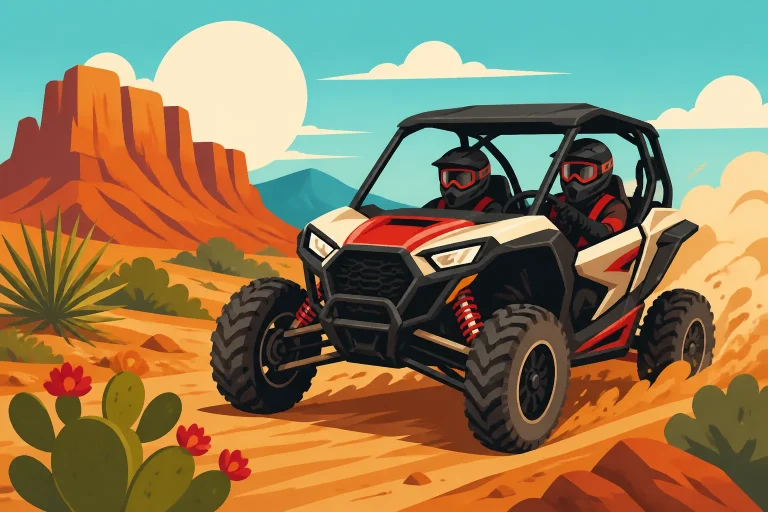
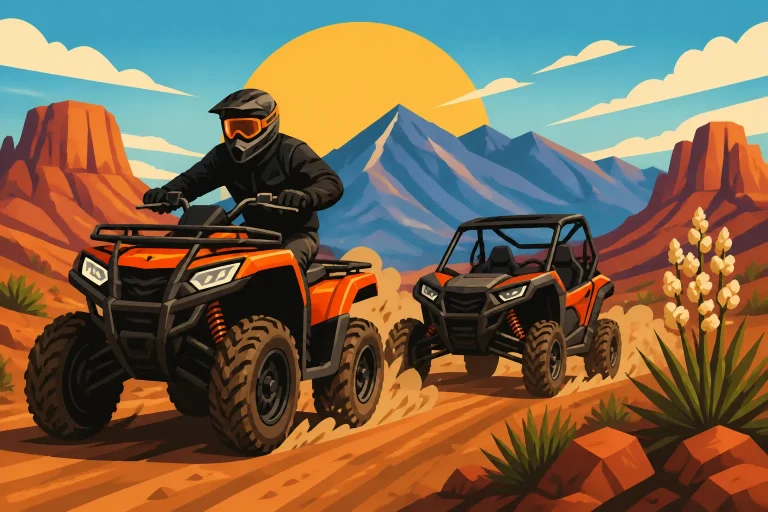
Start with the vehicle category and seating. A quad is an ATV designed for one rider at a time; a side-by-side, often called a UTV or ROV, has a seated cabin-style layout with a steering wheel and seats for a driver and passengers. If you need a side-by-side, ask for the confirmed passenger capacity, not just the model name or a photo. For background on the local street distinction, see Riding Into Red River on a Side-by-Side.
A machine’s advertised capacity is not the same as a guarantee that every passenger will fit comfortably. Ask whether the stated seating capacity includes the driver, whether child seats or restraints are available, and whether each passenger needs a helmet. If anyone in your party is small, tall, or has mobility needs, describe the situation before reserving rather than trying to solve it at pickup.
| What to verify | Why it matters | Useful question |
|---|---|---|
| ATV or side-by-side | The controls, passenger options, and riding experience differ | “Which vehicle category is available for my date?” |
| Confirmed passenger capacity | Listings and photos may not match the assigned machine | “How many riders can this specific machine carry, including the driver?” |
| Vehicle assignment | A reservation may be for a category rather than a named model | “Is the model guaranteed, or can it be substituted?” |
| Transmission and controls | Riders may be more comfortable with one setup than another | “What controls does the machine have, and is an orientation included?” |
| Helmets and other gear | Included equipment can vary by machine and rider | “What protective gear is supplied, and what should we bring?” |
| Route and use limits | A rental may be restricted to certain areas or roads | “Where may this machine legally be ridden?” |
| Fuel and return condition | These details affect your plan and possible charges | “What fuel level and condition are expected at return?” |
Ask whether the business rents quads, side-by-sides, or both for your dates. Do not infer that a company has a particular model, brand, engine size, or passenger configuration because it appears in an old review or a search result. If a certain feature matters—such as room for a child, an enclosed cab, or a particular control layout—get confirmation in writing.
Also clarify whether the machine is reserved by exact model or by general class. A category reservation can be appropriate if you are flexible, but it may not meet your needs if you have a firm seating requirement. If the business offers an alternative rather than the vehicle you expected, ask whether you can decline it and what happens to the reservation.
A quick phone call can resolve more than a long chain of assumptions. Share your party size, ages of riders, experience level, planned date, and intended riding area. That gives the staff a chance to tell you whether the available vehicle is suitable and whether your plan conflicts with local restrictions or the rental’s own permitted-use area.
Match the machine to your group and experience
The best rental is not automatically the biggest one. A larger side-by-side can carry more people, but it may feel wider and heavier on narrow or uneven routes. A quad can be simpler to transport and maneuver, but it does not provide a passenger seat for a second adult. The right choice depends on who is riding, where you expect to go, and what the operator allows.
If you are considering a quad
A quad is a one-rider machine. It requires the rider to steer and balance through body movement, and it is not a substitute for a two-seat side-by-side. Never plan to carry another person on a quad unless the specific machine is designed and approved for a passenger and the rental provider explicitly permits it. Even then, follow the machine’s seating and safety instructions.
If you are traveling with a partner or child, ask whether each person needs a separate quad, whether a side-by-side is available, and what age or supervision restrictions apply. A child’s comfort and skill matter as much as whether they can physically reach the controls. For a rental, the operator may set its own age, license, or supervision requirements, so confirm those directly rather than assuming a general rule covers the booking.
If you are considering a side-by-side
A side-by-side can make it easier for a group to ride together, but passenger count alone does not tell you how comfortable or appropriate it will be. Confirm the exact number of seats and whether everyone will have a seat belt and helmet. Ask what happens if the group’s size changes before the trip; do not count on squeezing in an extra passenger.
Ask about the controls, too. Some people find a steering wheel and pedals more familiar than ATV handlebars, but a side-by-side still takes attention and care to operate off-road. A short orientation should cover shifting, braking, seat belts, passenger behavior, safe spacing, and what to do if the machine stops or becomes stuck. If you have never driven one, say so when booking and ask whether the planned route is suitable for a first-time driver.
Consider the mountain setting
Red River is in a mountain environment, so a ride can involve changes in elevation, temperature, surface, and weather. A sunny start in town does not guarantee the same conditions on higher roads. A route that looks easy on a map may include loose material, ruts, steep grades, or narrow sections. Ask the rental provider how its permitted routes compare with your group’s experience and whether there are current closures or weather concerns.
For more context on planning a ride at elevation, see New Mexico Riding at High Elevation. If your group is used to desert trails, don’t assume mountain riding will feel easier just because it is cooler. Conversely, if you are used to paved roads, a rough or steep route can be demanding even in a familiar-looking vehicle.
Be honest about experience when you book. The goal is not to prove that a route is beyond you; it is to choose a machine and ride plan that leave room for learning and changing conditions. Ask the staff to explain any route restrictions in plain language, including whether you must stay on designated roads and where you are not allowed to go.
Understand where the rental may be ridden
Having a rental vehicle does not mean you can take it on every road around Red River. The machine’s registration, local rules, land access, and rental contract all matter. A route can be physically passable but still prohibited to the machine or to a renter. Before setting out, get a clear answer about where the vehicle may go and whether you must trailer it to a starting point.
Red River has local rules that distinguish vehicle types and restrict where some machines may travel. Do not assume that permission to ride a side-by-side on one street means a quad can use the same route. Read Why a Quad Gets Turned Back at Red River and Red River Ordinance 2000-5 for more on the local distinction. If the plan involves a street, verify the exact street and vehicle category with the rental provider and the relevant local authority.
A town street, a county road, a Forest Service road, and a trail on other public land can each have different access rules. The fact that a road is unpaved does not make it an open OHV route. Public land managers may limit travel to designated routes, and access can change with closures, maintenance, fire conditions, or seasonal conditions. Private property, tribal land, and state trust land also require the appropriate permission or authorization; do not treat a map line or an open gate as permission to ride.
Ask the provider these questions before your booking:
- Which routes or riding areas are permitted for this rental?
- Can the machine leave town under its own power, or must it be transported to a trailhead?
- Are any town streets off-limits to this vehicle category?
- Are there current road, trail, fire, or weather closures that affect the route?
- Do you provide a map, GPS route, or written list of permitted roads?
- What should we do if a sign or closure notice conflicts with the route we were given?
If you plan to ride out of town, ask where the legal route begins. A rental company may allow an outing in a certain area without allowing you to drive the machine through town to reach it. The distinction matters: a machine may need to be trailered to a staging area. The article When a Rental Must Be Trailered to the Trailhead covers why that detail is worth confirming.
Never assume that a rental company’s route suggestion overrides a posted closure or land manager’s sign. If conditions have changed, stop and contact the provider for guidance rather than riding around a barrier. A route that was open on a previous visit may not be open on your date.
Visitors coming from out of state should check permit requirements as well as local access. New Mexico’s rules can depend on whether the machine has qualifying home-state registration or whether a visitor permit is needed. The operator should explain what applies to its rental and what the renter must carry. See Do Visitors Need a New Mexico OHV Permit? and Riding New Mexico With an Out-of-State Registration for more detail, then confirm the current requirement for your specific machine and trip.
Book with a clear picture of the costs and conditions
An advertised rental rate rarely answers every practical question. The amount you ultimately pay can depend on the rental period, vehicle category, optional equipment, deposits, fuel, damage terms, cleaning expectations, and taxes or other charges. Because provider terms can change, check Red River Offroad directly for current figures and ask what is included before you commit.
The reservation should make the essential terms understandable. Confirm when the rental clock starts and ends, how late returns are handled, what happens if the ride is interrupted by a closure, and whether the business provides a replacement machine if the assigned vehicle becomes unavailable. If a booking is described as a half-day or full-day option, ask for the exact pickup and return times. Labels alone do not tell you how much usable riding time you will have.
Check the deposit and damage terms
Ask whether the provider places a hold on a payment card, when the hold is released, and what circumstances could lead to a charge. A deposit or damage hold is not necessarily the same thing as a final rental fee. Confirm what the agreement says about collision damage, rollovers, tire damage, recovery, cleaning, and mechanical problems.
Do not assume that a damage waiver eliminates every possible responsibility. Read the agreement and ask the staff to explain exclusions and the process for reporting a problem. Take clear photos or video of the vehicle at pickup, including visible damage, tires, controls, and body panels. Let the staff know about any existing damage before leaving and follow its instructions for documenting it.
For more on common contract details, see Reading a New Mexico Damage Schedule and How Much a Rental Holds on Your Credit Card. Those terms are specific to the provider and booking, so use them as a checklist rather than a substitute for the agreement you receive.
Confirm gear, fuel, and return expectations
Ask exactly what protective equipment is supplied, in what sizes, and whether it is included in the booking or available separately. If a child needs a helmet, check the fit before departure. Goggles, gloves, sturdy footwear, and clothing suited to dust and changing weather can make a long ride more comfortable. If you plan to bring your own equipment, ask whether it must meet any requirements.
Clarify how fuel is handled. Some rental arrangements expect the machine to return at a particular fuel level; others may provide a different arrangement. Ask where you can refuel on the permitted route and whether the machine’s expected range fits the outing. Do not rely on a generic estimate from an online review, especially if your route includes elevation changes or extended low-speed riding.
Find out what condition is expected at return. Mud, dust, or ordinary trail dirt may be treated differently by different providers, and a wet ride may lead to additional cleaning requirements. Ask what to do if a machine has a flat, runs low on fuel, or becomes stuck. Save the provider’s contact number and know whether you should call before attempting a repair or recovery.
Choose a booking channel carefully
You may see rental listings or tours through more than one channel. Polaris Adventures can help travelers locate participating outfitters, while Viator may display bookable activities. A listing on a platform is not a guarantee that the exact vehicle, route, or time is available directly from the operator. Compare the cancellation terms, included equipment, meeting location, and contact process, and confirm essential details with the business responsible for the ride.
If you book through a third-party platform, check who handles changes, cancellations, refunds, and support on the day of the ride. Save both the platform confirmation and the operator’s contact details. If the listing describes a vehicle by category rather than exact model, ask whether the category and passenger capacity are guaranteed. Don’t wait until pickup to resolve a mismatch between the listing and what your group needs.
Prepare for pickup and ride responsibly
A smooth outing starts before the engine does. Arrive with enough time to complete paperwork, check the machine, and listen to the safety briefing. Bring the driver’s required identification and any other documents the operator requests. If the booking is in someone else’s name, ask in advance who must be present and who may drive.
At pickup, have the staff show you the key controls and safety equipment. Make sure every rider knows how to use a seat belt or helmet, how passengers should sit, and what the driver expects on uneven ground. Agree that passengers will keep their hands and feet inside the vehicle and avoid sudden movements. If any control is unfamiliar, ask for another explanation before leaving.
Inspect the machine with staff. Check that the tires look suitable for the outing, the lights and brakes work as expected, and the vehicle has no obvious new damage. Confirm that the fuel level and any supplied equipment match what you were told. If something does not seem right, raise it before departure and ask whether the vehicle should be checked or replaced.
Plan conservatively. Carry water, weather-appropriate layers, a charged phone, and any required permit or rental documents. Cell service may be limited away from town, so ask what communication options are available if the machine breaks down or your group is delayed. Tell someone where you expect to ride and when you plan to return.
Ride at a pace that leaves time to react. Keep a safe gap between machines, slow down when visibility is reduced by dust, and avoid following another vehicle so closely that you cannot see its movements. Yield appropriately, watch for pedestrians and other trail users, and keep noise and speed under control near homes, wildlife, and livestock. Close gates you find closed; if a gate is open, ask the operator what to do rather than assuming it should be left that way.
If weather or terrain becomes uncomfortable, turning around is a sound decision. Do not continue onto a closed road, into a wash with rising water, or onto a route beyond your ability just to complete the planned loop. If there is a mechanical issue, stop in a safe place, keep the group together, and call the provider for instructions. Avoid unauthorized repairs or recovery attempts that could cause injury or additional damage.
Before returning, check the agreed return time and fuel requirement. Report any damage, warning light, unusual noise, or route incident promptly, even if the machine still runs. Clear communication helps the operator assess the vehicle and avoids confusion about when a problem occurred.
Frequently Asked Questions
Does Red River Offroad have a specific ATV or UTV model?
The available machines can vary. Ask the business what is available for your date and whether your reservation guarantees a particular model or only a vehicle category.
Can a rental side-by-side be driven on every Red River street?
No. Local rules and the rental agreement may restrict where a machine can go, and rules can differ by vehicle type and street. Confirm the exact route with the provider before riding.
Should I book a quad or a side-by-side?
Choose based on passenger needs, experience, and the permitted route. A quad is for one rider; a side-by-side may carry passengers if the specific machine is designed and approved for them. Confirm seats and restrictions directly.
What should I ask before paying for a rental?
Confirm vehicle type and capacity, permitted routes, pickup and return times, gear, fuel expectations, deposits, damage terms, and cancellation procedures. Get important details in writing when possible.
Can I rely on a third-party listing for the exact vehicle?
Not without checking. A platform listing may describe a category or show a representative machine. Verify the actual vehicle, passenger capacity, route, and terms with the operator handling the rental.
Disclaimer
This article is for general informational purposes only and does not constitute professional advice. Laws, prices and regulations vary by location and change over time. Consult a qualified professional for guidance on your specific situation.