Parking a Trailer at a Desert Trailhead
A trailer can turn a simple New Mexico ride into a stressful start if the trailhead lot is sandy, crowded, or too tight to turn around in. This guide explains how to choose a safe place to park, position your truck and trailer, protect access for other visitors, and plan for desert weather before unloading your ATV or UTV.
Choose a suitable New Mexico trailhead before you tow
Check the parking setup, not just the riding area
A trail system may be perfect for riding but awkward for towing. Before you leave home, look for practical details about the staging area: whether it has room for trailers, whether there is a turnaround, and whether access involves a narrow road, soft shoulder, gate, or steep approach. A spot that’s easy to reach in a pickup can be a very different proposition with a long trailer behind it.
This matters at dispersed desert areas as much as at established riding destinations. Areas such as Red Sands OHV Area in Southern New Mexico, Glade Run and Chokecherry Canyon at Farmington, and New Mexico’s 1,920-Acre Haystack Mountain have different terrain and access conditions. Don’t assume that a parking arrangement that works at one location will work at another. Check the current information from the land manager, and contact the appropriate office if the parking details aren’t clear.
If you use onX Offroad to review a route, look at the approach to the staging area as well as the trails you hope to ride. Mapping can help you understand nearby roads and land boundaries, but it doesn’t confirm that a particular spot is open for parking or suitable for your trailer. Verify access and parking permission with the relevant land manager before setting out.
Match the trailer to the approach
Think through the whole trip in reverse: how will you arrive, get the trailer into a legal parking space, unload, and leave? A tight approach may be manageable in a short utility trailer but difficult with a long enclosed trailer. Some desert roads have limited room to turn around, and a sandy shoulder may not support the weight of a tow vehicle and loaded trailer.
If you’re unsure about the approach, avoid treating a map’s apparent road width as a promise. A narrow track may be rough, rutted, or bordered by loose ground. Ask someone familiar with the staging area or choose a location with a clearer, established parking setup. Resources such as New Mexico Trail Maps Worth Carrying can help with trip planning, while New Mexico Riding Areas With RV Parking may be useful when you need a larger staging area. Still, confirm that the information applies to your specific vehicle and trailer.
| What to check | Why it matters | Safer planning choice |
|---|---|---|
| Trailer space | A regular vehicle space may not fit a tow vehicle and trailer | Confirm there is designated or otherwise permitted trailer parking |
| Turning room | A tight lot can make backing or turning difficult | Plan a route that avoids needing a multi-point turn in traffic |
| Ground surface | Sand or loose gravel may not hold a heavy rig securely | Favor firm, established parking areas |
| Gates and access roads | Blocking an entrance can prevent access for others or responders | Keep gates, roads, and turnarounds clear |
| Weather exposure | Wind, rain, and heat can affect both parking and unloading | Check conditions and have a backup plan |
Park and unload without blocking the trailhead
Choose firm ground and leave room for everyone
Once you arrive, take a moment to assess the site before committing to a parking position. Look for established parking rather than creating a new spot on desert vegetation or driving off the hardened area to make more room. The ground can look firm while still giving way under a loaded trailer, especially where loose sand has collected along a road edge.
Position the rig so other visitors can pass, turn around, and reach any posted information or access points. Don’t park across a gate, in front of a road, or where the trailer blocks a narrow approach. A rig that seems out of the way when the lot is empty may become a serious obstruction when several groups arrive. If the lot is crowded, waiting for a space or choosing another legal staging area is usually better than squeezing into a spot that leaves no safe path through.
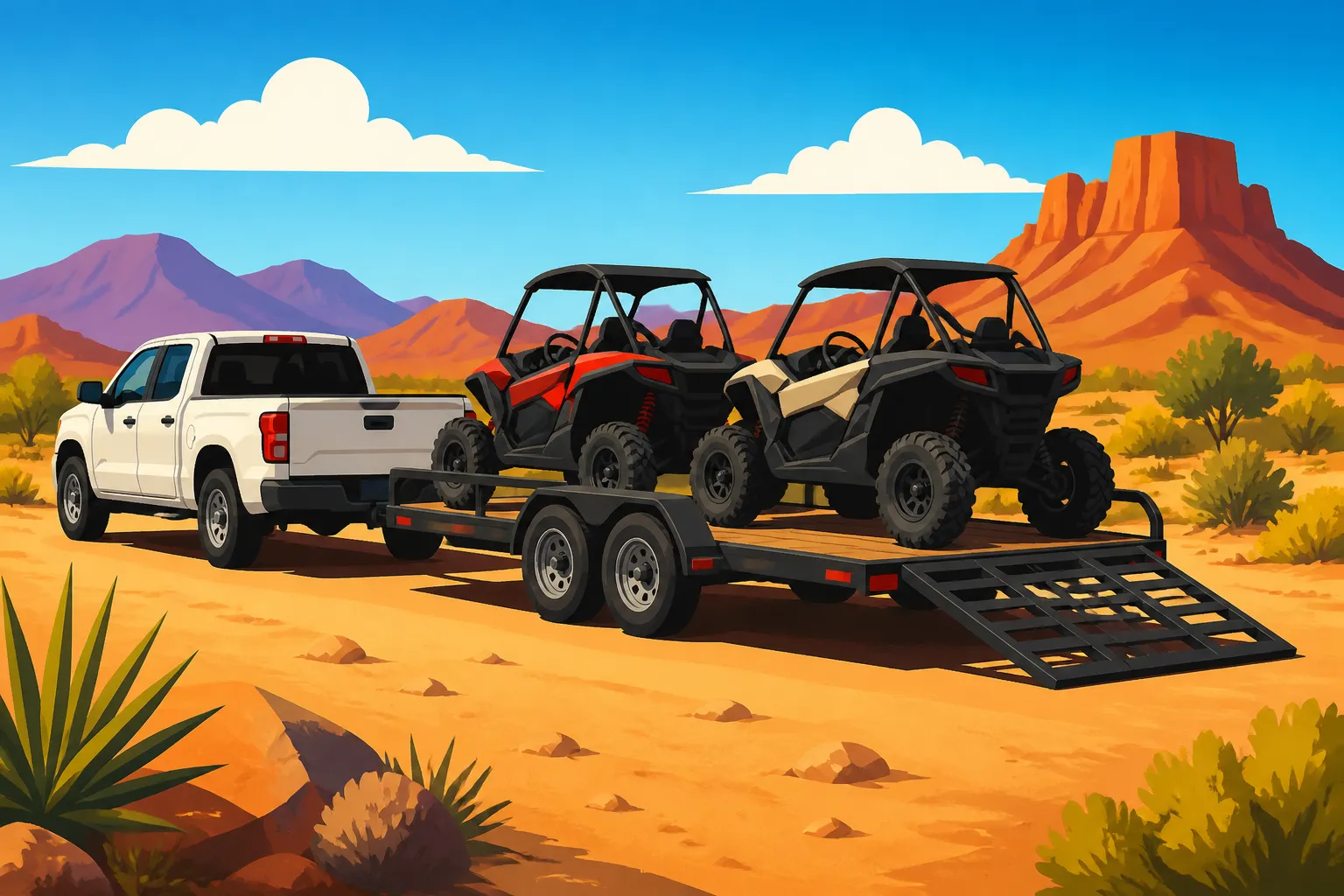
Give yourself enough room to open trailer ramps and unload without spilling into an active road or trail. Keep the ATV or UTV, tie-downs, ramps, and loose gear contained within your parking area as much as possible. This is particularly helpful at popular sites and during busy weekends, when vehicles may be coming and going while riders prepare. For more on shared staging areas and trip timing, see Staging Before Sunrise in Summer.
Secure the trailer before unloading
Before you release tie-downs, make sure the tow vehicle and trailer are stable. Park on firm, reasonably level ground when available, put the vehicle in park or in gear as appropriate, and set the parking brake. Use wheel chocks if you carry them, especially if the surface is uneven or the trailer may shift as you unload. Follow the trailer and vehicle manufacturers’ instructions for safe loading and unloading.
Lower ramps carefully and check that they sit securely on the ground and align with the trailer. Loose sand can make a ramp slide or sink, so don’t assume it’s stable just because it appeared secure at first. Keep people clear of the ATV or UTV’s path, and unload at a controlled pace. If the approach to the trailer is awkward or the surface is sloped, reposition the rig before unloading rather than trying to compensate with a hurried maneuver.
Once the machines are off, stow ramps and tie-downs so they don’t become tripping hazards or blow away. Keep keys, phones, water, and other essentials accessible. A dusty, windy staging area can scatter lightweight gear quickly, and searching for a missing strap at the end of a ride is an avoidable frustration. Loading Up After a Dusty Day covers the other half of the routine: getting organized before you head home.
Plan around desert ground and changing weather
Don’t let dry-looking ground fool you
Desert access roads can change quickly. A road that felt firm on the way in may become slick or soft after rain, and a shoulder that looks like extra parking can be deceptively loose. Be cautious about pulling onto unmarked ground, especially near washes or low spots. If you can’t tell whether the surface will support the trailer, stay on established, permitted parking instead of testing it with a heavy rig.
Rain deserves particular attention in New Mexico. A distant storm can send runoff through a wash even when the sky above the trailhead looks clear. Avoid parking in a wash, channel, or low drainage area, and don’t assume that a dry arroyo is a safe place to leave a vehicle. For route planning in changing conditions, read Red Sands After a Rainstorm and Monsoon Afternoons and Flash Floods. If the forecast or road conditions make access uncertain, postponing the ride may be safer than risking a stuck trailer or a blocked route.
Wind and heat also affect the parking routine. Strong gusts can catch an open trailer door or lift loose gear, while high temperatures can make unloading strenuous and leave riders eager to rush. Secure ramps, doors, and lightweight belongings, and take a moment to drink water before heading out. If you’re riding in exposed terrain, check Dust and Visibility on a Desert Trail as part of your preparation.
Recheck boundaries, closures, and permission
A place that looks like a convenient turnout is not automatically an approved parking area. It could be private property, state trust land, a restricted access point, or ground where vehicles are not allowed. Check land boundaries and posted signs, and confirm parking rules with the land manager when needed. onX Offroad can help you review land boundaries and plan around mapped routes, but use that information as a planning aid—not as permission to park or ride somewhere.
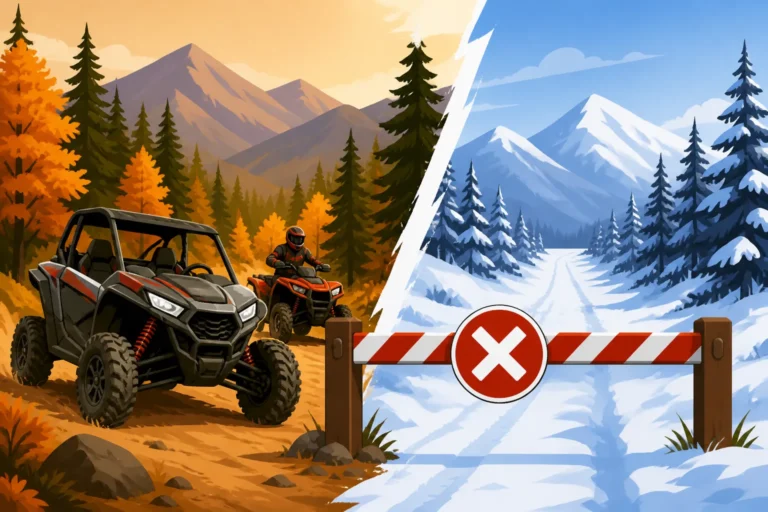
Also check for closures and travel restrictions before towing out. A road or staging area may be unavailable because of seasonal conditions, fire restrictions, maintenance, or another temporary closure. New Mexico Trail Closures to Check First and Designated Routes and Travel Management in New Mexico can help you build that check into your planning. If you discover a closure on arrival, don’t improvise by parking beyond a barrier or driving around a sign. Find an authorized alternative or reschedule.
If you plan to leave a trailer or tow vehicle overnight, verify that overnight parking is allowed at that specific location. Rules differ between developed sites and dispersed public land, and a spot that permits day-use staging may not allow unattended vehicles overnight. Keep valuables out of sight, lock the trailer, and leave enough access for other visitors and land managers. When the rules or safety of a location are unclear, contact the managing agency rather than relying on assumptions.
Use a repeatable parking checklist
Before you leave home
A few minutes of planning can prevent the familiar trailhead scramble: backing up while people wait, discovering there’s nowhere to turn around, or realizing the trailer is on ground too soft to support it. Save the location and review the driving approach before the trip. If you’re using onX Offroad, check the route, nearby boundaries, and any relevant map details, then confirm access and parking rules through the land manager or current site information.
Pack for the staging area as well as the ride. Useful items may include wheel chocks, gloves, a tire pressure gauge, a small shovel, drinking water, and a way to secure ramps and loose gear. The right kit depends on your trailer, vehicle, and destination. A shovel can help with minor surface issues, for example, but it is not a reason to drive onto ground that is too soft or to park where vehicles are not permitted.
Tell your group how you plan to enter and where you expect to stage. If multiple rigs are travelling together, decide in advance how the trailers will fit without blocking other users. Arriving one vehicle at a time without a plan can create unnecessary congestion, especially at a small staging area.
Before you leave the trailhead
Before riding, take a quick look at the parked rig. Check that the trailer is stable, ramps and doors are secured, and nothing important is sitting where wind or dust can take it. Make sure the tow vehicle and trailer do not block a gate, trail entrance, road, or turnaround. Take a photo of the parking position if you want an easy reference when you return, particularly if several similar trailers are in the area.
When you come back, give yourself time to load without rushing. Dust, heat, fatigue, and a crowded lot can make simple tasks feel harder. Inspect the machines and trailer, secure the ramps and tie-downs, and check that no gear has been left behind. If the lot has become busy, wait until there’s enough room to load and pull out safely rather than backing into moving traffic or forcing another visitor to maneuver around you.
Good trailer parking is less about finding the closest patch of open ground and more about choosing a legal, stable place that leaves room for everyone. Plan the approach, protect access, and be ready to change plans if the ground, weather, or parking rules don’t cooperate.
Disclaimer
This article is for general informational purposes only and does not constitute professional advice. Laws, prices and regulations vary by location and change over time. Consult a qualified professional for guidance on your specific situation.