Elk on a Trail at Dusk
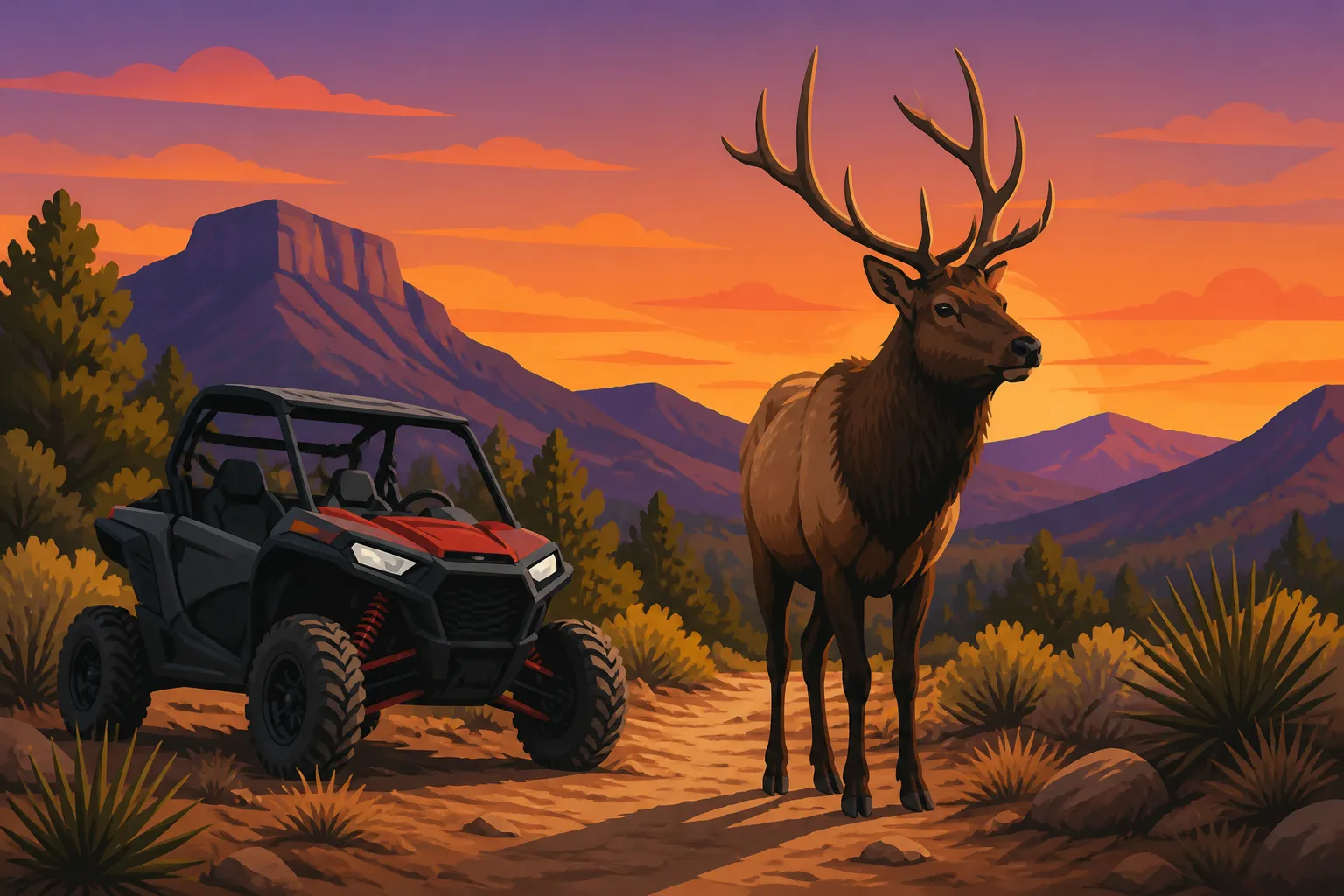
An elk stepping onto a New Mexico trail at dusk can turn a relaxed ride into a tense few seconds. Low light, engine noise, and a large animal moving unpredictably are a difficult mix, especially on narrow forest roads. This guide explains how to respond, how to reduce the chance of a close encounter, and how to plan a safer ride when daylight is fading.
Why elk encounters are more likely to feel sudden at dusk
Elk move between feeding and resting areas
Elk are often active around dawn and dusk, when changing light can also make them harder to see. In New Mexico, riders may encounter them in forested and mountain habitats, including areas with a mix of wooded cover, meadows, and water. But wildlife is unpredictable: a familiar route that was empty yesterday may have elk on it today.
An animal may appear just beyond a bend, step out from brush, or cross a road after you have started through a quiet stretch. That can be startling even at a moderate speed. In a side-by-side, the cab and windshield can make the view feel enclosed; on an ATV, the rider is exposed to the elements and may have fewer options for shelter if an animal approaches.
Treat the time near sunset as a period when you need extra room and attention, not as a guarantee that elk will be present. If you are riding in elk habitat, scan the trail edges as well as the route ahead. Look for movement, silhouettes, fresh tracks, and animals standing partly concealed in trees or brush. A wildlife encounter can happen quickly, so leave yourself enough distance to slow down smoothly.
A herd can behave differently from a single animal
Seeing one elk does not always mean there is only one. Others may be hidden nearby, and a cow may be accompanied by a calf. During the fall rut, bulls can be more reactive around other elk, while cows with young may be especially protective. A rider who focuses on the animal in front may miss another animal coming from the side or behind it.
Avoid assuming that an elk will move away from a vehicle. It may hold its ground, cross in front of you, or turn unexpectedly. A group of riders can add pressure if they approach from several directions, rev engines, or try to pass around the animal. Even if the elk looks calm, giving it space is safer than trying to predict its next move.
For more general guidance on sharing routes responsibly, see New Mexico Trail Etiquette on Shared Ground and New Mexico Riding With Livestock Around. Elk are wildlife, not livestock, but the same basic courtesy applies: do not crowd animals, chase them, or force them toward a fence, road, or other hazard.
What to do when you see an elk on the trail
Slow down, stop, and give the animal an exit
When an elk appears ahead, ease off the throttle and stop at a safe distance. Avoid sudden acceleration, hard braking, or repeated engine revving. If you are traveling with a group, signal the riders behind you to stop too, and keep everyone together rather than letting machines fan out around the animal.
Give the elk room to move away on its own. Do not ride closer for a better look, block its path, or try to pass between members of a herd. If the animal is near the route you need to take, wait quietly and allow it to clear the area. Sometimes the safest choice is to turn around or use another route, especially if the animal appears agitated or has no clear way to move away.
Keep children and passengers seated and calm. Do not get off a machine to approach the elk or encourage anyone to take a close-up photo. A vehicle can feel like a barrier, but it does not make a close encounter harmless. If an elk changes direction, keep distance and avoid making a quick move that could put your machine or another rider in its path.
Keep noise and movement predictable
Once stopped, stay as quiet and still as practical. Do not honk, shout, throw objects, or use a machine to herd the animal off the trail. If you need to reposition, do so slowly and only when you can create more space without approaching or trapping the elk.
If the animal does not move, wait. A few minutes of patience is far better than provoking a close encounter. If you cannot wait safely, back away along the route you came from, provided the route is clear and you can do so without rushing. In a group, move one machine at a time and make sure everyone understands the plan before anyone starts moving.
Do not follow an elk after it leaves the trail. It may be moving toward other animals, young, or cover. Continuing after it defeats the purpose of giving it space and can lead to another encounter farther along the route. A wildlife sighting is a good reason to pause your ride, not an invitation to pursue the animal.
Plan a dusk ride with visibility and wildlife in mind
Leave time to get off the trail before dark
A ride that starts late can take longer than expected. A slow section, a wrong turn, a minor mechanical problem, or an elk encounter can use up the daylight you thought you had. Before setting out, check your intended route, estimate a conservative return time, and set a turnaround point that leaves a buffer for delays.
The terrain matters. A short distance on a rough forest road can take much longer than the same distance on an open, familiar route. Elevation, weather, dust, and seasonal closures can affect the ride as well. Conditions vary across the state, so consider the differences between mountain and desert routes when choosing a start time. New Mexico Riding Seasons by Elevation offers useful context for thinking about seasonal conditions.
A map or navigation app can help you understand where you are and identify alternate routes, but it cannot make an unsafe route safe. Some riders use onX Offroad to review route options and keep track of their position, particularly when an unfamiliar trail network has multiple junctions. Check the route before leaving, download or otherwise prepare what you need for areas with poor service, and carry a backup plan rather than relying on a phone alone. You can also review New Mexico Trail Maps Worth Carrying before a trip.
Check your lights and adapt your pace
As daylight fades, distance and depth become harder to judge. Dust, shadows, uneven ground, and dark tree cover can hide an animal or an obstacle until you are close. Reduce speed before visibility drops, and be especially cautious on blind corners, narrow sections, and places where brush reaches the trail edge.
Make sure your machine’s lights work before leaving the staging area. Carrying extra lighting does not mean you should push a ride deeper into darkness; it simply gives you another layer of preparation if a delay occurs. Requirements for lighting can depend on the type of machine and where you are riding, so review New Mexico Rules for Riding After Dark and New Mexico Lighting Requirements for OHVs rather than assuming that a particular setup is legal everywhere.
If your group is spread out, have a clear way to communicate before the ride begins. Agree on where to stop, how to signal a hazard, and what to do if someone loses sight of the rider ahead. Dust and uneven terrain can widen a gap quickly. A lead rider should not assume that everyone behind has seen an elk, a turn, or a change in trail conditions.
| Before the ride | Why it matters near dusk | Practical step |
|---|---|---|
| Check route and conditions | Closures or unfamiliar junctions can add delay | Review the route and identify a turnaround point |
| Inspect lights | Low light makes obstacles and animals harder to see | Test the lights before leaving the staging area |
| Set a return time | Small delays can use up the remaining daylight | Build in a buffer instead of planning to finish at sunset |
| Brief the group | Riders need to know how to respond to a wildlife sighting | Agree to stop together and avoid surrounding animals |
| Carry a backup plan | Navigation and communication tools may not work everywhere | Bring suitable offline navigation and basic emergency supplies |
Choose routes thoughtfully and avoid common mistakes
Use routes that match your group and the conditions
A route that feels easy at midday can feel very different in fading light. If you are unfamiliar with the area, pick a route with clear navigation and a straightforward way back. Avoid adding a remote spur late in the day just because it looks close on a map. A line on a screen does not show every rough patch, blind corner, locked gate, or seasonal change.
Before heading out, check for closures and current access information. Forest roads and other public-land routes may have seasonal or temporary restrictions, and access rules differ by land manager. Review New Mexico Trail Closures to Check First and confirm that your planned route is open and appropriate for your machine. When using onX Offroad or another mapping tool, treat the map as one planning aid, not as permission to ride every road or trail it displays.
If the route crosses land with grazing activity, you may encounter cattle, gates, or other signs of working land. Slow down around animals, leave gates as you find them unless signs or instructions say otherwise, and do not assume that a road is open simply because it is visible. Cattle on a Forest Road explains why animal awareness matters on shared routes, while [New Mexico Rules for Riding a Closed Road] is relevant when a route is signed closed.
Avoid these reactions when an elk is near
The most common mistakes come from trying to make the encounter end quickly. Riders may creep closer, rev the engine, split the group, or try to squeeze around the animal. Each choice can reduce the elk’s options and make the situation less predictable. Waiting at a distance or turning back may feel inconvenient, but it is often the sensible decision.
Do not chase elk for video, follow a herd off the trail, or position machines to keep animals in view. A calf may be hidden nearby, and an adult animal can react quickly if it feels cornered. Never assume an elk understands your intentions or will move in the direction you expect.
Finally, do not let the pressure to finish the route override your judgment. If the light is fading, you are unsure where the trail goes, or wildlife is keeping you from moving safely, turn around when it is safe to do so. A dusk ride should end with enough daylight and attention left to get everyone back—not with a rushed push through unfamiliar terrain.
Disclaimer
This article is for general informational purposes only and does not constitute professional advice. Laws, prices and regulations vary by location and change over time. Consult a qualified professional for guidance on your specific situation.