Midnight Meadows in Summer
Midnight Meadows can look like an inviting summer ride near Red River, but mountain weather, high elevation, and changing forest-road access can turn a casual outing into a demanding day. This guide explains how to plan for the terrain, check whether your intended route is open and legal, prepare your ATV or UTV, and ride more safely when summer conditions shift.
What to Expect at Midnight Meadows in Summer
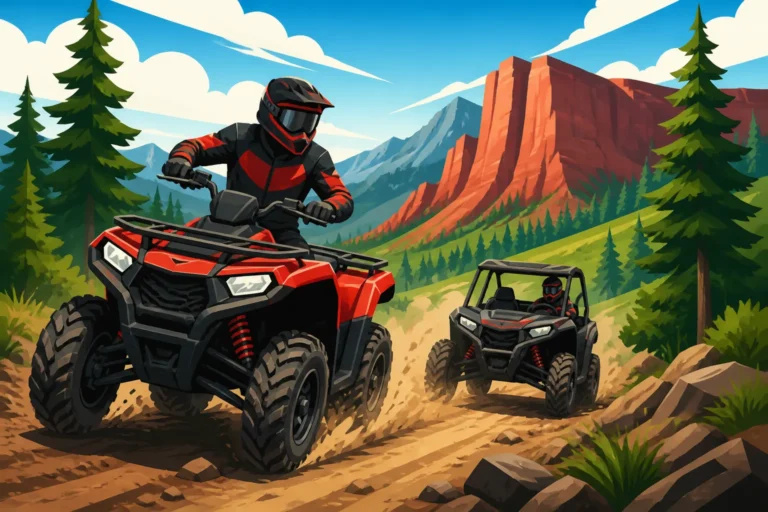
Mountain riding is different from desert riding
A summer ride around Midnight Meadows is not simply a warmer version of a winter outing. In the mountains near Red River, you can encounter cool, shaded sections and exposed, sunlit stretches during the same trip. The altitude can also make physical exertion feel harder than it does at home, especially if you arrive from a lower-elevation area and head out soon after reaching town.
Give yourself time to adjust before planning an ambitious ride. A passenger who feels fine walking around Red River may become tired more quickly on a long, bumpy route. Build in breaks, drink water before you feel thirsty, and avoid treating a planned distance as a promise that you have to complete it. If anyone in your group is feeling unwell, turning around early is a sensible choice, not a failed outing.
High elevation also affects the machine and the ride. A vehicle can feel less responsive than it does at lower elevations, and steep or rough sections demand careful speed control. For broader planning help, see [New Mexico Riding at High Elevation]. If you are comparing the area with other nearby destinations, [Old Red River Pass and Where It Goes] and [Goose Lake and the Climb Up] can help you think about how routes around Red River differ in character and effort.
Summer weather can change the ride quickly
A blue sky at the trailhead does not guarantee clear weather for the whole day. Summer afternoons can bring thunderstorms, strong wind, rain, and lightning, particularly on exposed ridges. A route that feels comfortable in the morning may become a poor place to be later if storm clouds build overhead.
Plan your ride so you are not relying on a late-afternoon return from a remote section. Check the forecast before leaving, look for changing conditions while riding, and turn around before a storm reaches you. Do not wait until you hear thunder or see rain directly over your route. Lightning is especially concerning on open terrain, ridgelines, and high points. For more context on this risk, read [Afternoon Lightning on a Carson Forest Ridge].
Rain also changes trail surfaces. A dry track may become slick, muddy, or rutted, while water running across a road can conceal loose material or damage. Do not enter a flooded crossing or ride into a wash when storms are nearby. Conditions can change beyond what you can see from the vehicle, so a cautious turnaround is often the safest decision.
Check Access and Route Conditions Before You Go
Confirm that the route is open and legal
The name Midnight Meadows alone does not tell you whether every road or trail leading toward it is open to motorized use. Routes in the surrounding mountain country may have different land managers, seasonal restrictions, travel-management rules, or temporary closures. Do not assume that a line shown on a general map is a legal ATV or UTV route.
Before leaving, check the latest information from the relevant land manager for the route you plan to ride. Confirm that the specific roads are open to your vehicle type and that you are not crossing into a restricted area. Forest roads can close because of weather, fire danger, maintenance, or other management decisions. [Questa District Roads and Their Seasons] and [New Mexico Fire Season and Trail Closures] are useful background when planning a ride in this part of the state.
A navigation app can help you understand where you are, but it is not a substitute for official route information. Some riders use onX Offroad to review mapped roads and compare their planned route with the terrain. Treat it as a planning aid, then verify access and closures with the appropriate agency. A digital map can be outdated, and a route that appears connected on screen may not be open to motorized travel.
Carry more than one way to navigate
Do not build your entire plan around a phone signal. Reception can be unreliable in mountain terrain, and a battery that lasts through a day around town may drain quickly while running navigation in a vehicle. Download maps for offline use before you leave coverage, keep your phone protected from dust and moisture, and bring a backup power source.
A paper map or a separate GPS device can provide a useful backup if your phone is damaged, lost, or out of power. Before riding, make sure everyone in the group understands the basic route and where you intend to turn around. Agree on what to do if the group gets separated, and avoid splitting up simply because one machine is moving more slowly.
Carry a map that helps you distinguish roads from boundaries and restricted areas. [New Mexico Trail Maps Worth Carrying] offers additional guidance on map preparation. Whatever mapping tools you bring—including onX Offroad—check that the route is appropriate for your vehicle and that your device can still show your location without a data connection.
| Planning question | What to check before leaving | Why it matters |
|---|---|---|
| Is the route open? | Current land-manager notices and closure information | A mapped road may be closed or restricted |
| Is motorized travel allowed? | Route designation and vehicle restrictions | Not every visible road is open to ATVs or UTVs |
| Can you navigate offline? | Downloaded maps, charged devices, and a backup | Cell coverage may be limited |
| Could weather affect the route? | Forecast, storm timing, and recent conditions | Rain and lightning can make exposed routes unsafe |
| Does your group have the right paperwork? | Registration or permit requirements for your situation | Requirements can differ for residents and visitors |
Prepare Your ATV or UTV for a Mountain Day
Give the vehicle a careful pre-ride check
A quick check at home can prevent a frustrating breakdown on a remote road. Inspect tires for damage and proper inflation, test the brakes, check the steering, and confirm that lights work. Look for loose fasteners, damaged belts, fluid leaks, or anything that seems unusual before you load the machine.
Fuel planning deserves extra attention. Do not assume you will find fuel close to the riding area, and do not calculate range using only easy pavement miles. Climbing, soft or rough surfaces, low-speed travel, and carrying passengers or gear can all affect consumption. Start with enough fuel for the planned route and a reasonable reserve for delays or a detour. If you are uncertain about range, shorten the ride rather than counting on a perfect return.
Carry basic tools and supplies that match your machine and your group’s ability to use them. A tire repair kit, air source, spare belt where appropriate, and basic hand tools may help with common problems. Bring drinking water, sun protection, food, and warm layers even on a sunny day. Mountain shade and changing weather can make a lightweight jacket useful after a hot start.
Plan for a breakdown or an early turnaround
Before setting out, tell someone who is not riding with you where you expect to go and when you plan to return. If the plan changes, make a reasonable effort to update them when you have service. For remote travel, consider carrying a satellite messenger or other emergency communication device and learn how to use it before the trip.
Agree on a turnaround point with your group. This matters when one person is uncomfortable, a machine develops a problem, or weather begins to build. Riders sometimes push onward because they have already driven to the trailhead or because the destination feels close. That pressure can lead to rushed decisions. A planned cutoff time makes it easier to head back while conditions are still manageable.
If you experience a mechanical problem, move out of the way of other traffic if it is safe to do so. Keep the group together, avoid walking blindly along an unfamiliar road, and do not attempt a repair that could make the situation worse. If you need assistance, share your location and the most useful landmarks you have. The same offline map used to follow the route can help you report where you are.
Ride Considerately and Leave Room for Changing Conditions
Share the route and protect the landscape
Mountain roads may be shared with other riders, hikers, cyclists, ranching activity, or local traffic. Slow down when visibility is limited, especially around bends, narrow sections, and blind rises. Dust can reduce visibility for everyone behind you, so leave space rather than riding close to another vehicle.
Stay on routes designated for motorized travel. Cutting a corner, widening a road to pass, or making a new track across a meadow can damage vegetation and create erosion that lasts beyond the ride. Close gates if you open them, unless posted instructions say otherwise, and leave them as you found them. Keep away from livestock and give animals time and space to move.
Take all trash with you, including food wrappers and small items that can blow away. Secure loose gear before starting, and check the vehicle and staging area before leaving. A quiet, careful ride helps preserve the area for other visitors and reduces the chance of conflict with land managers or people using the same roads.
Make a flexible itinerary
A good Midnight Meadows plan should have a main route, a shorter option, and a clear reason to turn around. Your shorter option might be appropriate if the weather worsens, a rider is tired, or the group is moving more slowly than expected. Check for current conditions before the day of the ride and again before unloading. If a road is closed, do not try to work around the closure by entering from another direction.
If you are visiting from out of state, confirm which registration or permit rules apply to your machine before you ride. New Mexico’s requirements can depend on where the vehicle is registered and where you plan to use it. Start with [New Mexico's Nonresident OHV Permit] and [New Mexico OHV Reciprocity Rules] for visitor-specific background, then check the instructions that apply to your situation.
Summer can offer long daylight hours, but that does not make a late start a good idea when you are unfamiliar with the area. Give yourself time to unload, check the route, and ride at a comfortable pace. If the day turns hot, stormy, or unexpectedly difficult, changing the plan is part of responsible riding. Midnight Meadows is best approached as a mountain outing where conditions—not a fixed itinerary—decide how far you go.
Disclaimer
This article is for general informational purposes only and does not constitute professional advice. Laws, prices and regulations vary by location and change over time. Consult a qualified professional for guidance on your specific situation.