Riding Near Chaco Without Entering It
So, you're dreaming of an ATV or UTV adventure in the vast, ancient landscapes of New Mexico, specifically drawn to the mystique of Chaco Culture National Historical Park, but you know that roaring through a UNESCO World Heritage site isn't exactly an option. It's a common frustration for off-highway vehicle (OHV) enthusiasts: you want to experience the raw beauty and history of a place, but direct access for your machine is often off-limits. This guide is here to help you navigate those waters, explaining exactly how you can explore the incredible country around Chaco, providing all the crucial details for an unforgettable, respectful, and legal OHV experience without ever needing to set a tire inside the protected park boundaries.
Understanding Chaco Culture National Historical Park's Restrictions
It's tempting to want to drive right up to the great kivas and ancient pueblos, but Chaco Culture National Historical Park is a place of immense historical and cultural significance, and its rules reflect that. Getting a handle on why OHVs aren't allowed inside and understanding the park's boundaries is the first step to planning your adventure responsibly.
Why OHVs Aren't Allowed Inside the Park
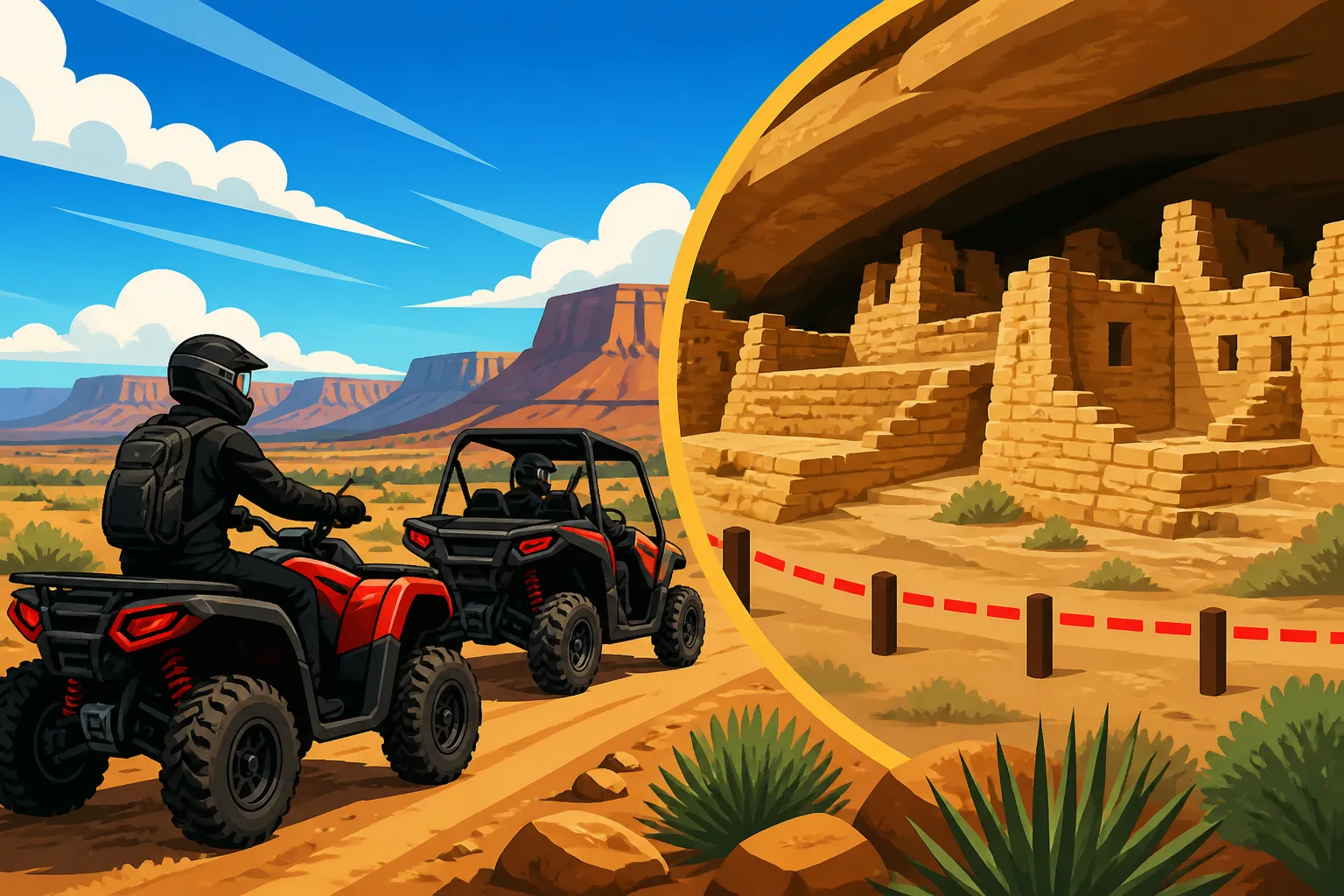
Chaco Culture National Historical Park is not just any piece of land; it's a designated UNESCO World Heritage site and a unit of the National Park System. This means it's under federal protection, primarily to preserve its extraordinary archaeological resources. Imagine the damage hundreds of off-road vehicles could do to ancient roadways, fragile artifacts just below the surface, or the delicate desert ecosystem that supports them. The park's mission is conservation, research, and education, not recreational vehicle access.
This designation means that the regulations are much stricter than, say, a typical Bureau of Land Management (BLM) riding area. The federal laws governing National Historical Parks are designed to protect the integrity of the cultural landscape, which includes not just the structures themselves, but the entire surrounding environment. Allowing OHVs would introduce noise pollution, soil erosion, and an unacceptable risk of disturbing archaeological sites, many of which are still unexcavated or undiscovered. While it's certainly disappointing when a beautiful, intriguing landscape is off-limits to your preferred mode of exploration, these rules are in place for very important, long-term preservation goals.
Think of it like this: you wouldn't take your side-by-side through the Louvre or the Grand Canyon's main visitor area. Chaco, in its own way, holds a similar level of irreplaceable value. The park's administration has a monumental task in balancing public access with the delicate act of preserving thousands of years of human history. Their primary concern is keeping these precious resources intact for future generations, and unfortunately, that means limiting certain types of recreational activities, including OHV use, within the park's boundaries.
The Boundaries: What "Near Chaco" Really Means
When we talk about riding "near Chaco," it's important to understand that the park itself is quite remote, located in northwestern New Mexico, a significant distance from any major paved roads. The roads leading to Chaco are notoriously rough, often unpaved, and can be quite challenging, especially after rain. These aren't just minor dirt roads; they can be long stretches of washboard, deep ruts, and slippery mud, which actually makes them an adventure in themselves, but they are still access roads to the park, not OHV trails.
The actual boundaries of Chaco Culture National Historical Park are clearly marked on official maps. "Near Chaco" therefore refers to the vast expanse of public and private lands that surround the park. These are primarily Bureau of Land Management (BLM) lands, State Trust Lands, and various parcels of private property, often interspersed with Native American tribal lands. Understanding these different land designations is absolutely critical because each comes with its own set of rules and regulations regarding OHV access.
Crucially, the area immediately bordering the park might also have buffer zones or special designations, so it's not a simple matter of driving right up to the boundary and turning onto a trail. You'll need to study detailed maps, such as those provided by the BLM, to identify legally accessible routes and areas. Getting to these surrounding areas often still involves significant travel on unpaved roads, sometimes requiring an hour or more of driving just to reach the beginning of a legal OHV route. It's a remote region where self-sufficiency and careful planning are paramount.
Navigating the Surrounding Public Lands for OHV Use
While Chaco Canyon itself is off-limits to OHVs, the broader region offers plenty of opportunities for exploration. The key is knowing where you can ride and under what conditions. Most of your opportunities will lie on Bureau of Land Management (BLM) land, but you'll also encounter State Trust Lands and private property, each with its own set of rules.
BLM Land Opportunities Around Chaco
The Bureau of Land Management manages huge tracts of public land in New Mexico, much of it surrounding areas like Chaco Culture National Historical Park. These lands are often open to various forms of recreation, including OHV use, but with specific regulations you absolutely must follow. On BLM land, the general rule is "ride on designated routes," meaning you need to stick to established roads and trails that are clearly marked as open to motorized vehicles. This isn't the place for creating your own paths or going wherever you please.
To find these designated routes, your best bet is to contact the local BLM field offices, such as the Farmington Field Office or the Rio Puerco Field Office, which would cover the Chaco region. They can provide detailed travel management plans and maps that clearly indicate which roads and trails are open, closed, or restricted. Don't rely solely on general GPS maps or apps, as these often don't differentiate between legal OHV routes and sensitive areas or private property. A good quality paper map from the BLM is often invaluable in these remote areas where cell service is spotty at best.
Riding on BLM land is a fantastic way to experience the vast, open landscapes of New Mexico, offering incredible vistas and a true sense of adventure. You might come across ancient ruins (observe from a distance and do not disturb!), wildlife, or unique geological formations. Remember that [New Mexico Rules for Riding BLM Land] apply, which means adhering to speed limits, avoiding resource damage, and generally practicing Leave No Trace principles. Always ensure your vehicle is properly equipped with a spark arrester and meets any sound requirements, as these are routinely checked. [Designated Routes and Travel Management in New Mexico] are strictly enforced to protect natural and cultural resources, so staying on marked trails isn't just a suggestion—it's the law.
State Trust Land and Private Property Considerations
Beyond BLM land, you'll encounter two other significant land categories: New Mexico State Trust Land and private property. Both have very different access rules than BLM land, and it's crucial not to confuse them, as trespassing can lead to serious legal consequences. State Trust Lands are managed by the New Mexico State Land Office (NMSLO) with the primary goal of generating revenue for public institutions, like schools. For recreational access, including OHV riding, you generally need to purchase a Recreational Access Permit from the NMSLO.
This permit is typically an annual pass that allows you to recreate on designated State Trust Lands. It's not a free-for-all, however; even with a permit, you must still adhere to any specific rules or closures on those lands, and often, OHV use is limited to existing roads. Think of it as a privilege, not an inherent right. You can find information about these permits and specific land access on the NMSLO website. Make sure you understand what type of permit you need and carry proof of it with you. You might wonder about the [New Mexico State Trust Land Permit Cost], but rest assured, it's a small price to pay for legal access to thousands of acres.
Private property is the simplest rule of all: if it's not public land or State Trust Land with a valid permit, assume it's private property and you need explicit, written permission from the landowner to ride there. This region has many ranching operations and privately owned parcels. Respecting "No Trespassing" signs is non-negotiable. Riding on private land without permission is illegal and can lead to fines, vehicle impoundment, or worse. Given the often remote and sparsely populated nature of the Chaco region, knowing exactly where you are and whose land you're on is not just good etiquette, it's a legal imperative. Familiarize yourself with [New Mexico Trespass Rules for Riders] to avoid any costly mistakes or confrontations.
Important Considerations for Riding in the Chaco Region
Riding in the remote, high-desert environment surrounding Chaco Canyon isn't like a day trip to a local riding park. It requires careful planning, respect for the land and its history, and a solid understanding of the unique challenges this area presents.
Respecting Tribal Lands and Cultural Sensitivity
The Chaco region is not only archaeologically significant but also deeply sacred to various Pueblo peoples. This entire area is their ancestral homeland, and many tribal lands are interspersed with public and private parcels. It is absolutely essential to understand that Native American tribal lands operate under their own sovereign laws and regulations. Unlike federal or state lands, access to tribal lands for recreational OHV use is almost universally prohibited unless you have explicit, advance permission from the tribal government.
Attempting to ride on tribal lands without permission is not only illegal but also profoundly disrespectful. These lands are often protected for cultural, spiritual, or resource management purposes. There are specific protocols for even entering certain areas, let alone riding an OHV. You might find roads that appear to be public, but if they cross tribal land, they are not. This is why mapping and knowing your exact location is paramount. Remember [Tribal Land and Why You Need Permission] is not just a polite request; it's a legal requirement that protects both the land and your freedom to ride elsewhere.
Often, permission for recreational riding on tribal lands is simply not granted to the general public. So, if your map indicates tribal land, plan your route to go around it entirely. Never assume that an unmarked road is open for your use. The adage [Why a Pueblo Road Is Not Open to You] truly encapsulates the strict and necessary rules governing access to these culturally sensitive areas. Your adventure should be about experiencing New Mexico's beauty and history responsibly, not infringing on the rights or sacred spaces of others.
Essential Preparations for Remote Desert Riding
The Chaco region is remote. Seriously remote. Cell service is virtually nonexistent in many areas, and help can be hours away. This isn't a place where you can rely on popping into a gas station or grabbing a snack. Preparing thoroughly for your ride is not just a good idea; it's a matter of safety. Navigation is key: bring multiple forms of navigation, including a GPS device loaded with detailed topo maps, and crucially, physical paper maps. Satellite communication devices, like a satellite messenger, are highly recommended for emergencies when you're out of cell range.
Water, water, and more water! The high desert climate means dehydration is a constant threat, even on cooler days. Plan for at least a gallon of water per person per day, plus extra for emergencies or unexpected delays. Fuel is another critical consideration; always fill up before you head out, and consider carrying extra fuel in approved containers, especially if you plan an extended ride. Breaking down far from a paved road is a real possibility, so a well-stocked tool kit, spare tire (for UTVs/side-by-sides), tire repair kit, air compressor, and recovery gear are absolute necessities. Brands like SuperATV offer robust aftermarket parts and recovery equipment that can be a lifesaver in these conditions.
Weather can be extreme and change rapidly. Summers bring intense heat, but also sudden, violent monsoon thunderstorms that can cause flash floods in arroyos and washes. Winters can be surprisingly cold, with snow at higher elevations. Always check the forecast, dress in layers, and be prepared for anything. Familiarize yourself with [Carrying Water in the Southern Desert] and how crucial it is for your safety. A breakdown in this environment isn't just an inconvenience; it can quickly become a survival situation. Understanding the realities of [Breaking Down Far From a Road] will inform your preparation and help ensure a safe return.
OHV Registration and Permits for New Mexico
Before you even think about hitting the trails around Chaco, your OHV needs to be properly registered or permitted in New Mexico. For New Mexico residents, this means registering your ATV or UTV with the Motor Vehicle Division (MVD). This process includes obtaining a title, paying a registration fee, and receiving a decal that you'll display on your machine. Don't skip this step; riding an unregistered OHV on public land is a ticket waiting to happen. Understanding the [New Mexico OHV Registration Cost] is a good first step, as it's a biennial renewal that's mandatory for all residents.
If you're visiting New Mexico from another state, you might need a non-resident permit. New Mexico has reciprocity agreements with many states, meaning if your OHV is legally registered in your home state, you might not need an additional New Mexico permit. However, some states don't have an OHV registration program, or their programs don't meet New Mexico's reciprocity requirements. In those cases, you'll need to purchase a [New Mexico's Nonresident OHV Permit]. It's your responsibility to confirm whether your home state's registration is honored or if you need a New Mexico permit. It's always best to call the New Mexico Department of Game and Fish (or check their website) before your trip to confirm your status.
Beyond registration, your OHV must comply with New Mexico's equipment requirements, especially for public land use. This includes a U.S. Forest Service-approved spark arrester on your exhaust system to prevent wildfires, which are a serious concern in the arid landscape. There are also sound limits (typically 96 decibels) that your machine must meet. Carrying proof of your registration or permit, along with any required safety certifications (especially for riders under 18), is mandatory. The [New Mexico Spark Arrester Requirement] is particularly vital; officials will check for this, and riding without one on public land can result in a significant fine and potential trail closure.
Land Ownership and OHV Access in the Chaco Region
When exploring the areas surrounding Chaco Culture National Historical Park, understanding the type of land you're on is paramount. Each category comes with specific rules and requirements for OHV use.
| Land Type | Primary Manager | OHV Access Rules | Key Requirement / Note |
|---|---|---|---|
| Chaco Culture National Historical Park | National Park Service | Strictly Prohibited | No OHV access whatsoever within park boundaries. |
| Bureau of Land Management (BLM) Land | U.S. Bureau of Land Management | Generally Permitted on Designated Routes | Stick to marked roads/trails. Check BLM field office maps. Spark arrester required. |
| New Mexico State Trust Land | NM State Land Office | Permitted with Recreational Access Permit | Purchase an annual permit. OHV use usually limited to existing roads. |
| Private Property | Individual Landowners | Prohibited Without Explicit Permission | Never trespass. Always obtain written permission in advance. |
| Native American Tribal Land | Tribal Governments (e.g., Navajo) | Prohibited Without Explicit Tribal Government Permission (Rarely Granted for OHVs) | Do not assume access. Permission is generally not granted for recreational OHV riding. |
Disclaimer
This article is for general informational purposes only and does not constitute professional advice. Laws, prices and regulations vary by location and change over time. Consult a qualified professional for guidance on your specific situation.