Can a 17-Year-Old Carry a Passenger?
It’s a common scenario out on the trails: you’ve got a fantastic off-highway vehicle (OHV), the New Mexico landscape is calling, and you want to share the adventure with a friend or family member. But when the driver is a teenager, especially one who hasn't reached adulthood yet, the rules can suddenly feel murky and confusing. This guide will meticulously break down New Mexico's regulations surrounding 17-year-old OHV operators and the specific rules they must follow regarding carrying passengers, ensuring you understand the law before you hit the dirt.
Understanding New Mexico's Core Rules for Young OHV Operators
Navigating the rules for young riders in New Mexico can feel like deciphering a riddle, especially when you're trying to figure out what's allowed and what's not for a 17-year-old behind the handlebars or wheel. It's not just about knowing how to operate the machine; it's about understanding the legal framework that ensures safety for everyone on the trail.
The General Age for Operating an OHV on Public Land
First and foremost, New Mexico law has clear guidelines on who can actually operate an OHV on public lands. For anyone under the age of 18, there are specific requirements in place to ensure they have the necessary knowledge and skills. A 17-year-old is certainly old enough to operate a full-sized ATV or UTV, but their youth places them under a different set of rules compared to an adult. They're not just mini-adults in the eyes of the law; there's an acknowledgment that while they may have driving experience in a car, an OHV presents different challenges and risks. This is why you'll often see distinct categories in the regulations for riders under certain ages. For instance, you can find more detail on the overall guidelines in [New Mexico Rules for Riders Under 18] and [New Mexico Minimum Age to Ride Off-Road].
It's important to differentiate between operating the machine solo and operating it with someone else on board. The basic premise is that a 17-year-old can indeed ride an OHV on public land, provided they meet other requirements like having a safety permit. However, adding a passenger instantly changes the dynamic and, critically, the legal landscape. The state wants to ensure that if a young rider is in control, they can handle the machine and any additional weight or distraction a passenger might bring, which can be a significant challenge on unpredictable off-road terrain.
The Importance of the New Mexico Safety Permit for Minors
For any rider under 18 in New Mexico, including a 17-year-old, a New Mexico OHV Safety Permit is a non-negotiable requirement for riding on public land. This isn't just a piece of paper; it signifies that the rider has completed an approved safety course and demonstrated a basic understanding of safe OHV operation, trail etiquette, and the state's specific laws. The state's intent here is clear: reduce accidents and promote responsible riding, especially among younger, less experienced operators.
Think about it from a safety perspective: an OHV, whether it’s a nimble ATV or a robust UTV equipped with accessories from a brand like SuperATV, can be incredibly fun, but it's also a powerful machine. Without proper training, even seemingly simple maneuvers can lead to dangerous situations. The safety permit aims to mitigate this risk. You can learn more about what it entails in [New Mexico OHV Safety Permit Requirements]. While a safety permit allows a 17-year-old to operate an OHV, it does not automatically grant them the right to carry a passenger. The permit confirms their individual competency, but the rules for carrying others are entirely separate and often more stringent for minors. This distinction is crucial and often overlooked by eager young riders and their parents.
New Mexico's Specific Rules on Carrying Passengers
This is where the rubber truly meets the road, or rather, where the knobby tire meets the trail, regarding your 17-year-old and their passenger plans. New Mexico has very particular stipulations designed to keep everyone safe, and these often surprise riders who might be used to less restrictive rules in other states or on private property.
Single-Rider ATVs Versus Multi-Passenger UTVs
One of the biggest distinctions in New Mexico law when it comes to passengers is the type of off-highway vehicle being operated. This isn't just a suggestion; it's a legal cornerstone.
-
ATVs (All-Terrain Vehicles): By their very design, most ATVs are built for a single operator. They have a straddle seat, handlebars, and are meant to be operated by one person shifting their weight for control. New Mexico law specifically states that ATVs are generally designed for one rider. Carrying a passenger on a single-rider ATV is inherently dangerous and, more importantly, illegal in many circumstances, particularly on public lands. There are some "two-up" ATVs designed from the factory to carry a passenger, usually with an extended seat and footpegs. However, even with these, the age restrictions for operators and passengers still apply, and the specific rules for minors carrying passengers become paramount. Trying to squeeze two people onto a single-rider ATV, even if they're small, significantly impairs the operator's ability to control the machine, especially when navigating challenging New Mexico terrain.
-
UTVs (Utility Terrain Vehicles) / Side-by-Sides: UTVs, or side-by-sides as they're commonly known, are fundamentally different. They are designed with multiple seats, seatbelts, and a steering wheel, much like a car. They are explicitly built to carry passengers. Many UTVs come in two-seat, four-seat, or even six-seat configurations. For these machines, carrying passengers is expected and legal, provided all other rules are followed, such as age, seatbelt use, and helmet laws for minors. Products from brands like SuperATV often focus on enhancing the utility and safety of UTVs, making them even more suitable for group rides, but these enhancements don't override the basic age and passenger rules set by the state. The fact that a UTV is built for multiple occupants means the primary legal hurdle isn't whether you can carry a passenger, but who can operate it with a passenger, especially when the operator is under 18.
Age Restrictions for Passengers on Any OHV
Beyond the type of vehicle, New Mexico also has rules about the passengers themselves. Regardless of who is driving, there are minimum age requirements for passengers on public lands. Generally, a passenger must be able to reach the handholds and footrests of the OHV. More critically, for ATVs, New Mexico law specifically prohibits anyone under 6 years of age from riding as a passenger on an ATV. This is because young children lack the physical development and cognitive ability to properly brace themselves and react to the dynamics of an OHV, putting them at extreme risk.
For UTVs, while there isn't a blanket minimum age for passengers (other than the general safety guideline about reaching controls), it's crucial that all passengers are properly secured in a seat designed for them with an appropriate restraint system. This means no lap riding, no standing, and no more passengers than there are designated seats. The rules are in place to prevent injuries from sudden stops, turns, or rollovers that can occur even on seemingly easy trails. Always remember, the safety of the youngest riders is paramount, and adults should always ensure they are in a safe and legal position before setting off.
The Strict Passenger Rule for Riders Under 18
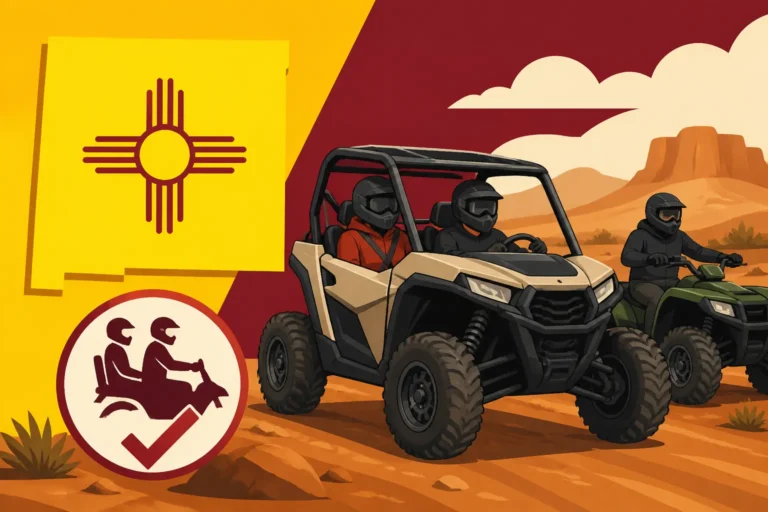
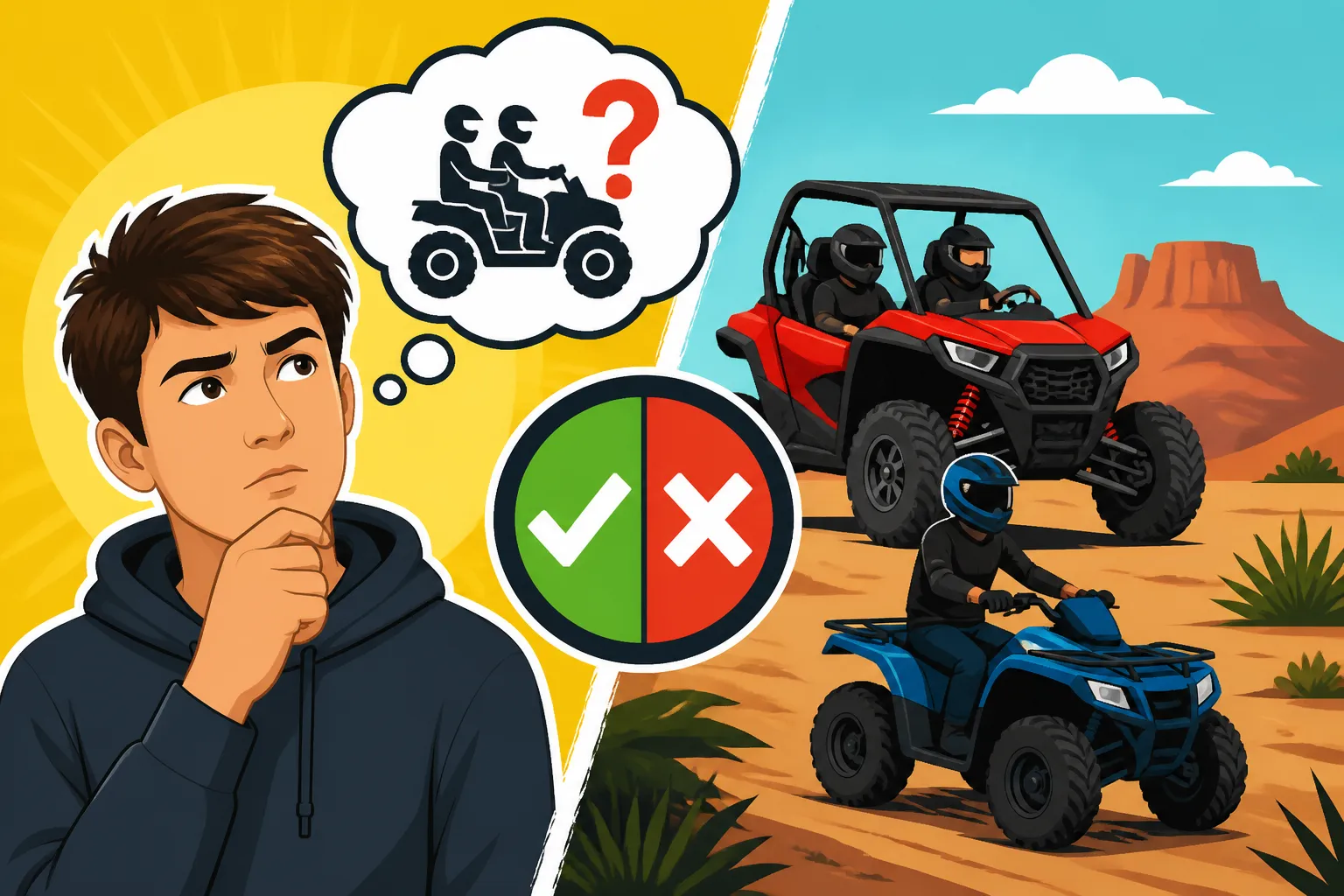
Now we arrive at the core of the matter: can a 17-year-old carry a passenger? The answer, straight from New Mexico law, is a resounding no. New Mexico Statutes prohibit any person under the age of 18 from carrying a passenger on an OHV, regardless of whether the OHV is designed for one rider or multiple riders. This is a critical distinction that many people miss. It doesn't matter if it's a two-up ATV, a four-seat UTV, or even a vehicle specifically designed for passengers; if the operator is under 18, they cannot have anyone else on board when riding on public lands.
This rule is in place for a very good reason: to minimize risk. Teenage operators, while often skilled, may not have the same level of judgment, experience, or ability to react under pressure as an adult. Adding a passenger introduces a distraction, changes the vehicle's weight distribution, and adds another life into the equation that the young operator is responsible for. The state's position is that a minor operator should focus solely on operating their machine safely, without the added responsibility of a passenger. This applies to all minors, whether they are 13, 15, or [New Mexico Rules for a Rider Aged 15], and certainly to 17-year-olds.
Let's be clear: a 17-year-old can absolutely operate a multi-passenger UTV on public land, but only if they are the sole occupant. The moment a passenger, even another adult, steps onto that machine while a 17-year-old is driving on public land, they are in violation of New Mexico law. This rule is often a point of frustration for families who want to ride together with their older teenagers, but it's a firm regulation aimed at enhancing safety for young operators and their potential passengers. You can find direct reference to this in [New Mexico Rules for Carrying a Passenger] and specifically in [Why Under-18 Riders Carry No Passenger].
Where These Rules Apply: Public Lands, Roads, and Private Property
Understanding where these rules apply is just as important as knowing the rules themselves. New Mexico has different classifications of land and roads, and the regulations regarding OHV operation, including passenger rules for minors, can shift depending on your location.
Riding on Public Land and Designated Trails
The rules we've discussed so far, particularly the prohibition of minors carrying passengers, are primarily enforced on New Mexico's public lands. This includes:
- Bureau of Land Management (BLM) lands: Vast tracts of desert, mountains, and forests managed by the BLM are popular OHV riding areas.
- National Forests: Areas like the Carson National Forest or Gila National Forest offer scenic trails, but riders must adhere to federal and state regulations. You can explore this further in [New Mexico Rules for Riding Federal Land].
- State Trust Lands: While often requiring a specific permit, State Trust Lands also fall under these regulations when public access is granted.
When you're out on these designated trails or open riding areas, a game warden, forest ranger, or sheriff's deputy will be looking to ensure compliance with all OHV laws. If a 17-year-old is operating an OHV with a passenger on any of these public lands, they (and potentially their parents) are subject to fines and penalties. It’s not just about getting caught; it’s about the inherent safety risk the law aims to prevent. Even if you've got a UTV beefed up with aftermarket roll cages or safety harnesses from SuperATV, the law regarding a minor carrying a passenger remains the same.
Navigating Paved Roads with a Passenger
New Mexico has specific laws regarding OHVs on paved roads, and these become even more complex when a minor is operating and wants to carry a passenger. Generally, OHVs are not allowed on state highways, but many counties and municipalities have "opted in" to allow OHV use on their paved roads, usually for limited access to trails or services.
If an OHV is street-legal (meaning it has been registered for paved road use with a specific decal, meets equipment requirements like mirrors, headlights, taillights, etc.) and is being operated on an approved county or city road, the rules about passengers for minors still apply. Even if the OHV meets all the requirements in [New Mexico Equipment Rules for Road Use] and the operator has a valid driver's license (which is required for paved road operation), a 17-year-old cannot carry a passenger. The age-based restriction for carrying passengers is fundamental to the state's OHV safety regulations for minors and extends beyond just dirt trails. Riding on a paved road presents different hazards than off-road, including interactions with other vehicles, and the state maintains that a minor operator should not be responsible for another person in such scenarios. [New Mexico Rules for Riding a County Road] provides more context on these situations.
Private Property: Different Rules, Same Responsibilities
Private property is a different ball game. Generally, New Mexico's OHV laws, including those regarding permits, registration, and passenger restrictions, do not apply to OHV operation exclusively on private property. This means if you own a large ranch or have permission to ride on private land, you can often set your own rules regarding who rides and who carries passengers, provided you're not violating any local ordinances or creating a public nuisance.
However, "different rules" does not mean "no responsibility." Even on private land, it is critically important for parents and guardians to ensure that young riders operate machines safely. Allowing a 17-year-old to carry a passenger on private land still carries significant inherent risks. The physical dynamics of an OHV don't change just because the property lines do. An overloaded ATV or a distracted young UTV operator is still prone to accidents. Many experienced riders choose to err on the side of caution, even on private land, adhering to the spirit of the state's safety laws. While the law might not fine you, a serious injury to a passenger due to a lapse in judgment by a young operator is a much higher price to pay.
Consequences of Not Following New Mexico's Passenger Rules
Ignoring New Mexico's OHV laws, especially those designed to protect young riders and their passengers, can lead to serious consequences that go beyond just a slap on the wrist. It’s important for both the young rider and their parents to understand the potential repercussions.
Potential Fines and Penalties
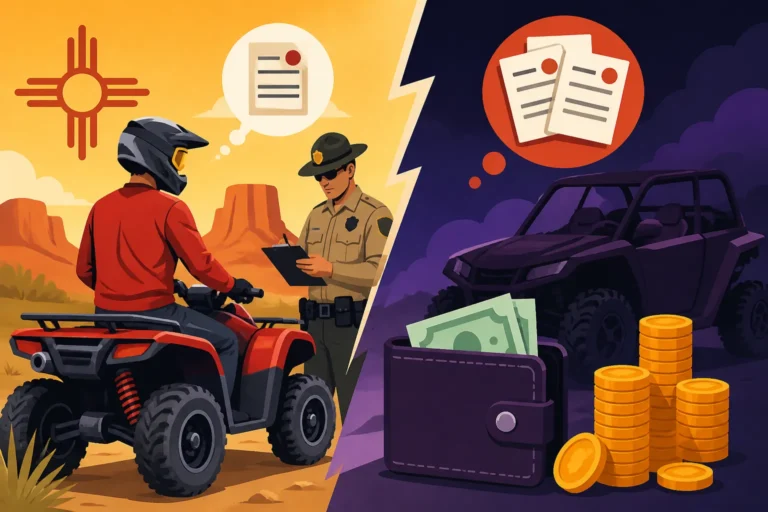
If a 17-year-old is caught operating an OHV with a passenger on public land in New Mexico, they are violating the Off-Highway Motor Vehicle Act. This isn't just a minor infraction; it can result in significant financial penalties. While specific amounts can vary and may be subject to change, OHV violations in New Mexico often start with fines ranging from moderate to substantial. These fines are designed to deter unsafe behavior and ensure compliance. Furthermore, repeated offenses can lead to escalating fines and other penalties.
It’s not just the fine itself; a violation can also involve court appearances and other legal hassles that are inconvenient and stressful for everyone involved. The cost of a ticket can quickly add up, easily surpassing the cost of a good set of tires or even some performance parts you might consider from a brand like SuperATV. The state takes these safety laws seriously, particularly when it involves minors and the increased risk associated with carrying passengers. This is why it’s always better to know and follow the rules, even if they seem overly restrictive at times. You can find general information on penalties in [New Mexico Fines for an OHV Violation].
Parental Responsibility in OHV Violations
This is perhaps the most critical consequence for families. In New Mexico, parents or legal guardians are often held directly responsible for violations committed by their minor children while operating OHVs. This means if your 17-year-old is cited for carrying a passenger when they shouldn't be, you, as the parent, can also be held liable and face the same fines and penalties. The law is structured this way to encourage adult supervision and ensure that parents are actively educating their children about OHV safety and legal operation.
Imagine a scenario where your 17-year-old, eager to show a friend the ropes, takes them out on a UTV for a quick spin on a BLM road near your house. A ranger spots them, and suddenly, you're not just dealing with an upset teenager, but also a fine in your name. This parental liability extends to ensuring the minor has the correct safety permit, that the machine is registered, and that all equipment requirements are met. It’s a legal acknowledgment that young riders are still under the guidance and supervision of adults, and those adults bear the ultimate responsibility for their children's actions on public lands. Understanding [New Mexico Penalties for a Parent] is crucial for any family with young OHV riders. It underscores the importance of not just knowing the rules yourself, but actively enforcing them with your children.
| Operator Age (Public Land) | Has Safety Permit | Carries Passenger | Permitted to Operate OHV | New Mexico Passenger Rule |
|---|---|---|---|---|
| Under 10 | No | No | No (with exceptions) | No passenger permitted |
| 10-14 | Yes | No | Yes (limited cc) | No passenger permitted |
| 15-17 | Yes | No | Yes (any size) | No passenger permitted |
| 18+ | Not required | Yes | Yes (any size) | Passenger permitted |
Note: This table summarizes general rules for public land. Specific rules for ATV vs. UTV and minimum passenger age still apply.
Disclaimer
This article is for general informational purposes only and does not constitute professional advice. Laws, prices and regulations vary by location and change over time. Consult a qualified professional for guidance on your specific situation.