A Taillight Visible at 200 Feet
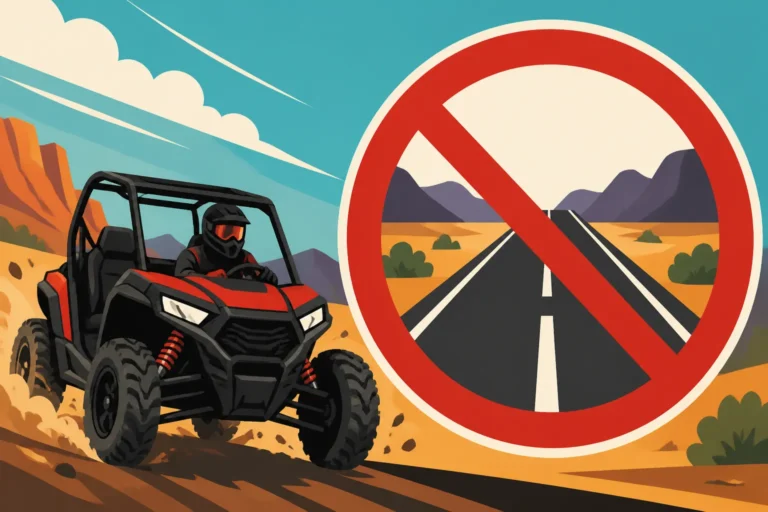
Navigating the world of off-highway vehicles (OHVs) in New Mexico can feel like deciphering a secret code, especially when you start dreaming about taking your machine from the dirt trails to a paved road. Many riders get excited about the possibility of legally connecting trails or just cruising into town for supplies, only to be hit with a wave of confusion about what "street legal" truly means. One of those critical, often overlooked details is how visible your machine needs to be, specifically, that your taillight must be clearly seen from 200 feet away. This guide will shine a light on this and other essential requirements to help you confidently get your OHV road-ready in the Land of Enchantment.
Understanding New Mexico's Paved Road Requirements for OHVs
It's a common dream: you're out exploring the vast, beautiful landscapes of New Mexico on your ATV or UTV, and you come across a short stretch of paved road that would connect you to another incredible trail, or maybe even to a little general store for a cold drink. The thought of just hopping onto the asphalt seems so convenient, but suddenly you remember vague rules and wonder, "Is my machine even set up for this?" That quick transition from dirt to asphalt means a whole new set of responsibilities and equipment requirements kick in, designed not to make your life harder, but to keep everyone safe.
Why Specific Equipment Matters on Pavement
When you're off-road, the primary concerns are often traction, suspension, and clearance. You might be kicking up dust, splashing through arroyos, and rarely encountering other vehicles at high speeds. But the moment you roll onto a paved public road, you enter an entirely different environment. You're now sharing space with cars, trucks, and motorcycles, often traveling much faster, and they expect certain signals and visibility from every other vehicle on the road. Your ATV or UTV, which is relatively small compared to a full-sized pickup, needs every advantage to be seen and understood. This is why New Mexico has specific regulations for lighting, signaling, and other safety gear. Without these, your machine simply isn't equipped to safely operate in mixed traffic, and you're putting yourself and others at risk. Think of it as gearing up for a different kind of adventure—one that demands a bit more forethought for the safety of the collective. This whole effort is tied into acquiring your [New Mexico's Paved Road Plate], which signifies your machine has met the necessary criteria for on-road use.
The Critical 200-Foot Taillight Rule
Let's get right to the heart of the matter for our discussion today: your taillight. New Mexico law is crystal clear: any OHV operating on a paved public road must have a taillight that emits a red light plainly visible from a distance of 200 feet to the rear. This isn't just a suggestion; it's a non-negotiable safety standard. But what does "plainly visible" really mean when you're out there?
Imagine you're driving your truck down a paved county road just outside of Clovis, the sun starting to dip below the horizon, creating those long, tricky shadows. Ahead of you, there's an OHV with a taillight. If you can only discern a dim glow at 100 feet, that's not good enough. "Plainly visible" means that from 200 feet, you can clearly identify it as a taillight, indicating a vehicle ahead, allowing you ample time to react, slow down, or adjust your driving. This becomes even more critical in low-light conditions, during dust storms that occasionally sweep across the plains, or when unexpected weather rolls in. An OEM taillight might meet this standard, but sometimes, especially with older machines or those that have seen a lot of trail abuse, the plastic lenses can get cloudy, or the bulbs can dim. Many riders opt for aftermarket solutions from reputable brands like SuperATV to ensure they not only meet but exceed this visibility requirement, often installing brighter LED units that cut through gloom more effectively. It’s about being proactive and making sure you’re not just legal, but truly safe and seen.
Beyond the Taillight: Other Essential Lighting and Visibility Gear
While the taillight is a crucial piece of the puzzle, it's far from the only light your OHV needs to be street-legal in New Mexico. Think of it as a symphony of illumination; each light plays a vital role in ensuring your machine is seen and understood by other drivers, minimizing confusion and maximizing safety. These additional lighting requirements create a comprehensive envelope of visibility around your OHV, alerting others to your presence and intentions from all angles.
Headlights: The 150-Foot Rule and What It Entails
Just as important as being seen from behind is being able to see where you're going, especially when twilight descends or if you're navigating shaded areas on an otherwise bright day. New Mexico law requires your OHV to have a headlight that projects a white light visible from a distance of 150 feet to the front. This is directly addressed in [The 150-Foot Headlight Rule]. This isn't merely about lighting up the road for your own benefit, though that's certainly a major plus. It's also about making your presence known to oncoming traffic.
Consider this: you're coming around a blind curve on a quiet paved road near Ruidoso, and an ATV is approaching. If their headlight only becomes visible at 50 feet, that leaves very little reaction time for either party, especially if one of you is driving a larger vehicle. A strong, clear headlight ensures that drivers see you well in advance, giving them time to adjust their speed or position. Many stock headlights on older ATVs might be sufficient, but modern LED upgrades offer significantly better performance, both in terms of light output for your vision and sheer visibility for others. When looking for upgrades, a brand like SuperATV offers robust headlight options designed to withstand tough conditions while providing excellent illumination, ensuring you meet and often exceed this 150-foot visibility rule.
Turn Signals, Brake Lights, and Reflectors
Beyond the basic headlight and taillight, modern road-going vehicles have systems to communicate intentions, and your street-legal OHV needs to do the same.
- Turn Signals: While some older laws might have been a bit ambiguous, for an OHV to truly integrate safely into paved road traffic, clear indicators of turning are essential. New Mexico's regulations for the paved road opt-in implicitly require turn signals. Imagine trying to make a left turn onto NM-38 in Red River without signaling—it would be incredibly dangerous and confusing for following and oncoming traffic. Dedicated, amber turn signals at both the front and rear, clearly visible, are crucial for safe maneuvers. These communicate your intentions to other drivers, preventing sudden braking or unexpected lane changes that can lead to collisions.
- Brake Lights: This might seem obvious, but your taillight must also function as a brake light, illuminating brighter when you apply the brakes. This is a universally understood signal that you are slowing down or stopping. Without a functional, bright brake light, a driver behind you has no warning of your deceleration, creating a significant hazard. Ensure your brake light is well-maintained and clearly distinguishable from your regular taillight.
- Reflectors: Often overlooked, but incredibly important, especially if your lights fail or you're parked on the side of a road after dark. Reflectors, typically amber on the sides/front and red on the rear, provide passive visibility by bouncing back light from other vehicles' headlights. While they don't replace active lighting, they offer an extra layer of safety, making your machine more discernible in low-light conditions, even if its electrical system experiences a hiccup.
The Importance of Mirrors for Road Safety
One of the most jarring transitions from off-road to on-road riding is the sudden need to be aware of what's happening around and behind you. On the trail, you might glance over your shoulder or rely on your peripheral vision, but on a paved road, that simply won't cut it. This is where mirrors become indispensable, a requirement explicitly mentioned in [Mirrors and Brakes for New Mexico Road Use].
New Mexico law requires at least one rearview mirror that allows the operator to see at least 200 feet to the rear. While one mirror technically meets the letter of the law, most experienced riders and safety advocates would strongly recommend two side mirrors, one on each side, in addition to or instead of a small rearview mirror. Why? Because they significantly expand your field of vision, helping you monitor traffic in your blind spots, especially when changing lanes or making turns. Imagine you're on a multi-lane street in Alamogordo, needing to switch lanes. Without proper mirrors, you're essentially guessing what's beside you, a recipe for disaster. What makes a mirror "adequate"? It needs to be securely mounted, provide a clear, undistorted view, and be of a size that allows for practical use without constantly craning your neck. Again, aftermarket options like those from SuperATV often provide more robust, adjustable, and wider-view mirrors specifically designed for OHV road use, which can be a huge upgrade from flimsy stock options.
Comprehensive Safety and Equipment for Street-Legal Riding
Achieving street-legal status for your OHV in New Mexico is about more than just lights and mirrors. It's about ensuring your machine can safely interact with other vehicles and comply with broader environmental and operational standards. It's a holistic approach to safety that protects not only you but also the public and the very environment you love to explore. Skipping any of these components could lead to fines, inconvenience, or worse, a dangerous incident on the road.
Sound Limits and Spark Arresters
When you're tearing up the dunes at Mescalero Sands, the roar of your engine might be part of the thrill. But on a quiet residential street, excessive noise can quickly turn heads for the wrong reasons, leading to complaints and, eventually, citations. This is why New Mexico has established a maximum sound level for OHVs operating on public roads: [New Mexico's 96 Decibel Ceiling].
This measurement is usually taken from a specific distance, and aftermarket exhausts that significantly boost performance often exceed this limit. While a louder exhaust might sound aggressive, it can contribute to noise pollution and annoy residents, potentially leading to areas being closed off to OHV use. Before taking your machine onto paved roads, it's wise to check your exhaust system for compliance.
Similarly, a spark arrester is a critical component, even if you're just using your OHV to connect trails via pavement. Spark arresters are designed to prevent hot carbon particles from exiting your exhaust and igniting dry vegetation. While the immediate risk on pavement is lower than in a dry forest, you'll still be riding near grassy shoulders, through rural areas, or even just passing through areas with dry landscaping. Furthermore, if your street-legal journey takes you from pavement back to public lands, a spark arrester will be required there too. It's a fundamental safety device for preventing wildfires, a very real concern in New Mexico's often arid climate.
Brakes and Tires: Beyond Off-Road Performance
Your off-road brakes and tires are built for gripping dirt, mud, and rocks, providing stopping power in loose conditions. However, the demands of paved road use are quite different, and your OHV needs to be up to the task.
- Brakes: On paved roads, you need consistent, reliable braking power, often at higher speeds than you'd typically reach off-road. The smooth, hard surface of asphalt demands a different kind of brake performance compared to loose dirt. New Mexico law requires your OHV to have adequate brakes capable of controlling the movement of and stopping the vehicle. This means ensuring your brake pads are in good condition, your brake fluid is at the correct level, and your hydraulic lines are free from leaks. A sudden emergency stop on pavement is a much different beast than on a soft trail, and your brakes must be able to handle it without fade or failure.
- Tires: Those aggressive, deep-lugged knobby tires that give you phenomenal traction in the mud or sand? They'll wear out incredibly fast on asphalt, reduce your handling capabilities, and generate a lot of road noise. While not always explicitly dictated by law as a "road-legal" tire, riding knobby tires on pavement compromises safety and vehicle control. They have less contact patch, reducing grip, and can feel squirmy, especially in turns or during braking. If you plan on significant paved road use, consider investing in a set of tires designed for mixed-surface use or even dedicated DOT-approved street tires. While this might seem like an extra expense, it's an investment in safety, comfort, and the longevity of your tires.
Carrying Proof of Insurance and Registration
No matter how pristine your OHV, how bright your lights, or how compliant your exhaust, if you don't have your paperwork in order, you're not legally ready for the road. This is one of the easiest ways to run afoul of the law, and it's also entirely preventable.
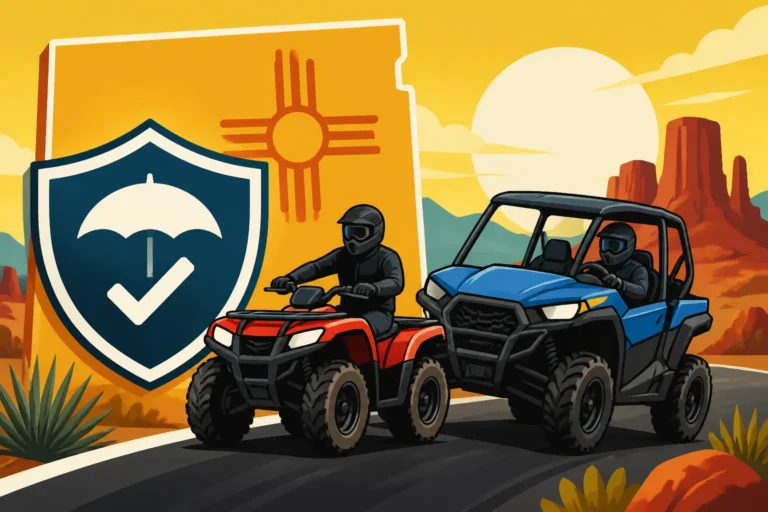
First and foremost, if you're taking your OHV onto paved public roads, New Mexico requires it to be insured. Specifically, you need to meet the minimum liability coverage stipulated by the state's financial responsibility laws, similar to a regular car. This is outlined in [New Mexico ATV Insurance Requirement]. Imagine a minor fender-bender with a car on a paved street; without insurance, you'd be on the hook for all damages, which can quickly add up. Always carry proof of this insurance, whether it's a physical card or digital proof on your phone.
Secondly, your OHV must be properly registered and display the correct decals for paved road use. This means you need your [New Mexico OHV Registration Paperwork] and, crucially, the [New Mexico's Green On and Off-Highway Decal]. The yellow decal is for off-highway only, but the green decal signifies that your machine is equipped and registered for both on- and off-highway use. A New Mexico State Police officer or county deputy will check for both of these things during a roadside stop. Make sure your registration is current, and your green decal is properly affixed to your machine in the designated spot. Forgetting these simple documents can turn a pleasant ride into a frustrating and expensive encounter with law enforcement.
Navigating the Paved Road Opt-In: Practical Considerations
The "paved road opt-in" program in New Mexico offers fantastic opportunities for OHV riders, allowing for greater access and connectivity. However, it's not a blanket permission to ride anywhere you please. There are nuances, limitations, and specific steps you need to take to ensure your rides are always legal, safe, and enjoyable. Understanding these practical considerations is key to fully leveraging the privilege of riding your OHV on paved surfaces.
Understanding Where You Can and Cannot Ride
This is perhaps one of the most confusing aspects for riders: just because your OHV is street-legal doesn't mean every paved road is open to you. New Mexico law carefully delineates where OHVs can and cannot operate, and local ordinances play a huge role.
Generally, OHVs can be operated on paved county roads and city streets if the specific county or municipality has adopted an ordinance or resolution allowing such use. This means a road that's open in Sierra County might be closed in another. State highways (marked with "NM" or "US" designations) are generally off-limits, with very few exceptions for crossing. Interstate highways are completely forbidden, even for crossing. This detailed guidance is touched upon in [New Mexico Rules for Riding a City Street].
The critical takeaway here is that you cannot assume. Before you plan a route that involves paved roads, you absolutely must check with the local county sheriff's office and any municipalities you plan to enter. Many popular riding destinations like Red River have very specific ordinances regarding OHV use within town limits, which can be different from the surrounding county roads. Ignorance of these local rules can quickly lead to [New Mexico Fines for Illegal Road Riding]. It's a bit of homework, but it's essential for a stress-free ride. When you do cross, remember [New Mexico Rules for Crossing a Highway] and do so as perpendicularly as possible.
Pre-Ride Checks for Paved Road Compliance
Think of this as your pilot's checklist before takeoff. Every time you plan to take your OHV onto a paved road, a quick, thorough inspection can save you from a world of trouble.
- Lights Check: Walk around your machine. Are your headlights bright and working? Your taillight? Does your brake light illuminate when you squeeze the lever or press the pedal? Do your turn signals flash correctly, front and rear? Is your horn working? This is particularly important for meeting that [New Mexico Equipment Rules for Road Use].
- Mirror Check: Are your mirrors securely mounted? Are they clean and adjusted so you can clearly see 200 feet behind you?
- Brakes Check: Squeeze your brake levers and push your brake pedal. Do they feel firm? Do they stop your machine effectively? Is there any noticeable fade or unusual sounds?
- Tire Check: Inspect your tires for damage, proper inflation, and excessive wear. While knobby tires might be legal, consider their performance on pavement.
- Documentation Check: Do you have your current New Mexico OHV registration (with the green decal proudly displayed)? Do you have proof of insurance? Do you have your driver's license? For those with the [Why the Green Decal Lets You Onto Pavement], ensure it is correctly placed.
- Fuel and Fluids: Are your fluid levels (oil, coolant, brake fluid) appropriate? Do you have enough fuel for your intended route, especially if it involves longer paved stretches where fuel consumption might differ from off-road?
Making this a routine ensures that when you encounter a law enforcement officer, you can confidently present your machine and documentation, showing that you're a responsible and compliant rider.
Choosing the Right Aftermarket Upgrades
For many OHV owners, making their machine street-legal means a trip to the aftermarket parts catalog. While some stock machines might meet basic requirements, upgrading can significantly enhance safety, visibility, and compliance.
- Lighting Kits: Many aftermarket companies, like SuperATV, offer comprehensive street-legal kits that include DOT-approved headlights, bright LED taillights that easily meet the 200-foot visibility rule, integrated turn signals, and even license plate lights. These kits are often designed for specific OHV models, making installation straightforward.
- Mirrors: As discussed, upgrading from flimsy or small stock mirrors to larger, more robust, and adjustable options can dramatically improve your rearward visibility and confidence on paved roads.
- Horns: While many OHVs come with a horn, ensuring it's loud enough to be heard by other vehicles on the road is crucial. Aftermarket horns are often more powerful and reliable.
- Windshields and Wipers: While not always strictly required for street-legal status, a windshield can significantly improve rider comfort and safety on paved roads, especially at higher speeds or in inclement weather. Adding a wiper kit can be invaluable for maintaining visibility in rain or dust.
Investing in quality aftermarket upgrades not only helps you meet New Mexico's requirements but often enhances your overall riding experience. These products are designed with durability and performance in mind, ensuring they can stand up to both the rigors of the trail and the demands of the pavement. Just remember to always choose reputable brands and ensure any installed equipment is compliant with all applicable laws.
| Feature / Item | Primary Off-Road Purpose | Primary Paved Road Purpose | New Mexico Requirement (Paved Road) |
|---|---|---|---|
| Taillight | Basic rear visibility | Clear visibility from 200 ft (red light) | Mandatory (200 ft visibility) |
| Headlight | Illuminating trail ahead | Illuminating road and being seen from 150 ft (white) | Mandatory (150 ft visibility) |
| Brake Light | Signaling stops to following riders | Signaling stops to all traffic | Mandatory |
| Turn Signals | Hand signals or informal communication | Clearly indicating turns/lane changes | Mandatory (implied by safe road use) |
| Rearview Mirror(s) | Limited, brief glances over shoulder | Constant awareness of rear traffic (200 ft view) | Mandatory (at least one, 200 ft view) |
| Horn | Warning other riders or wildlife | Warning other drivers or pedestrians | Mandatory |
| Spark Arrester | Fire prevention on public lands | Fire prevention, overall safety | Mandatory |
| Muffler/Exhaust | Performance, sound (can be loud) | Sound control (96 dB max) | Mandatory (96 dB max) |
| Brakes | Stopping on varied, loose terrain | Consistent, reliable stopping on hard surfaces | Mandatory (adequate) |
| Tires | Maximum traction on dirt/mud | Safe handling, longevity on asphalt | No specific "street tire" law, but recommended for safety |
| Registration Decal | Yellow (off-road only) | Green (on/off-road) | Mandatory (Green) |
| Insurance | Often optional/highly recommended | Financial responsibility for accidents | Mandatory |
| Driver's License | Not always required for off-road | Required for paved road use | Mandatory |
Disclaimer
This article is for general informational purposes only and does not constitute professional advice. Laws, prices and regulations vary by location and change over time. Consult a qualified professional for guidance on your specific situation.