Ordering a Replacement New Mexico Decal
There’s nothing quite as frustrating as heading out for a fantastic ride on your ATV or UTV, only to realize that your New Mexico registration decal has gone missing or is so faded it’s practically invisible. It’s not just an aesthetic issue; it’s a legal one that can put a serious damper on your outdoor adventures. This guide will walk you through everything you need to know about why that little sticker is so important and how to easily get a replacement, ensuring you stay compliant and ready to hit the trails.
Why Your Decal is So Important in New Mexico
That small sticker on your off-highway vehicle (OHV) might seem like a minor detail, but in New Mexico, it's a critical component of legal operation. It's more than just proof you've paid a fee; it's a visible declaration that your machine is properly registered with the state, allowing you access to designated riding areas and, in some cases, even certain public roads.
The Law and Your Riding Privileges
Operating an OHV in New Mexico without a current and visible registration decal is a gamble you don't want to take. The decal is your state-issued license plate, so to speak, for your off-road machine. It tells law enforcement and land managers that your ATV, UTV, or dirt bike meets the state's requirements for use on public lands and designated trails. If you're pulled over or encountered by a ranger without this crucial proof, you could face penalties. These fines aren't just a slap on the wrist; they can significantly cut into your riding budget and ruin a perfectly good weekend. Think about it: a day of fun out on the trails versus a costly citation because a sticker fell off. It’s a no-brainer to ensure it’s always there and readable. You can learn more about the consequences of not having your machine properly registered by reading up on [New Mexico Fines for an Unregistered OHV].
Furthermore, the decal is a practical tool for land management and safety. It helps track OHV use, which in turn helps fund trail maintenance and safety programs. When your decal is present, legible, and correctly displayed, it signifies that you're a responsible rider contributing to the overall OHV community in New Mexico. Without it, you might find yourself explaining to an officer why your machine looks unregistered, even if you’ve already completed all the paperwork.
Different Decals for Different Rides
New Mexico actually has two main types of OHV decals, and understanding the difference is key, especially if you plan on mixing up your riding environments. The distinction between these decals dictates where you can legally operate your machine. Knowing which one you should have, and ensuring it's the one you replace, is vital for compliance.
First, there's the standard yellow decal. This is the most common one you'll see, and it indicates that your OHV is registered for off-highway use only. This means you're good to go on most designated trails, BLM land, and National Forests that permit OHVs. It's truly for those who want to stick to the dirt and adventure routes without venturing onto paved public roads. For a deeper dive into what this decal means, check out [New Mexico's Yellow Off-Highway Decal].
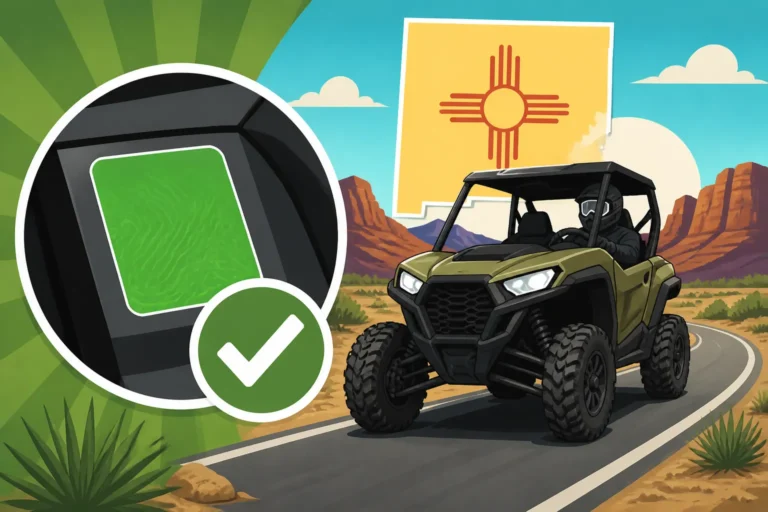
Then, there's the green decal. This one is for machines that are registered for both off-highway and paved road use, under very specific conditions. This typically requires additional equipment on your OHV and adherence to specific local ordinances. If you're thinking of riding into a small town for gas or crossing a paved road to get to another trail system, this is the decal you need, alongside meeting all other requirements. It signifies a broader range of legal operation, but with more stringent rules attached. You can get more details about this versatile decal by reading [New Mexico's Green On and Off-Highway Decal]. Regardless of the color, proper placement is non-negotiable, and understanding [New Mexico OHV Decal Placement Rules] is crucial.
When You Need to Replace Your New Mexico Decal
Life on the trails can be tough on a little sticker. From scorching desert sun to muddy splashes and abrasive branches, your decal faces a lot of wear and tear. Knowing when it’s time to order a replacement isn't just about aesthetics; it's about maintaining legal compliance and avoiding unnecessary headaches.
Common Scenarios for Decal Replacement
One of the most common reasons riders need a new decal is simply because the old one vanishes. Maybe it peeled off after a particularly muddy wash, was scraped off by a low-hanging branch, or just succumbed to the elements over time. It can be incredibly frustrating to discover your decal has disappeared, leaving you questioning your next ride. High winds during transport on an open trailer can also be a culprit, as the adhesive slowly weakens and the sticker is eventually torn away.
Another frequent issue is damage or fading. New Mexico's intense sun can be brutal, bleaching colors and making the registration numbers unreadable. A decal that’s so faded or torn that the information can't be clearly seen by a law enforcement officer is, for all intents and purposes, the same as having no decal at all. The entire point is clear identification, and if that's compromised, you'll need a replacement. It’s a common occurrence for riders to wonder [What to Do About an Unreadable Decal Number] after a season or two under the New Mexico sun. The desert environment, while beautiful for riding, isn’t always kind to adhesive and ink, leading many to report [When Desert Sun Peels a Decal Off].
Then there are less common, but equally valid, reasons like theft or a damaged quarter panel. If your OHV was vandalized or if the specific part where the decal was affixed needs replacement, then a new decal becomes necessary. Even during a private sale, if the previous owner removed the decal or if it was damaged during the transfer, the new owner will want to start fresh with a clean, clearly visible decal, which is often tied into the process of [Renewing on a Change of Ownership in New Mexico]. Ensuring your machine is always properly marked is part of responsible OHV ownership.
Avoiding Future Decal Issues
While you can't prevent every accident, there are definitely steps you can take to make your replacement decal last longer and prevent needing another one too soon. The initial application is crucial. Before sticking on your new decal, make sure the surface of your ATV or UTV is absolutely clean, dry, and free of any grease or wax. A thorough cleaning with rubbing alcohol can help the adhesive bond properly. Applying it to a warm surface, not a freezing cold one, can also improve adhesion significantly.
Once applied, try to minimize exposure to harsh conditions where possible. For instance, if you're frequently trailering your OHV at high speeds, consider a protective cover for the decal area or even a full OHV cover to shield it from wind and road debris. While riding, be mindful of tight trails with overhanging branches that could snag and tear the decal. A small scratch might not seem like a big deal, but it can create an edge for water or dirt to get under, eventually leading to peeling.
Regularly inspecting your decal is a simple habit that can save you trouble. Before each ride, give it a quick glance. Is it still firmly attached? Is it legible? Catching a loose edge early allows you to press it back down, or at least be aware that a replacement might be needed soon, rather than being caught off guard by a missing decal mid-ride. Understanding the correct [Where New Mexico Requires the Decal Placed] for your specific machine type and ensuring it's in a spot less prone to direct impact or heavy abrasion can also extend its lifespan.
The Step-by-Step Process for Ordering a Replacement Decal
So, your decal is gone or unreadable, and you're ready to get a new one. Don't worry, the process in New Mexico isn't overly complicated, but it does require attention to detail and the right paperwork. Knowing what to expect will make the experience much smoother, getting you back on the trails with confidence.
Gathering Your Documentation
The first and most critical step is to gather all the necessary documentation. This usually includes your proof of ownership, which could be your OHV's title or a previous registration certificate. You'll also need a valid form of identification, like your driver's license. The state needs to confirm that you are indeed the rightful owner of the machine before issuing a new decal. Having these documents organized before you start the process will save you a lot of time and frustration.
It's also essential to know your OHV's unique identification number (VIN). This number is printed on the decal itself and on your registration paperwork. It's how the state links your machine to your ownership records. If you've recently purchased your OHV and are in the process of transferring ownership, having a properly executed bill of sale is crucial. Tools like those found on LawDepot can help ensure you have a legally sound document that clearly outlines the sale details, which will be critical for any MVD transaction, including ordering a replacement decal or even [New Mexico's First OHV Registration] if you’re a new owner. Make sure all your information matches across your documents to avoid any delays.
Where to Submit Your Request
Once your paperwork is in order, you have a few options for how to submit your request for a replacement decal in New Mexico. The most traditional method is visiting a local New Mexico Motor Vehicle Division (MVD) office in person. This allows you to speak directly with a clerk, clarify any questions, and often receive your replacement decal on the spot, provided all your documentation is correct and they have decals in stock. It’s a reliable option, especially if you prefer face-to-face interaction or need immediate assistance. You can find more information about this process in [New Mexico OHV Registration at MVD].
While some MVD services are moving online, the availability for a direct decal replacement might vary. It's always a good idea to check the official New Mexico MVD website for the most current options. If an online portal is available for decal replacement, you'll typically need to create an account, log in, and follow the prompts to submit your request electronically. This can be a convenient option if you're far from an MVD office or prefer handling things from home. For other registration needs, [New Mexico OHV Registration Online] might be an option.
In some cases, and often for specific forms, you might be able to submit your request via mail. This usually involves downloading the relevant form from the MVD website, filling it out completely, attaching copies of your required documentation, and mailing it along with the appropriate fee. While convenient, this method typically has the longest processing time, so it's best reserved if you're not in a hurry to get back on the trails. Remember, accuracy on these forms is paramount, and resources like LawDepot can also provide templates for various legal documents that might be needed in conjunction with MVD paperwork.
Understanding the Replacement Fee and Timeline
Replacing your New Mexico OHV decal isn't typically an expensive endeavor, but there is a fee involved. The cost is usually a nominal amount designed to cover the administrative processing and the production of the new decal itself. It's important to remember that this fee is separate from your biennial registration renewal. Even if your registration is current, you'll still pay this smaller fee specifically for the replacement decal. You should always check the official MVD website or call your local office for the most current figures, as fees can change. This specific cost is detailed further in [New Mexico OHV Decal Replacement Cost].
As for the timeline, it largely depends on how you submit your request. If you visit an MVD office in person and they have decals on hand, you might walk out with your replacement the same day. This is often the quickest way to get back on track. However, if you submit your request online or via mail, the processing time will be longer. Mail-in requests can take several weeks to process and then additional time for shipping. Online requests might be slightly faster than mail, but you’ll still need to account for mailing time for the decal to reach you.
While you're waiting for your new decal to arrive, it's generally not advised to ride your OHV on public lands or designated trails without a visible, valid decal. If you must ride, carry all your registration paperwork, including proof that you've applied for a replacement, but understand that this might not always satisfy a ranger or officer. It's truly best to wait until that shiny new decal is properly affixed to your machine.
Important Considerations After Receiving Your New Decal
Getting your replacement decal is a relief, but the job isn't quite done. Proper placement and staying on top of your overall registration status are crucial to ensuring you remain compliant and avoid any future issues on the trails or roads.
Correct Placement for Compliance
Once your new decal arrives, resist the urge to just slap it anywhere convenient. New Mexico has specific rules about where your OHV decal must be placed, and these rules often vary depending on the type of machine you operate. Incorrect placement can lead to the same issues as not having a decal at all, as law enforcement needs to easily spot and read it.
For ATVs (All-Terrain Vehicles), the decal typically needs to be placed on the left-rear fender, clearly visible from the rear of the machine. This spot ensures it's not easily obscured by the rider or gear. Understanding [Where the Decal Goes on an ATV's Left Rear] is key for compliance. For ROVs (Recreational Off-Highway Vehicles), often referred to as UTVs or side-by-sides, the placement is usually on the left-rear quarter panel. This larger surface area allows for easy visibility. You can get more specifics on this by checking out [Where the Decal Goes on an ROV Quarter Panel]. Dirt bikes, with their different body structure, require the decal to be placed on the left fork leg. This prominent position ensures it can be seen from the side. Learn more about this specific requirement in [Sticking the Decal on a Dirt Bike's Fork Leg].
The underlying reason for these specific placement rules is clear identification. During a trail patrol or a roadside stop, an officer or ranger needs to quickly verify your registration. If the decal is hidden, covered in mud, or on the wrong part of the machine, it hinders this process and can lead to unnecessary delays or questioning, even if you are fully registered. Taking the extra moment to place it correctly the first time will save you potential headaches down the line.
Ensuring Your Registration Remains Current
Receiving a replacement decal is great for fixing an immediate issue, but it doesn't change your OHV's overall registration expiration date. Think of it like getting a new license plate for your car because the old one was damaged; your vehicle's registration date remains the same. Your New Mexico OHV registration is typically valid for two years, and it's your responsibility to keep track of that expiration.
It’s easy to forget when that two-year cycle is up, especially if you don't ride year-round. Many riders write the expiration date down or set a reminder on their phone to prompt them when it's time to renew. The MVD usually sends renewal notices, but relying solely on those can be risky in case it gets lost in the mail or you've moved. Proactively checking your registration status periodically, or simply looking at the date printed on your new decal, is the best practice. When it's time, you'll go through the [Renewing a New Mexico OHV Registration] process.
Keeping your registration current is just as important as having a visible decal. An expired registration, even with a perfectly intact decal, renders your OHV illegal for public land use. Understanding [How Long a New Mexico OHV Registration Lasts] will help you plan your renewals and ensure continuous, legal access to all the fantastic riding opportunities New Mexico has to offer. Don't let a lapse in renewal catch you off guard – stay informed and keep those decals fresh and legal!
| Decal Type | Primary Use Case | Typical Placement (Example) | Key Requirement |
|---|---|---|---|
| Yellow | Off-Highway Use Only | ATV: Left-rear fender | Valid OHV registration |
| Green | On- and Off-Highway Use | ROV: Left-rear quarter panel | Additional equipment & insurance for road use |
Disclaimer
This article is for general informational purposes only and does not constitute professional advice. Laws, prices and regulations vary by location and change over time. Consult a qualified professional for guidance on your specific situation.