Registering a Machine Still in a Crate
That shiny new off-highway vehicle (OHV) arriving in a crate is one of the most exciting experiences for any powersports enthusiast here in New Mexico. You've dreamt of hitting the trails, carving through arroyos, or exploring the vast landscapes. But before you even think about uncrating and assembling that beauty, there's a crucial step many folks overlook: registration. This comprehensive guide will walk you through everything you need to know about registering an OHV that's still in its crate with the New Mexico Motor Vehicle Division (MVD), ensuring you're ready to ride legally and safely once it's built.
The Initial Excitement and the Registration Reality Check for Crated Machines
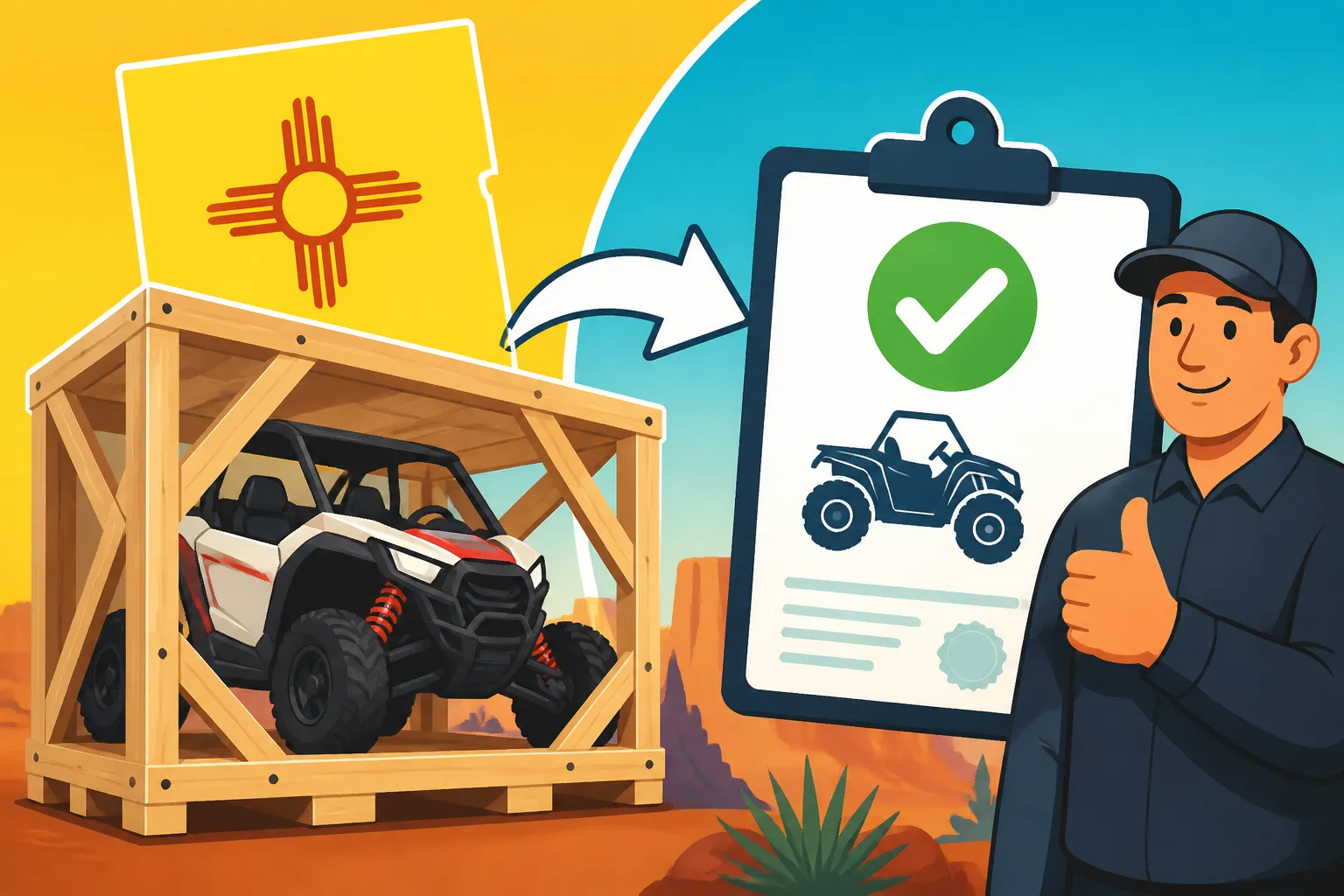
The moment that freight truck pulls up with a wooden crate holding your new ATV or UTV is pure magic. It’s like Christmas morning for adults who love the outdoors. You start picturing all the adventures, the dusty trails, the stunning views from a high-country forest road. But then a little voice in the back of your head might whisper, "Wait, what about paperwork?" And that whisper is right. Even though your machine is still neatly packed away, you’ll need to navigate the registration process before it sees its first ride on public lands.
Why a Crate Doesn't Excuse Registration in New Mexico
It's a common misconception that because an OHV is brand new or still in pieces, it doesn't need to be registered. Here in New Mexico, the law is pretty clear: if you intend to operate your off-highway vehicle on public lands, it must be registered. This applies whether it's an ATV, UTV, dirt bike, or any other type of machine. The state isn't waiting for you to assemble it; they're looking for proof of ownership and a valid registration before it ever touches a public trail.
Registration isn't just a bureaucratic hurdle; it serves important purposes. It helps fund trail maintenance and development, keeping our riding areas accessible and enjoyable. It also provides a way to identify vehicles in case of theft or accident, adding a layer of safety for all riders. So, while you might be itching to grab your tools, remember that the MVD is interested in the machine's legal status from the get-go.
Understanding the Key Documents: MCO, Bill of Sale, and VIN
When you're dealing with a brand-new, crated OHV, there are a few foundational documents that are absolutely critical. These are the pieces of paper that tell the story of your machine, from its birth at the factory to its new home in your garage. Without them, your MVD visit will likely be a non-starter.
The Manufacturer's Certificate of Origin (MCO) is paramount. Think of this as your OHV's birth certificate. It's issued by the manufacturer and proves that the machine is new and has never been titled or registered. It will contain vital information like the make, model, year, and, most importantly, the Vehicle Identification Number (VIN). This document is absolutely crucial for your [New Mexico's First OHV Registration]. Without an MCO, the MVD simply can't issue you a title or registration for a new machine.
Alongside the MCO, you'll have a Bill of Sale or Purchase Agreement from the dealer where you bought the machine. This document confirms the transaction, shows you paid for the OHV, and formally transfers ownership from the dealership to you. Make sure this document also clearly lists the VIN and your full legal name as the purchaser. If for some reason you are creating a private record of the purchase, or if the machine was gifted to you while still in the crate, a formal bill of sale or gift affidavit template from a trusted resource like LawDepot can provide peace of mind and ensure all legal bases are covered.
Finally, the VIN (Vehicle Identification Number) is the unique identifier for your specific machine. It's a series of 17 characters that tells you everything about the vehicle's origin, specifications, and year. For a crated machine, the VIN will be listed on the MCO and the purchase agreement. It will also be physically stamped on the machine itself, usually on the frame or engine block. Even before assembly, you should be able to locate this number on the main frame components inside the crate. Getting familiar with [New Mexico OHV VIN Requirements] can help you understand why this number is so important.
Navigating the Paperwork: What New Mexico MVD Needs for Your Boxed Beauty
Dealing with government paperwork can feel like trying to untangle a fishing line after a windy day – a little frustrating, but totally manageable if you know the right steps. For a new, crated OHV, the MVD needs specific documents to ensure everything is above board. Gathering these beforehand will make your trip to the MVD much smoother.
Essential Documents to Bring to the MVD
When you head to your local New Mexico MVD office, preparation is key. You don't want to get there, wait in line, and then realize you've forgotten something vital. For a brand new OHV that's never been registered or titled, here's the core list of what you absolutely must have in hand:
- Manufacturer's Certificate of Origin (MCO): As discussed, this is the most critical document. Ensure it's the original and that all information, especially the VIN, is clear and legible.
- Original Bill of Sale or Dealer Purchase Agreement: This proves you bought the machine from a legitimate dealer. It should have the purchase price, date, seller's and buyer's information, and the VIN clearly printed.
- Proof of Identity: Your valid New Mexico driver's license or state-issued identification card will suffice. Make sure it's current and matches the name on your purchase documents.
- Proof of New Mexico Residency: The MVD needs to verify you're a resident. A utility bill, lease agreement, or other official mail with your current address will work.
- Method of Payment: Be ready to pay the applicable registration and titling fees. While specific figures can fluctuate, it's typically a biennial fee, and you'll want to check current rates on the MVD website.
Remember, the goal is to provide a complete and consistent story of your OHV to the MVD. Every document should align with the others, especially regarding the VIN and your personal details. This upfront effort will save you headaches down the line. To get a broader understanding of what's generally expected, reviewing [New Mexico OHV Registration Paperwork] can be helpful.
The Importance of the Manufacturer's Certificate of Origin (MCO)
Let's dive a little deeper into the MCO because it truly is the bedrock for registering a new, crated machine. Unlike a used vehicle that might already have a title, your brand new OHV's legal journey begins with this document. The MCO certifies that the vehicle meets all federal safety and emissions standards and has yet to enter commerce in a way that would require a state title. It's the first official declaration of the vehicle's existence and its specifications.
When you present the MCO to the New Mexico MVD, they use it as the basis to issue your very first New Mexico title. This title will then be the official proof of legal ownership going forward. What happens if your MCO is missing or delayed? This can be a significant setback. Your immediate step should be to contact the dealership you purchased the OHV from. They are responsible for providing you with the original MCO. If for some reason they can't, or if there's a problem, you might need to contact the manufacturer directly, though this is rare with reputable dealerships. Don't try to register without it; it's a non-negotiable item for a new machine. Having a clear understanding of [New Mexico OHV Title Requirements] will help you appreciate the MCO's role in the titling process.
Verifying the VIN Before Assembly
Even though your OHV is still in its crate, it's a really good idea to locate and verify the VIN. This isn't just about cross-referencing numbers on paper; it's about making sure the machine you received matches the documentation. Manufacturers typically stamp the VIN on a non-removable part of the frame, often near the steering head on an ATV or dirt bike, or on the main frame rail for a UTV. Sometimes, it might also be on the engine block.
Before you start assembling, carefully inspect the components within the crate to find this physical VIN. Compare it to the VIN listed on your MCO and your bill of sale. If there are any discrepancies, stop immediately and contact your dealer. This kind of mismatch can cause major headaches at the MVD and could even indicate a mix-up or a potentially stolen vehicle (though highly unlikely for a new, crated machine from a dealer). While the New Mexico MVD may require a VIN inspection for certain circumstances, especially for out-of-state transfers or rebuilt vehicles, a brand-new machine with a clear MCO from a licensed dealer usually doesn't need an additional MVD VIN inspection. However, your own verification is always a smart move to prevent future problems.
The MVD Visit: Getting Your Crated OHV Officially Registered
Okay, you've got all your ducks in a row – MCO, bill of sale, ID, proof of residency. Now it's time for the main event: the trip to the New Mexico MVD. This part of the process can sometimes feel intimidating, but knowing what to expect can ease a lot of that stress.
Step-by-Step at the New Mexico MVD Office
Your MVD visit for a crated OHV won't differ too much from registering any other vehicle for the first time in New Mexico, but there are a few nuances to keep in mind for a brand new, never-titled machine.
- Arrive Prepared: Bring all your required documents in an organized folder. It's often helpful to have photocopies as well, just in case, though originals will be needed for verification.
- Take a Number: Most MVD offices operate on a queue system. Grab your number and be ready for a wait, especially during peak hours. Patience is your friend here!
- Submit Your Documents: When your number is called, present your MCO, bill of sale, ID, and proof of residency to the MVD agent. They will review everything, checking for accuracy and consistency. This is where having matching VINs on all documents is crucial. They will use the MCO to initiate the titling process.
- Answer Questions: The agent might ask a few questions, such as the intended use of the OHV (recreational, ranch work, etc.) or if you plan to operate it on paved public roads (which requires an additional green decal and potentially a paved road plate).
- Pay the Fees: Once the documents are approved, you'll be instructed on the fees due. For a new OHV, this typically includes the initial registration fee, which is often a biennial cost, and the associated titling fee. Remember, the goal is to describe the shape of the cost, not state specific figures, as these can change. Expect to pay a lump sum that covers both registration and getting that first title issued.
- Receive Your Registration and Decals: If all goes well, you'll leave the MVD office with your temporary registration certificate and the appropriate decals. This usually includes the yellow off-highway decal, and potentially the green on/off-highway decal if you've opted for that.
It's important to remember that [Why New Mexico Residents Register at MVD] is all about keeping records accurate and ensuring you're compliant with state law. The agents are there to help you through the process, so don't hesitate to ask if you have questions during your visit.
What Happens After Submission: Title, Decal, and Plate (If Applicable)
Once you've completed your MVD visit and paid your fees, you won't walk out with a physical title in hand for a new machine. The MVD will process your MCO and then mail you the official New Mexico Certificate of Title separately. This usually arrives within a few weeks. The title is the official proof of ownership, so keep it in a safe place, not on your OHV!
What you will receive on the spot is your registration certificate and the actual OHV decals. New Mexico uses different colored decals to signify different types of use. The standard registration typically gets you a yellow decal, which permits off-highway use. If you intend to operate your OHV on certain paved public roads where permitted by local ordinance, you'll need the green "on and off-highway" decal. There's usually an additional fee for this option. This green decal, once applied, signals that your machine is compliant with [New Mexico Green Decal Requirements]. Keep in mind that a separate paved road plate used to exist, but the rules around paved road use have evolved, and the decals are key. For a deep dive into the plate situation, you might want to look at [New Mexico's Paved Road Plate] if that's something you're considering.
Understanding Costs and Renewals for Your New Machine
The cost to register a brand new OHV in New Mexico usually involves a few components wrapped into one initial payment. First, there's the biennial registration fee, meaning it covers you for two years. This fee contributes to the state's OHV program, supporting trail maintenance and rider safety initiatives. On top of that, there's a fee for processing and issuing your first New Mexico title, which is what the MVD creates from your MCO. The total initial cost will generally be higher than a standard renewal because it includes both the title and the first registration period.
After your initial two-year registration period, you'll need to renew it. New Mexico OHV registrations expire on the last day of the month two years from the issue date. The renewal process is typically simpler and just involves paying the biennial renewal fee. You won't need an MCO again, as your machine will already be titled. Understanding [New Mexico OHV Registration Cost] and [What a New Mexico Renewal Costs] can help you budget for the long-term enjoyment of your new machine.
| Document Type | Purpose | For a New, Crated OHV | For a Used OHV |
|---|---|---|---|
| Manufacturer's Certificate of Origin (MCO) | Proof of initial ownership from manufacturer; used to issue first title | Required | Not applicable (should have a title) |
| Bill of Sale/Purchase Agreement (from dealer) | Proof of purchase and transfer of ownership from a licensed dealer | Required | Used for private sales if applicable |
| New Mexico Title | Legal document of ownership | Issued by MVD after MCO | Required for transfer |
| Proof of Identity (Driver's License/State ID) | Verification of applicant's identity | Required | Required |
| Proof of New Mexico Residency (Utility Bill, etc.) | Establishes residency for registration purposes | Required | Required |
| VIN Inspection | Verification of Vehicle Identification Number | Usually not for new | Sometimes required for used or specific cases |
Preparing for the Trails: Beyond Registration for Your New OHV
Once your crated OHV is officially registered with the New Mexico MVD, the real fun can begin: assembly, safety checks, and finally, hitting the trails. While registration is a critical first step, it's just one part of being a responsible OHV owner.
Assembly, Safety, and First Ride Considerations
Now that the paperwork is handled, you can finally uncrate your machine! Take your time with the assembly process. Always follow the manufacturer's instructions in the owner's manual precisely. Using the correct tools and having a friend to help can make the process smoother and safer. Double-check every bolt, connection, and fluid level before you even think about starting the engine.
Before your first ride, safety should be paramount. Invest in proper safety gear, including an approved helmet, eye protection, gloves, long pants, and sturdy boots. Consider taking an OHV safety course, especially if you're new to the sport or if you have younger riders in the family. New Mexico has specific [New Mexico Helmet Law for ATV Riders] and [New Mexico Rules for Riders Under 18] that all riders must adhere to. Getting to know these rules before you ever turn the key can prevent accidents and fines.
Where to Place Your New Mexico Decals Once Assembled
After assembly, and before you head out, you'll need to properly affix those New Mexico registration decals you received from the MVD. Correct placement is important not only for compliance but also for visibility if a ranger or law enforcement officer needs to check your registration. The specific location can vary slightly depending on your OHV type.
For ATVs, the yellow or green decal should be placed on the left-rear fender. It needs to be clearly visible and permanently affixed. You can find more detail on [Where the Decal Goes on an ATV's Left Rear]. For ROVs (Recreational Off-Highway Vehicles, or UTVs/Side-by-Sides), the decal is typically placed on the left-rear quarter panel. It should be easily readable without obstruction. If you own a UTV, make sure you understand [Where the Decal Goes on an ROV Quarter Panel]. For dirt bikes or off-highway motorcycles, the decal is usually placed on the left fork leg. The key is visibility and security of attachment. All these specific requirements fall under the broader umbrella of [New Mexico OHV Decal Placement Rules], so a quick review of those general guidelines will serve you well. Make sure the surface is clean and dry before applying the decal for maximum adhesion.
Disclaimer
This article is for general informational purposes only and does not constitute professional advice. Laws, prices and regulations vary by location and change over time. Consult a qualified professional for guidance on your specific situation.