Handing Back an Old License Plate
Oh, the memories of those old metal plates! If you've been riding New Mexico's off-highway vehicles (OHVs) for a while, you might remember a time when getting a physical license plate for your ATV or UTV meant you could legally ride on paved roads. Many riders are now left wondering what to do with that old plate after the rules changed, or perhaps they've sold a machine and need to clear up the paperwork. This guide is here to walk you through the ins and outs of handling and returning your old New Mexico OHV license plate, ensuring you're squared away with the MVD and know exactly why those changes happened.
The Evolution of New Mexico's OHV Road Use: Why Plates Disappeared
It might feel like just yesterday that you were proudly bolting that small metal plate onto your quad or side-by-side, signifying your ability to legally cruise down a paved county road or even through a small town. For years, New Mexico had a system where OHVs could obtain a special "paved road plate" from the Motor Vehicle Division (MVD), allowing them limited access to public streets. It was a convenient option for many, especially those who wanted to ride from their campsite to a trailhead without having to trailer their machine everywhere.
The Shift from Plates to Decals
However, laws and regulations evolve, and New Mexico's approach to OHV road use underwent a significant transformation. The state recognized a need for a more streamlined and clearer system, leading to a shift away from physical plates for pavement access. This change was a big deal for many riders, as it meant a whole new set of rules and, importantly for this discussion, the eventual obsolescence of those once-essential metal plates. If you've been wondering [Why the Sticker Program Ended], it really came down to creating a more coherent system for both off-highway and on-highway use. The state moved towards distinct decal requirements to differentiate between machines that were strictly for off-road use and those that qualified for limited paved road access.
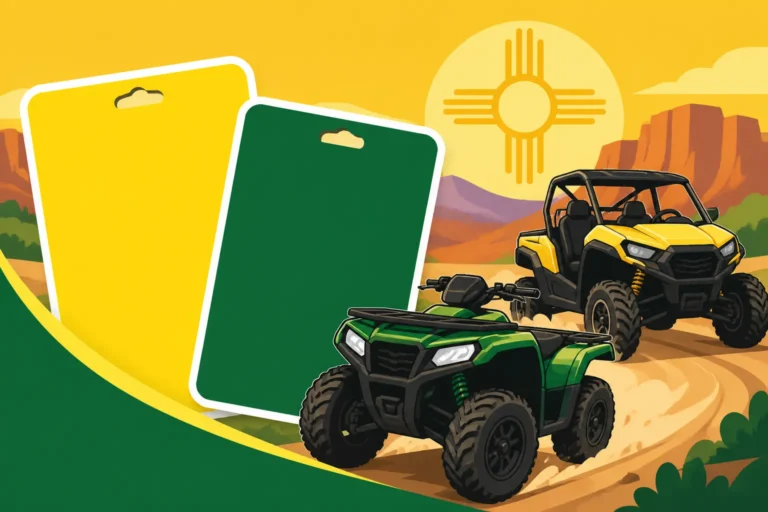
The new system essentially introduced two primary decals: a yellow one for pure off-highway use and a green one that, when combined with other requirements, granted access to designated paved roads. This created a clear visual identifier for law enforcement and simplified the regulatory framework. No longer would an OHV rely on a small, car-like plate for paved road privileges; instead, a specific decal indicated its approved use. This meant that the old paved road plates, once a symbol of freedom on asphalt, became relics of a previous era.
Understanding the Change's Impact on Riders
For those of us who had invested in a paved road plate, this transition naturally raised questions. What do you do with the plate now? Is it just a souvenir? Does the MVD expect it back? The short answer is yes, in most cases, the MVD prefers the return of these plates. It helps them keep their records accurate and ensures that no old plates are mistakenly used or cause confusion in the new system. The old system, which included [New Mexico's Paved Road Plate], was replaced with a more comprehensive decal system that emphasizes [New Mexico's Yellow and Green Decals] for clear identification of permitted use.
This legislative change also brought about new requirements for titling and registration, especially if you planned to use your OHV on paved roads under the new decal system. Previously, simply having the plate was the key. Now, specific registration and insurance requirements, along with displaying the correct green decal, are paramount for road legality. So, while your old plate might hold sentimental value, its practical use for road access has been superseded by the current decal framework.
The Practicalities of Returning Your New Mexico OHV Plate
So, you've got an old New Mexico OHV license plate gathering dust, perhaps from a machine you no longer own, or one that's now proudly displaying the newer green and yellow decals. The question now becomes: how do you properly return it to the MVD? It's a fairly straightforward process, designed to be as hassle-free as possible for riders like us.
How and Where to Return Your Plate
The most common and recommended way to return your old New Mexico OHV license plate is directly to a local Motor Vehicle Division (MVD) office. When you visit the MVD, you can simply hand the plate over to a representative. They will take it off your hands, officially note its return in their system, and ensure it's properly disposed of or decommissioned. This prevents any ambiguity about the plate's status. It's a quick transaction, and usually, there's no fee involved for returning a plate.
Before you go, it's a good idea to bring any associated paperwork you might have, such as the old registration for the machine the plate was on. While it might not always be required, having it on hand can help the MVD staff if they need to look up your vehicle's history or confirm the plate's prior assignment. Think of it as providing all the puzzle pieces to make their job easier. Walking into an [New Mexico OHV Registration at MVD] office is the most direct way to handle this.
If an MVD office isn't easily accessible, some riders have historically inquired about mailing plates back. While direct mail isn't always the primary recommendation, if you're truly unable to get to a physical office, contact the MVD directly to inquire about their mail-in process and address. They can provide specific instructions to ensure your plate reaches the correct department and is processed properly. You wouldn't want it getting lost in the mail and creating more questions down the line.
Scenarios Requiring Plate Return
There are a few key situations that would prompt you to return an old OHV license plate:
- Transition from Paved Road Plate to Decal System: This is probably the most common scenario. As the old paved road plate program was phased out, the MVD encouraged riders to return these plates. The new system, featuring [Plates That Replaced the Old Stickers], fundamentally changed how OHVs gain paved road access.
- Selling an OHV: If you've sold your ATV or UTV, especially one that previously had a paved road plate, it's good practice to remove and return the plate. This severs your connection to that specific plate and machine, preventing any potential issues for you or the new owner. When [Selling an OHV in New Mexico], addressing the plate is a small but important detail.
- Machine Decommissioned or Destroyed: In the unfortunate event that your OHV is totaled, permanently taken out of service, or destroyed, returning the plate helps to formally close its chapter with the MVD.
Think of returning the plate as tying up a loose end. It's about being thorough and making sure your record with the MVD is clean and current. While you won't face severe penalties for simply holding onto an obsolete plate, the responsible thing to do is to return it.
What Happens if You Don't Return That Old Plate?
It's easy to forget about an old license plate, tucked away in a garage or workshop. Maybe you just moved and it ended up in a box somewhere. But for many, there's a lingering question: "What happens if I just keep it?" While the consequences for not returning an old, now-obsolete New Mexico OHV paved road plate are generally not severe, understanding the implications can help you make an informed decision.
The Lack of Formal Penalties for Obsolete Plates
For the most part, simply holding onto an old New Mexico OHV paved road plate that has been superseded by the current decal system won't land you in hot water. Unlike standard vehicle plates, which can carry fines or legal ramifications if not surrendered upon sale or cancellation of registration, the OHV paved road plates from the previous era are largely considered obsolete. The state's primary concern shifted to ensuring riders comply with the new decal system and [New Mexico's Yellow Off-Highway Decal] or [New Mexico's Green On and Off-Highway Decal] requirements for road use.
The MVD isn't actively hunting down every old OHV plate. Their focus is forward-looking: getting riders to register their machines under the current system and display the correct decals. So, if you've got an old plate tucked away, you likely won't receive a penalty notice or face a fine simply for possessing it. However, this doesn't mean it's entirely without implications.
Potential Confusions or Unforeseen Issues
While there aren't direct penalties, keeping an old plate can lead to minor confusions or missed opportunities down the line.
- Records Clarity: For the MVD, a returned plate provides a definitive end to its active status. If a plate is never returned, it might technically remain "open" in some archival records, even if it's no longer valid for road use. This rarely causes an issue for individual riders, but it can contribute to less precise data management for the state.
- Preventing Misuse: While unlikely, an unreturned plate could theoretically fall into the wrong hands. Though it's obsolete for New Mexico road use, there's always a slim chance of it being misused in other contexts, especially if the machine it was attached to was sold without a proper bill of sale. When buying or selling, using a service like LawDepot to generate a comprehensive bill of sale can provide an extra layer of protection, clarifying that the plate (if any) is being removed or addressed.
- Peace of Mind: For many, returning the plate simply offers peace of mind. It's one less piece of official documentation to worry about, and it ensures you've completed all necessary steps related to the machine's administrative status, particularly if you're no longer the owner.
Consider this scenario: You sell your ATV, and the new owner gets pulled over. If your old plate was still on it, even if invalid, it could lead to questions and a longer roadside stop. By returning the plate when you [Selling an OHV in New Mexico], you eliminate that remote possibility. The process of making sure your [New Mexico OHV Registration Paperwork] is in order includes ensuring the MVD knows your plate is no longer active.
Different Scenarios for Plate Handling
Returning an old license plate isn't always a one-size-fits-all situation. Depending on why you're returning it, or what its specific history is, the context can change slightly. Let's explore some common scenarios.
The Phased-Out Paved Road Plate
As we discussed, the most frequent reason riders are thinking about handing back a plate is due to the end of the dedicated paved road plate program. If you had one of these plates, which was once your golden ticket for limited on-road OHV use, its purpose has officially expired. The state now requires OHVs that operate on paved roads to have specific decals and meet additional requirements, like carrying specific [New Mexico ATV Insurance Requirement] and [New Mexico Driver's License Rules for OHVs].
When this program ended, the MVD did not implement a mandatory recall for every single plate. However, they strongly encouraged riders to return them to clear the records and prevent any confusion. So, if your garage still houses one of these, bringing it to the MVD is a responsible closure to that chapter. It’s also important to note that [Riding on a Sticker After the Program Ended] is no longer permitted, further solidifying the need to move on from the old plate system.
Returning a Plate After Selling Your OHV
Selling an OHV in New Mexico involves a few critical steps, and dealing with the license plate is one of them. While a standard vehicle's plate often stays with the owner, for OHVs, especially those with the old paved road plates, it’s best to remove it upon sale. You want to ensure that once you transfer ownership, you're not associated with any future activities or potential issues related to that machine or its old plate.
When you sell your OHV, you should definitely include a robust bill of sale. Services like LawDepot offer templates for a New Mexico bill of sale, which can clearly document the transfer of ownership, the machine's condition, and any specific agreements, including the removal or return of a license plate. This legal document is crucial for protecting both the buyer and the seller. Making sure all your [New Mexico ATV Bill of Sale Requirements] are met provides clarity and protection.
After the sale, take that old plate to the MVD. This action formally disconnects you from the plate number in their system. The new owner will then proceed with [Registering an OHV in New Mexico] and obtaining the correct decals or plates under the current regulations, ensuring their machine is properly identified for its intended use.
Special Cases and Lost Plates
Sometimes, things aren't so straightforward. What if you lost your old plate before you had a chance to return it? Or perhaps you moved out of state and just found it?
- Lost Plates: If your old OHV paved road plate was lost or stolen before you could return it, it's a good idea to report it to the MVD, if only to keep your records straight. They can mark it as lost in their system, preventing any potential misuse. While the risk is low given the plate's obsolescence, it's still a sound administrative step.
- Out-of-State Relocation: If you've moved out of New Mexico but still possess an old plate, you might consider mailing it back to the MVD if you can't visit in person. Again, a quick call to their office can confirm the best mailing address and procedure.
- Titling an OHV: The process of [Titling an Off-Highway Vehicle in New Mexico] and subsequent registration under the current system is separate from the old plate return. Your focus for a new or newly purchased machine will be on obtaining the proper title and then getting the necessary yellow or green decals, not on old plate issues.
| Aspect | Old New Mexico OHV Paved Road Plate (Pre-2017) | Current New Mexico OHV Road Use Decal (Green) |
|---|---|---|
| Physical Item | Small metal license plate | Adhesive decal |
| Issuing Agency | MVD | MVD |
| Road Use | Limited paved road access (specific laws) | Limited paved road access (specific laws) |
| Primary Identifier | Plate number | Decal number and registration |
| Insurance Required | No statewide mandate for plate | Yes, mandatory liability insurance |
| Driver's License | Not explicitly tied to plate | Yes, valid driver's license required on road |
| Current Status | Obsolete for road use, return recommended | Required for paved road access |
Returning your old plate is a simple act of good administrative hygiene. It tidies up your records with the MVD and ensures there are no lingering questions about a plate that no longer serves its original purpose.
Disclaimer
This article is for general informational purposes only and does not constitute professional advice. Laws, prices and regulations vary by location and change over time. Consult a qualified professional for guidance on your specific situation.