New Mexico OHV Registration Late Fee
It's an all too common scenario: you're planning an epic weekend ride through the stunning high desert trails or the mountainous terrain of New Mexico, only to suddenly realize that nagging thought in the back of your mind was right – your off-highway vehicle (OHV) registration expired weeks, maybe even months, ago. The immediate panic sets in: what are the consequences? Will there be a hefty late fee? This guide is here to walk you through everything you need to know about New Mexico's OHV registration late fees, how to avoid them, and what steps to take if you find yourself in this all-too-familiar predicament.
Understanding the New Mexico OHV Registration Cycle
First things first, let's get a handle on how registration works in New Mexico, because understanding the standard process is key to preventing those dreaded late fees. Unlike some states that might have annual renewals, New Mexico operates on a biennial system for OHV registration. That means your registration is valid for two years from the date of issuance. This two-year cycle can be a blessing, giving you more time between renewals, but it can also be a curse if you're prone to forgetting dates that only roll around every other year.
When you first register a machine, or if you're [New Mexico's First OHV Registration], that date kicks off your two-year period. It's not necessarily tied to a calendar year, which means everyone's renewal date is a little different, depending on when they initially registered their ATV, UTV, dirt bike, or sand rail. This personalized timeline is why it's so important to mark your own calendar and not rely on generalized annual reminders.
The New Mexico Motor Vehicle Division (MVD) is the agency responsible for handling OHV registrations. They send out renewal notices, but sometimes these can get lost in the mail, overlooked in a pile of junk mail, or simply arrive too close to the deadline to be truly helpful. Life happens, and it's easy to let these things slip, especially if you're not riding your OHV regularly during certain seasons. The biennial nature is intended to simplify things, but if you forget when your two years are up, you could be in for a surprise. This is [Why New Mexico Renews Every Two Years], offering a bit of a buffer, but demanding your attention when the time comes.
The Biennial Renewal Process
So, what exactly does a biennial renewal entail? Essentially, it means you'll need to submit the necessary paperwork and pay the registration fee every two years to keep your OHV legal for riding on public lands and designated routes. This process is generally straightforward if you're organized. The MVD will typically ask for a few key pieces of information and proof of ownership. You can find more details on [What MVD Asks For at a Two-Year Renewal].
For many riders, the standard renewal fee is quite manageable, designed to contribute to the upkeep of trails and the overall OHV program in the state. [New Mexico's $50 Biennial Renewal] covers the cost for two years, which, when you break it down, isn't a huge annual expense for the access it provides. However, this base cost is what you want to stick to. Allowing your registration to lapse means you'll almost certainly pay more, making that initial $50 seem like a bargain.
Understanding that your OHV's registration [How Long a New Mexico OHV Registration Lasts] is crucial. It's a hard two years, and the clock starts ticking the moment your current registration is issued. There isn't an unspoken grace period that extends indefinitely. While you might get a little wiggle room sometimes, banking on it is a risky proposition, especially if you encounter law enforcement while riding.
The Specifics of New Mexico's Late Fees
Let's address the elephant in the room: what happens if you miss that two-year deadline? Unfortunately, New Mexico doesn't just give you a free pass. While the exact structure of late fees can sometimes feel a bit opaque, the general rule is that failing to renew your OHV registration by its expiration date will incur additional costs. These aren't just penalties; they're designed to encourage timely renewals and ensure that all machines operating on public land are properly accounted for.
It's common for a late fee to be an incremental charge that adds to your base renewal fee. It might be a flat amount, or it could be a percentage of the original fee, accumulating the longer you let the registration lapse. The MVD isn't in the business of letting things slide indefinitely. When you finally get around to renewing, whether it's a few weeks or several months past due, you'll be faced with the original renewal fee plus whatever late penalties have accrued. This is part of the overall [New Mexico OHV Registration Cost] you need to factor in if you're behind.
The key takeaway here is that the cost never goes down once you're late; it only stays the same or increases. There's no benefit to waiting once you realize your registration has expired. In fact, delaying further can only lead to a bigger financial hit and the risk of other, more serious penalties if you're caught riding an unregistered machine.
Beyond Just a Late Fee
It's important to understand that a late fee isn't the only potential consequence of an expired OHV registration. That late fee is simply the cost to bring your registration current after missing the deadline. However, if you are pulled over or encountered by a game warden or law enforcement officer while operating an OHV with an expired registration, you could face additional fines. These are separate from the MVD's late fee and can be significantly more substantial.
Think of it this way: the MVD charges you extra for the administrative hassle of a late renewal, but law enforcement charges you for breaking the law by operating an unregistered vehicle. These fines can escalate, and the penalty for operating an unregistered OHV can certainly take a bite out of your wallet. Riders often find themselves facing [New Mexico Fines for an Unregistered OHV] if they're caught on the trails without current paperwork. This is why it's always best to be proactive and ensure your registration is up to date before you even load your machine onto the trailer.
Consider this hypothetical: you've forgotten to renew, and your registration expired a month ago. You decide to take a quick ride on some local trails. A ranger stops you for a routine check. Not only will you have to pay the late fee when you eventually renew, but you'll also likely receive a citation right there on the spot for operating an unregistered vehicle. That single oversight can quickly turn into a multi-hundred-dollar problem, making a simple, timely renewal seem like a bargain in comparison.
Avoiding Late Fees: Proactive Strategies
Nobody wants to pay a late fee. It's money that could be spent on new gear, fuel for more rides, or even just saved for a rainy day. The good news is that avoiding these extra charges is entirely within your control with a few simple proactive steps. It just takes a little organization and consistency.
One of the most effective strategies is to create your own reminder system. Don't rely solely on the MVD's mailed notices, as they can sometimes be inconsistent or arrive too late. Since your registration [When a New Mexico OHV Registration Expires] is personal to your machine's original registration date, set a recurring reminder on your phone, email calendar, or even a good old-fashioned wall calendar. Set it for a month or two before the actual expiration date. This gives you plenty of time to gather any necessary documents and complete the renewal process without feeling rushed.
Another helpful tip is to keep all your OHV-related documents organized in one place. This includes your title, previous registration cards, and any bills of sale. If you ever need to create a bill of sale, especially for a private sale, resources like LawDepot can provide customizable templates that ensure all the necessary legal details are covered. Having these documents handy makes the renewal process much smoother, whether you're renewing online or in person.
Leveraging Online and Dealer Services
In this day and age, convenience is king, and the New Mexico MVD often offers online services for OHV registration renewals. Utilizing [New Mexico OHV Registration Online] is a fantastic way to avoid late fees. You can typically complete the process from the comfort of your home, at any time of day, which removes many of the common barriers like "I don't have time to go to the MVD." Just make sure you initiate the process a few weeks before your expiration date to account for any processing time or potential mail delays for your new decal.
Another option, especially if you're purchasing a new machine or have a local dealership you trust, is to inquire if they handle registration renewals as a service. Some dealerships offer this as part of their customer care, taking the burden off your shoulders. They are often well-versed in the MVD's requirements and can ensure everything is submitted correctly and on time. While not every dealer offers this, it's worth asking.
It's also a good idea to periodically check your current registration for the expiration date, perhaps when you're doing routine maintenance on your machine. This quick check can serve as a natural reminder. Don't assume that because you just rode it last month, the registration is still good for ages. Make it a habit, just like checking your oil or tire pressure.
What to Do If You're Already Late
Okay, so despite your best efforts, or maybe due to an oversight, you've realized your New Mexico OHV registration has already expired. Take a deep breath! While it's not ideal, it's a fixable situation. The most important thing is to address it immediately and avoid riding your OHV until the registration is current. Riding with an expired registration is not only risky due to potential fines but also means you're not contributing to the system that maintains the very trails you enjoy.
Your first step should be to locate your most recent registration documents. Even if expired, these contain crucial information like your vehicle identification number (VIN) and previous registration number, which will be needed for renewal. If you've lost your decal or registration card, you might also need to inquire about [Replacing a Lost New Mexico Decal] as part of your renewal process.
Next, you'll need to contact the New Mexico MVD or visit their website to initiate the renewal process. Be prepared to pay the standard renewal fee plus any applicable late fees. As mentioned earlier, these late fees can vary, but the longer you wait, the more they can accumulate. It's a "rip the band-aid off" situation – the sooner you act, the less headache and cost you'll incur.
The Renewal Process When Overdue
When you go to renew an expired registration, the process is very similar to a regular renewal, but with the added financial penalty. You'll still need to provide proof of ownership, and potentially proof of insurance if you plan on using your OHV on paved public roads where that's allowed. [New Mexico OHV Registration at MVD] details the standard in-person process, which might be your best bet if you have questions about the late fees or need to sort out any issues with your paperwork.
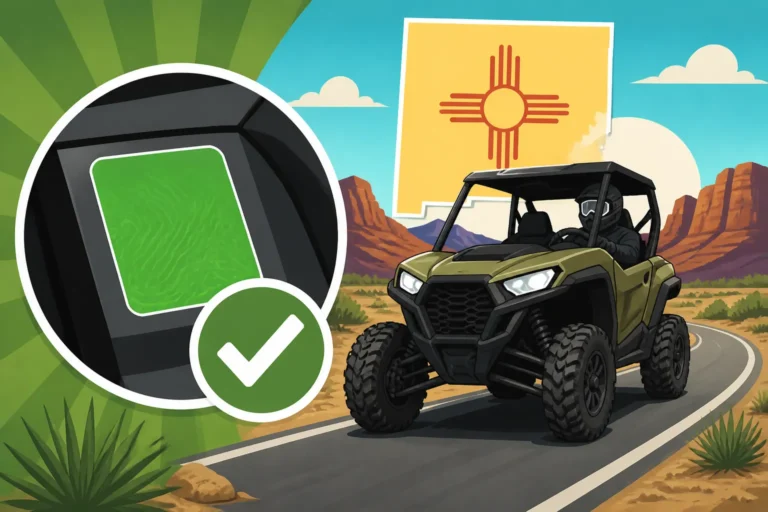
The MVD clerk can clearly outline the total amount due, including the original biennial renewal fee and any late charges. Don't be shy about asking for a breakdown if it's not immediately clear. It's your right to understand what you're paying for. Once you've paid the fees, you'll typically receive a new registration card and decals right away, making your machine legal to ride again. This usually involves getting the appropriate yellow or green decal, depending on your intended use.
Remember, even if you are just heading to the MVD, ensure your OHV is trailered, not ridden, if its registration is expired. This avoids any further legal complications on the way to fixing the issue. While the financial hit of a late fee might sting a little, it's a small price to pay for peace of mind and the continued enjoyment of New Mexico's incredible off-highway riding opportunities.
| Situation | Standard Fee ($) | Late Fee Status | Additional Penalties Possible | Recommended Action |
|---|---|---|---|---|
| Current, On-Time Renewal | Base Renewal | None | No | Renew online or at MVD before expiration. |
| Expired (1-30 Days Late) | Base Renewal | Likely Minor Late Fee | Yes (if riding) | Renew immediately; avoid riding. |
| Expired (30+ Days Late) | Base Renewal | Likely Increased Late Fee | Yes (if riding) | Renew immediately; expect higher costs; do not ride. |
| Expired & Caught Riding | Base Renewal | Late Fee | Yes (citation/fine) | Pay fine, then renew registration ASAP. |
Disclaimer
This article is for general informational purposes only and does not constitute professional advice. Laws, prices and regulations vary by location and change over time. Consult a qualified professional for guidance on your specific situation.