Registering a UTV in New Mexico
If you've just brought home a shiny new (or new-to-you) UTV, or maybe you've had one for a while and are finally ready to hit those incredible New Mexico trails, the thought of registration can feel like wading through quicksand. Many folks feel overwhelmed by the paperwork, the MVD visits, and simply figuring out what's required. This guide is here to cut through the confusion and walk you through every step of registering your UTV in New Mexico, ensuring you're ready to ride legally and confidently.
What Exactly is a UTV in the Eyes of New Mexico Law?
Before we dive into the nitty-gritty of registration, let's clear up what New Mexico actually considers a UTV. You might hear terms like side-by-side, ROV (Recreational Off-Highway Vehicle), or simply UTV, and it can get a bit muddled. Essentially, a UTV, or side-by-side, is characterized by its automotive-style seating, often with a steering wheel and foot pedals, and typically designed to carry one or more passengers side-by-side. They usually have a cargo bed and are built for a variety of tasks, from utility work to recreational trail riding.
Defining Your Machine: UTV vs. ATV
In New Mexico, the Motor Vehicle Division (MVD) is the agency responsible for off-highway vehicle (OHV) registration, and they have specific definitions. While ATVs (All-Terrain Vehicles) are generally single-rider machines with straddle seating and handlebars, UTVs (or ROVs) are designed for multiple occupants sitting next to each other. This distinction is important for things like passenger limits, but for registration purposes, both fall under the broader umbrella of OHVs. You'll often see the term "off-highway vehicle" used interchangeably in regulations, covering both your quad and your side-by-side. The key is that if it's motorized and primarily designed for off-highway use, it likely needs to be registered.
The ROV Classification and Its Implications
New Mexico law specifically recognizes "Recreational Off-Highway Vehicles" (ROVs) which perfectly encompasses most UTVs. These vehicles have their own set of rules, particularly concerning where decals are placed and sometimes even where they can be ridden on public roads (more on that later!). Understanding that your UTV is an ROV helps you navigate the specific decal placement requirements, for instance. You'll want to make sure you know [Where the Decal Goes on an ROV Quarter Panel] so you don't run into issues down the line. It's not just a label; it guides practical aspects of ownership and compliance.
Why is Registering Your UTV in New Mexico Non-Negotiable?
You might be thinking, "It's just for trails, why do I need a formal registration?" The answer is simple: it's the law, and it's for everyone's safety and the preservation of our riding areas. Operating an unregistered OHV on public lands in New Mexico can lead to fines and headaches you definitely want to avoid. Beyond the legal mandate, your registration fees directly contribute to the maintenance and expansion of the very trails you love to explore.
Legal Requirements for New Mexico Riders
New Mexico Statutes mandate that any OHV operated on public lands must be registered with the MVD. This isn't just a suggestion; it's a requirement that applies whether you're heading out for a quick spin or embarking on a multi-day adventure. Public lands include everything from Bureau of Land Management (BLM) land to national forests and state parks (though state parks often have their own restrictions on OHV use). Without that current registration decal, you could face penalties if stopped by a ranger or law enforcement officer. It’s also important to note that New Mexico has [New Mexico Fines for an Unregistered OHV], and those can add up quickly.
Supporting Our Trails and Riding Opportunities
A portion of every OHV registration fee goes directly back into maintaining and improving the trails, staging areas, and infrastructure that we all enjoy. This means that when you register your UTV, you're not just complying with the law; you're actively investing in the future of off-highway vehicle recreation across our beautiful state. It's a collective effort that helps ensure we have safe, accessible, and well-maintained places to ride for years to come. Think of it as your contribution to keeping those incredible New Mexico landscapes open for adventure. This is also why understanding [Where New Mexico OHV Fees Go] is important for every rider.
The Step-by-Step Process to Register Your UTV
Alright, let's get down to business. Registering your UTV in New Mexico isn't overly complicated, but it does require attention to detail and making sure you have all your ducks in a row. The MVD handles these registrations, so that's where you'll be heading.
Gathering Your Essential Documents
This is arguably the most critical step. Show up to the MVD without the right paperwork, and you'll be sent home, wasting valuable time. Here's what you'll typically need:
- Proof of Ownership: This is usually your Certificate of Title. If you're registering a brand-new UTV, the dealer will provide this or facilitate the titling process. If you bought a used UTV, you'll need the title signed over to you by the previous owner. If for some reason you don't have a title for an older machine, you might need to go through a special process to establish ownership, which can involve a VIN inspection and sometimes even a bond. It's crucial to understand [New Mexico OHV Title Requirements] before you get too far.
- Bill of Sale: Especially for used UTVs purchased in a private sale, a clear bill of sale is highly recommended, if not required. This document should detail the buyer and seller information, the UTV's make, model, year, VIN, and the purchase price. A well-drafted bill of sale, perhaps using a template from a service like LawDepot, can protect both parties and provide clear evidence of the transaction.
- Proof of Identity: A valid driver's license or state-issued ID is necessary.
- Proof of New Mexico Residency: If your ID doesn't show a New Mexico address, you might need additional documents like a utility bill or lease agreement.
- VIN Inspection: While not always required for every registration, a VIN inspection might be necessary, especially if you're registering an out-of-state machine, a homemade UTV, or if there's any discrepancy with the title. The MVD or designated law enforcement can perform this.
- Payment for Fees: There's a registration fee, and potentially a title fee if you're also titling the UTV for the first time in your name. [New Mexico OHV Registration Cost] will give you an idea of what to expect.
Here’s a quick overview of common scenarios and the documents typically required:
| Scenario | Proof of Ownership | Additional Documents | Notes |
|---|---|---|---|
| New UTV (Dealer Purchase) | Manufacturer's Certificate of Origin (MCO) | Dealer paperwork, ID | Dealer often handles initial titling/registration. |
| Used UTV (Private Sale) | Signed-over Title | Bill of Sale (LawDepot template useful), ID | Ensure title is properly endorsed by seller. |
| Used UTV (No Title) | Bill of Sale | VIN Inspection, ID, Affidavit of Ownership | May require MVD investigation, potentially a bond. |
| Out-of-State UTV (Moving In) | Out-of-state Title | Proof of NM Residency, ID, VIN Inspection | [Registering an Out-of-State Machine in New Mexico] has more info. |
Navigating the MVD Process
Once you have all your documents, it's time for the MVD. Here’s what you can expect:
- Visit Your Local MVD Office: It's usually best to go in person for your initial registration, especially if there are any questions about your paperwork. You can find MVD offices across the state, from Albuquerque to Las Cruces and Farmington.
- Submit Paperwork and Pay Fees: A clerk will review your documents. If everything is in order, you'll pay the applicable fees. The initial registration period is typically two years.
- Receive Your Decal and Registration Card: Once processed, you'll be given a registration card and your OHV decal. This decal is usually green in New Mexico, indicating it's registered for both off-highway and potential paved road use (where permitted). You'll also learn about [New Mexico's Green On and Off-Highway Decal]. Make sure you understand [Where New Mexico Requires the Decal Placed] for your specific UTV.
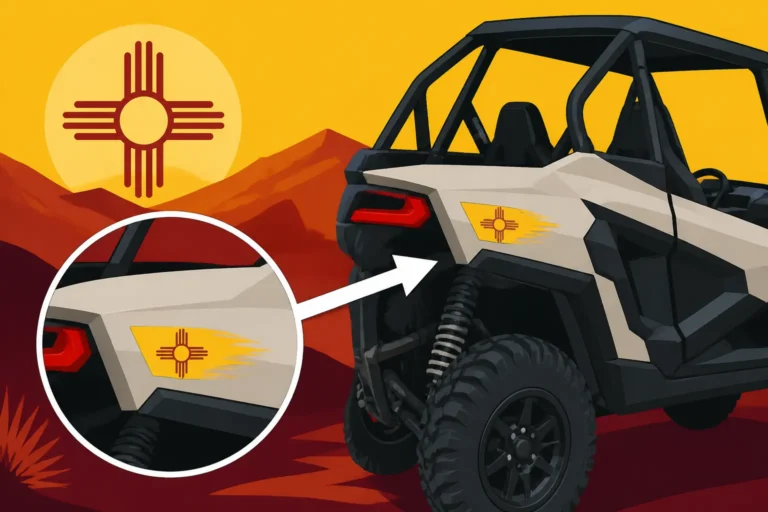
- Decal Placement: Affix the decal to your UTV as specified by New Mexico law. For UTVs (ROVs), this is typically on the left-rear quarter panel. Correct placement is important for compliance.
Remember that [New Mexico OHV Registration at MVD] is the primary way to get this done, so prepare for that visit.
What Happens After Registration? Decals, Renewals, and Road Use
Congratulations, your UTV is officially registered! But the journey doesn't end there. Understanding decal placement, renewal requirements, and the nuances of road use will keep you compliant and enjoying the trails worry-free.
Decal Placement: Where Does it Go on Your UTV?
Getting your shiny new green decal is exciting, but knowing exactly where to put it is crucial. For UTVs (Recreational Off-Highway Vehicles or ROVs), New Mexico law specifies that the decal must be affixed to the left-rear quarter panel. It needs to be clearly visible and permanently attached. This isn't just a suggestion; it's what law enforcement will be looking for during trail checks. Incorrect placement could lead to questions or even a citation, so take a moment to get it right. For specific guidance, you can always refer to [Where the Decal Goes on an ROV Quarter Panel].
Renewing Your Registration
New Mexico OHV registrations are typically valid for two years. Before your registration expires, the MVD should send you a renewal notice. It's your responsibility to ensure your registration is current, even if you don't receive a reminder. [When a New Mexico OHV Registration Expires] is usually on the last day of the month, two years from your initial registration or last renewal. Renewing is generally simpler than the initial registration and can often be done online, by mail, or in person at the MVD. Be aware of [What a New Mexico Renewal Costs] as it's typically less than the initial registration.
Understanding Paved Road Use and Permits
This is where things can get a little tricky, and it's a common point of confusion for UTV owners. While your green OHV decal allows you to ride on designated off-highway trails and certain county or city roads that have been opened to OHVs, it does not automatically grant you permission to ride on all paved public roads, especially state highways.
New Mexico has specific rules for paved road use, often requiring an additional "paved road plate" or permit, and certain equipment requirements like headlights, taillights, mirrors, and proof of insurance. Many towns and counties have their own ordinances, so what's legal in one area might not be in another. For example, some counties, like Sierra County, have opened many of their county roads to OHVs, but state highways remain largely off-limits. If you plan to ride your UTV on any paved public roads, you absolutely need to understand [New Mexico's Paved Street Opt-In] and all the associated rules, including [New Mexico UTV Rental License Requirements] if you're ever renting. It's always best to check local ordinances and carry your registration and any necessary permits with you, just as you would with a regular car.
Common Roadblocks and How to Ride Past Them
Even with the best intentions, you might run into a few bumps on the road to UTV registration. Don't worry, many common issues have straightforward solutions.
Buying a Used UTV with a Missing or Problematic Title
This is a scenario that causes a lot of anxiety for buyers. What if the seller doesn't have the title, or it's improperly filled out? First, always try to avoid purchasing a UTV without a clean, properly endorsed title. If you're buying a used UTV, consider it a red flag if the seller can't produce a title or has a vague story about why it's missing. However, if you find yourself in this situation, you'll likely need a robust bill of sale (again, a template from LawDepot can be invaluable here for documenting every detail) and potentially a VIN inspection by the MVD or law enforcement. The MVD might require an affidavit of ownership or even a surety bond to establish clear title if no title can be produced. It’s a bit more work, but it's often doable. For more on this, check out [Buying a Used ATV in New Mexico] which often shares similar requirements for UTVs.
Registering as a Non-Resident or After Moving to New Mexico
If you're visiting New Mexico from another state, your home-state OHV registration is generally honored, provided your state has a similar registration program. However, if your state doesn't have an OHV registration program, or if you plan to stay in New Mexico for an extended period, you might need a New Mexico non-resident permit. For those moving to New Mexico, you'll need to re-register your UTV here. This process will follow the standard steps for bringing an out-of-state machine into New Mexico, which usually involves presenting your out-of-state title, proof of residency, and possibly a VIN inspection. The good news is that New Mexico generally has [New Mexico's Broad OHV Reciprocity], but it’s always wise to confirm if you’re unsure.
Lost or Damaged Decals
Things happen out on the trail – decals get scratched, fade, or even peel off. If your New Mexico OHV decal becomes unreadable or goes missing, you'll need to apply for a replacement. The MVD can issue a new one for a nominal fee. Don't operate your UTV on public lands with a missing or unreadable decal, as it's the same as not being registered. It's a quick fix that saves you potential trouble. Knowing [Replacing a Lost New Mexico Decal] is a good piece of information to keep handy in case you ever need it.
Ultimately, registering your UTV in New Mexico is a straightforward process once you know the steps and gather the necessary documents. It’s an essential part of being a responsible rider and contributes to the health and accessibility of our fantastic riding areas. So, get that paperwork sorted, get your decal, and get ready to hit those trails with peace of mind!
Disclaimer
This article is for general informational purposes only and does not constitute professional advice. Laws, prices and regulations vary by location and change over time. Consult a qualified professional for guidance on your specific situation.