Carrying Your Permit Number on a Card
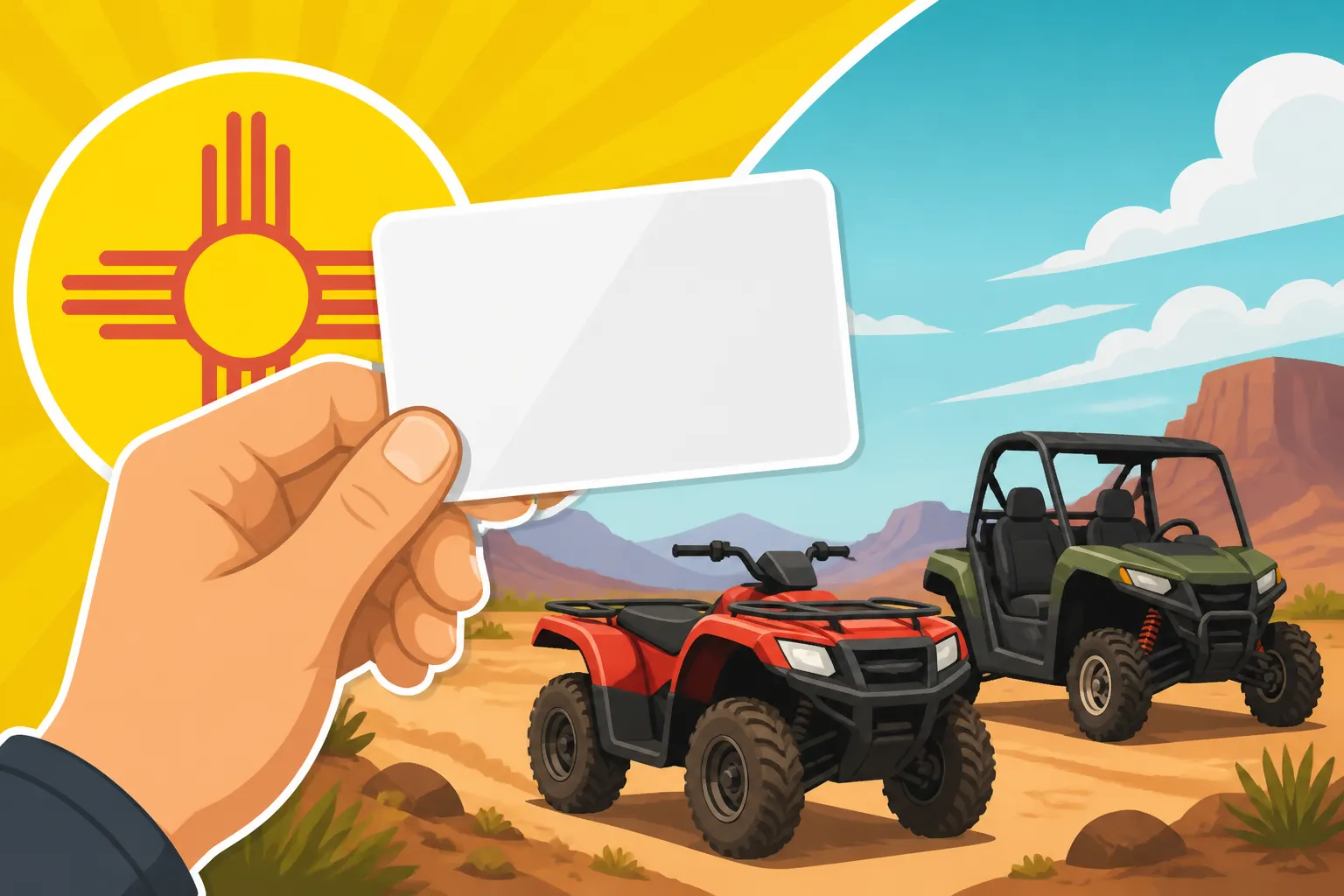
A permit number is easy to lose track of when you are unloading, riding, or dealing with a roadside check. A small card can keep the details handy, but it is important to know what the number proves—and what it does not. Here is how to make a useful backup for a New Mexico OHV ride without mistaking it for the permit itself.
What Your New Mexico OHV Permit Number Proves
A permit number identifies a permit record. It can help you find or confirm the permit you obtained, especially if you saved the number from a purchase confirmation. It is useful information to carry, but the number alone is not a substitute for meeting the rules that apply to your machine and ride.
For nonresidents, whether a New Mexico permit is needed depends in part on whether the home state has an OHV registration or permit program that New Mexico recognizes. A valid out-of-state registration may satisfy the requirement for a rider from a state with a qualifying program. Visitors whose states do not have a qualifying program may need to obtain a New Mexico nonresident permit. Check New Mexico OHV Reciprocity Rules before relying on a home-state document.
A permit number is also different from a registration number, a machine’s vehicle identification number, and a rider’s safety permit. These records serve different purposes:
| Record or number | What it relates to | Why carry it |
|---|---|---|
| New Mexico nonresident OHV permit number | A permit purchased for a visiting rider or machine, when required | Helps identify the permit record |
| Home-state registration information | The machine’s registration in its home state | Helps show the basis for reciprocity, when applicable |
| OHV VIN | The machine’s identifying number | Helps match paperwork to the machine |
| OHV safety permit or course credential | A rider’s safety training, when required | Shows the rider’s separate qualification |
A card with a permit number does not automatically prove that a machine is registered, that its required permit decal is properly displayed, or that a young rider has the necessary safety credential. If a requirement applies to the vehicle or rider, carry the relevant proof separately. For details on visitor permits and eligibility, see New Mexico’s Nonresident OHV Permit and New Mexico OHV Safety Permit Requirements.
The number is best treated as a backup reference. Keep the permit document or confirmation, follow any instructions for displaying the permit, and carry any other documentation that applies. A handwritten number with no other supporting information can be difficult to verify if it is incomplete, incorrect, or associated with a different machine.
Make a Card That Is Useful in the Field
A pocket card works best when it contains enough information to connect the number to the right permit and machine, but not so much personal data that losing the card creates an unnecessary privacy risk. Use a durable card or a small piece of waterproof paper kept in a sealed sleeve. The goal is to make the details readable after a dusty ride or a damp day, not to create a replacement permit.
Before copying anything, check the permit confirmation or official record. Transcribe the number exactly, including any letters, punctuation, or leading zeros. A single wrong character can make the card less useful. Compare the written number with the original before you put the original away.
A practical card can include:
- The permit number, copied exactly
- The permit holder’s name, if it helps distinguish permits in a group
- The machine’s make or a short description
- The last few characters of the VIN, if needed to tell similar machines apart
- The permit’s validity information as shown on the official record
- A phone number or email for the permit holder, if the card might be separated from its owner
Avoid putting a full payment card number, account password, or other sensitive login information on a trail card. You generally do not need those details to identify a permit. If you are carrying permits for several machines, label each card clearly enough that you will not mix them up.
For a group or family, make one card per machine rather than putting every number on a single card that could be left in a different vehicle. Keep a copy with the machine’s documents and another with the person responsible for the ride. If one person carries all the paperwork, a fall, breakdown, or separation from the group could leave the others without access to any of it.
Keep a paper copy and an offline digital copy
A phone screenshot or saved confirmation can be a convenient second backup, but it should not be the only one. Cell service may be unreliable in remote riding areas, a phone battery can run down, and a device can be damaged. Save the relevant screen or file for offline access before leaving home, and keep a paper copy with the card or machine paperwork.
Store digital copies where you can open them without signing in to an account that requires a signal. If the confirmation is in email, download it or take a screenshot rather than assuming you will be able to retrieve it at a trailhead. Do not count on a screenshot to replace a required decal or official document; it is simply another way to find the permit information.
If you use a card sleeve, choose one that stays closed and does not block the print with glare or condensation. Keep it somewhere protected from heat, moisture, and abrasion, such as with the machine’s paperwork. Do not attach the card in a way that could be confused with the required permit decal.
Carry the Card Along With the Required Permit Proof
The main purpose of a permit-number card is to make it easier to identify or retrieve the record. It is not a workaround for a display requirement. If the permit you bought comes with a decal or other instructions for the machine, follow those instructions. A card in a pocket or glove box does not make an improperly displayed permit compliant.
The same distinction applies to registration. A rider with a valid home-state registration may be relying on reciprocity rather than a New Mexico nonresident permit. In that case, carry the registration or other proof that supports the machine’s status, rather than assuming a New Mexico permit number is needed. Conversely, if your state does not qualify for reciprocity and you need a New Mexico permit, carrying only a home-state document that does not meet the rule may not solve the problem. The details are covered in Riding New Mexico With an Out-of-State Registration.
For a rider under 18, the permit number for a machine should not be confused with any separate safety-permit requirement. A parent or supervising adult should check the rider’s requirements and keep the applicable safety proof available as well. See New Mexico’s Safety Permit for Under-18 Riders for the rider-specific rules.
Before a trip, use this simple check:
- Confirm whether the machine needs a New Mexico permit or whether a qualifying home-state registration applies.
- Check that the permit or registration belongs to the machine you are taking.
- Follow the official instructions for displaying any decal or permit material.
- Put the permit number and supporting record in a protected place.
- Save an offline copy, but do not rely on a phone alone.
- Carry separate proof for any rider safety requirement that applies.
- Make sure everyone in the group knows where the paperwork is kept.
If you have more than one machine, check the information against each VIN or other identifying detail. It is easy to carry the correct permit number for the wrong quad when machines look alike. A short machine description on the card can prevent that mix-up.
What to Do If You Are Asked for the Number
At a roadside check or other inquiry, stay calm and provide the requested information. If you have the card, show the number and explain what document or permit it relates to. Then provide the underlying confirmation, registration, decal, or safety document when requested and applicable. The card makes the record easier to locate; it does not replace the record.
Keep the number legible and avoid handing over a card that is too worn to read. If you copied the number by hand, compare it with the official record before the trip. If you notice a discrepancy, use the official permit record or contact the agency responsible for the permit to verify the correct information. Do not guess at a missing character.
If you cannot access a digital confirmation in the field, give the official information you do have and explain what is unavailable. A screenshot saved offline may help, but a phone screen is not guaranteed to be accepted in place of a required document. That is why paper backup and correct decal placement matter. For the permit purchasing process and available ways to obtain one, see Where to Buy a New Mexico OHV Permit.
If the card is lost, treat it as a reminder to check the original record—not as proof that the permit is invalid. Locate the confirmation or official permit information and make a new card with the same verified details. If the permit decal itself is lost, damaged, or unreadable, that is a separate issue; follow the official replacement process rather than copying the number onto a homemade decal. Ordering a Replacement New Mexico Decal explains the difference between replacing a number card and replacing the permit material attached to the machine.
Before every ride, confirm that the paperwork still matches the machine and that any validity period shown on the permit has not passed. A card can remain readable long after the underlying permit has expired, so do not use the card as a reminder of validity unless you have checked the current record. When rules, permit options, or verification procedures are unclear, confirm them with the official New Mexico OHV permit source before riding.
Disclaimer
This article is for general informational purposes only and does not constitute professional advice. Laws, prices and regulations vary by location and change over time. Consult a qualified professional for guidance on your specific situation.