Whose Permit Counts on a Borrowed Machine
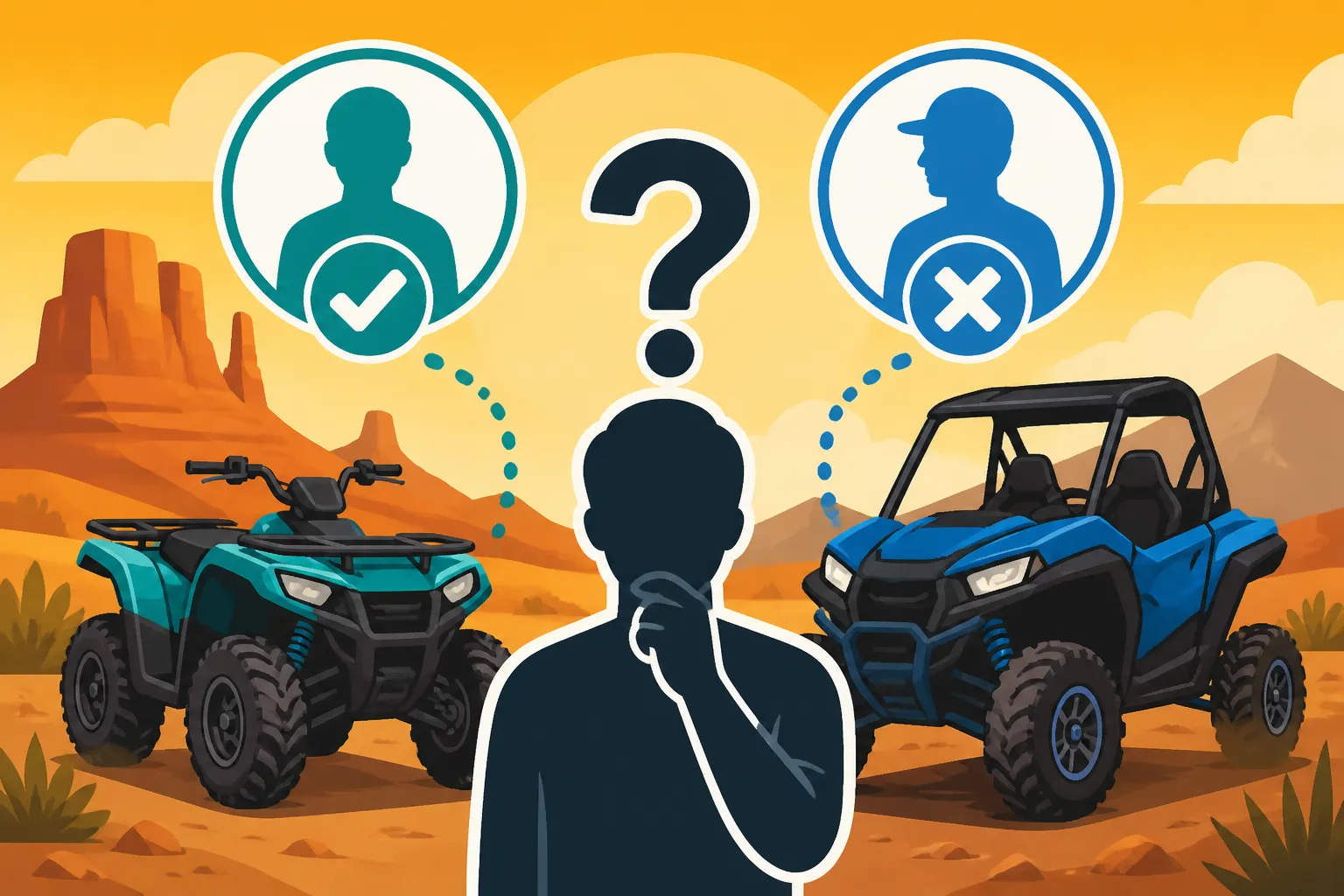
Borrowing an ATV or UTV for a New Mexico ride raises a simple but important question: does the permit belong to the machine, its owner, or the person riding? The answer depends on what kind of permit you mean. Distinguishing machine registration from a rider’s safety permit helps you check what must travel with the vehicle—and what each rider must carry.
Start by separating the machine’s paperwork from the rider’s permit
“Permit” can mean several different things in New Mexico OHV rules. A machine’s registration or nonresident permit is not the same as a safety permit required for some young riders. Land access permissions can be separate again. Before borrowing a machine, identify which requirement applies to the ride you plan to make.
For the machine, the key question is whether it has qualifying New Mexico registration, a qualifying out-of-state registration, or the required New Mexico nonresident permit. In general, that paperwork applies to the vehicle, not as a transferable personal pass that lets its owner ride any machine. A permit or registration for one ATV should not be assumed to cover another ATV, even if the same person owns or regularly rides both.
New Mexico recognizes qualifying OHV registrations from many other states under its reciprocity rules. That can mean a borrowed machine with valid home-state registration does not need a separate New Mexico nonresident permit. But the machine’s paperwork must actually qualify, and the rider should be able to show it. See New Mexico’s Broad OHV Reciprocity and Any Valid OHV Registration Counts in New Mexico for the distinction between a qualifying registration and a separate permit requirement.
A New Mexico safety permit works differently. It applies to the rider, not the machine. If a rider under 18 needs one, borrowing a properly registered ATV does not replace that rider requirement. A machine’s registration does not make an underage rider’s safety permit unnecessary. For the age and training rules, see New Mexico’s Safety Permit for Under-18 Riders.
| What the paperwork covers | Whose requirement it is | What to check before riding |
|---|---|---|
| New Mexico OHV registration | The registered machine | Confirm the registration is current and matches the machine |
| Qualifying out-of-state registration | The machine registered in that state | Check that the registration is valid and qualifies for New Mexico reciprocity |
| New Mexico nonresident OHV permit | The specific nonresident machine | Confirm the permit is valid for that machine and is displayed or carried as required |
| Under-18 safety permit | The individual young rider | Confirm each rider who needs one has their own valid permit |
| Land access authorization | The rider, group, or activity, depending on the land and permit | Confirm separate land-use permission is not required |
That last row matters because a machine that is properly registered or permitted is not automatically allowed everywhere. Route closures, land-management rules, private property, tribal land, and state trust land can impose separate restrictions. Check the rules for the place you intend to ride, including New Mexico Rules for Riding Federal Land.
What to check when you borrow an ATV or UTV
Ask the owner about the machine’s registration or permit before you load it. Do not rely only on a verbal assurance that “it’s covered.” You need to know what kind of coverage it has and whether the paperwork matches the specific vehicle.
If it has New Mexico registration
Check the registration information and decal, and confirm they belong to the machine you are borrowing. A friend’s other ATV may have current registration, but that does not mean the paperwork covers the machine you are taking. If the owner cannot find the registration document, ask how they can confirm the machine’s status before the trip.
You should also check that the required decal is present, readable, and attached where it belongs. A decal from another vehicle, a damaged decal that cannot be identified, or an expired registration can create a problem even if the owner paid to register a different machine. The registration holder’s name may be the owner’s; that alone does not mean the machine cannot be borrowed. The practical issue is whether the vehicle itself is properly covered and the required proof is available.
If it has out-of-state registration
Ask which state issued the registration and whether it is current. A vehicle with valid registration from a state New Mexico recognizes may qualify under reciprocity. A card, document, or other proof that identifies the vehicle makes it easier to show that the machine—not just the owner—has qualifying registration.
Do not assume that an out-of-state plate, sticker, or document is automatically enough. States have different OHV systems, and some may issue documents that are not equivalent to an OHV registration for New Mexico’s purposes. If the owner is unsure, compare the paperwork with the guidance on New Mexico OHV Reciprocity Rules and Riding New Mexico With an Out-of-State Registration. If the registration does not qualify, the nonresident machine may need a New Mexico permit before it is used where one is required.
If it has a New Mexico nonresident permit
Confirm that the permit belongs to the machine you are borrowing and that it is still valid. A nonresident permit should not be treated as the owner’s personal credential. If the owner has several machines, ask which one the permit was issued for and make sure the displayed permit is the one associated with the vehicle on the trailer.
New Mexico offers nonresident permit options, but the right option and its current conditions depend on the permit. Check the official purchasing and program information rather than relying on an old receipt or an owner’s recollection. The overview at New Mexico’s Nonresident OHV Permit can help clarify when a nonresident permit may be needed.
If the owner cannot show proof
The safest choice is to pause and resolve the paperwork before riding. A message or phone call from the owner may help you locate the document, but it is not a substitute for proof you can produce during a ride. Ask the owner to send a clear image of the relevant registration or permit and confirm that it identifies the machine you are taking. If it remains unclear whether the vehicle qualifies, contact the appropriate program office or check official guidance before setting out.
This is especially worthwhile when the machine was recently bought, brought in from another state, or used under a different registration arrangement. For a rental or a borrowed machine from an outfitter, ask who is responsible for providing the required machine paperwork; see New Mexico Rules for a Rented Machine.
The rider still has separate responsibilities
A machine’s registration or permit does not cover every person who climbs aboard. Each rider must follow the rules that apply to their age, equipment, route, and riding location. This is where confusion about “whose permit counts” can lead to a false sense of security: the vehicle may be covered while a particular rider is not.
Young riders and safety permits
For riders under 18, New Mexico has safety permit requirements that depend on the rider’s circumstances. The permit belongs to the young rider. It does not transfer from a parent, sibling, vehicle owner, or another rider in the group. If two young people take turns riding the same ATV, check each person’s eligibility and paperwork individually.
A parent or adult should not assume the machine owner has handled this. Ask the young rider or their parent to confirm the safety permit requirement and bring the required proof. The details can depend on age and qualifications, so check New Mexico Safety Permit for a Minor before the trip. The machine’s registration and the rider’s safety permit answer different questions: one concerns the vehicle, and the other concerns who may ride under the applicable youth rules.
Equipment, insurance, and riding location
Borrowing a registered machine does not exempt the rider from equipment or conduct rules. Requirements can depend on whether the machine is used off-road or on a roadway where OHV use is allowed, and on the rider’s age. A machine owner may have equipment that is adequate for their usual trail but not for a different kind of ride.
Before departure, agree who will supply helmets and other required gear, and verify what applies to each rider. If your route includes a paved-road segment, review the separate conditions for that use rather than assuming ordinary off-highway registration is enough. New Mexico Rules for a Rented Machine and New Mexico Rules for Riding Federal Land are useful starting points for checking responsibilities that can remain with the rider even when the machine is borrowed.
Also confirm that the route is open to the kind of vehicle you have. A permit does not authorize travel on every road or trail, and registration does not override a closure or a landowner’s restrictions. A route may cross land with different managers, so check maps and posted signs along the way. If the ride involves state trust land, confirm whether separate access permission is needed; see State Trust Land and Its Own Permit.
A practical pre-ride check for a borrowed machine
Use this sequence before leaving home. It takes less time than trying to sort out missing paperwork at a trailhead or during a roadside check.
- Identify the machine. Note its make, model, and vehicle identification number if available. Make sure the paperwork and decal refer to the ATV or UTV you are taking, not another machine in the owner’s garage.
- Ask what covers it. Find out whether it has New Mexico registration, qualifying out-of-state registration, or a New Mexico nonresident permit. Do not rely on the word “permit” without clarifying which document the owner means.
- Check that the coverage is current. Look at the dates and any identifying information on the document. If the owner is unsure whether an out-of-state registration qualifies, verify that before riding.
- Locate the proof. Bring the required documents or other acceptable proof with the machine. Make sure the decal is attached as required and can be read.
- Check each rider separately. Confirm age-related safety permit obligations and any equipment rules for every person who will operate or ride on the machine.
- Verify the route. Check whether the planned land and roads are open to your vehicle and whether separate access permission applies.
- Agree on responsibility. Decide who will carry the documents, who will provide safety gear, and who will contact the owner if a problem comes up.
For example, an adult borrowing a friend’s ATV with current qualifying out-of-state registration should focus on whether the machine’s registration qualifies and whether proof accompanies it. If a teenager will ride the same ATV, the teenager’s own safety requirements must also be checked. If the machine instead has a New Mexico nonresident permit, confirm that the permit is associated with that ATV—not merely that the owner has purchased a permit for some other vehicle.
If the owner is lending multiple machines, repeat the check for each one. One properly covered UTV does not establish that the second UTV is covered, and a rider’s safety permit does not establish that any machine has the registration or permit it needs. Keep the checks separate: first verify the vehicle, then verify each rider, then verify the place and route.
The short answer is that the borrowed machine’s valid registration or nonresident permit is what matters for the vehicle, while an under-18 safety permit belongs to the individual rider. Confirm both sides of the equation before the trip. When the paperwork is uncertain, do not guess based on who owns the machine or who usually rides it.
Disclaimer
This article is for general informational purposes only and does not constitute professional advice. Laws, prices and regulations vary by location and change over time. Consult a qualified professional for guidance on your specific situation.