Visual Supervision and What It Means
A parent can be nearby and still be unable to supervise a young rider on a winding trail, over a ridge, or across a staging area. In New Mexico, visual supervision is about being able to see the rider—not merely being somewhere on the same ride. Here’s what that means in practice, how it differs from a safety permit, and how to plan a ride so the adult can actually keep watch.
What visual supervision means in New Mexico
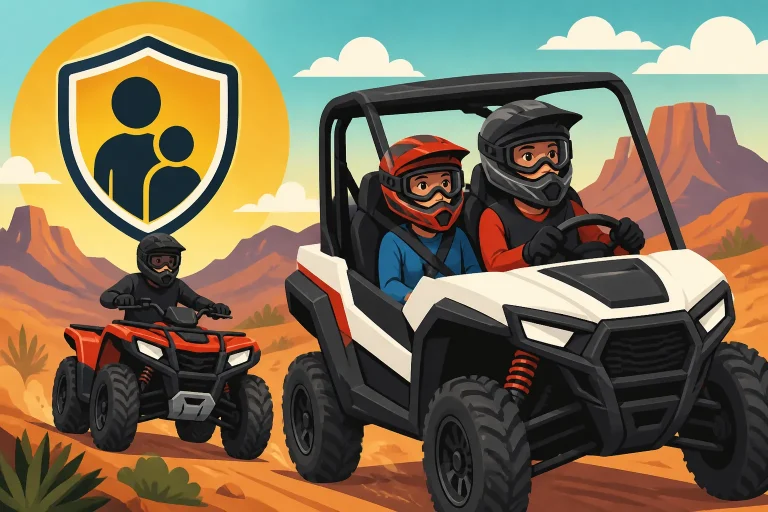
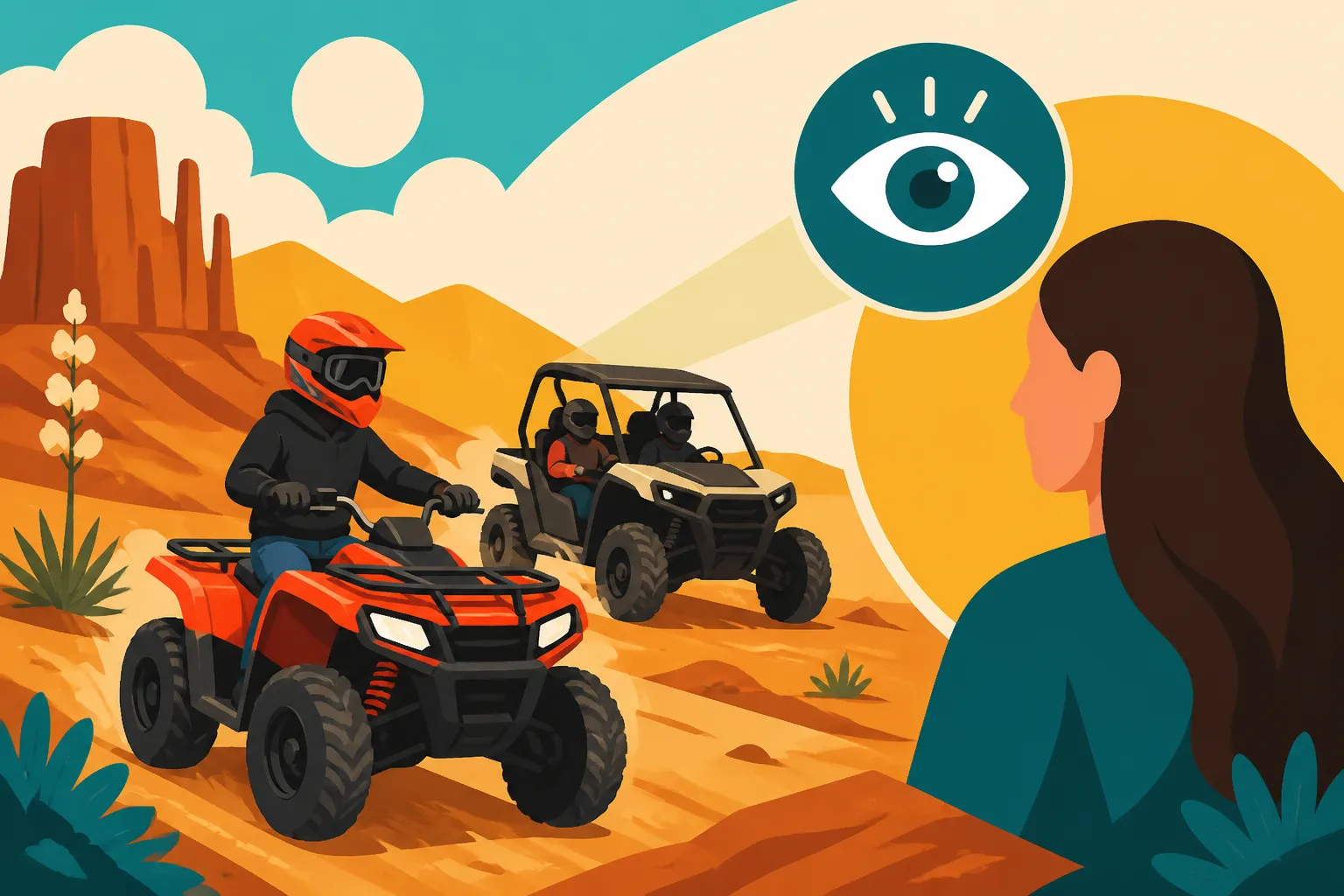
For a minor riding an OHV on public land, New Mexico’s supervision requirement is a practical one: a responsible adult must be able to see the young rider while the rider is operating. The point is not simply that an adult is present at the trailhead or knows where the child intends to go. The adult needs a real line of sight and a position that allows them to notice trouble and respond.
That distinction matters in New Mexico’s varied riding terrain. A rider can disappear from view quickly behind a dune, a rock outcrop, a tree line, or a bend in a forest road. A group may start together, then stretch out until the youngest rider is no longer visible to the adult. If the adult cannot see the minor, the group should slow down, regroup, or change its route.
Visual supervision is separate from the rider’s safety permit. A permit or course completion record addresses the rider’s safety training; supervision addresses the adult’s ability to watch the rider during operation. One does not automatically replace the other. Check the current requirements for the rider’s age and circumstances in New Mexico OHV Safety Permit Requirements and New Mexico’s Safety Permit for Under-18 Riders.
For a useful on-the-ground test, ask: Can the supervising adult see where the minor is, tell whether the rider is moving safely, and get to them promptly if they stop or fall? If the answer is no, the adult is not in a good position to provide visual supervision, even if the group is technically still together.
| Situation | Is visual supervision working? | Practical response |
|---|---|---|
| The minor rides a short distance ahead on open ground and remains in view | Usually, if the adult can still reach the rider promptly | Keep the pace controlled and agree on a stopping point |
| A ridge, dune, or bend hides the minor | No, while the rider is out of sight | Stop before the obstruction or choose a route with a clear view |
| The adult waits at the staging area while the minor rides out of sight | No | Have the adult accompany the minor or choose a route both can see |
| The group spreads out and the minor falls behind | Not reliably | Stop and regroup before continuing |
| The adult can see the rider but is too far away to respond quickly | The arrangement is weak | Ride closer together and reduce speed |
The table is a practical way to assess a ride, not a substitute for checking the exact rule that applies to the child and location. New Mexico’s requirements can involve more than one factor, including age, training, and where the machine is being operated. For a broader explanation of the adult’s role, see New Mexico Supervision Rules for Young Riders.
How to keep a minor within sight on a ride
Good supervision starts before the machines move. Choose a route that matches the young rider’s ability and the adult’s ability to keep up. A fast adult on a powerful machine may not be able to supervise well if the minor is on a slower or smaller OHV. The adult’s job is not to ride at their preferred pace; it is to remain close enough to observe and assist.
Before leaving the staging area, agree on simple rules:
- The minor does not ride ahead around a blind turn or over a rise without the adult.
- The group stops before any feature that blocks the adult’s view.
- If anyone loses sight of the group, they stop in a safe place rather than continuing farther.
- The adult and minor use a clear signal for stopping or needing help.
- No one leaves the planned route without telling the group.
These rules are especially useful when riding with multiple adults or children. Decide who is responsible for the minor. Do not assume that another adult has taken over just because they happen to be nearby. If the group splits into separate routes, the supervising adult should stay with the young rider rather than relying on a later meetup.
Match the route to visibility
A wide, open route can make it easier to keep a young rider in view, but openness alone does not guarantee a safe ride. Dust can block sightlines, and uneven ground can conceal a stopped or fallen rider. In wooded areas, a trail that looks visible from the staging area may have tight turns and short sightlines farther along.
Plan to stop before features that will hide the rider. On dunes, that may mean staying on the same side of a crest rather than sending the minor over the top first. In forest terrain, it may mean taking turns slowly and waiting at intersections. On a narrow or uneven route, the adult may need to ride behind the minor, where they can observe the rider’s actions, or ahead at a pace that allows frequent checks. The right position depends on the terrain and the child’s skill.
If you cannot keep the minor in view without riding faster than is safe, the route is not a good fit. Choose a shorter or more open option. For help thinking through age-related restrictions alongside supervision, review New Mexico Minimum Age to Ride Public Land and New Mexico Rules for a Rider Under 13.
Set expectations for the adult and young rider
Explain that visual supervision is not a race, and that keeping the adult in sight is part of the ride. A young rider who is eager to catch up may take a blind corner too quickly or cross an obstacle without checking. Set a pace that leaves room to stop, look, and wait.
The adult should also avoid distractions. Taking photos, checking a phone, or managing another machine can leave a rider unwatched just when attention matters most. If the adult must stop to deal with a breakdown, a map, or another child, the group should stop too. Do not let the minor continue out of sight while the adult handles the interruption.
Where visibility is poor, use planned regrouping points rather than trying to maintain a long line of riders. A regrouping point should be somewhere safe and easy to identify, not a blind corner or the far side of a steep feature. The adult should arrive with the minor, not send the minor ahead to wait alone.
What does not count as reliable supervision
Being in the same general area is not enough if the adult cannot see the child. An adult at a parking area, campsite, or trailhead cannot visually supervise a minor who has ridden beyond view. A phone call or a GPS location may help someone find a rider, but neither allows the adult to observe the rider in real time or react as a hazard develops.
A helmet camera, action camera, or other recording device does not replace direct observation either. It may document a ride, but it does not show the supervising adult what is happening at that moment unless the adult is also watching a live feed—and a screen is not a sensible substitute for staying with the rider. Keep attention on the route and the young operator.
Nor does riding in a large group guarantee that someone is watching. Unless adults have clearly agreed on who is responsible, each person may assume another rider is keeping track of the minor. Before starting, name the supervising adult and make sure that person knows the child’s machine, experience level, and planned route.
Visual supervision also does not make every ride appropriate. An adult can watch a child and still choose a route that is too steep, fast, remote, or technically demanding. Supervision is one part of safe riding, not a way to cancel out poor route choices, unsafe speed, unsuitable equipment, or missing training.
Keep the paperwork side separate, too. Confirm which safety permit or course documentation the minor needs and carry the required proof while riding. See Carrying the Safety Permit on a New Mexico Ride for more on having that documentation available. A permit does not authorize a rider to ignore route closures, property boundaries, or other rules for the land being used.
A practical pre-ride check for families
Before a ride, consider the child’s age, experience, machine, and route together. A young rider who is comfortable on familiar, open terrain may need much closer support on a rocky trail or unfamiliar forest road. A machine that is difficult for the child to control can also make it harder for the adult to keep the group together. If the child struggles to stop, turn, or maintain a safe pace, choose easier ground or postpone the ride.
Use this short check before starting:
- Adult: Is a responsible adult assigned to stay with the minor and able to keep them in view?
- Route: Are there blind turns, steep crests, or obstacles that will separate the pair?
- Pace: Can the adult maintain a safe pace that matches the young rider?
- Group: Does everyone know where the minor is and who is supervising?
- Plan: Does the group know where to stop if visibility is lost?
- Requirements: Have you checked the applicable supervision and safety-permit rules for the rider’s age and location?
If the ride includes a rental machine, borrowed OHV, or group outing, confirm the provider’s rules as well as the public-land requirements. A rental operator can set conditions for its machines, but those conditions do not necessarily cover every rule that applies on public land. The adult should also make sure the minor knows how to stop the machine and what to do if separated.
When a rider falls behind or disappears from view, stop in a safe place and re-establish contact before moving on. Do not assume the child will catch up, and do not send another minor to look alone. If the rider cannot be located promptly, follow the group’s emergency plan and seek help as appropriate. Having an agreed stopping rule makes this less likely to become a confusing search.
The central idea is simple: supervision has to work in the terrain you are riding, not just on paper. If the adult can see the minor, stay close enough to respond, and choose a route suited to the child, visual supervision is much more meaningful. When the route or group setup makes that impossible, change the plan rather than relying on the child to ride out of sight safely.
Disclaimer
This article is for general informational purposes only and does not constitute professional advice. Laws, prices and regulations vary by location and change over time. Consult a qualified professional for guidance on your specific situation.