New Mexico Rules for Retrieving Game by UTV
Retrieving a harvested animal with a UTV in New Mexico can save a long carry, but it does not make every route legal. The answer depends on where you are, which roads are open, and what the current hunting and land-use rules allow. Here’s how to plan a retrieval without assuming your hunting license or OHV permit grants off-road access.
A UTV helps with transport, not access
A UTV can be useful for bringing harvested game back from a legal staging point. But having a machine, a valid hunt license, or permission to hunt does not automatically authorize driving wherever the animal lies. Hunting access and motorized access are separate questions.
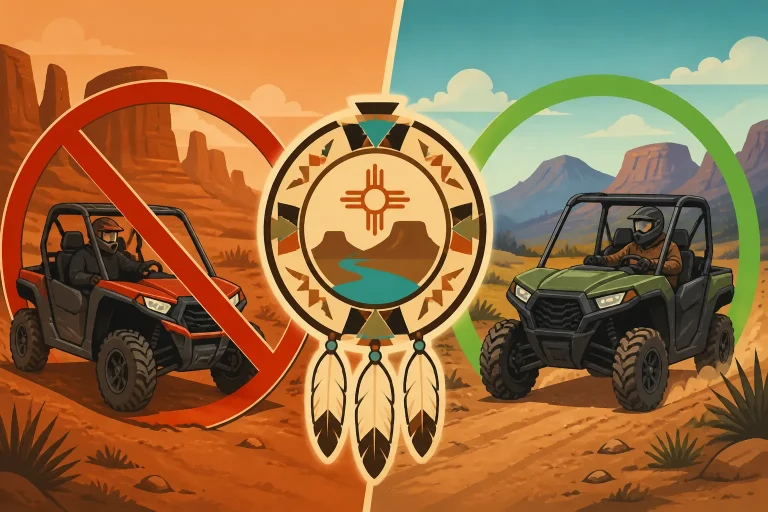
On public land, travel is generally controlled by the land manager’s route designations and closures. A route that appears on a map, or that other riders have used, is not necessarily open to your UTV today. Check the current travel map, seasonal restrictions, and any closure notices for the specific area. The rules can differ between a national forest, BLM land, state trust land, and private property. See [New Mexico Rules for Riding a National Forest] and New Mexico Rules for Riding BLM Land for more on why the land type matters.
The same distinction applies to hunting. A hunting license authorizes a specific kind of hunt under its conditions; it does not give you permission to leave an established route to reach an animal. Likewise, an OHV registration or nonresident permit concerns the machine’s legal operation, not the right to cross closed ground. For visitor requirements, see New Mexico’s Nonresident OHV Permit and New Mexico OHV Reciprocity Rules.
| Situation | What to check before moving the UTV |
|---|---|
| The animal is beside an open, legal route | Confirm the route is open to your vehicle and the hunt rules allow the activity |
| The animal is beyond the route | Do not assume you can drive cross-country; check land-manager rules and any specific exception |
| The route is gated or seasonally closed | Treat the closure as controlling unless the manager confirms an applicable exception |
| The animal is on private or trust land | Confirm access and motorized travel permission, not just hunting access |
| You are using a borrowed or rented machine | Confirm its required permit or registration and any land-use limits |
Some rules focus on whether a motor vehicle may be used to pursue, harass, or take wildlife. Moving a harvested animal is not the same activity as pursuing live game, but that distinction does not erase route restrictions. If the proposed retrieval involves leaving a road or trail, check the exact rules for that land and hunt before entering. A call to the responsible land office or a written clarification can be more useful than relying on a general statement from another hunter.
Check the hunt, land, route, and machine
Before the hunt, work through four separate checks. This takes less time than discovering that the UTV cannot legally reach the animal after a successful hunt.
Read the current hunt conditions
Use the current proclamation and license materials for the species and hunt you plan to pursue. Confirm any unit boundaries, season dates, weapon restrictions, tagging instructions, and rules about transporting or recovering game. Conditions may differ between hunts, so do not rely on last season’s paperwork or a rule you remember from another unit.
Do not use the UTV to chase, pressure, or herd live animals. Keep the machine out of the hunting action unless the applicable rules clearly allow the specific use. For firearm-related restrictions, review New Mexico Rules for Carrying a Firearm on an ATV. Never fire from a moving machine, and do not assume that a road or vehicle location is a lawful shooting position.
Confirm the land and route
Identify who manages the ground where the animal is located and which routes are open to your vehicle type. A road may be open to highway vehicles but not to UTVs, or open only during part of the year. A route can also be closed because of weather, fire danger, wildlife protection, maintenance, or a seasonal order.
Use the appropriate current map for the area and check for updates close to your trip. If a sign at the route contradicts an older map, stop and follow the posted restriction until you have confirmed otherwise. Keep in mind that a designated route is not necessarily permission to drive off it when the terrain narrows, becomes muddy, or is blocked.
Where grazing allotments or ranch operations are involved, gates and access conditions deserve particular care. A gate that is open when you arrive is not an invitation to drive through land where motorized access is not authorized. See New Mexico Rules for Riding a Grazing Allotment for the basics of respecting those access limits.
Verify that the UTV itself is covered
Check what registration, permit, or proof of compliance your machine needs for the trip. New Mexico residents and nonresidents may have different requirements, and reciprocity depends on the rider’s home-state situation. Do not assume a plate, sticker, or registration from home is recognized everywhere, or that a New Mexico permit opens a closed road.
If the machine is rented or borrowed, ask who is responsible for confirming its paperwork and whether the rental agreement limits where it may be driven. For a broader look at what hunters need to know, see New Mexico Rules for Hunting From an ATV. The rules for an ATV and a UTV can overlap, but vehicle classification and route restrictions still matter.
Plan for recovery without driving farther
Decide in advance where the UTV can legally stop and how the animal will get there. That may mean parking on an open route and carrying or dragging the animal to the machine, using a hand cart, or arranging help. A winch can assist with loading or moving equipment, but it does not authorize driving onto closed ground or using a vehicle in a prohibited way.
A paper map or offline map is a useful backup if cell service is weak. A waterproof map sleeve—available from outdoor retailers, including Amazon—can keep a printed map readable in dust or rain. Check the route on the map before leaving the staging area rather than relying only on a phone that may lose signal.
A careful retrieval process
Once you have a harvested animal, slow down and make the recovery a separate task from the hunt. Confirm the harvest is legal, secure the required documentation, and move only where access is allowed.
- Make the area safe. Unload and secure firearms as appropriate, keep bystanders clear, and take a moment to assess the terrain. Avoid driving across a slope, through unstable ground, or into brush where the UTV could roll or become stuck.
- Follow the tag and carcass instructions. Complete the required tag details and attach the tag as directed by the current license materials. Keep the license or other required documentation with you. Do not leave the tag behind at the kill site or assume a photo of it is a substitute for the required physical tag.
- Confirm the route again. Check for a closed gate, posted restriction, washout, fire closure, or other condition that changes access. If you cannot establish that the route is open to your UTV, do not proceed on the assumption that retrieval creates an exception.
- Choose a legal approach. Keep the machine on an authorized route. If the animal is off-route, consider carrying or dragging it to the route, getting help, or contacting the land manager for guidance. Do not widen a trail, bypass a gate, or drive around a closure.
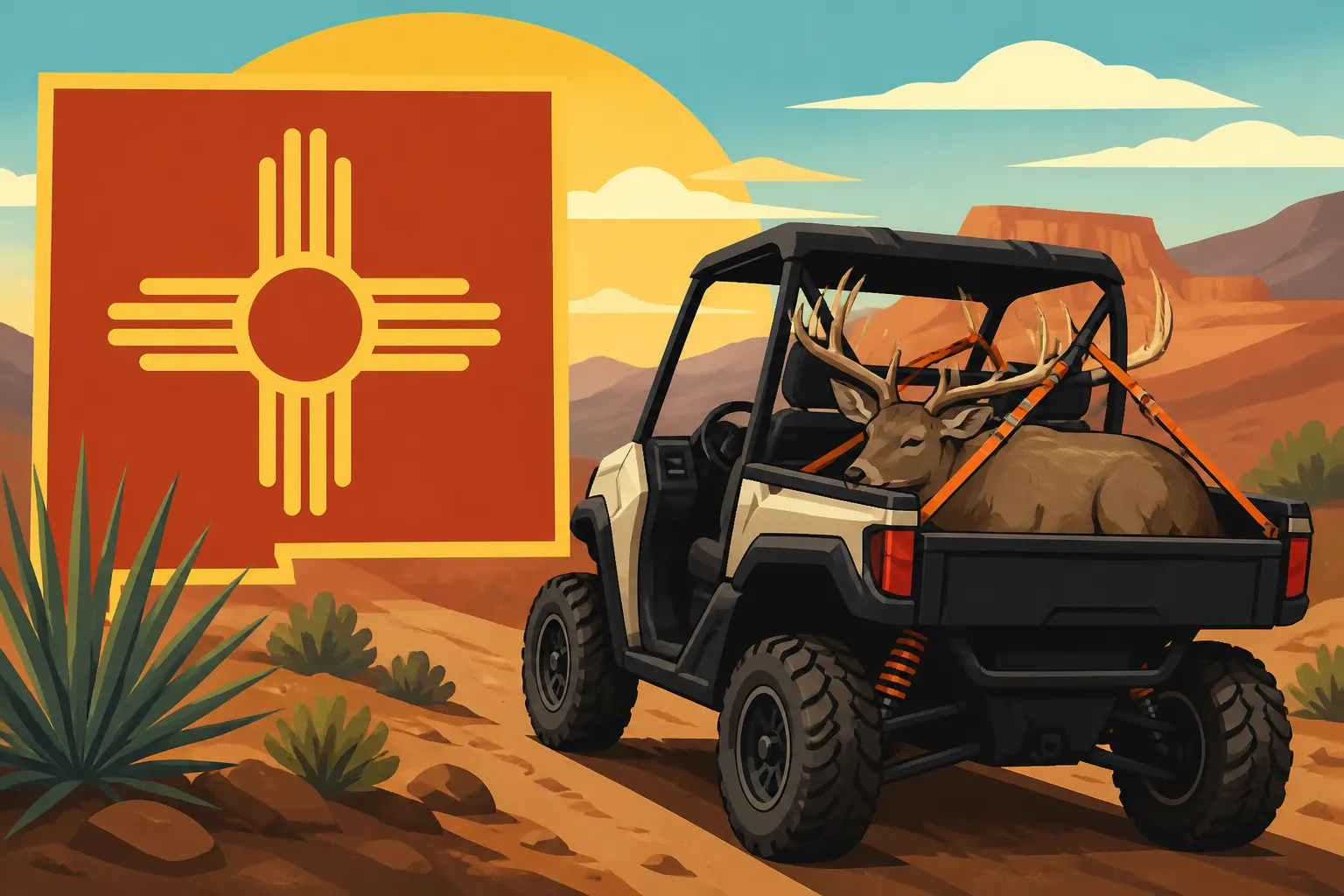
- Load securely. Balance the load, secure it with suitable straps, and keep it within the UTV’s capacity. A poorly secured carcass can shift on a side slope or during braking. Avoid carrying a load where it blocks the driver’s view, controls, or safe access to passengers.
- Return by an open route. Travel slowly, watch for other users, livestock, and wildlife, and leave gates as you found them unless the land manager’s instructions say otherwise. Do not take a shortcut simply because the loaded machine is difficult to maneuver.
- Handle the animal promptly. Protect the meat from dirt, exhaust, and excessive heat. Field dress and cool it as conditions and the applicable rules require. Keep the tag and other required documentation associated with the animal during transport.
If the animal is wounded rather than harvested, treat the situation differently. Follow the hunting rules for tracking and dispatching it, and do not use the UTV to chase or push it. If you are uncertain whether a particular recovery method is permitted, stop before using it and ask the appropriate wildlife or land-management office.
Common retrieval problems and safer alternatives
The animal is just off the road
“Just off the road” can still mean off a designated route. The distance does not decide whether driving is allowed. If the route ends at a fence, gate, or posted boundary, do not treat the nearby terrain as an extension of the road. Carrying or dragging the animal to the machine may be the lawful and lower-risk option.
A road is physically passable but not open
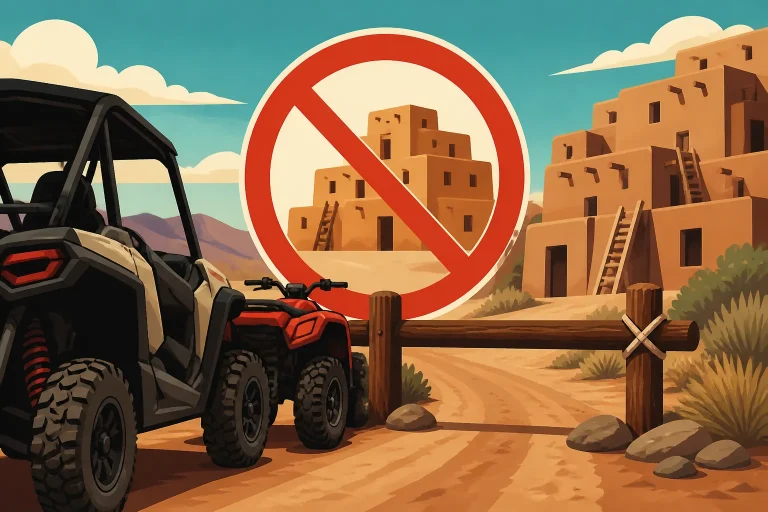
A UTV may fit through a gap or around a barrier, but physical access is not legal access. Gates, signs, barriers, and seasonal notices can mark restrictions that are not obvious on a phone map. Do not bypass them to shorten the carry. If the status is unclear, turn around and confirm it with the land manager.
The land crosses multiple ownerships
A hunt area can include a patchwork of public, private, and trust land. Permission on one parcel does not automatically continue across the boundary. Confirm both the hunting access and the right to travel by UTV for each parcel you need to cross. On trust land, check the current permit terms and whether motorized travel is allowed; do not treat a recreation permit as blanket permission for every route or activity.
The route closes during the trip
Weather, fire conditions, and management decisions can change access. Carry a backup plan for getting the animal out without driving farther into a closure. If a closure affects the route you intended to use, follow posted instructions and contact the manager for advice. Do not assume that a prior approval or an open route earlier in the day overrides a new restriction.
The UTV cannot carry the load safely
A machine’s cargo rating and passenger rating are not interchangeable. Check the manufacturer’s limits, secure the animal so it cannot shift, and do not overload the cargo bed or tow beyond the machine’s capacity. If the terrain is steep or soft, multiple smaller trips or a hand-carry may be safer than an overloaded UTV. A recovery strap or winch should be used only from a stable, appropriate anchor point and in a way that does not damage vegetation or land.
The practical rule is simple: plan to bring the animal to the UTV, not to drive the UTV to the animal at any cost. Before leaving, make sure the hunt conditions, land access, route designation, and machine requirements all line up. If one part is uncertain, choose a recovery method that stays on known legal ground and confirm the rest with the responsible office.
Disclaimer
This article is for general informational purposes only and does not constitute professional advice. Laws, prices and regulations vary by location and change over time. Consult a qualified professional for guidance on your specific situation.