When a Town Inside an Open County Says No
You've done your homework. You've heard the buzz that your local New Mexico county has opened up its roads to off-highway vehicles, and you're picturing seamless rides from your property right onto the trail. But then, the excitement fades as you approach the city limits. A small sign, a quick glance at a local ordinance, and suddenly, you realize that just because the county gave the green light, doesn't mean every town within it agrees. This guide is here to help you navigate that often confusing reality, understanding why towns sometimes say "no," even when the surrounding county says "yes."
The Layered Reality of New Mexico OHV Laws
Riding an ATV or UTV in New Mexico comes with a fascinating, and sometimes frustrating, patchwork of regulations. What's perfectly legal on a forest road might get you a ticket just a few miles away. This complexity is amplified when you start talking about county roads and the incorporated towns nestled within those counties. It’s like peeling an onion; each layer has its own set of rules, and you have to understand them all to stay compliant.
County Ordinances: The Broad Stroke of Opportunity
Many New Mexico counties have recognized the economic and recreational benefits that come from embracing OHV riders. They understand that off-highway vehicles are a part of the local culture and a key to accessing the incredible landscapes that draw so many of us here. As a result, several counties across the state have passed resolutions or ordinances to open their unincorporated county roads to OHV traffic. This is fantastic news for riders, as it often means more miles of accessible routes, easier connections between trails, and sometimes even the ability to ride from your property to a trailhead without having to trailer your machine.
For example, counties like Sierra County have made significant strides in opening up their roads, allowing riders to explore vast areas that were once off-limits for through-travel. [How Sierra County Opened Nearly All Its Roads] explains the enthusiasm behind these decisions. Similarly, areas around Truth or Consequences and Monticello have seen increased access, which is a boon for tourism and local businesses alike. Eddy County, too, has explored ordinances to facilitate OHV use, opening up many opportunities for riders to enjoy the desert landscape. These county-level decisions are often celebrated by the riding community, but they come with an important caveat that can often be overlooked in the excitement.
Municipal Authority: When Local Trumps County
Here's where the rubber meets the road, or more accurately, where the dirt road meets the asphalt. While a county has the authority to open its unincorporated roads – essentially, any road that isn't maintained by the state or an incorporated municipality – it does not automatically have jurisdiction over the streets within a legally incorporated town or city. Think of it this way: an incorporated town has its own government, its own police force (or contracts with the county sheriff), and crucially, its own set of municipal ordinances that govern what happens within its boundaries.
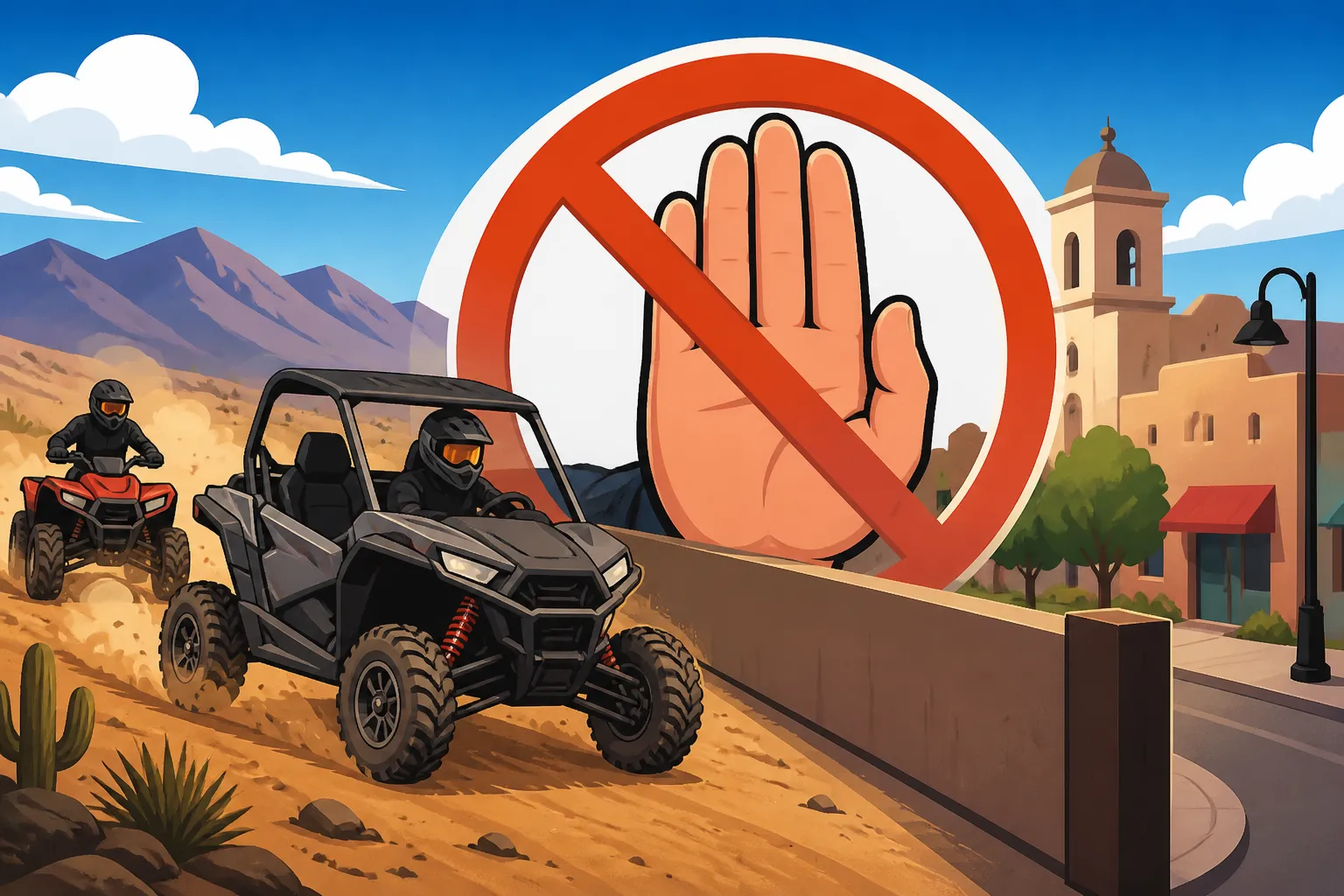
This means that even if you're riding in, say, Otero County, which might have an accommodating OHV ordinance, the moment you cross into the city limits of Alamogordo, the county's rules often no longer apply to those specific city streets. Alamogordo, like many towns, retains its right to regulate traffic and vehicle types on its streets. This can be incredibly frustrating. You might be riding happily on a county road, following all the rules, only to encounter a "No OHV" sign at the town's edge, effectively cutting off your route or forcing you to load up your machine just to bypass a few blocks. Understanding this distinction is crucial for staying legal and avoiding unexpected fines. [New Mexico Rules for Riding a City Street] delves deeper into these specific urban regulations.
Why Towns Opt Out and What It Means for Riders
It's easy to feel a sense of injustice when a town restricts OHV access, especially when the surrounding county is welcoming. But from the perspective of municipal leaders, these decisions are often made with what they perceive to be valid reasons, even if they sometimes feel short-sighted to the riding community. Understanding their rationale can help riders plan better and even engage in more productive dialogue.
Safety Concerns and Traffic Flow
One of the primary reasons towns choose to restrict OHV access on their streets is public safety. Many municipal areas have denser populations, more pedestrian traffic, school zones, and a mix of larger vehicles that simply don't mix well with off-highway vehicles in their view. The concern often revolves around the perceived instability of OHVs on paved surfaces, their acceleration capabilities, and the potential for accidents involving cars or pedestrians.
Noise is another common complaint. While our machines are a symphony to our ears, they can be perceived as disruptive by residents, especially in quiet neighborhoods. Traffic congestion, particularly in tourist-heavy towns, can also be a factor. Towns want to ensure smooth traffic flow for their primary economic drivers and sometimes see OHVs as an impediment. These concerns, whether fully justified or not, often drive the decision to keep OHVs off city streets. They are trying to manage the overall urban experience, and sometimes, OHV access just doesn't fit into their vision for that experience.
Identifying "Open" vs. "Closed" Areas
So, how do you know where you can and cannot ride? This is the million-dollar question, and unfortunately, there's no single, statewide answer that applies everywhere. The best advice is always to "know before you go." The responsibility falls squarely on the rider to research the specific ordinances for both the county you plan to ride in and any incorporated towns you might encounter along your route.
Look for physical signage at city limits, which should clearly state whether OHVs are restricted or allowed. However, don't rely solely on signs, as they can sometimes be missing or unclear. Check municipal websites, call city halls, or even visit local visitor centers. Many communities that do allow OHVs will proudly display that information. If a town is within an "open" county but you can't find clear information, assume it's closed to OHVs until you can confirm otherwise. Remember, ignorance of the law isn't a valid defense. It’s a bit of a bureaucratic scavenger hunt, but it's essential for preventing trouble.
| Jurisdiction Type | Typical OHV Status | Key Considerations |
|---|---|---|
| Federal Lands | Generally allowed on designated routes. | Spark arresters, sound limits, safety permits for minors. |
| State Lands | Varies widely; often restricted. | State Parks typically ban OHVs. |
| County Roads (Unincorporated) | Increasingly open in many counties. | Still subject to county-specific ordinances and state rules for road use. |
| City/Town Streets (Incorporated) | Often restricted, even within open counties. | Subject to municipal ordinances, which can override county rules. |
| Private Property | Permitted with landowner permission. | Always get explicit permission. |
Navigating the Urban Landscape with Your OHV
Even when towns have restrictions, there can sometimes be designated paths or rules for crossing, which makes proper planning and awareness crucial. It’s about minimizing your footprint and maximizing your fun legally and safely.
The "Designated Route" Dilemma
Some forward-thinking towns, recognizing that OHV riders need to get somewhere, have created designated routes through their municipal areas. These routes are usually designed to connect trail systems, allow access to gas stations or local businesses, or simply provide a way to pass through town to reach other riding areas. A prime example, though slightly different in context, is how [Red River's ROV-Only Streets] allow for specific types of OHVs on certain roads. While Red River's situation is unique, it highlights the possibility of towns creating specific pathways.
These designated routes are typically clearly marked with signs, and they often come with their own set of rules, such as speed limits, hours of operation, or even requirements for specific safety equipment like mirrors or turn signals. It's not a free-for-all; it's a carefully planned compromise. As riders, it's our responsibility to respect these designations strictly. Straying from a designated route can quickly lead to fines and can jeopardize future access for the entire riding community. When you encounter a town that has made these accommodations, treat them with extra care and respect.
Planning Your Ride: Avoiding Fines and Frustration
The best way to avoid the headache of unexpected town restrictions is to do your homework before you even load up your machine. Start by identifying your riding destination and then plot out your route, paying close attention to any incorporated towns or cities you might encounter. Look up their specific OHV ordinances online, or make a quick phone call to their city clerk's office. It might sound like extra work, but it saves immense frustration (and potential fines) later on.
Consider carrying maps or using GPS apps that can help you identify city limits and designated routes. Tools and accessories from companies like SuperATV, such as sturdy phone mounts or dedicated GPS units, can be invaluable for navigating complex trail systems and urban interfaces, helping you keep track of where you are relative to those critical boundaries. Always be prepared to trailer your machine if a town is completely closed to OHVs and you need to pass through. It's inconvenient, yes, but it's the legal and responsible choice. Remember, [New Mexico Fines for an Unregistered OHV] can be steep, and illegally riding in a prohibited area can add to that penalty. Planning prevents these unfortunate surprises.
What to Do When a Town Says "No"
Encountering a "No OHV" sign can be a disheartening moment, especially when you've planned a fun day of riding. However, your response in that moment, and in the long term, is crucial both for your own legal standing and for the future of OHV access in New Mexico.
Respecting Local Ordinances and Signage
When you see signs prohibiting OHVs on municipal streets, or if you've confirmed through your research that a town is closed to them, the most important thing you can do is to respect that decision. Do not try to sneak through, or assume you won't get caught. Local law enforcement is typically very aware of their town's ordinances, and they will enforce them. Trying to skirt the rules not only puts you at risk of a citation but also creates a negative impression of OHV riders in the community.
If you are caught riding where you shouldn't be, the consequences can range from a warning to a significant fine, or even having your machine impounded. [New Mexico Fines for an OHV Violation] can quickly add up, turning a fun outing into an expensive headache. It's always better to turn around, find an alternative route, or carefully load your machine onto a trailer to bypass the restricted area. Your compliance helps build trust and may open doors for future discussions about responsible OHV access.
Advocacy and Engagement: Being Part of the Solution
While respecting current rules is paramount, it doesn't mean you have to accept the status quo indefinitely. The OHV community has a powerful voice when it comes together. If you believe a town's restrictions are overly broad or preventing legitimate access, consider engaging constructively with local officials. Attend town council meetings, write letters, or join local OHV clubs that are already advocating for access.
Educate local leaders on the economic benefits OHV tourism can bring, highlight the responsible practices of riders, and offer solutions, such as proposing designated routes or advocating for clearer signage. Sometimes, towns simply haven't considered the issue from a rider's perspective or don't realize the potential benefits. By being a polite, informed, and persistent advocate, you can contribute to changing policies and opening up new opportunities for everyone. It's a long game, but one that dedicated riders can win, one town at a time. The push to allow OHVs on county roads in places like Eddy County and Sierra County didn't happen overnight; it was the result of consistent effort and engagement.
Disclaimer
This article is for general informational purposes only and does not constitute professional advice. Laws, prices and regulations vary by location and change over time. Consult a qualified professional for guidance on your specific situation.