Watching the Race at Red Sands
Watching a race at Red Sands can be a great way to enjoy New Mexico’s desert riding scene, but race-day access, parking, and safe viewing spots may differ from an ordinary riding visit. This guide explains how to plan, what to bring, how to stay clear of active routes, and what to verify before you head out.
Plan your Red Sands race-day visit
Confirm the event and spectator access
Start by confirming that a race is actually scheduled and that spectators are welcome. Red Sands is a riding area, but that does not mean every event, route, or staging zone is open to the public. Race organizers may set rules for spectator access, designated viewing zones, parking, and entry. Those details can change from one event to another.
Look for information from the event organizer or the relevant land manager, rather than relying on an old social media post or a friend’s recollection. Ask whether spectators need to register, where vehicles should park, whether the riding area will be partly closed, and whether children or pets are allowed. If the information is unclear, call or message the organizer before making the drive.
It also helps to distinguish a race weekend from a regular riding day. Race activity can mean more traffic, temporary barriers, course markings, dust, and moving support vehicles. Even if the event is visible from a public area, the course itself may be restricted to racers and authorized staff. For background on the kind of event people mean when they talk about race weekend, see [What Happens at Red Sands Race Weekend in February]. Treat it as context, not as a substitute for checking the event’s own instructions.
Check access, weather, and road conditions
Red Sands is in southern New Mexico, where a clear morning can still bring wind, blowing dust, or a fast change in conditions. Check the forecast for the area and consider how visibility and surface conditions could affect both the drive in and the time you spend watching. Recent rain can make access roads or low spots difficult, while dry, windy conditions can stir up dust. [Red Sands After a Rainstorm] and [Dust and Visibility on a Desert Trail] offer useful context for those conditions.
Plan your route before leaving, including the final approach to the staging area. Follow the event’s directions and posted signs rather than assuming a familiar entrance will be open. If you use onX Offroad to review your route, use it as a planning aid alongside organizer directions and signs on the ground. App maps can help you understand the surrounding area, but they do not grant permission to enter a closed route or cross private property.
Do not count on every nearby road or riding route being available during an event. Organizers may redirect traffic or restrict access to protect racers and spectators. For general area context, see [Red Sands OHV Area in Southern New Mexico] and [Getting to Red Sands Off New Mexico's US 54]. Before setting out, verify the current event access instructions; a route that worked on a previous visit may not be appropriate on race day.
Find a safe place to watch
Stay in designated viewing areas
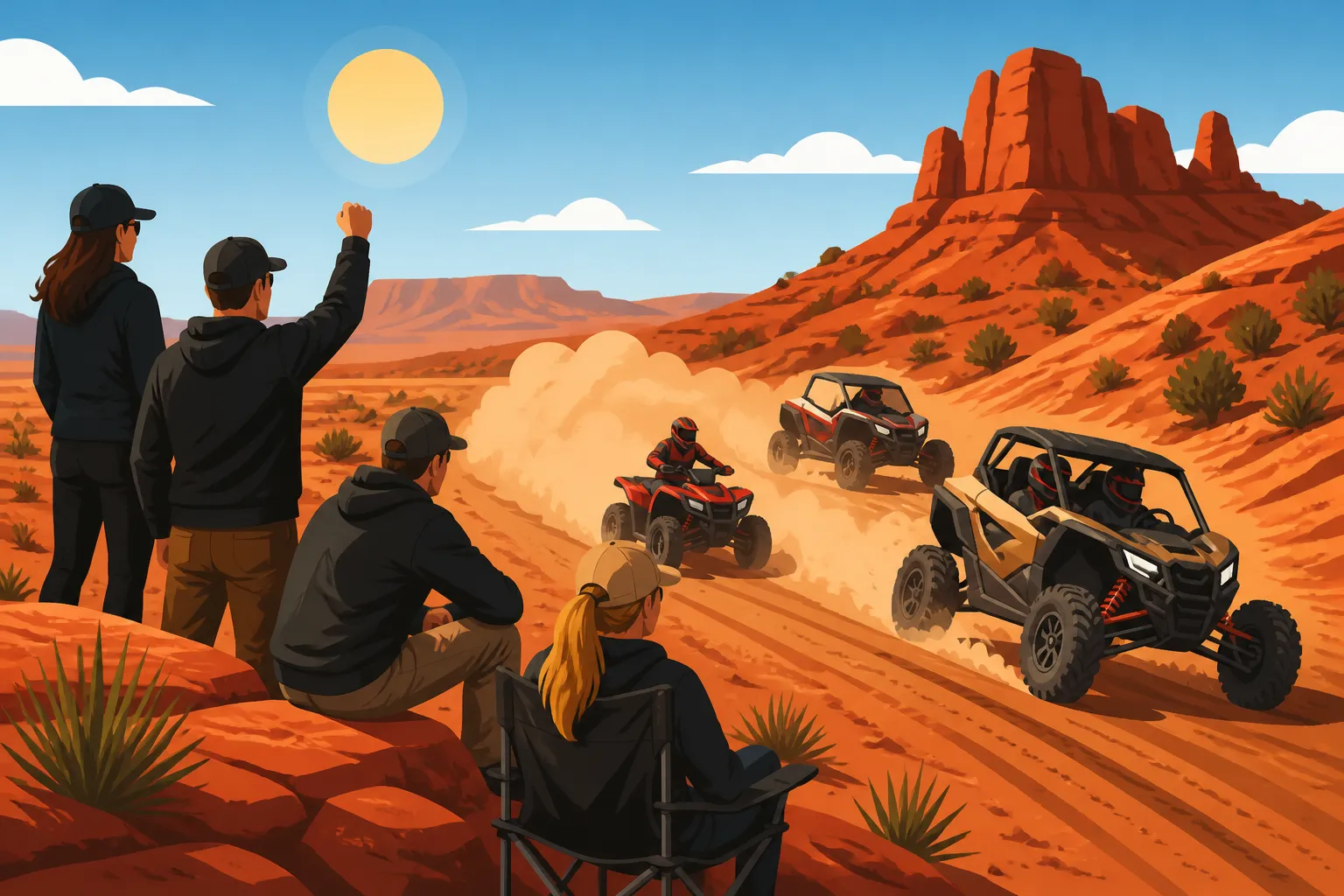
The safest viewing spot is the one the organizer has marked for spectators. Race courses can include blind turns, jumps, uneven ground, and sections where a racer may need room to recover or change direction. A place that looks like a good vantage point from a distance may put you too close to the course or in a vehicle’s path.
Never cross a marked course to reach a better view, and don’t stand behind a barrier or tape line. Those boundaries are there to separate people from moving machines, not simply to keep the course tidy. If you cannot see the action clearly from a safe location, ask an event official whether there is another approved viewing point.
Keep children close, especially in busy staging areas where racers, crew members, and spectators may all be moving at once. Explain that a race machine can approach quickly and may be difficult to hear through engines, wind, or crowd noise. A child who wanders a few steps toward the track can become hard to spot in a dusty crowd, so agree on a meeting point before you settle in.
Choose a viewing spot with visibility and room
A slightly less dramatic viewpoint can be the better choice if it gives you a clear view of the course and space to stand well back. Avoid positioning yourself near a blind crest, the outside of a turn, a narrow access lane, or anywhere race staff are using to move vehicles. Never sit or stand where an official vehicle might need to pass.
Wind direction matters too. If dust is blowing toward spectators, move farther away or use eye protection rather than trying to watch through a cloud. Do not move into a restricted area just to escape the dust. If visibility becomes poor enough that you cannot see the course edge or the people around you, step back to a safer location and follow any instructions from officials.
A simple map review can help you understand the area before you arrive, especially if the event identifies a spectator zone or parking location. onX Offroad may help you orient yourself around routes and staging areas, but compare what you see on a screen with event signage and instructions. At the site, posted restrictions and staff directions take priority over an app or saved route.
Prepare for a desert race day
Pack for heat, dust, and a long wait
A race can involve more standing and waiting than people expect. Even when the event itself is exciting, spectators may spend much of the day outside between heats or while racers prepare. Bring drinking water for everyone in your group, sun protection, sturdy closed-toe shoes, and clothing that can handle dust and changing temperatures. A light layer can be useful if the day starts cool or the wind picks up.
Eye protection is especially helpful in a dusty setting. Sunglasses may work for some spectators, while snug-fitting goggles can offer more coverage when the wind is blowing grit around. Bring any prescription eyewear you need, and avoid assuming that a hood or baseball cap will keep dust out of your eyes. If you have breathing sensitivities, consider whether the forecast and conditions make an outdoor event comfortable for you.
Pack snacks, a fully charged phone, and any medications your group may need. Keep food and belongings secured so they do not blow away or become a tripping hazard. If you are bringing a child, consider ear protection because race engines can be loud. A small first-aid kit is sensible for minor scrapes, but it is not a substitute for finding out where event staff direct people who need help.
Park considerately and keep access lanes clear
Use the parking area designated for spectators, even if another open patch looks closer to the course. Improvised parking can block race support vehicles, emergency access, other visitors, or the movement of trailers. Do not park on vegetation or on a route that appears to be used by riders. If space is tight, follow staff directions rather than creating a second row that traps other vehicles.
If you are arriving with an ATV or UTV as well as watching the race, separate the two activities in your plans. A spectator pass or invitation to an event does not automatically mean you can ride the machine wherever you like. Confirm whether riding is allowed, where unloading is permitted, and which routes—if any—remain open to general users. [Parking a Trailer at a Desert Trailhead] has practical considerations that can help you avoid blocking access.
Bring your own supplies and take rubbish with you when you leave. Keep vehicles slow in staging and parking areas, where children and pedestrians may be moving between cars. If a staff member asks you to relocate, do it promptly; event crews need room to work, and a few minutes of inconvenience is better than creating a safety issue.
Make the most of the event without creating risk
Follow signs, staff directions, and shared-area etiquette
Race day can bring together racers, families, general riders, event staff, and people who are simply passing through. Give everyone room. Keep dogs leashed if they are allowed, and move them away from the course and busy staging areas. A dog can be startled by engine noise or sudden movement, even if it is normally calm.
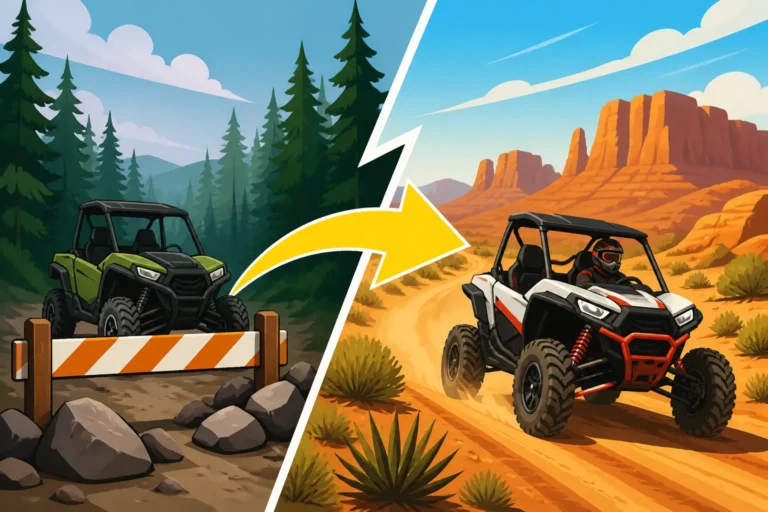
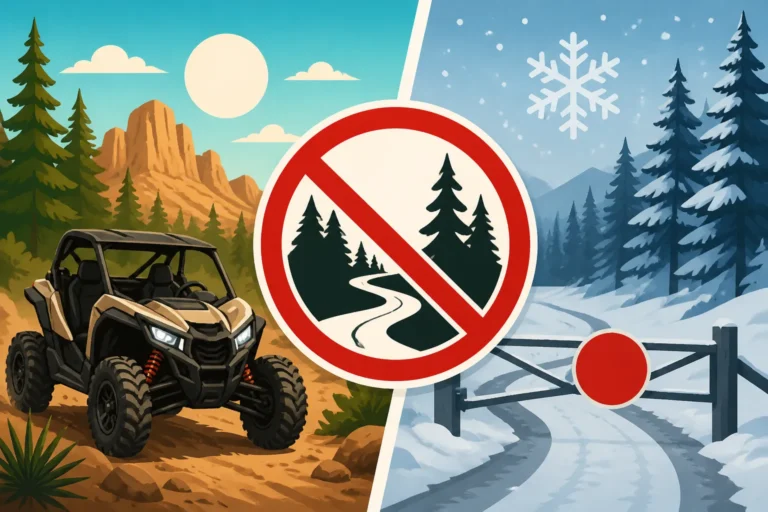
Follow temporary signs and barriers, and do not remove, shift, or drive around them. If a route is closed, assume the closure applies even if you see tire tracks beyond it. Do not ride or walk onto a course during a break unless officials explicitly open it to spectators. [New Mexico Trail Etiquette on Shared Ground] is a helpful companion for thinking about considerate behavior in a busy riding area.
If you are riding separately from the race, check what rules apply to your machine and your planned route. Registration, permits, and land access requirements may depend on who you are, where you ride, and whether you are on a designated route. A race event does not suspend those requirements. onX Offroad can be one part of route planning, but it cannot replace permission, current closure information, or the rules posted for the area.
Know when to change your plans
Dust, heat, wind, traffic, or a change in event access can make a visit less comfortable than expected. Set a simple plan with your group: where to meet if you get separated, where you will park, and what you will do if officials close a viewing area. If the crowd shifts or conditions deteriorate, move calmly and follow directions instead of trying to hold a spot.
If you are taking a machine out after watching, give yourself time to check the route and the weather again. A race-day crowd can make it tempting to follow other riders, but their destination does not tell you whether a route is open or suitable for your vehicle. Review official directions, signs, and available maps before leaving the staging area. For more general route-planning preparation, see [New Mexico Trail Maps Worth Carrying].
Desert conditions can change quickly, particularly during monsoon weather. Avoid arroyos and low crossings when storms threaten, and do not assume a dry wash will stay dry. [New Mexico Riding in Summer Monsoon] explains why those conditions deserve extra caution. If a route is closed, visibility is poor, or you cannot confirm where spectators are permitted, it is reasonable to skip that part of the visit and choose a safer option.
| Before you go | What to confirm |
|---|---|
| Event access | Whether spectators are welcome and where they may watch |
| Parking | The designated lot or staging area and any traffic directions |
| Route access | Which roads or riding routes are open or temporarily closed |
| Weather | Wind, dust, heat, rain, and possible monsoon conditions |
| Family needs | Water, sun protection, eye and ear protection, and a meeting point |
| Map planning | Organizer directions, posted signs, and any route map you plan to use |
A good Red Sands race-day visit is not about getting as close to the course as possible. It is about seeing the event from a permitted, safe place, arriving prepared for the desert, and giving racers and event staff the space they need. Check the details before you drive, follow on-site instructions, and be ready to adjust your plans if conditions or access change.
Disclaimer
This article is for general informational purposes only and does not constitute professional advice. Laws, prices and regulations vary by location and change over time. Consult a qualified professional for guidance on your specific situation.