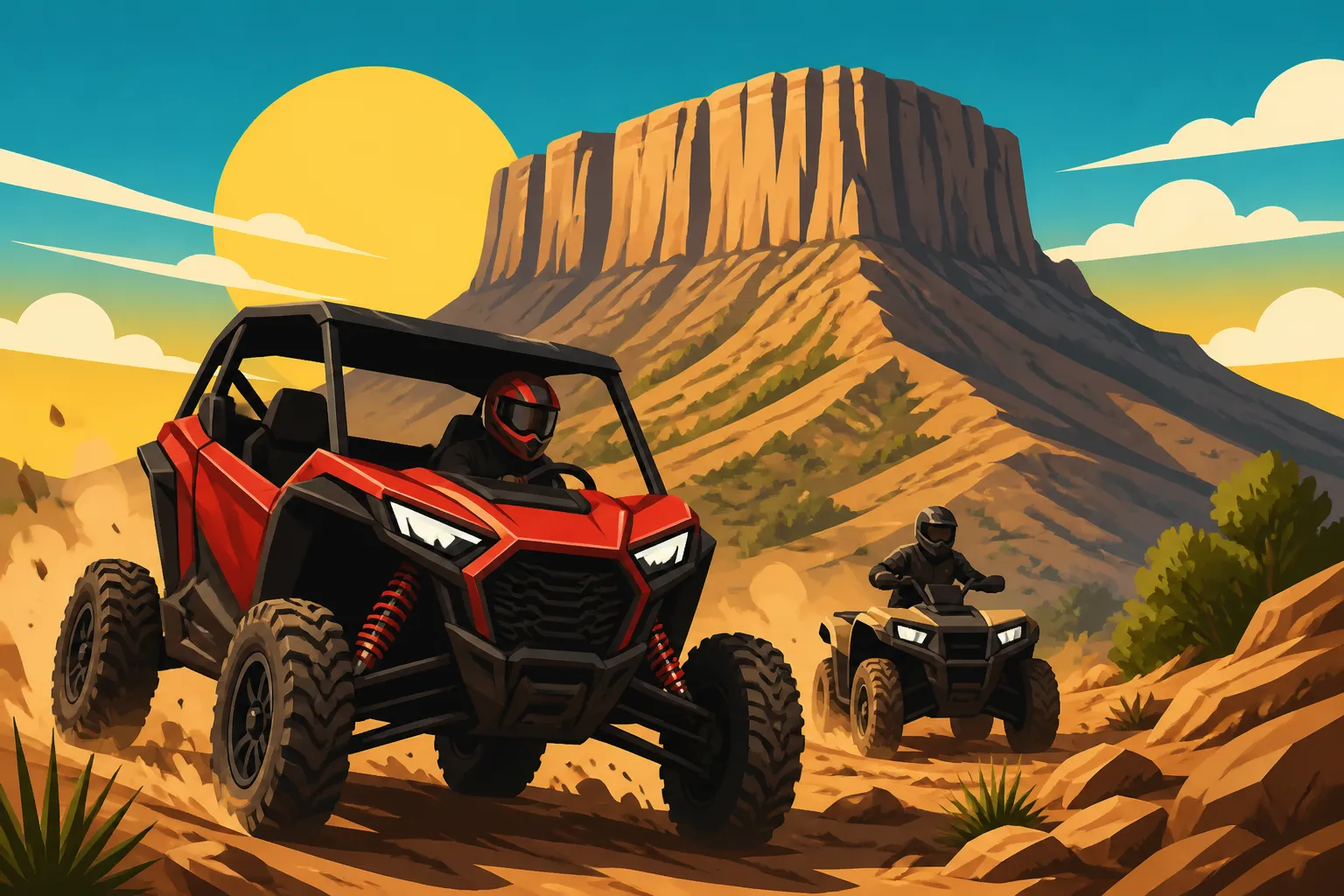
Riding Haystack Mountain for a Day
Haystack Mountain is a practical day trip for riders near Roswell, but a good day depends on more than unloading and following the first trail you see. Desert heat, changing surface conditions, route choices, and limited services can catch people off guard. This guide helps you plan a safer, more comfortable ATV or UTV ride, from the drive in to the last check before heading home.
Plan a day at Haystack Mountain
Know what kind of riding to expect
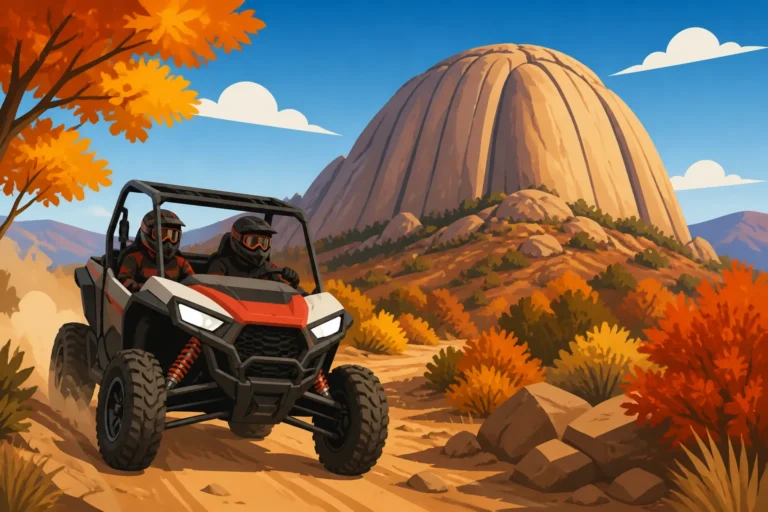
Haystack Mountain OHV Area is a Bureau of Land Management recreation area west of Roswell in southeastern New Mexico. Its roughly 1,920 acres offer a different feel from a high-elevation forest ride: expect open country, desert vegetation, sandy stretches, and uneven ground that can change from one route to the next. [New Mexico's 1,920-Acre Haystack Mountain] has more detail on the area’s scale and setting.
The terrain can make a ride look deceptively easy from the staging area. A broad, open track may narrow, become rough, or lead into a section that asks more of your machine and your experience. A passenger in a side-by-side may also feel bumps and turns differently from the driver, especially over repeated uneven ground. Take a few minutes to look at the route and conditions before committing to a longer loop.
Haystack can suit a range of riders, but “beginner-friendly” is not the same as “risk-free.” If someone in your group is new to OHVs, start with a short ride and check how they handle steering, braking, loose surfaces, and visibility. Keep the first outing simple enough that you can turn around without feeling pressured to push on.
Choose a realistic riding window
A full day does not have to mean riding continuously from morning to evening. Build in time to unload, check the machines, review your route, drink water, and stop for breaks. A relaxed plan gives you room to adapt if the group moves more slowly than expected or a section is rougher than it looked on a map.
In warmer months, aim to do more of your riding during the cooler part of the day. Southeastern New Mexico can become uncomfortably hot, and the sun can feel intense even when a breeze makes the air seem manageable. Start early when practical, take breaks in shade where available, and avoid treating a fixed return time as a reason to rush through the final miles. [New Mexico Riding in Summer Monsoon] is also worth reading if your visit falls during storm season.
| Part of the day | What to focus on | Why it helps |
|---|---|---|
| Before leaving Roswell | Check the route, weather, fuel, water, and machine condition | Reduces avoidable delays once you are away from town |
| At the staging area | Review maps, set a turnaround point, and agree on group signals | Helps everyone start with the same plan |
| Early ride | Begin with an easier route and assess conditions | Lets the group warm up and adjust expectations |
| Midday | Take a proper break, drink water, and check machines | Helps prevent fatigue and catches small problems early |
| Final ride | Choose a familiar return route and leave a time buffer | Makes it less likely the group will hurry as daylight fades |
Get there prepared
Plan the drive and arrival
Haystack Mountain is reached from the Roswell area via US 70. Before driving out, confirm your route and the current access conditions; a remembered set of directions or an old screenshot may not account for changed signs, roadwork, or closures. [Getting to Haystack Off US 70] can help you prepare for the approach.
If you are towing, think about the whole arrival—not only the highway drive. Make sure the trailer, tie-downs, spare tire, and hitch are ready before leaving town. When you reach the staging area, park so you have enough room to unload without blocking other visitors. Keep children and pets clear of moving vehicles and machines while you are setting up.
Do not assume every service you might want is available at the riding area. Check what facilities are open and bring essentials from Roswell, including drinking water, food, basic tools, and anything needed for your machine. Conditions and services can change, so a quick check before the trip is more reliable than planning around a facility you visited on a previous ride.
Carry maps and agree on a route
Cell coverage and navigation tools can be inconsistent in open country. Download maps before you leave town, carry a backup way to navigate, and make sure at least one other person in the group understands the planned route. [New Mexico Trail Maps Worth Carrying] offers a useful starting point for deciding what to bring.
A phone app such as onX Offroad can help you review routes and your location before and during a ride. Treat it as a planning aid, not permission to ride anywhere the screen appears to show. Compare app information with official land-management signs and travel guidance, and turn around if a route is marked closed or does not match what you see on the ground. A second onX Offroad check before leaving the staging area can help your group confirm a proposed loop and identify a reasonable turnaround point.
Agree on a simple group plan before engines start. Decide who leads, who rides at the back, what to do if someone stops, and where the group will regroup after a junction. If a rider loses sight of the person ahead, the safest response is usually to slow down and regroup rather than speed up in an attempt to catch up.
Ride with the area and your group in mind
Match the route to the machine and rider
ATVs and UTVs do not handle the same way. A wider side-by-side may have a different turning radius and may not fit comfortably on every narrow or rough stretch. An ATV can be easier to maneuver in some places, but the rider needs the balance and control to manage uneven ground. Before choosing a route, consider the machine’s width, ground clearance, tires, passenger load, and the least experienced rider in the group.
A sensible first loop is one that lets everyone learn the surface without getting far from the staging area. Pay attention to how the machine responds in sand and on rutted ground. Avoid sudden steering or braking inputs, leave extra space between vehicles, and slow down where visibility is limited. Dust can hide a rut, a rock, another rider, or an animal ahead.
If you are using an app such as onX Offroad, check your route against signs and travel restrictions as you go. Stay on routes open to motorized travel, and do not treat a faint track as an invitation to make a new one. [New Mexico Rules for Riding BLM Land] explains why checking land rules and route designations matters.
Keep the ride comfortable and safe
Bring more water than you expect to need, and make it easy to reach without unloading the whole vehicle. Wear eye protection, a helmet, sturdy clothing, and footwear that protects your feet and ankles. Dust, sun, and flying debris can make a pleasant ride miserable quickly if your gear is inadequate. New riders may also appreciate gloves and a light layer that protects skin from sun and brush.
Before setting out, inspect tires, brakes, lights, steering, and fuel. Carry a basic tool kit and equipment suited to the machine, but do not assume every breakdown can be fixed on the trail. Tell someone who is not riding with you where you plan to go and when you expect to return. [New Mexico Trail Etiquette on Shared Ground] is a helpful companion for keeping the area enjoyable for other visitors.
Desert weather can change quickly. A storm may bring lightning, strong wind, or sudden water in low areas, and dry ground does not guarantee a wash will remain safe to cross. If the sky darkens or thunder becomes audible, turn toward a safe exit rather than trying to finish the loop. In dry conditions, be alert to fire restrictions and closures; [New Mexico Fire Season and Trail Closures] explains why plans may need to change.
Make the day work from start to finish
Use a simple day-ride checklist
A checklist helps catch the small oversights that can cause an outsized headache, such as leaving a registration document at home or discovering a loose tie-down after reaching the access road. Prepare the evening before if you can, then do a final walk-around before leaving.
- Confirm access and conditions. Check for closures, restrictions, weather concerns, and any current site information.
- Review vehicle and rider requirements. Make sure the machine is properly documented and that riders have any permits or safety credentials that apply to them. Start with [New Mexico OHV Safety Permit Requirements] and [New Mexico Rules for Riding BLM Land].
- Inspect the machine and trailer. Check tires, brakes, steering, lights, fuel, tie-downs, and the trailer’s spare tire.
- Pack essentials. Bring water, food, sun protection, helmets, eye protection, first-aid supplies, tools, and a backup navigation option.
- Set a group plan. Choose a lead rider, a sweep rider, a route, regroup points, and a turnaround time.
- Leave the area as you found it. Pack out trash, avoid damaging vegetation, and follow posted instructions.
Leave room for the ride to change
The best day at Haystack may not follow the exact route you planned at breakfast. A machine may need attention, a rider may tire sooner than expected, or conditions may make a particular section uncomfortable. Build flexibility into the plan so turning back feels like a sensible decision, not a failed trip.
If the group is still enjoying the ride, take a short break before deciding whether to continue. Check water, fuel, daylight, and everyone’s energy. If you are running behind, choose the simplest route back rather than trying to squeeze in one more loop. That small decision can make the end of the day feel calm instead of hurried.
At the staging area, do a final count of riders and gear before loading. Look over the machines for new damage or leaks, secure them carefully, and make sure nobody is too tired to drive home safely. For more ideas on nearby options and trip planning, browse [New Mexico OHV Areas Near Roswell] and [New Mexico Trail Maps Worth Carrying].
Disclaimer
This article is for general informational purposes only and does not constitute professional advice. Laws, prices and regulations vary by location and change over time. Consult a qualified professional for guidance on your specific situation.