Tire Choice for Volcanic Rock
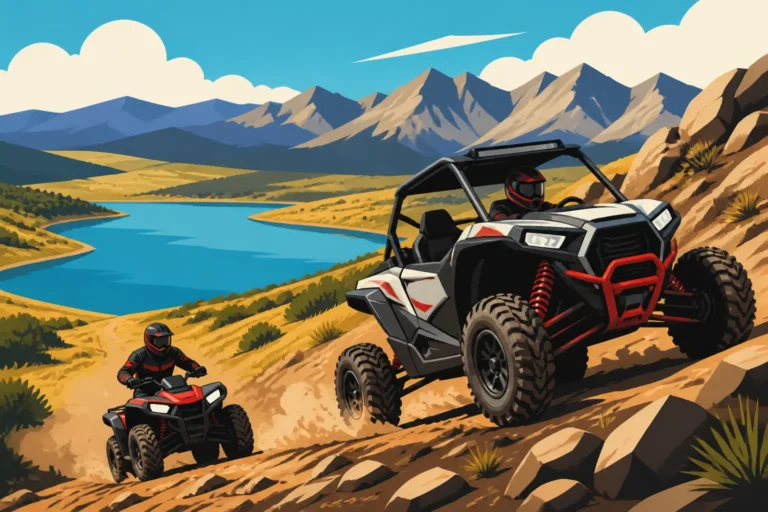
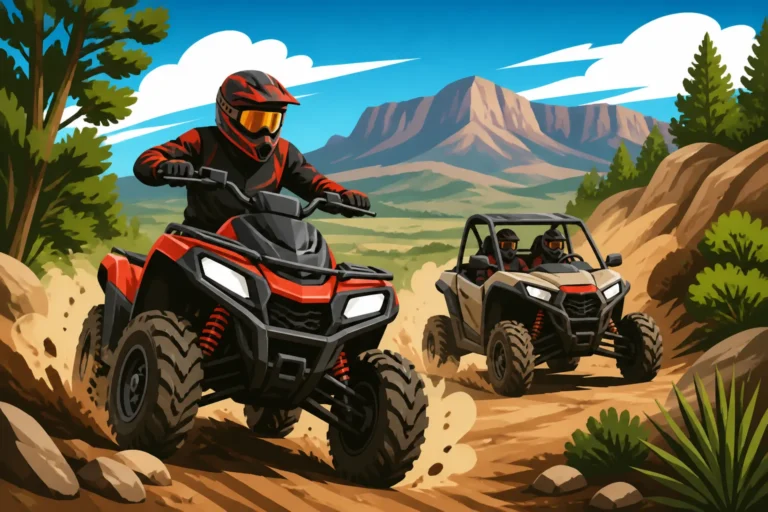
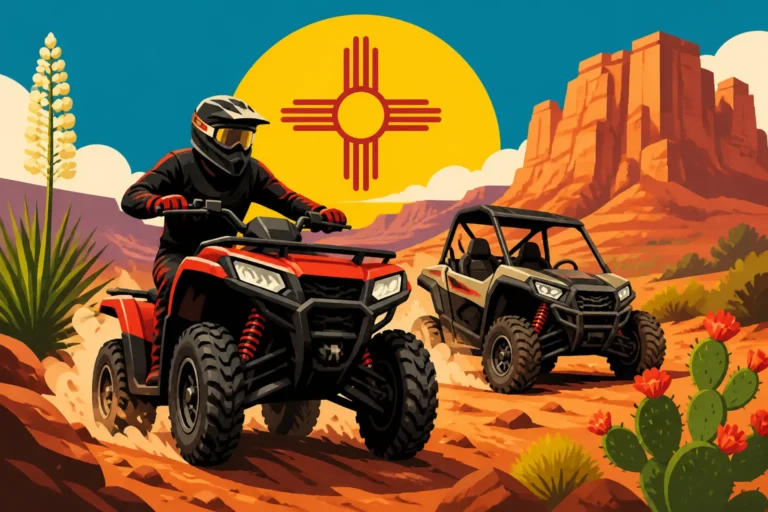
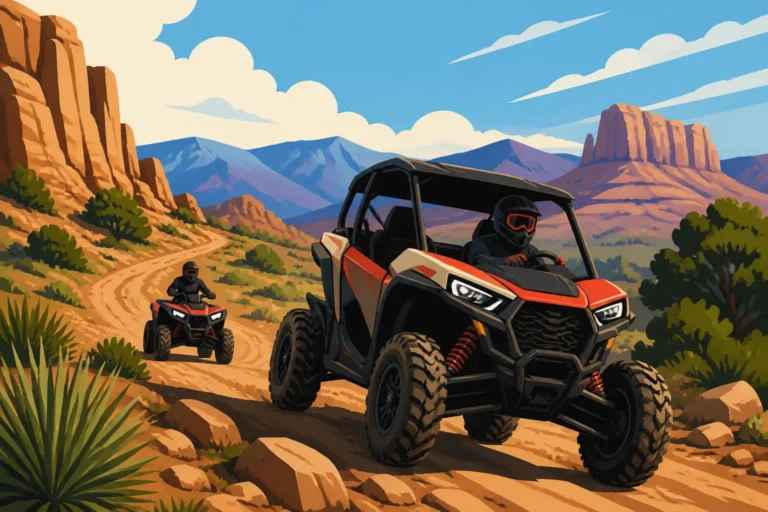
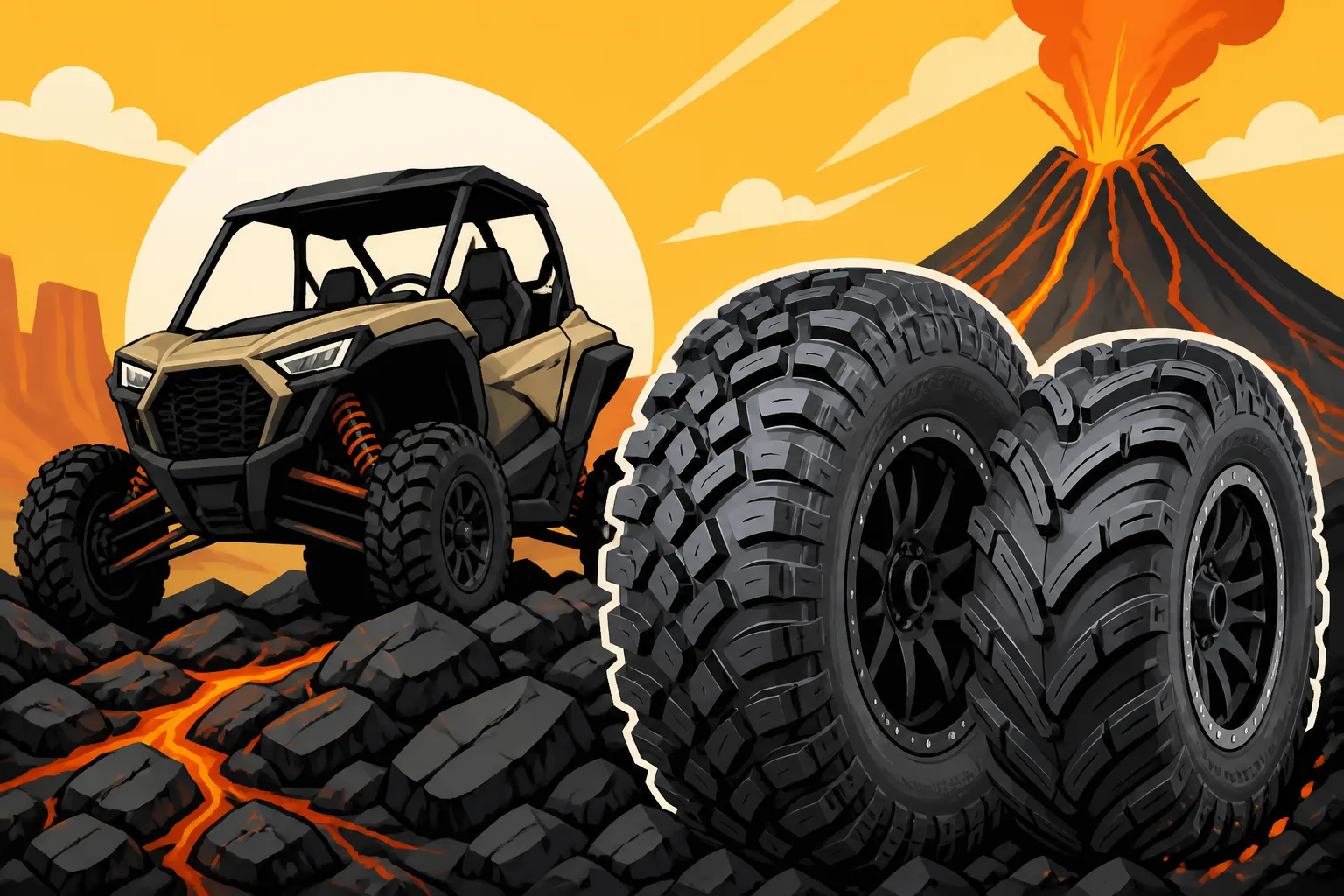
Sharp volcanic rock can turn an ordinary New Mexico ride into a tire test: a pointed edge may cut a sidewall, loosen a plug, or leave you stranded far from the trailer. The right setup depends on your machine, load, terrain, and riding style. This guide explains how to choose and care for ATV and UTV tires for rocky routes.
What volcanic rock does to ATV and UTV tires
Sharp edges create more than tread wear
Volcanic terrain is not all the same. Some routes have firm dirt mixed with scattered rock; others include rough, angular surfaces that put repeated pressure on the tread and sidewalls. Basalt, the dark rock common in volcanic landscapes, can have sharp edges. When a tire rolls over one, the risk is not limited to a slow leak through the tread. A rock can also pinch a tire against the wheel or slice its sidewall, where a repair may be more difficult.
The way you ride matters, too. A tire that might handle a careful crawl over uneven rock can be more vulnerable when spun quickly against an edge. Added weight from passengers, cargo, tools, or hunting gear can increase the pressure on the tire. That makes the machine’s load and tire recommendations important parts of the decision—not just the tread pattern.
New Mexico’s volcanic terrain is not confined to one kind of riding area. Around places such as Caja del Rio, riders may encounter a mix of surfaces and conditions rather than uninterrupted rock. Check the route and access rules before you go, and stay on routes open to your type of vehicle. Caja del Rio and St. Peter’s Dome offers related area context, while New Mexico Trail Closures to Check First is a useful reminder to check access before loading up.
Why sidewall protection matters
The tread is the part of the tire designed to meet the ground, but a sharp rock can catch the sidewall when a wheel drops beside an obstacle or slides along a rock face. That sidewall is also more difficult to fix reliably in the field than a straightforward tread puncture. For rocky riding, compare tire construction and sidewall protection—not just how aggressive the tread looks.
A tougher construction can bring trade-offs. A more heavily built tire may weigh more, which can affect steering feel and suspension response. It can also be less forgiving over small bumps than a lighter, more flexible option. The best choice is the one that balances protection with the machine maker’s requirements and the kind of terrain you actually ride.
Before buying, check the tire size and load rating recommended for your ATV or UTV. Confirm that the tire is compatible with the wheel, and do not assume a tire designed for a similar-looking machine will fit or carry the same load. If you are considering a different size or construction, ask a qualified tire or powersports shop to check clearance and suitability for your specific vehicle.
Choosing a tire for rocky New Mexico routes
Match the tread to the whole ride
A very open, aggressive tread can help a tire find purchase on loose material, but it is not automatically the best choice for every rocky route. If a ride includes hard-packed dirt, loose gravel, and scattered rock, a tread intended for only one surface may feel less predictable on the others. Think about the entire route, including the transitions between surfaces, rather than choosing based on the roughest-looking section alone.
For mixed terrain, look for a tread and carcass combination intended for the type of ATV or UTV and the conditions you expect. A sensible choice should provide usable grip without encouraging you to rely on wheelspin to climb. Spinning a tire against sharp rock can increase heat and wear while making control harder. On a steep or uneven section, a slower approach and careful line choice often help more than an especially aggressive tread.
Consider where the machine will be used most often. A rider who mainly explores rocky trails but occasionally crosses soft ground may need a different compromise from someone whose regular rides are in dunes. If you also ride sand, Tire Pressure for Soft Sand can help explain why one tire setup may not be ideal for every surface. Changing conditions may call for a different pressure within the vehicle and tire maker’s guidance, not an assumption that one setting works everywhere.
Compare construction, fit, and riding feel
Use the product specifications and your owner’s manual together. Tire size, load capacity, wheel compatibility, and the machine’s intended use should all line up. For a UTV carrying passengers and equipment, account for the combined load rather than treating the tire choice as though the machine were empty. For an ATV, consider how you ride, what you carry, and whether the tire remains within the manufacturer’s recommendations.
| Tire feature | Why it matters on rocky terrain | What to check |
|---|---|---|
| Sidewall construction | Helps resist damage from rock edges and impacts | Intended use, construction details, and compatibility |
| Tread pattern | Influences grip on rock, dirt, and loose material | Whether it suits the full mix of surfaces on your route |
| Load rating | Must suit the machine and the load it carries | Vehicle guidance and the tire’s stated rating |
| Tire size | Affects fit, clearance, and handling | Recommended size and wheel compatibility |
| Repairability | Can matter when a puncture happens far from help | Suitable repair supplies and manufacturer guidance |
A tire change can also alter the way a machine feels. Larger or heavier tires may affect steering, acceleration, braking, and clearance. If you notice rubbing, unusual vibration, or changed handling after fitting new tires, stop and investigate rather than assuming the tire simply needs to wear in. A shop familiar with your machine can help assess fitment before a long trip.
Setting pressure and riding with fewer punctures
Use a starting point the manufacturer supports
There is no single tire-pressure number that is right for every ATV or UTV on volcanic rock. The appropriate setting depends on the vehicle, tire, load, wheel, and riding conditions. Start with the vehicle and tire manufacturers’ guidance, and avoid using a pressure borrowed from someone else’s setup without checking those details. A similar machine may have different tires, cargo, or wheel equipment.
Pressure changes how a tire supports its load and responds to obstacles. Too little can increase the chance of pinching or damaging a tire, especially when a wheel strikes a rock. Too much can make the ride harsher and reduce the tire’s ability to conform to uneven ground. Adjustments should stay within the applicable manufacturer recommendations. If the tire or wheel setup has been modified, get qualified advice instead of guessing.
Check pressure before the ride, when tires are cool, with a gauge you trust. Recheck if you change the load or move between significantly different terrain, and record settings that work well for your machine under similar conditions. A small, reliable gauge is worth carrying because judging pressure by sight or hand is not dependable. If you are also planning sand or soft dirt, treat that as a separate setup question rather than simply carrying over your rocky-terrain pressure.
Ride the line, not just the tire
A careful line can prevent a lot of tire trouble. Look ahead for pointed edges, narrow gaps, and places where a wheel could drop into a sharp-sided rut. When it is safe, approach obstacles at a controlled pace and avoid turning a tire against a rock under heavy throttle. On a UTV, remember that the rear wheels follow a different path from the front ones; a line that clears the front tires may still expose a rear tire to an edge.
Do not treat every rock as something to climb. Sometimes the safer option is to slow down, choose a broader path, or turn around if the route is beyond the machine or group’s ability. Keep enough distance from other riders to avoid rushing into an obstacle, and do not ride close behind someone whose tires may throw rock. New Mexico Trail Etiquette on Shared Ground covers the kind of considerate habits that help on shared routes.
For planning, a map app such as onX Offroad can help you review a route and identify nearby access points before leaving. Use it as one planning aid, not as proof that a road is currently open or appropriate for your vehicle. Cross-check route access and land rules, and carry a map you can use if your phone battery or signal becomes a problem. New Mexico Trail Maps Worth Carrying and Riding BLM Land in New Mexico provide useful background for planning rides on public land.
Preparing for a flat before you leave
Pack repairs that match your tire type
A basic repair kit should suit the tires you actually run. A tread puncture may be repairable with a compatible plug or other manufacturer-approved method, while a sidewall cut or a damaged bead can be a different problem. Carry a way to check pressure and restore it, such as a suitable pump or compressor, and know how to use the equipment before you are on the trail.
Do not assume every puncture can be fixed in the field. A repair may be temporary, and damage near the sidewall, a large cut, or a tire that will not hold pressure may require a spare or recovery plan. If you carry a spare, make sure it fits the machine and that you have the tools to change it safely. UTV owners should also consider the space and weight of a spare, particularly when the vehicle already carries passengers and gear.
Practice the basic steps at home. Find the jack points in your owner’s manual, confirm the lug-tool size, and check that the tools fit your wheel hardware. A repair kit buried beneath cargo is not much help when a tire goes down. Keep it accessible, and let everyone riding in the group know where it is.
Inspect tires before and after the ride
Before setting out, look over each tire for cuts, embedded sharp rock, bulges, exposed cords, missing tread chunks, and signs of a slow leak. Check the wheels for damage and make sure lug nuts appear secure. After the ride, inspect again while the machine is still at the staging area or trailer. A small cut or a piece of rock lodged in the tread is easier to spot before the next trip than after it becomes a failure miles from the road.
If a tire loses pressure repeatedly, has a sidewall injury, or shows damage that affects its structure, do not keep riding on it simply because it still holds some air. A failure far from the trailhead can put the whole group in a difficult position. When you are unsure whether a tire is safe, get it assessed by a qualified repair shop.
Finally, plan for the route as well as the tires. Confirm that the riding area is open, that your vehicle is allowed, and that your group has the right supplies for the distance and conditions. [New Mexico Rules for Riding a Designated Route] is a useful companion when planning public-land riding. Good tire choice reduces risk, but it cannot replace route awareness, careful riding, and a realistic plan for getting back if something goes wrong.
Disclaimer
This article is for general informational purposes only and does not constitute professional advice. Laws, prices and regulations vary by location and change over time. Consult a qualified professional for guidance on your specific situation.