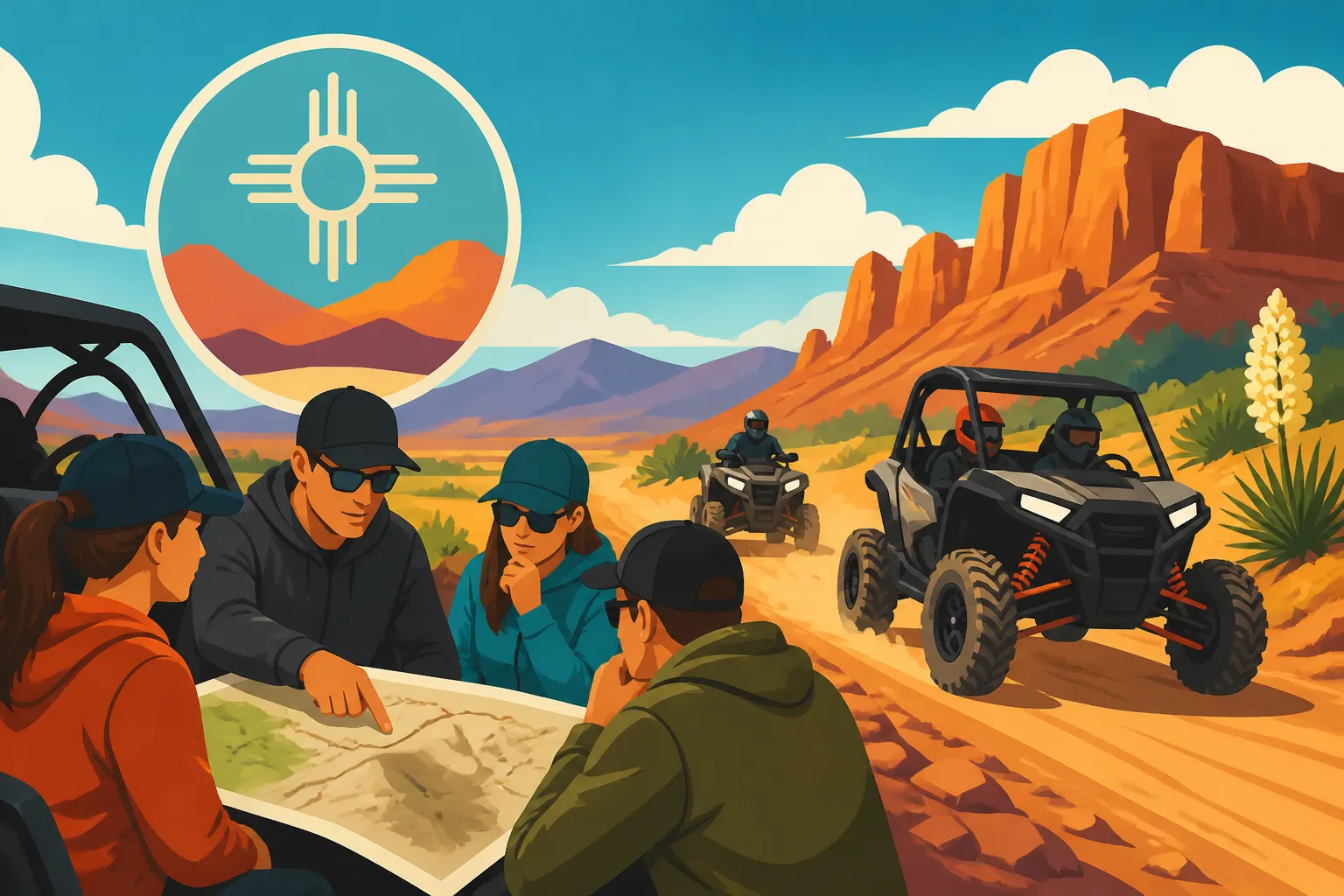
Organizing a Club Ride on Federal Land
A club ride on federal land in New Mexico takes more than choosing a route and setting a meet-up time. The land manager may require advance authorization for an organized event, and every rider still has to meet applicable permit, registration, and route rules. Here’s how to check the requirements, plan a responsible ride, and avoid assuming that a club event is automatically treated like a casual outing.
Start by identifying the land and the activity
“Federal land” is not one set of riding rules. A route might cross land managed by the Bureau of Land Management (BLM) or the U.S. Forest Service, and each office can have its own travel rules, seasonal closures, and process for reviewing organized activities. A trail shown on a map is not necessarily open to motorized use, and a route that crosses different jurisdictions may involve more than one land manager.
Before inviting members, identify the exact staging area, route, date, expected group size, and type of activity. Be clear about whether the ride is a casual club outing, a timed event, a fundraiser, a competition, a guided ride, or an activity with vendors or spectators. These details help the local office decide whether the ride needs a special recreation permit or another form of authorization.
Do not rely only on a general map, an old ride description, or a route shared by another club. Federal travel-management rules can restrict motorized use to designated roads and trails, and closures can change with conditions. Check current maps and notices with the relevant office before publishing the route. For background on route designations, see Designated Routes and Travel Management in New Mexico.
When to ask about an event permit
A club’s nonprofit status does not automatically exempt a ride from authorization requirements. Nor does calling an activity a “club ride” settle the question. The land manager may consider the event’s purpose, size, frequency, location, expected effects on the land, use of staff or facilities, and whether money or commercial services are involved.
A small group of friends riding together may be treated differently from a planned event that advertises a date, assembles many participants, uses a staging area, sets a course, provides organized support, or draws spectators. The dividing line is not something to guess at from another event’s experience. Ask the office responsible for the specific area and describe the plan accurately.
Contact the land manager early, before advertising widely or collecting registrations. Ask whether the event needs a special recreation permit, another authorization, or no event-specific permit. If there is a formal application process, ask about the required documents, review time, insurance, fees, maps, and any limits on attendance or route use. Requirements and timelines can differ by office and activity, so confirm current details directly with the agency.
An event authorization is not the same as permission to ride anywhere nearby. It may apply only to a defined route, date, staging area, or group size. It also does not automatically authorize use of adjacent private, state trust, or tribal land. If the proposed route leaves federal land, identify each landowner or manager and obtain any additional permission required. For a federal event application, Getting a Special Recreation Permit for an Event offers related context.
| Planning question | Why it matters | What to confirm |
|---|---|---|
| Which agency manages the route? | BLM and Forest Service offices may have different processes and local restrictions. | The responsible office for each segment and staging area |
| Is this an organized event? | A planned ride may require review even if the club is not-for-profit. | Whether the activity needs event authorization |
| Does the route use designated motorized routes? | A route can be physically passable but closed to motor vehicles. | Current maps, closures, and route conditions |
| Will the ride cross other jurisdictions? | Federal authorization may not cover non-federal land. | Permission or separate requirements for each section |
| Are visitors or minors participating? | Riders may have separate state permit and safety obligations. | Each rider’s applicable documents and supervision requirements |
Check rider permits, reciprocity, and equipment separately
Once the land manager’s event requirements are clear, check what each participant needs to ride legally. An event permit, when required, applies to the organized activity; it does not replace a rider’s own registration or permit obligations. Likewise, an individual OHV permit does not authorize a club to hold an organized event.
For visitors, New Mexico’s reciprocity rules depend on the rider’s home-state program and the documentation the rider carries. Do not assume that an out-of-state registration is accepted in every case, or that a New Mexico permit held by the club covers all machines. Ask members to confirm their own status before the ride. The overview at New Mexico OHV Reciprocity Rules can help riders identify what to check, while What a Rider From a Non-Program State Must Buy addresses a different situation for visitors whose home state does not have an OHV program.
Plan a document check that is practical rather than intrusive. Before ride day, give members a short list of what to bring, such as proof of applicable registration or permit, identification if needed, and any required safety permit. For minors, check the rules that apply to their age and riding situation; an adult’s paperwork does not stand in for a young rider’s requirements. New Mexico’s Safety Permit for Under-18 Riders explains the age-specific issue.
The route itself needs its own compliance check. A federal recreation permit does not make a closed road open, and an accepted state registration does not override a land manager’s travel restrictions. Use official travel-management maps and ask the local office about seasonal closures, temporary restrictions, and any machine limits that matter for your route. Review [New Mexico Rules for Riding a National Forest] or New Mexico Rules for Riding BLM Land according to the agency managing the ride.
Check equipment rules as well. Federal public-land requirements may include items such as a functioning spark arrester, and local conditions or route rules can add other restrictions. New Mexico sound requirements may also apply. Do not assume that equipment accepted at a different riding area will pass in this one. Members can review Checking Your Spark Arrester Before Public Land and Passing New Mexico’s 96 Decibel Check at a Trailhead as part of their preparation.
For paved sections, crossings, or travel between a staging area and a trail, confirm whether the route is actually open to OHVs and what state and local rules apply. A federal land event permit is not street-use authorization. If the ride includes a road segment, check the relevant rules before including it in the itinerary.
Build an event plan the agency and riders can follow
A clear, modest plan is easier to evaluate than a vague request to “ride the area.” Prepare a route map with the start and finish points, proposed staging location, rest stops, and any planned support vehicles. Include a realistic estimate of participants, machines, and spectators, plus the event’s purpose and how the group will be managed.
If an agency asks for additional material, answer precisely and keep copies of the approved version. Do not change the route, date, attendance estimate, or event format without asking whether the change needs approval. A change that seems minor to the club may affect the land manager’s review.
A useful planning sequence is:
- Choose a specific location and date range. Identify the land manager and the roads or trails you hope to use.
- Contact the local office. Describe the event honestly, including its size, schedule, advertising, fees, support vehicles, and any spectators or vendors.
- Ask what authorization is needed. Confirm whether an event permit or other approval applies, and get the application instructions from the agency.
- Submit a complete plan. Provide the requested route, staging, participant, safety, and insurance information. Keep the agency’s response and any conditions with the event records.
- Verify route status close to ride day. Check for fire restrictions, weather closures, maintenance work, seasonal limits, and other changes.
- Brief participants. Share the approved route, required documents, meeting point, group rules, and a clear instruction to stay on open routes.
- Keep the ride within the approval. Follow attendance limits, route boundaries, dates, and other conditions; stop or reroute if conditions make the plan unsafe or unauthorized.
Insurance is worth raising with the land manager early. An office may require evidence of insurance for a particular activity, or set conditions based on the event’s details. Do not assume a club policy, a participant’s personal policy, or a vehicle policy meets an agency requirement. Ask what type of coverage and documentation the office expects, then confirm the terms with the insurer or a qualified adviser.
Plan for the ground as it is, not just as it appears on a screen. In New Mexico, weather, fire conditions, and seasonal access can affect whether a ride is safe or allowed. A route that is dry and passable at the start can become hazardous after a storm, and a forest road may be closed during part of the year. Check local conditions with the land manager before departure and have a cancellation or alternate-date plan. Relevant preparation includes New Mexico Fire Restrictions That Close Trails and New Mexico Trail Closures to Check First.
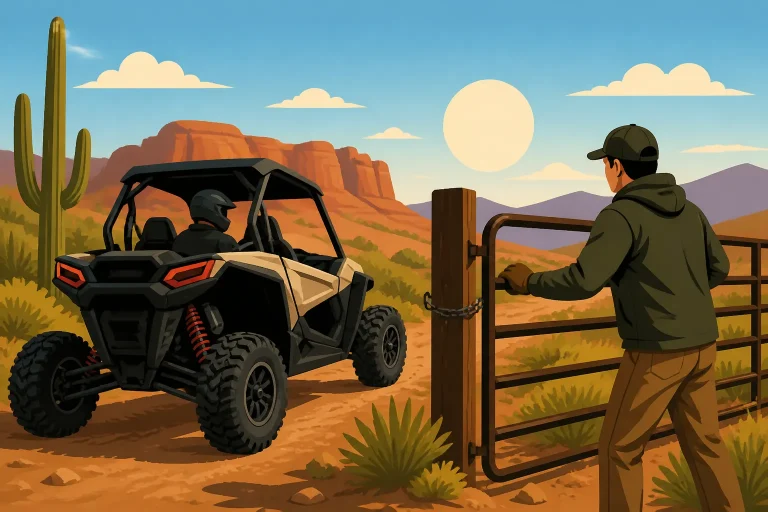
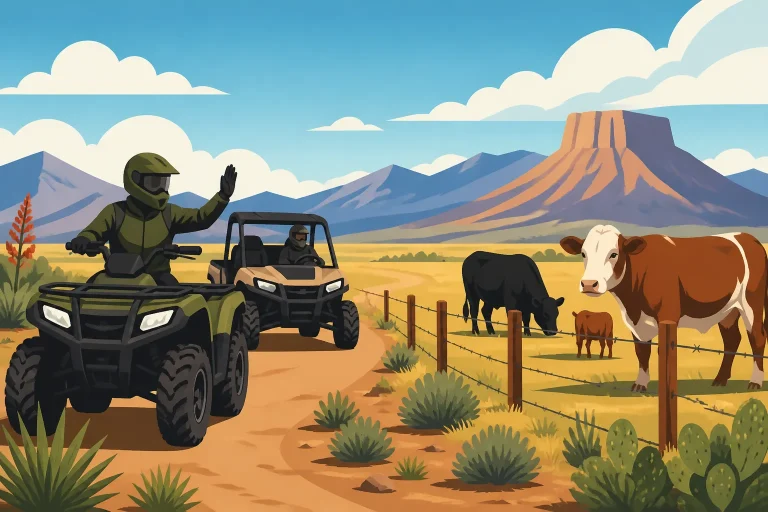
Make the rider briefing specific. Tell participants where to park and unload, when to arrive, what route is approved, how the group will regroup, and what to do if someone has a breakdown. Set expectations about speed, spacing, passing, noise, litter, and yielding to other users. If the plan includes gates or grazing areas, remind riders to leave gates as instructed and give livestock room. The club’s behavior can affect future access for everyone.
Keep the group manageable on the trail. A long line of machines can block other users, spread dust, and make it harder to respond when someone stops. Use a lead and sweep rider where appropriate, establish regroup points, and avoid splitting into unplanned side trips. If riders want to explore a spur, they should first verify that it is open and included in the approved plan.
Common mistakes to avoid
The most avoidable problems usually come from treating different permissions as if they were interchangeable. A club may have approval for an event but still need to follow route restrictions. A rider may have the right personal permit but still be unable to join an event held without required authorization. A route may start on federal land but cross property where the group has no permission.
Watch for these mistakes:
- Advertising before checking with the land manager. Public promotion can create expectations before the club knows whether the event is allowed or what conditions apply.
- Assuming a free or nonprofit ride needs no review. The activity’s impact and organization can matter independently of whether the club makes money.
- Using an old route file. A saved GPS track does not prove a route is currently open to OHVs.
- Treating the group permit as each rider’s permit. Confirm individual registration, reciprocity, and age-related requirements separately.
- Adding a road crossing or staging area without review. Those changes may involve separate rules, land, or safety concerns.
- Failing to confirm current conditions. Closures, restrictions, and hazards can change between planning and ride day.
- Leaving the approved route to accommodate late arrivals or faster riders. Keep the group within the authorized plan and open travel routes.
If the land manager says an authorization is needed, follow the application process rather than trying to infer an exemption from another club’s ride. If the office says no event-specific permit is needed, keep a record of the guidance and still follow all rider, route, and land-use requirements. Either way, the safest approach is to verify the details with the office responsible for the exact area.
Disclaimer
This article is for general informational purposes only and does not constitute professional advice. Laws, prices and regulations vary by location and change over time. Consult a qualified professional for guidance on your specific situation.