New Mexico Yellow Decal Requirements
It's incredibly frustrating when you're trying to do the right thing and get your off-highway vehicle (OHV) legal for New Mexico's beautiful trails, only to be met with a cascade of decals, plates, and rules that seem designed to confuse. One of the most common questions riders have revolves around that distinct yellow decal – what it means, why you need it, and where it's supposed to go. This guide will cut through the clutter and break down everything you need to know about New Mexico's yellow off-highway vehicle decal requirements.
Understanding New Mexico's Yellow Off-Highway Decal
Navigating the world of OHV registration in New Mexico can feel like deciphering an ancient scroll, especially when it comes to the different colored decals. But once you understand the core purpose of the yellow decal, it all starts to click into place. This little sticker is a big deal because it's your official pass to ride legally on the vast majority of New Mexico's public lands.
What the Yellow Decal Signifies
At its heart, the yellow decal is New Mexico's way of saying, "This machine is registered for off-highway use only." It signifies that your ATV, UTV, dirt bike, or other OHV has met the state's basic registration requirements for recreational riding on designated trails, open riding areas, and unpaved county roads. It doesn't mean you can just roam anywhere, but it does mean you've got the green light (or, well, yellow light) for the dirt. Think of it as your primary identification tag for your machine when you're out exploring the backcountry, from the high desert mesas to the challenging mountain passes. Without it, even if you own the machine free and clear, it's considered unregistered for public land use, and that can lead to some unwelcome conversations with law enforcement. The yellow decal ensures that your machine is documented, and the fees you pay go directly towards supporting the very trails you love to ride. [Where New Mexico OHV Fees Go] provides more insight into how your registration dollars are put to use, often benefiting trail maintenance and OHV programs.
Who Needs a Yellow Decal in New Mexico
If you own an OHV in New Mexico and plan to ride it on any public land, including BLM land, National Forests, or even unpaved county roads, you absolutely need that yellow decal. This isn't just for thrill-seekers on sand dunes; it applies to everyone. Whether you're a rancher using a quad to check fence lines, a hunter accessing public hunting grounds, or a family enjoying a weekend ride on designated trails, your machine must display a current yellow decal. This requirement extends to all types of OHVs, including ATVs, UTVs (side-by-sides), dirt bikes, sand rails, and even youth model machines. It's a universal requirement for operating on public land within the state, designed to ensure that all users are contributing to the system and adhering to safety and environmental standards. Even if you only trailer your machine to an OHV park and never touch pavement, the yellow decal is your mandatory ticket to ride. For a deeper dive, check out [Registering an OHV in New Mexico].
The Difference Between Yellow and Green Decals
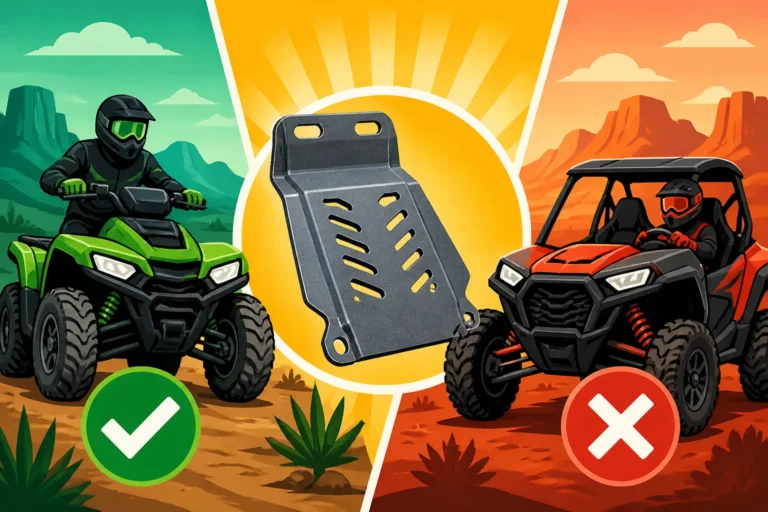
This is where a lot of riders get confused, and understandably so! New Mexico actually has two main types of OHV registration decals: the yellow and the green. While both indicate registration, their permissions are fundamentally different. The yellow decal, as we've established, is strictly for off-highway use. It means your machine is not equipped (or not registered) to travel on paved public roads. You can ride it on dirt roads, trails, and designated OHV areas, but a yellow decal is your signal to stay off the asphalt.
The green decal, on the other hand, is the "on and off-highway" decal. If your machine displays a green decal, it means it has met additional requirements, including specific equipment standards (like mirrors, headlights, and taillights), and you've provided proof of financial responsibility (insurance). With a green decal, you can legally operate your OHV on paved county and city roads where local ordinances permit, in addition to off-highway trails. You'll still see specific restrictions, like no state highways, but the green decal opens up many more possibilities for connecting trails or running into town for supplies. Essentially, the yellow says "dirt only," while the green says "dirt and permissible pavement." Understanding this distinction is crucial for staying legal and safe on New Mexico's diverse terrain. For more details on the paved road option, take a look at [New Mexico's Green On and Off-Highway Decal].
Here's a quick comparison of the two decals:
| Feature | Yellow Decal | Green Decal |
|---|---|---|
| Purpose | Off-highway use ONLY | On-highway (where permitted) AND off-highway |
| Required For | All OHVs on public dirt trails/roads | OHVs intended for paved county/city roads |
| Equipment | Basic OHV safety gear | Additional road-legal equipment (mirrors, etc.) |
| Insurance | Not explicitly required for off-road use | Mandatory proof of financial responsibility |
| Cost | Standard biennial OHV registration fee | Standard biennial OHV registration fee |
| Valid On | Dirt trails, BLM, Forest Service, unpaved county roads | Paved county/city roads (if open), plus all yellow decal areas |
| Paved State Hwys | Prohibited | Prohibited |
Meeting the Requirements for Your Yellow Decal
Getting your yellow decal might seem like a bureaucratic hurdle, but it's a straightforward process once you know what to bring and where to go. The good news is that New Mexico's Motor Vehicle Division (MVD) handles all OHV registrations, making it a one-stop shop for most of your needs.
Essential Paperwork and Information
To successfully register your OHV and get that all-important yellow decal, you'll need to gather a few key documents and pieces of information. This is where many people get tripped up, so it's worth having everything organized before you head to the MVD.
First and foremost, you'll need proof of ownership. This usually means a manufacturer's certificate of origin (MCO) for a brand-new machine, or a properly executed title if you bought your OHV used. If you're purchasing from a private party, a bill of sale can be extremely helpful to document the transfer, even if the state doesn't always require it for title transfer on OHVs. Services like LawDepot can offer templates for a New Mexico bill of sale, which can add an extra layer of protection and clarity for both buyer and seller. However, always confirm with the MVD what their specific requirements are for documentation, especially if there's no official title from a previous owner, as can sometimes be the case with older off-road machines.
You'll also need personal identification, such as your driver's license or state ID. Be prepared to provide the Vehicle Identification Number (VIN) for your OHV, which is crucial for identification and registration. If your OHV has been previously registered in another state, you might also need its last registration document. Sometimes, if the MCO or title is missing, the MVD may have specific procedures, like a VIN inspection, to establish ownership. It’s always best to call your local MVD office ahead of time to confirm the exact documents required for your specific situation. This upfront check can save you a lot of time and a second trip. [New Mexico OHV Registration Paperwork] offers a detailed list of what you'll need to bring.
Fees and the Renewal Process
Once you have your paperwork in order, the next step is paying the associated fees. New Mexico's OHV registration operates on a biennial (two-year) cycle. The cost for a new registration or a renewal for the yellow off-highway decal is a set fee, which helps fund the OHV program, including trail maintenance and safety education. While I can't provide the exact current dollar amount, it's designed to be an affordable fee that covers two full years of riding privileges. You can usually pay by cash, check, or credit card at the MVD office. It’s a good idea to bring multiple payment methods, just in case.
When it comes to renewals, New Mexico makes it fairly straightforward. Your yellow decal will have an expiration date, and it's your responsibility to renew it before that date passes. The MVD typically sends out renewal notices, but it's wise not to rely solely on these, as mail can sometimes go astray. You can usually renew online, by mail, or in person at an MVD office. Renewing on time is important; while New Mexico often has a short grace period, riding with an expired decal can still lead to fines. If you've just acquired a used machine, remember that the registration clock often resets, and you'll need to go through the [Renewing on a Change of Ownership in New Mexico] process. Planning ahead for your renewal ensures uninterrupted access to New Mexico's incredible off-road opportunities. [New Mexico OHV Registration Cost] delves into the specifics of fees.
Proper Placement of Your New Mexico Yellow Decal
Once you’ve successfully registered your OHV and received your shiny new yellow decal, the next critical step is ensuring it’s placed correctly on your machine. This isn't just about aesthetics; New Mexico has specific regulations to ensure the decal is visible and easily identifiable by law enforcement and park rangers. Misplaced decals can lead to unnecessary stops and potential fines, so it’s worth taking a moment to get it right.
ATV and Quad Decal Placement
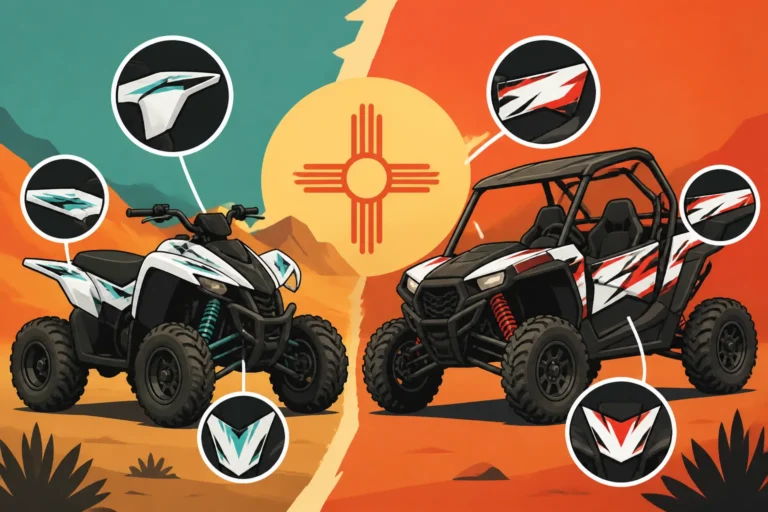
For ATVs and quads, New Mexico law is very specific: the yellow decal must be placed on the left rear quadrant of the machine. This means the left side of the rear fender, or any other permanent structure on the left-hand side towards the back of the ATV. The key here is "left rear" and "visible." It should be affixed to a clean, flat surface that isn't obstructed by cargo, flags, or other accessories. Many riders find the ideal spot on the plastic fender directly above the rear tire, on the left side, ensuring it's clearly visible from behind and the side. It should be securely adhered and not peeling or easily removable. If your ATV has an unusually shaped rear fender or you've installed modifications, use your best judgment to pick the most prominent, unobstructed spot on the left rear. The goal is unambiguous visibility. [Where the Decal Goes on an ATV's Left Rear] offers more detailed guidance for this specific vehicle type.
Side-by-Side ROV Decal Placement
For Recreational Off-Highway Vehicles (ROVs), commonly known as side-by-sides or UTVs, the placement rules are slightly different. The yellow decal for an ROV must be placed on the left rear quarter panel. A quarter panel refers to the body section that frames the rear wheels. This location is chosen for its flat surface and clear visibility. Similar to ATVs, the decal needs to be firmly attached and not obscured by mud, dirt, or aftermarket additions like spare tires, coolers, or custom cages. It should be easily legible for anyone observing the machine from the rear or side. Choose a spot that allows the entire decal to be seen at a glance, without requiring someone to lean in or search for it. Ensure the surface is clean and dry before applying to get a good, long-lasting adhesion. [Where the Decal Goes on an ROV Quarter Panel] provides specific visuals and tips for side-by-sides.
Dirt Bike and Off-Highway Motorcycle Decal Placement
Dirt bikes and off-highway motorcycles have their own specific requirement for decal placement due to their different construction. For these machines, the yellow decal must be affixed to the left front fork leg. The fork leg is the cylindrical tube that connects the front wheel to the handlebars. The decal should be placed on the outer side of the left fork leg, facing outward, ensuring it is clearly visible. It's important to choose a spot that doesn't interfere with the suspension travel or get damaged by routine riding. Make sure it's not tucked away behind brake lines or other components. Again, the surface should be clean and free of grease or dirt before application to ensure the decal adheres properly and doesn't peel off during rides. Because fork legs are often exposed to debris and mud, regularly check your decal to make sure it's still legible and securely attached. If it gets damaged, you'll want to address that to avoid any issues on the trails. [Sticking the Decal on a Dirt Bike's Fork Leg] covers this in more depth.
Navigating Common Yellow Decal Questions and Challenges
Even with a clear understanding of the rules, real-world situations can throw a wrench into things. From accidental damage to questions about enforcement, it's helpful to anticipate potential issues and know how to address them.
What Happens If You Ride Without One
Riding an OHV on New Mexico public land without a current, properly displayed yellow decal is a violation of state law. This is not a minor infraction that gets a shrug from officials. If you're stopped by a New Mexico State Police officer, a Department of Game and Fish warden, a BLM ranger, or a Forest Service officer, and your machine doesn't have the required decal, you could face fines. These fines can add up quickly, especially if you're also found to be in violation of other OHV laws, such as operating in a restricted area or without proper safety equipment. Beyond the financial penalty, an unregistered machine could lead to your ride being cut short, or even impounded in some extreme cases. The simple act of obtaining and correctly displaying your yellow decal is a fundamental step in ensuring a worry-free and legal riding experience. It's truly not worth the risk of a citation when the solution is so straightforward. For more on the consequences, see [New Mexico Fines for an Unregistered OHV].
Replacing a Lost or Damaged Yellow Decal
New Mexico's terrain is rugged, and sometimes, despite your best efforts, decals can get lost, torn, or simply become unreadable due to sun exposure or trail abuse. If your yellow decal becomes damaged or goes missing, you absolutely need to replace it as soon as possible. Riding with an unreadable or absent decal is functionally the same as riding without one, and it won't stand up as an excuse if you're stopped.
The process for replacing a lost or damaged decal is generally quite simple. You'll typically need to visit an MVD office, provide your OHV's registration information (or VIN), and pay a small replacement fee. This fee is usually nominal, far less than the cost of a new registration, and certainly less than a citation. It's always a good idea to bring your driver's license and any existing registration documents you have to expedite the process. The MVD will issue you a new decal with your current registration number, ensuring you're back on the trails legally in no time. Don't put off getting a replacement; it's a quick fix that saves a lot of potential headaches down the line. Check out [Replacing a Lost New Mexico Decal] for step-by-step instructions.
Yellow Decal Rules for Non-Residents and Visitors
For those visiting New Mexico from out of state, the yellow decal requirements can be a bit confusing. New Mexico generally offers reciprocity, meaning if your OHV is currently and legally registered in your home state, you typically don't need to purchase a New Mexico yellow decal or a non-resident permit. However, there are some important caveats. Your home state must have its own OHV registration program that is recognized by New Mexico. If your state doesn't have a formal OHV registration program, or if your machine isn't registered, then you will need to obtain a New Mexico non-resident OHV permit before riding on public lands.
These non-resident permits function similarly to the yellow decal, providing authorization for off-highway use. They come in different durations, such as a two-year permit or a shorter ninety-day permit, depending on your needs. It's crucial for non-residents to carry proof of their home-state registration, or their New Mexico non-resident permit, at all times while riding. This ensures that if you encounter law enforcement, you can quickly demonstrate your legal right to be on the trails. Always double-check the latest reciprocity agreements and permit requirements, especially if you're traveling from a state without a robust OHV registration system. This diligence will help ensure your visit to New Mexico's trails is nothing but fun.
Disclaimer
This article is for general informational purposes only and does not constitute professional advice. Laws, prices and regulations vary by location and change over time. Consult a qualified professional for guidance on your specific situation.