New Mexico Spark Arrester Requirement
There's nothing quite like hitting the New Mexico trails, feeling the sun on your face, and listening to the rumble of your ATV or UTV as you navigate through our incredible landscapes. But let's be real, while we're out there chasing that perfect ride, there are some nitty-gritty details that often get overlooked, and one of the most critical is the New Mexico spark arrester requirement. Many riders don't fully understand what a spark arrester is, why it's so vital, or how to ensure their machine is compliant, which can lead to hefty fines and, worse, dangerous wildfires. This guide is here to cut through the confusion and give you everything you need to know about New Mexico's spark arrester laws, how to check your machine, and what it means for your next adventure.
What Exactly Is a Spark Arrester and Why Does New Mexico Care So Much?
When you’re gearing up for a ride across New Mexico's stunning deserts or through its high-elevation forests, the last thing you're probably thinking about is a tiny mesh screen or a series of baffles inside your muffler. But that little component, the spark arrester, is an unsung hero when it comes to protecting our precious environment and keeping you on the right side of the law. Without it, your off-highway vehicle (OHV) becomes a potential fire hazard, and in a state as dry and beautiful as ours, that’s a risk no one wants to take.
The Fire Hazard No One Wants to Talk About
At its core, a spark arrester is a safety device designed to prevent hot, incandescent particles of carbon—basically, tiny glowing embers—from escaping your ATV or UTV's exhaust system. When your engine is running, especially under load or at high RPMs, carbon deposits can build up inside the engine and exhaust. These deposits can break loose and, if they're hot enough, fly out of your muffler like miniature fireworks. Imagine pulling over on a dry, windy day, the ground covered in crispy pine needles or brittle mesquite branches, and a shower of these hot sparks suddenly hitting the fuel-rich environment. That's a wildfire waiting to happen, and unfortunately, OHVs have been known to cause them.
New Mexico's landscape is incredibly diverse, from the high desert's scrub brush to the Ponderosa pine forests of the mountains. All of these environments are susceptible to fire, particularly during our long, dry seasons. A small spark, especially during periods of low humidity or high winds, can rapidly escalate into a devastating blaze, destroying vast tracts of land, wildlife habitats, and even threatening homes and communities. It's a sobering thought, but one that highlights why this seemingly small piece of equipment is so incredibly important for every rider who values our state's natural beauty and wants to continue enjoying it.
The Letter of the Law: New Mexico's Requirement
Given the very real and significant risk of wildfires, New Mexico, like many other states with vast public lands, has clear and strict regulations regarding spark arresters. The law states unequivocally that any off-highway vehicle (OHV)—and that includes your ATV, UTV, dirt bike, or even your youth machine—operating on public land within New Mexico must be equipped with a USFS (United States Forest Service) approved spark arrester. This isn't just a suggestion; it's a mandatory requirement.
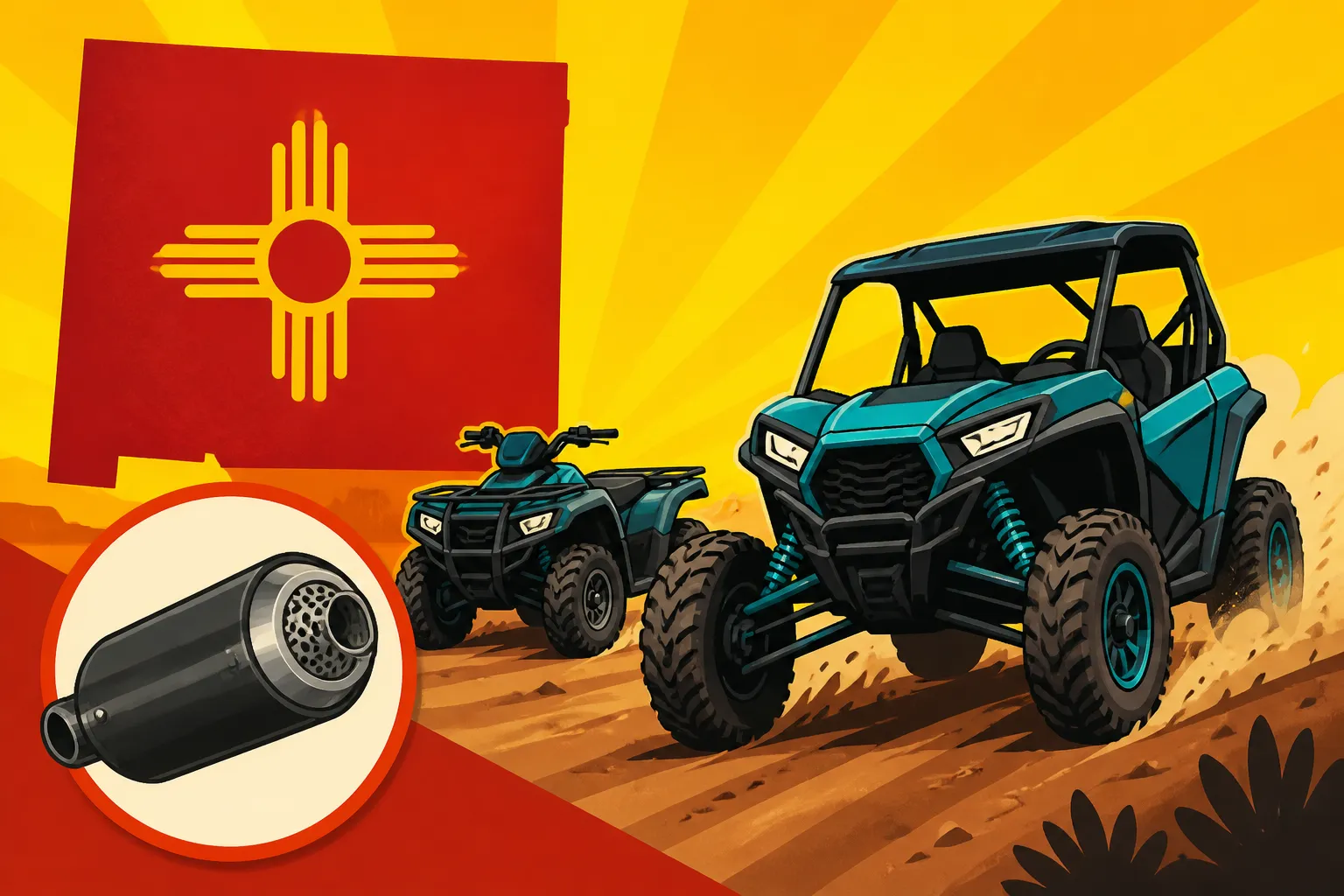
What does "approved" actually mean in this context? It means the spark arrester has been tested and certified by the USDA Forest Service to meet specific standards for preventing the escape of those dangerous carbon particles. You'll typically find a stamp, etching, or label directly on the muffler or exhaust component indicating its compliance, often with the words "USFS Approved" or a specific code. This standard ensures that the device is effective and reliable in preventing sparks. The regulations are designed to minimize the risk of fire starts from OHVs, whether you're cruising a [New Mexico Rules for Riding Federal Land], exploring [New Mexico Rules for Riding BLM Land], or navigating a [New Mexico Rules for Riding a National Forest]. Ignoring this requirement isn't just a minor infraction; it's a direct violation of land use rules meant to protect everyone and everything out there.
How to Ensure Your Machine is Compliant (and Avoid a Headache)
Okay, so you understand why a spark arrester is crucial. Now, let's get down to the practical side of things: how do you actually check if your machine is compliant, and what do you do if it's not? This is where many riders get a little lost, but with a few simple steps, you can ensure your rig is ready for the trail without running afoul of the law or putting our beloved New Mexico at risk. Taking the time for this check now can save you a lot of grief and expense later on.
Checking for a USFS-Approved Stamp
The first and most important step is to locate and inspect the spark arrester on your OHV. For most machines, the spark arrester is integrated into the muffler or the very end of the exhaust pipe. You'll need to get down and dirty, so grab a flashlight and perhaps a rag. Look for a small metal tag, a stamped marking, or an etching directly on the muffler itself, or sometimes on the exhaust tip. What you're looking for specifically is a clear indication that it's "USFS Approved" or "USDA Forest Service Approved." Sometimes, it might just be a manufacturer's code that signifies its compliance, so if you're unsure, a quick online search with your muffler's make and model can often confirm its status.
It’s not uncommon for these stamps to become faded, caked with mud, or even scratched off over years of use and abuse on the trails. If you can’t clearly read the stamp, or if there's no visible marking at all, that's your cue to investigate further. An unreadable stamp, in the eyes of a ranger, is often as good as no stamp at all. Remember, the burden of proof is on you, the rider, to demonstrate compliance. This is a crucial step in [Checking Your Spark Arrester Before Public Land] to ensure your day isn't cut short by an inspection.
Aftermarket Solutions and Installation Tips
What if your machine doesn't have a spark arrester, or the one it has isn't approved or is damaged? Don't fret; you have options. Many modern aftermarket exhaust systems come with integrated, USFS-approved spark arresters built right in. If you're upgrading your exhaust for performance or sound, make sure to verify that the new system is compliant. Companies like SuperATV, for instance, offer a variety of aftermarket parts, and if you're looking for a new exhaust or an insert, you'll want to confirm it meets the necessary spark arrester standards. They often clearly label their products as USFS compliant when applicable.
For those with older machines or specific exhaust setups, you might be able to install an aftermarket spark arrester insert. These are typically screen-type devices that fit inside the end of your muffler. When choosing an insert, ensure it's specifically designed for your make and model and, most importantly, is USFS approved. Installation usually involves removing a few bolts, sliding the insert in, and re-securing it, but always follow the manufacturer's instructions to ensure proper fit and function. Remember, proper maintenance is key; spark arresters, especially screen types, can get clogged with carbon, reducing their effectiveness and even impacting engine performance. Regular cleaning is a must to keep your machine compliant and running smoothly.
The Consequences of Non-Compliance and Responsible Riding
Now that we've covered what a spark arrester is and how to ensure your machine has one, let's talk about the real-world implications of not adhering to these rules. It’s easy to think of regulations as bureaucratic hurdles, but in the context of spark arresters, non-compliance carries significant risks, both legal and environmental. A quick check of your exhaust could save you a lot of grief and protect the very lands we love to ride.
Fines, Penalties, and Trailside Checks
Think about this scenario: You're out enjoying a beautiful Saturday, navigating a designated trail, maybe even on a [New Mexico Rules for Riding a Designated Route]. Suddenly, you see a U.S. Forest Service Ranger or a BLM officer signaling you to pull over. This isn't just about speeding; part of their routine check often includes verifying your OHV's equipment, and a spark arrester is high on that list. They know exactly what to look for, where the stamps usually are, and how to spot a non-compliant exhaust. If your machine is found without a USFS-approved spark arrester, or if it's damaged or illegally modified, you're looking at more than just a stern talking-to.
The consequences can range from a substantial fine, which can quickly put a damper on your weekend and your wallet, to being ordered off the trail and potentially even having your machine impounded in more severe or repeated cases. These aren't just theoretical penalties; they happen. While a fine for no spark arrester might not be as high as [New Mexico Fines for an OHV Violation] for something like illegal road use, it's still a significant cost and an undeniable hassle. Plus, imagine having to trailer your machine out of a remote area because you couldn't pass a simple inspection. It's a scenario every rider wants to avoid, and it's easily preventable with a little proactive maintenance. [What a New Mexico Officer Checks Roadside] almost always includes this crucial piece of equipment.
Beyond the Law: The Ethos of Responsible Off-Roading
Beyond the legal ramifications, there's a deeper, more profound reason to ensure your spark arrester is always in top-notch condition: it's about being a responsible steward of the land. We, as OHV enthusiasts, have a unique privilege to access and enjoy some of the most breathtaking natural areas New Mexico has to offer. With that privilege comes a responsibility to protect those lands for ourselves, for wildlife, and for future generations of riders. A single spark, escaping from a non-compliant exhaust, could ignite a wildfire that devastates thousands of acres, destroys ecosystems, and leads to long-term closures of our favorite trails. This is especially poignant during times of [New Mexico Fire Season and Trail Closures], when conditions are ripe for catastrophic blazes.
When you're riding, you're not just an individual; you're part of a larger community of off-roaders. The actions of a few can unfortunately cast a shadow on the entire group. A major wildfire caused by an OHV can fuel anti-access sentiments, leading to stricter regulations, more trail closures, and a loss of riding opportunities for everyone. This is why it’s not just about avoiding a ticket, but about upholding the integrity of our sport and demonstrating that we are responsible users of public lands. Whether you're riding your own machine or a [New Mexico Rules for a Rented Machine], ensuring a spark arrester is present and functional is a simple, effective way to contribute to fire prevention and maintain positive relationships with land managers and the wider public. It’s part of the unspoken code of off-roading, alongside practices like packing out your trash, staying on designated trails, and being mindful of others.
Here’s a quick overview of spark arrester compliance:
| Compliance Status | Description | Potential Impact on Riding |
|---|---|---|
| USFS-Approved (Stamped & Maintained) | Exhaust system clearly marked USFS-compliant; regularly cleaned and in good repair. | Optimal. Legal on all public lands. Minimizes fire risk. Ensures smooth riding without legal interruptions. Contributes to a positive image for OHV users. You can ride confidently knowing you're compliant. |
| Aftermarket (No Visible Stamp) | An aftermarket exhaust is installed, but lacks a clear USFS stamp, or its compliance is unverified. | High Risk. May be illegal on public lands even if functionally effective. Law enforcement will often assume non-compliance without a visible stamp, leading to potential fines or being turned away from trails. |
| Damaged/Clogged Arrester | A USFS-approved arrester is present but is bent, rusted, has holes, or is heavily clogged with carbon. | High Risk. Effectiveness is severely compromised, increasing fire risk. Law enforcement may still issue a citation for a non-functional or poorly maintained device. Can also negatively impact engine performance. |
| No Spark Arrester Present | The exhaust system has no spark arrester, or it has been deliberately removed (illegal). | Extremely High Risk. Immediate violation of state and federal law on public lands. Almost guaranteed fine, removal from trail, and potentially vehicle impoundment. Poses a severe fire hazard. Absolutely avoid this scenario. |
Just as you wouldn't head out without checking your [New Mexico Rules for Carrying Fuel] or making sure your machine adheres to the [New Mexico Sound Limit for ATVs], ensuring your spark arrester is compliant is an essential pre-ride ritual. It’s a small detail with huge implications for both your riding enjoyment and the protection of New Mexico’s incredible wild spaces.
Disclaimer
This article is for general informational purposes only and does not constitute professional advice. Laws, prices and regulations vary by location and change over time. Consult a qualified professional for guidance on your specific situation.