New Mexico Registration for a Side-by-Side
Trying to figure out how to properly register your shiny new (or new-to-you) side-by-side in New Mexico can feel like navigating a maze blindfolded. You've got the excitement of hitting the trails, but the looming question of paperwork can quickly dampen the fun. This guide is here to cut through the confusion, offering a clear, empathetic roadmap to getting your side-by-side legally registered and ready for adventure across the Land of Enchantment.
Why Register Your Side-by-Side in New Mexico?
Let's be real, no one wants more paperwork or fees. But when it comes to your side-by-side, registration isn't just a bureaucratic hurdle; it's a fundamental step that protects you, opens up incredible riding opportunities, and keeps you on the right side of the law. Think of it as your official passport to New Mexico's vast and varied landscapes.
Legal Requirements and Avoiding Fines
First and foremost, it's the law. New Mexico requires all off-highway vehicles (OHVs), including side-by-sides, to be registered if they're going to be operated on public land. This isn't just a suggestion; it's a mandatory step that carries real consequences if ignored. Imagine pulling up to a trailhead, ready for an epic day, only to have a ranger or local law enforcement officer issue you a ticket because your machine isn't properly registered. That's a quick way to turn a fun outing into a costly headache.
The fines for operating an unregistered OHV can be substantial, often escalating with repeat offenses. Beyond the monetary cost, it can lead to delays, having your machine impounded, and a whole lot of frustration. It’s a lot simpler, and much less stressful, to take care of the registration upfront than to deal with the fallout of an infraction. This is why understanding [New Mexico Fines for an Unregistered OHV] is so crucial.
Proper registration also serves as proof that your machine is recognized by the state. It signifies that you've completed the necessary steps to make it legally operable. Without this, you could face questions about ownership and legal status, especially if you're ever involved in an incident or need to prove your right to operate the vehicle.
Accessing Public Lands and Trails
New Mexico boasts an incredible array of public lands perfect for side-by-side riding, from vast BLM lands to stunning National Forests. However, access to these areas is contingent upon having a properly registered machine. That little decal on your side-by-side is your ticket to explore thousands of miles of designated trails and open riding areas. Without it, many of these fantastic spots are off-limits, which means you're missing out on some of the best riding experiences the state has to offer.
Picture planning a weekend trip to a gorgeous mountain trail or a wide-open desert expanse. You load up your side-by-side, drive hours to your destination, only to find a sign or be informed by an official that unregistered vehicles aren't permitted. All that planning, fuel, and anticipation, wasted. It’s a common scenario for those who overlook this essential step.
Furthermore, registration fees often contribute directly to the maintenance and improvement of these very trails. When you register your side-by-side, you're not just complying with the law; you're actively supporting the infrastructure that makes your riding adventures possible. It's a small investment that pays dividends in accessible, well-maintained public lands for everyone to enjoy.
Proof of Ownership and Resale Value
Beyond legal operation, registration provides crucial documentation of ownership. When you register your side-by-side, the state's Motor Vehicle Division (MVD) records you as the legal owner. This is invaluable for several reasons, including deterring theft and aiding in recovery if your machine is ever stolen. Having that official record can make all the difference in proving your claim to the vehicle.
Consider the scenario of selling your side-by-side down the road. Buyers are naturally wary of machines without clear documentation. A properly registered side-by-side with a clean title and up-to-date registration shows responsibility and transparency, making it far more attractive to potential buyers. It gives them peace of mind that they're purchasing a legitimate machine with no hidden legal issues.
Conversely, trying to sell an unregistered or untitiled side-by-side can be a major headache. You might struggle to find buyers willing to take on the potential hassle, or you may have to significantly drop your asking price. Think of the registration as adding a layer of legitimacy and value to your investment, ensuring a smoother process when it's time to move on to your next adventure. If you're buying, always verify the seller has proper documentation, including a clear title, to ensure a smooth transfer of ownership and registration for you.
Understanding New Mexico's OHV Registration Process
Alright, so you're convinced registration is a good idea. Now, let's dive into the specifics of how it actually works in New Mexico, especially for side-by-sides. It might seem like a lot of steps, but once you break it down, it's quite manageable. The key is knowing which agencies are involved and what they'll expect from you.
The Role of the MVD and Game & Fish
In New Mexico, the primary authority for registering your side-by-side is the Motor Vehicle Division (MVD). Unlike some states where Game & Fish departments handle OHV registration, New Mexico funnels this process through the MVD, just like with cars and trucks. This means you'll be visiting an MVD office or utilizing their online services to complete your registration. This centralized approach simplifies things a bit, as you're likely already familiar with the MVD for other vehicle needs. [Why MVD Registers New Mexico OHVs] explains more about this structure.
While the MVD handles the registration itself, the New Mexico Department of Game & Fish still plays a crucial role in OHV safety, education, and trail management. They are responsible for enforcing OHV laws on public lands, promoting safe riding practices, and overseeing the state's OHV program. The fees collected from MVD registrations often go back into funding Game & Fish initiatives, like trail maintenance and educational campaigns. So, while you deal with the MVD for paperwork, remember that Game & Fish is the agency actively working to ensure safe and enjoyable riding for everyone.
It's a collaborative effort: the MVD gets you officially registered, and Game & Fish helps ensure the trails are safe and accessible. Understanding this distinction can help you direct your questions to the right place should you encounter any issues during the process. Most of your direct interaction for registration will be with MVD representatives.
Key Documents You'll Need
Gathering the right documents before you head to the MVD is perhaps the most critical step in a smooth registration process. Showing up unprepared will only lead to wasted time and multiple trips. For a side-by-side, the core documents are similar to those for other vehicles, but there are specific nuances to OHVs.
You will almost certainly need your proof of ownership, which usually comes in the form of a manufacturer's statement of origin (MSO) for a brand-new machine, or a title for a used one. If you bought a used side-by-side, it's imperative that the seller provides you with a properly endorsed title. If the title is lost, that can create significant delays, so always sort that out before completing the purchase. Additionally, you'll need a bill of sale detailing the transaction, especially for private sales. For new purchases, the dealer will typically handle much of this initial paperwork. [New Mexico OHV Registration Paperwork] offers a more detailed breakdown.
Beyond ownership proof, you’ll also need valid identification, such as a driver's license, and proof of New Mexico residency if you're a new resident. The MVD will have specific forms to fill out, and they will likely require payment for the registration fees. Having all these items organized and readily available will make your visit much more efficient and less stressful. Don't forget any lienholder information if you financed your side-by-side, as they'll need to be listed on the registration.
Special Considerations for Side-by-Sides
Side-by-sides, also known as Recreational Off-Highway Vehicles (ROVs) or Utility Terrain Vehicles (UTVs), have some unique characteristics that factor into their registration. Due to their design, often with multiple seats, steering wheels, and sometimes even enclosed cabs, they bridge the gap between ATVs and small utility vehicles. While the basic registration process is the same as for other OHVs, their potential for road use introduces additional considerations.
For instance, if you plan to operate your side-by-side on any paved public roads in New Mexico, even for short distances to connect trails, you'll need to meet additional requirements. This often includes obtaining a special paved road plate and carrying proof of liability insurance. This is a significant difference from machines like dirt bikes or traditional ATVs, which generally have more limited or entirely prohibited paved road access. New Mexico Registration for a Side-by-Side delves into these specifics.
Also, the sheer size and weight of many side-by-sides mean they often don't fit on the narrowest of trails designed for smaller ATVs. While this doesn't directly impact registration, it's a practical consideration for where you'll be riding once registered. Always check trail restrictions and width limits to ensure your side-by-side is permitted. The MVD will categorize your machine as an ROV, which helps define its legal capabilities and requirements.
Step-by-Step Guide to Registering Your Side-by-Side
Okay, let's get down to the practical application. You've got your head wrapped around the "why" and "what" of registration. Now, here's the "how." Follow these steps to ensure a smooth journey from paperwork pile to trail-ready side-by-side.
Gathering Your Paperwork
Before you even think about setting foot in an MVD office, create a checklist and gather every single document you might need. Being prepared here saves so much time and frustration.
- Proof of Ownership: This is paramount.
- New Machine: You'll need the Manufacturer's Statement of Origin (MSO) or Manufacturer's Certificate of Origin (MCO). This is essentially the birth certificate of your side-by-side.
- Used Machine: You must have the vehicle's title, properly signed and dated by the previous owner, releasing their interest in the machine. Verify the VIN on the title matches the VIN on your side-by-side. If the title is missing, you'll need to work with the seller to obtain a duplicate or follow a specific MVD process for lost titles, which can add significant delays.
- Bill of Sale: Especially for private party sales, a detailed bill of sale is crucial. This document should include:
- Buyer's and Seller's full names and addresses
- Date of sale
- Purchase price
- Make, model, year, and Vehicle Identification Number (VIN) of the side-by-side.
- Signatures of both parties.
You can find templates for bills of sale online through resources like LawDepot, which can help ensure you don't miss any critical details.
- Proof of Identity: Your valid driver's license or state-issued ID card. If there are multiple owners, all owners typically need to present ID.
- Proof of Residency (if applicable): If you've just moved to New Mexico, you might need documents like a utility bill, lease agreement, or other MVD-approved proof of your New Mexico address. [Registering After Moving to New Mexico] can provide more specific guidance here.
- Lienholder Information: If you financed your side-by-side, have the lender's name and address ready. The MVD will note the lien on the registration.
- Payment: Be ready to pay the registration fees. The [New Mexico OHV Registration Cost] will give you an idea of the expense, but always check current MVD figures.
Organize these documents neatly in a folder. Consider making copies of everything for your records before you go. This meticulous preparation is the single best way to ensure your MVD visit is quick and successful.
Navigating the MVD Process
Once your paperwork is in order, it's time to head to the MVD. While some basic steps can be initiated online, for a first-time OHV registration, an in-person visit is often the most straightforward way to ensure everything is processed correctly.
Upon arrival, you'll typically take a number and wait your turn. When called, present all your gathered documents to the MVD agent. They will review everything, verify your identity, and ensure all forms are correctly filled out. Be prepared to fill out an application for title and registration, which the agent can assist you with if needed. This is the stage where the VIN on your physical side-by-side might be verified, or you may be asked to provide a VIN inspection depending on the machine's history (especially out-of-state vehicles). [New Mexico OHV Title Requirements] will guide you on title nuances.
The agent will calculate your registration fees, which generally cover the biennial registration period and any applicable excise taxes. You’ll pay these fees, usually by cash, check, or credit/debit card, though payment methods can vary by office. Once payment is processed and all documents are accepted, the MVD will issue you a temporary registration and often your permanent decals on the spot. Make sure you understand the expiration date and any next steps required.
What to Expect After Registration
Congratulations, you've successfully registered your side-by-side! You'll walk out of the MVD with a temporary registration document and your New Mexico OHV decals. These decals are critical and need to be properly affixed to your side-by-side before you hit any public lands.
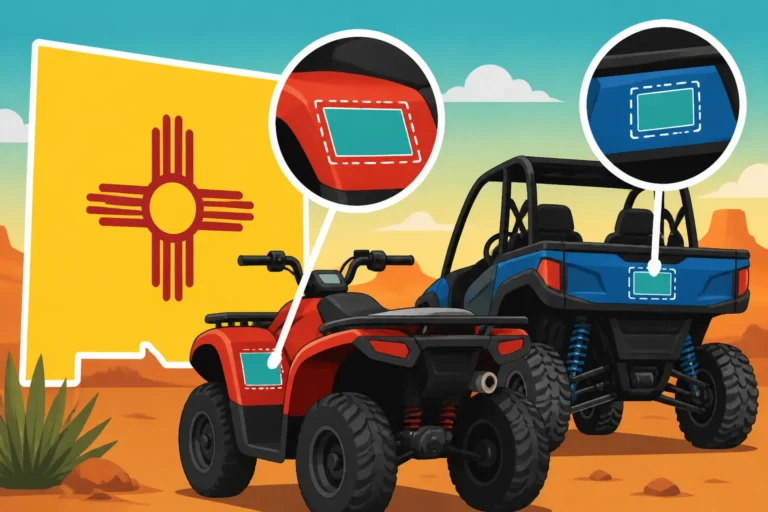
The MVD typically provides two types of decals: a yellow one for general off-highway use and a green one if you've opted into the paved road use program. You'll also receive a small registration card that you should carry with you whenever you ride. The [New Mexico OHV Decal Placement Rules] are very specific, and it's essential to follow them for your side-by-side. For ROVs, the decal usually goes on the left rear quarter panel in a clearly visible location.
Keep your registration card in a safe, waterproof place on your side-by-side. This document proves your machine is legally registered and will be the first thing a ranger or officer asks for during a trailside check. While the physical decals are prominent, the card is your official proof. Remember, this registration is typically valid for two years, and you'll need to remember to [Renewing a New Mexico OHV Registration] before it expires to avoid any lapses in legality.
Decals, Plates, and Paved Road Use
One of the most common areas of confusion for side-by-side owners in New Mexico revolves around the decals and the option for paved road use. It's not as simple as just one sticker; there are different types, each with a specific purpose. Understanding these nuances is crucial, especially if you plan to use your machine for more than just off-road trails.
Decal Colors and Their Meanings
In New Mexico, OHV registration comes with specific colored decals, and each color signifies different permissions and requirements. It’s not just a decorative sticker; it’s a legal indicator that law enforcement looks for.
The primary decal you'll receive is yellow. This [New Mexico's Yellow Off-Highway Decal] signifies that your side-by-side is registered for off-highway use only. This means it's legal for public trails, BLM land, National Forests, and other designated off-road areas. The vast majority of OHV riders will primarily use this yellow decal. It's proof that you've completed the basic registration requirements for recreational riding.
However, if you intend to ride your side-by-side on paved public roads in New Mexico – even to connect trails or access certain town streets where permitted – you will also need a green decal. This [New Mexico's Green On and Off-Highway Decal] indicates that your machine meets additional requirements for paved road legality. This isn't automatic; you have to specifically apply for this privilege and meet extra conditions, which we'll discuss next. Without the green decal, your yellow-decaled side-by-side should strictly remain off pavement, even if a county or town has opened its roads.
When a Paved Road Plate is Needed
So, you want to take your side-by-side on a paved road? It's not just about the green decal; it also involves a special paved road plate. This is a dedicated license plate, similar to what you'd see on a car, but specifically designed for OHVs that are street-legal under New Mexico's opt-in law.
To qualify for this paved road plate, your side-by-side must meet a series of additional equipment requirements, including things like headlights, taillights, brake lights, mirrors, a horn, and turn signals. It also needs to be insured with minimum liability coverage, just like any other street-legal vehicle. This ensures that if you're involved in an incident on a paved road, you have financial responsibility. The MVD will require proof of this insurance when you apply for the paved road plate. [New Mexico OHV Paved Road Plate Cost] will outline the fees associated with this additional registration.
It's important to understand that even with a paved road plate, you are still restricted from certain roadways, such as interstate highways or limited-access freeways. The plate primarily allows you to use county and city streets where local ordinances permit OHV travel, often for connecting to off-road trails. It’s not a blank check to ride anywhere. Always check local regulations, as towns and counties have the authority to open or close their roads to OHVs.
Placement Rules for Side-by-Side Decals
Once you have your decals, sticking them in the right spot is crucial. Improper placement can lead to questions from law enforcement and potentially even a citation. The MVD has very specific guidelines for where these decals should be affixed, and side-by-sides have their own unique requirements due to their body style.
For a side-by-side (ROV), both the yellow and green decals (if you have both) must be conspicuously displayed on the left rear quarter panel of the machine. This means the left side of the machine, towards the back, on a flat, visible surface. It's generally a smooth area where the bodywork is uninterrupted, allowing for clear visibility from behind and the side. This specific placement ensures that when an officer or ranger approaches your side-by-side, they can quickly identify its registration status without having to search for the decal.
Before applying, make sure the surface is clean, dry, and free of any dirt or wax to ensure good adhesion. Peeling or obscured decals can also be an issue, so if yours ever gets damaged or becomes unreadable, you'll need to order a replacement. Getting your [Where the Decal Goes on an ROV Quarter Panel] right ensures compliance and avoids unnecessary hassle when you're out enjoying the trails.
Common Pitfalls and Troubleshooting
Even with the best intentions and preparation, sometimes things don't go perfectly smoothly during the registration process. Knowing what potential roadblocks you might encounter and how to navigate them can save you a lot of grief. It’s all part of the journey to becoming a seasoned OHV enthusiast in New Mexico.
Missing or Incorrect Documentation
This is, by far, the most common reason for delays at the MVD. You show up, wait your turn, only to be told you're missing a signature, a date, or an entire document. It’s incredibly frustrating, but entirely preventable with thorough preparation.
A common issue is an incomplete or improperly filled-out title from a private sale. Perhaps the seller forgot to sign on the correct line, or the purchase date was left blank. These seemingly small errors can send you back to track down the previous owner, which can be a nightmare if they're not easily reachable. This is where a clear and comprehensive bill of sale, perhaps using a template from a service like LawDepot, can help bridge gaps or provide supporting evidence. Ensure every blank on the title and bill of sale is filled out accurately and completely before you leave the seller.
Another pitfall is having a title from a state that doesn't issue OHV titles, which can complicate the process in New Mexico. Or, perhaps you bought a side-by-side that was never properly titled in a previous state. In these cases, the MVD will have a specific process, often involving VIN inspections, affidavits, and potentially even a bond, to establish ownership. Be prepared for extra steps and potential fees if your machine's documentation history isn't perfectly clean.
Dealing with Out-of-State Purchases
Buying a side-by-side from another state can introduce an extra layer of complexity to the New Mexico registration process. While many states have similar titling and registration practices, there can be significant differences that require your attention.
First, if the side-by-side is coming from a state that does not issue titles for OHVs, you'll need to work closely with the MVD to establish ownership through other means, such as a bill of sale and possibly a VIN inspection. Don't assume that just because the previous state didn't require a title, New Mexico won't. Always confirm with the New Mexico MVD what specific documentation they will accept in lieu of a title for out-of-state machines. [Registering an Out-of-State Machine in New Mexico] provides a more detailed walkthrough.
Second, be aware of any sales tax implications. If you purchased the side-by-side out-of-state and didn't pay New Mexico sales tax (or an equivalent sales tax in the other state), you will likely owe compensating tax when you register it in New Mexico. This can be an unexpected cost if you haven't budgeted for it. Always keep your purchase receipts and bill of sale handy to show what you paid and any taxes that were collected.
Renewals and Transfers
Registration isn't a one-and-done deal. New Mexico OHV registrations are typically valid for two years, after which they need to be renewed. The MVD usually sends out renewal notices, but it's ultimately your responsibility to track the expiration date and [Renewing a New Mexico OHV Registration] on time. Renewals are generally simpler than first-time registrations and can often be done online or by mail, assuming your information hasn't changed.
When you sell your side-by-side, the registration does not automatically transfer to the new owner. The new owner will need to go through the full registration process in their name. As the seller, your responsibility is to properly endorse the title over to the buyer and provide a complete bill of sale. Failing to formally transfer ownership can leave you liable for tickets or incidents involving the machine after you've sold it.
If you purchase a used side-by-side, even if the registration is still technically "current" under the previous owner's name, you must register it in your name. The clock for the two-year registration period often resets with a change of ownership. This ensures that the state's records accurately reflect the current legal owner of the machine.
| Document Type | Purpose | Key Details | Where to Get It / What to Watch For |
|---|---|---|---|
| MSO/MCO | Proof of ownership for new machines | Manufacturer's original document. | Provided by dealer. Keep it safe. |
| Title | Proof of ownership for used machines | Must be signed/dated by seller. VIN must match machine. | Previous owner. Verify all fields are complete and accurate. |
| Bill of Sale | Record of transaction | Buyer/seller info, date, price, VIN, signatures. | Seller, or use a template like LawDepot. Essential for private sales. |
| Photo ID | Verification of identity | Valid driver's license or state ID. | Yourself. |
| Proof of Residency | Confirm New Mexico address | Utility bill, lease, NM driver's license. | Yourself (if new resident). |
| Lienholder Info | For financed machines | Lender's name and address. | Your loan documents. |
| Insurance Card | Required for paved road plate | Proof of liability coverage. | Your insurance provider (if seeking paved road plate). |
| Payment for Fees | Cover registration, title, and taxes | Varies; check MVD website for current amounts. | Cash, check, credit/debit (check specific MVD office policy). |
Disclaimer
This article is for general informational purposes only and does not constitute professional advice. Laws, prices and regulations vary by location and change over time. Consult a qualified professional for guidance on your specific situation.