New Mexico OHV Areas Near Santa Fe
Santa Fe offers an appealing mix of high-desert scenery, volcanic mesas, and mountain views, but finding a legal place to ride an ATV or UTV takes more than spotting an inviting dirt road. This guide explains what to expect around Caja del Rio and St. Peter’s Dome, how to plan a ride, and what to check before unloading your machine.
Where to ride an ATV or UTV near Santa Fe
Caja del Rio is the main nearby option
For many riders starting in Santa Fe, Caja del Rio is the first area to investigate. This broad landscape west of the city includes mesa country, dirt routes, and wide-open views toward the Rio Grande. It is close enough to be a practical outing, but it is not a single, neatly signed OHV park with one entrance and a simple loop. Routes, land boundaries, and permitted uses can vary across the area.
That patchwork is important. A road that looks rideable on a phone screen may cross land with a different manager or may not be open to motorized use. Before leaving, identify the route you intend to ride and confirm it on a current land-manager map. Use onX Offroad as a planning aid to inspect route options and boundaries, then compare your plan with official information rather than treating any app as permission to ride.
The area rewards riders who are comfortable navigating and who don’t mind a more self-directed day. You may find open terrain and quiet stretches, but facilities and services can be limited compared with a developed riding park. Bring what you need for the outing, plan for changing conditions, and avoid assuming that a trailhead will have water, fuel, restrooms, or reliable cell service.
For a closer look at the area’s geography and route-planning considerations, see [Caja del Rio and St. Peter's Dome]. If your route is aimed toward the river overlook, [Riding Caja del Rio to the Rio Grande Overlook] offers a useful companion topic for thinking through that kind of trip.
St. Peter’s Dome is part of the bigger picture
St. Peter’s Dome is a recognizable point of interest in the Caja del Rio area, but it’s best to think of it as a destination within a larger landscape rather than a separate, fully serviced OHV park. Riders may be drawn by the scenery and the chance to explore, yet access depends on which route is open and where it leads. Check the route details before setting out, especially if your plan involves connecting roads or exploring beyond a familiar turnaround point.
The terrain and riding experience can change quickly across the area. A route that seems straightforward on a map may become rough, rocky, sandy, or difficult to follow on the ground. If you are riding with a less experienced driver, build in time to turn around if the surface or route becomes uncomfortable. It is better to shorten the ride than to push a machine into terrain that exceeds the driver’s skill or the vehicle’s capabilities.
Scenery can also be distracting. Stop in a safe place before checking a map, taking photos, or deciding where to go next. If the group is spread out, agree on a regrouping point before leaving the staging area. A little structure helps prevent the familiar problem of one rider taking a fork while everyone else continues straight.
Nearby forest roads are not automatically OHV routes
Santa Fe is also close to national forest land, but being on a forest road does not automatically mean every ATV or UTV can use it. Motorized access is generally tied to designated routes and the applicable travel rules for the specific area. A road shown on a general map may be closed to motor vehicles, restricted by season, or unsuitable for the machine you are bringing.
Before choosing a forest route, confirm the road’s current status and any vehicle restrictions with the relevant land manager. For background on the distinctions riders need to understand, see [New Mexico Rules for Riding a National Forest]. If you are new to checking motorized route designations, [New Mexico Trail Maps Worth Carrying] is another helpful planning read.
This is particularly worth doing when your trip begins near Santa Fe but your route continues into less familiar country. Don’t rely on a route’s appearance, an old trip report, or a pin dropped into a mapping app. A marked route and a current official map are more useful than a vague assumption that a dirt road is open.
Compare nearby riding options before you go
The table below is a planning starting point, not a guarantee that a particular route is open on the day you visit. Check land status, permitted vehicle use, closures, and access conditions before heading out.
| Option | What it offers | Best for | What to verify |
|---|---|---|---|
| Caja del Rio | Mesa-country routes and expansive high-desert scenery near Santa Fe | Riders who want a self-guided outing close to town | Route access, land boundaries, current closures, and suitable staging |
| St. Peter’s Dome area | A scenic point of interest within the broader Caja del Rio landscape | Riders who have planned a specific route and are comfortable navigating | Whether the intended route is open and appropriate for the machine |
| Nearby national forest routes | Forest scenery and road-based travel where motorized use is allowed | Riders who prefer a route-focused ride over open desert terrain | Designated-route status, seasonal restrictions, and vehicle limits |
| More distant OHV areas | A wider range of developed or well-known riding destinations elsewhere in New Mexico | Riders willing to make a longer drive or plan an overnight trip | Travel time, access rules, facilities, and current conditions |
Pick the kind of ride you actually want
A short scenic ride, a technical outing, and a full day of exploring call for different plans. If your group includes new riders, choose a conservative route with an easy turnaround option. Don’t plan a demanding loop simply because it looks short on a screen; rough terrain and navigation stops can make a modest distance take much longer than expected.
For a relaxed outing, focus on one well-understood route and allow time for stops. If you are hoping to cover more ground, make sure every driver is comfortable with the route-finding and terrain. An experienced driver may enjoy a less predictable day, while a family group may be happier with a simpler ride and a clear return plan.
If you need an easy-going route idea, [20 Miles of Easy Forest Road] can help frame the kind of lower-key ride some people prefer. Still, use current route information to decide whether a particular road works for your vehicle and trip.
Decide whether you need a trailer
Some riders can reach a riding area with a machine already transported to the trailhead; others need to plan for a trailer, parking, and unloading. Don’t assume that a road-legal vehicle can carry you directly from Santa Fe to every riding route on an ATV or UTV. Rules for public-road travel are separate from the rules for riding on an OHV route, and local access restrictions matter.
Before leaving home, check where you can legally stage and whether the access road is suitable for your tow vehicle and trailer. A narrow, rutted approach can turn a simple arrival into a stressful maneuver, especially if you reach it late in the day or when other groups are arriving. If you’re comparing logistics, [New Mexico Riding Areas Reachable Without a Trailer] can help you think through that part of the outing.
Plan your route, equipment, and timing
Check maps and closures before loading
Use a map to create a route plan, not just to locate a general riding area. OnX Offroad can help you review routes and land boundaries while preparing, but check the appropriate agency’s current maps and notices too. If the route crosses or approaches areas managed by different agencies, confirm the rules for each section instead of assuming one map layer answers every question.
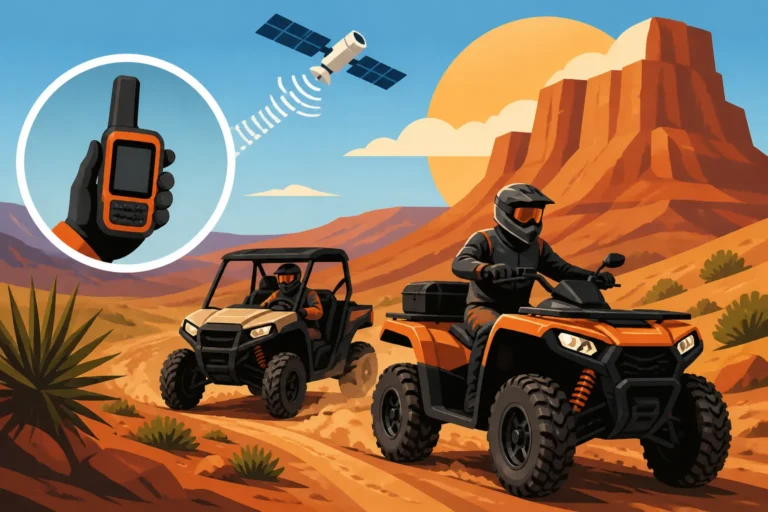
Look closely at route connections. A tempting loop may include an unmarked spur, a closed road, or a stretch that leads somewhere you did not intend to go. Save an offline map when available, carry a backup navigation option, and make sure at least one person in the group understands the planned route. Cell service can be unreliable once you are away from town.
Closures and access conditions can change for reasons that are not obvious from a map: weather damage, fire restrictions, maintenance, or seasonal limits. Check [New Mexico Trail Closures to Check First] before the trip. If you use onX Offroad in the field, download or prepare the information you need before you lose service rather than waiting until you are parked at a trail junction.
Match the machine and group to the terrain
A UTV and a quad can have different needs on the same route. Consider the width of the vehicle, turning room, ground clearance, tire setup, and the experience of the driver. A wide side-by-side may be a poor fit for a narrow route even when it has enough power for the terrain. A compact machine may be easier to maneuver but still need careful handling on loose or rocky surfaces.
Be honest about your group’s comfort level. A beginner who is nervous about steep or uneven ground may enjoy the trip more if the plan avoids those sections. If you are riding with children or less experienced drivers, make sure everyone understands basic group expectations: keep a safe following distance, wait at agreed junctions, and stop if someone needs help. On a mixed-skill ride, the pace should work for the least experienced person, not the fastest machine.
Before leaving, check your machine for basic readiness: fuel, tires, brakes, lights, and any equipment needed for the route. Bring water, food, warm or sun-protective layers as appropriate, and tools for minor problems. A breakdown that would be an inconvenience near town can become a much bigger issue if the group is far from the vehicle or out of service.
Ride considerately around shared land
Caja del Rio and nearby public lands are not isolated playgrounds. You may encounter hikers, cyclists, other motorized users, ranch activity, wildlife, or people who live and work nearby. Slow down around other users, give them room, and avoid creating unnecessary dust or noise. Stay on routes where motorized travel is permitted instead of widening a track or cutting across open ground.
Close any gate you find closed, and leave a gate as you found it when it is open. Keep an eye out for livestock and do not chase or crowd animals. If a route passes through a busy or sensitive area, choose a considerate speed and be prepared to stop. These small decisions make a real difference on shared ground; [New Mexico Trail Etiquette on Shared Ground] covers more of the basics.
Also confirm whether your machine and riders meet the applicable requirements for the trip. New Mexico rules can depend on where you ride, whether you are a resident or visitor, the rider’s age, and the kind of public land involved. Start with [New Mexico's Nonresident OHV Permit] if you are visiting from another state, and check the rules that apply to your specific route and machine before departure.
Make a practical Santa Fe riding plan
A good day near Santa Fe starts with a specific route, not simply a destination name. Choose the area, confirm the route is open to your machine, decide where you will stage, and give someone at home your general plan. Leave enough time to return before dark, especially if you are unfamiliar with the route or expect to stop for navigation.
Keep a backup plan. If the intended road is closed, the approach is too rough, or weather makes the terrain unsafe, be ready to change the outing rather than improvising onto an unverified route. Check forecasts and local alerts before departing, and take desert conditions seriously: sun, wind, dust, and sudden weather can make a ride harder than it looked from town.
Finally, set expectations with your group before you unload. Agree on who leads, who rides at the back, where you will regroup, and what to do if someone gets separated. A little preparation can turn a confusing day of guessing at forks into a smoother ride through some of northern New Mexico’s memorable high-desert scenery.
Disclaimer
This article is for general informational purposes only and does not constitute professional advice. Laws, prices and regulations vary by location and change over time. Consult a qualified professional for guidance on your specific situation.