Helmets and Eye Protection Under 18
It’s a scene many of us New Mexico off-road enthusiasts are familiar with: you’re gearing up for a fantastic day on the trails, the sun is shining, and your younger riders are bouncing with excitement. But then that familiar knot of anxiety tightens – "Are we really sure about the helmet rules? What about goggles? Is what we have actually legal?" It’s a common frustration, trying to keep up with all the regulations, especially when it comes to the safety of our kids. This guide is here to clear up that confusion, diving deep into New Mexico’s specific requirements for helmets and eye protection for anyone under the age of 18, ensuring your family stays safe and legal on every adventure.
The Foundation: New Mexico's Youth Safety Regulations for OHVs
Riding off-highway vehicles in New Mexico is an incredible experience, offering unmatched access to our state's diverse landscapes, from the sandy arroyos to the pine-studded mountains. But with that freedom comes a serious responsibility, especially when young riders are involved. New Mexico understands that children and teenagers simply don't have the same level of experience, judgment, or physical resilience as adults, which is why the state has put specific regulations in place to protect them. These aren't just arbitrary rules; they're designed to mitigate the inherent risks of off-road riding for our most vulnerable enthusiasts.
When you're out there, whether it's exploring a new trail near Ruidoso or cruising designated routes in the Carson National Forest, seeing a young rider without the proper safety gear can be genuinely alarming. We want our kids to enjoy the thrill of the ride, but not at the expense of their well-being. The state's regulations provide a crucial framework to ensure that every minor on an OHV is afforded a basic level of protection, recognizing that even the most cautious rider can encounter unexpected hazards on the trail.
Why Under-18 Riders Have Special Rules
The rationale behind New Mexico's specific rules for riders under 18 is rooted in safety and developmental understanding. Younger individuals, by nature, are still developing their motor skills, reaction times, and risk assessment abilities. They might not always perceive dangers as quickly as an adult, or they might push limits without fully understanding the consequences. Imagine a 14-year-old on a dirt bike, navigating a rocky climb for the first time; their focus might be entirely on throttle control and balance, potentially overlooking a stray branch at eye level or an unexpected dip in the trail. This is where comprehensive safety gear becomes non-negotiable.
Furthermore, children's bodies, particularly their heads and brains, are more susceptible to severe injury in the event of a crash or fall. A concussion that might be minor for an adult could have more profound and lasting effects on a developing brain. The state recognizes these physiological and developmental differences, crafting laws that act as a safety net. It’s not about restricting fun; it’s about ensuring that the fun can continue safely for years to come. Think of it as an investment in their future adventures, protecting them from preventable harm while they learn and grow into skilled riders. For more on the specifics of age-related rules, you might want to check out [New Mexico Rules for Riders Under 18].
The Core Requirements: Helmets and Eye Protection Defined
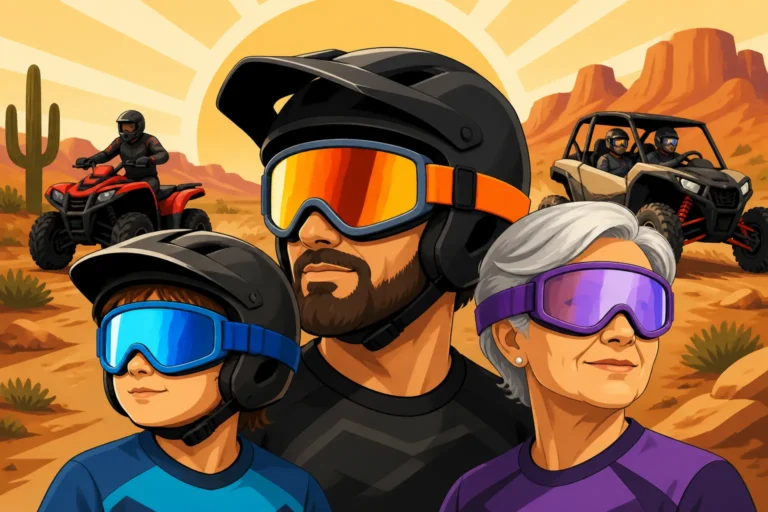
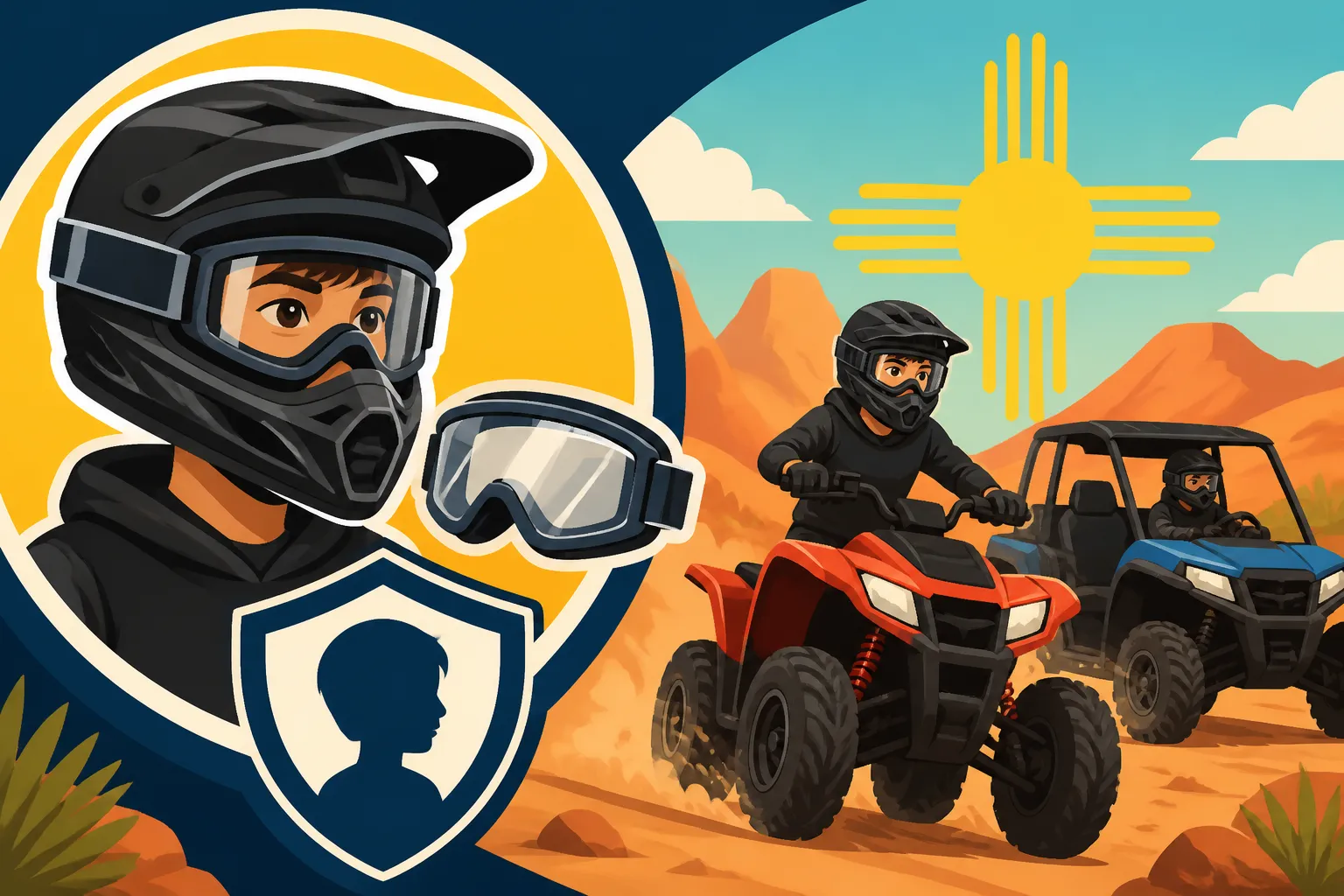
So, what exactly does New Mexico require for young riders? The law is quite clear: any person under 18 years of age operating or riding as a passenger on an OHV must wear a safety helmet and eye protection. It sounds straightforward, but there are specifics we need to unpack to ensure you're fully compliant. This isn't just about putting something on their head or over their eyes; it's about making sure that gear meets certain safety standards.
A "safety helmet" isn't just any helmet you might have lying around; it must be one that meets federal safety standards. This typically means a helmet certified by the Department of Transportation (DOT). Similarly, "eye protection" means something substantial enough to shield the eyes from impacts, dust, and debris. This usually translates to goggles designed for off-road use or a helmet with a integrated face shield. Sunglasses alone, for example, would not meet this requirement, as they don't offer the same level of impact resistance or full coverage. The goal is complete protection from unforeseen hazards.
Deciphering Helmet Requirements for Young Riders
Helmets are the most visible and often the most discussed piece of safety gear, and for good reason. They are the primary defense against head injuries, which can range from minor bumps to life-altering trauma. For our younger riders, whose brains are still developing, this protection is even more critical. New Mexico's helmet law for minors isn't just a suggestion; it's a mandate born from years of accident data and medical research. It’s about more than just avoiding a ticket; it’s about safeguarding their future.
Many parents express concern about their kids feeling restricted or uncomfortable in helmets, especially in New Mexico's warmer months. However, modern helmet technology has come a long way. Manufacturers like those whose gear might be sold through a company like SuperATV focus on ventilation, lighter materials, and comfortable liners to ensure riders can wear their helmets without undue discomfort. Finding the right fit and style is key to compliance and, more importantly, consistent use.
The "Why" Behind Mandatory Helmets for Minors
Let's face it, off-road riding, while exhilarating, comes with inherent risks. There are bumps, jumps, unexpected turns, and the occasional unplanned dismount. For a minor, who might still be honing their balance and judgment, these situations can arise more frequently or unexpectedly. A helmet acts as a crucial buffer, absorbing and distributing the forces of an impact, significantly reducing the risk of a severe head injury. Imagine a scenario where a young rider misjudges a turn on a dirt trail and tumbles off their ATV. Without a helmet, even a low-speed fall could result in a dangerous concussion or skull fracture.
The brain is incredibly delicate, and any injury to it can have long-lasting consequences, affecting everything from cognitive function to motor skills. For children and teenagers, who are still in critical developmental stages, protecting the brain is paramount. Mandatory helmet laws for minors reflect a public health approach, recognizing that the potential for severe, irreversible injury far outweighs any perceived inconvenience of wearing the gear. It’s a proactive measure, ensuring that when the unexpected happens – and it sometimes does, even to the most careful riders – the most vital part of their body is shielded. This commitment to safety is a core part of [Helmet Rules for New Mexico Riders].
What Makes a Helmet Legal in New Mexico? (DOT-Compliance)
When New Mexico law specifies a "safety helmet," it's not talking about a bicycle helmet, a construction hard hat, or even a fancy racing helmet that hasn't met specific federal standards. It means a helmet that complies with the Federal Motor Vehicle Safety Standard (FMVSS) No. 218, often referred to as DOT certification. You'll typically find a "DOT" sticker on the back of any helmet that meets this standard. This sticker isn't just for show; it's a critical indicator that the helmet has been tested to withstand certain impact forces, penetration, and retention system strength.
Choosing a DOT-compliant helmet involves looking for that sticker, but also considering the fit. A helmet that's too loose can shift during an impact, compromising its protective ability. One that's too tight can be uncomfortable and distracting. When you're shopping, whether it's at a local dealer in Farmington or looking at options online that might include offerings from a company like SuperATV, always prioritize proper fit. Different styles exist – full-face helmets offer the most comprehensive protection, covering the entire head and chin, while open-face helmets often require separate goggles but can offer better ventilation. For young riders, especially those new to OHVs, a full-face helmet with a good field of vision is often recommended as it offers maximum protection against impacts from all directions.
Understanding Eye Protection for New Mexico's Young Riders
While helmets grab a lot of attention, eye protection is equally vital, especially in New Mexico's often dusty and rugged terrain. Imagine riding through a dry arroyo near Las Cruces, and suddenly a gust of wind kicks up a cloud of sand, or a branch unexpectedly springs back from a passing OHV. Without proper eye protection, these seemingly minor incidents can lead to serious injury, temporary blindness, or at the very least, a significant distraction that could cause an accident. The law recognizes these common dangers, ensuring young riders have a clear, protected view of their surroundings.
Eye injuries can be incredibly painful and, in severe cases, can lead to permanent vision impairment. This is why New Mexico treats eye protection as seriously as helmet use for minors. It's not just about preventing discomfort; it's about safeguarding one of our most precious senses. As parents and guardians, making sure our kids have reliable eye protection is a simple yet profoundly impactful way to enhance their safety and enjoyment on every ride.
The Critical Role of Eye Protection on the Trail
Riding an OHV exposes your eyes to a barrage of potential hazards. Think about the fine dust that gets kicked up by other riders or even your own machine, which can quickly irritate and impair vision. Then there are the physical projectiles: small rocks, pebbles, bits of dirt, and even insects, all of which can be traveling at high speeds when you're moving. A stray bee hitting an unprotected eye at 20 miles per hour could cause significant damage and certainly make a young rider lose control. Add to that the constant threat of low-hanging branches in forested areas or the harsh glare of the New Mexico sun, and the need for robust eye protection becomes undeniable.
Beyond preventing direct injury, clear and unobstructed vision is absolutely critical for safe riding. If a young rider is constantly squinting, wiping their eyes, or trying to avoid debris, their attention is diverted from the trail ahead. This momentary lapse can be all it takes to miss an obstacle, misjudge a turn, or fail to react to another vehicle. By providing proper eye protection, we ensure our young riders can maintain focus, see clearly, and react appropriately to the dynamic environment of off-road riding. It's a fundamental component of their overall safety strategy, complementing the head protection provided by a helmet.
Acceptable Forms of Eye Protection (Goggles vs. Face Shields)
New Mexico law requires "eye protection," but what exactly qualifies? Generally, this means either goggles specifically designed for off-road use or a full-face helmet that comes equipped with an integrated face shield. The key is that the protection must be substantial, securely worn, and offer clear, unobstructed vision while riding. Simple sunglasses, reading glasses, or even standard safety glasses typically do not provide the necessary level of impact resistance, coverage, or retention for off-road speeds and conditions.
Off-road goggles are usually designed to fit snugly over the eyes, often with a foam lining to seal out dust and debris, and a durable strap to keep them in place. They come with impact-resistant lenses that can also offer UV protection. Many goggles are designed to be worn comfortably with open-face helmets. Face shields, integrated into full-face helmets, offer similar protection and convenience, often with anti-fog coatings and ventilation systems. When selecting eye protection, especially for a young rider, consider features like anti-scratch and anti-fog properties. Ensuring a comfortable fit is crucial too; if they're constantly fogging up or pinching, a child might be tempted to remove them, defeating the purpose. Some riders might look for replacement lenses or accessories, and a company like SuperATV could offer various options to customize or replace these components. For details on how these rules apply on paved roads, see [Eye Protection at Any Age on Pavement].
Where These Rules Apply: Public Lands and Paved Roads
Understanding what safety gear is required is only half the battle; knowing where those rules apply is equally important. New Mexico's OHV safety regulations for minors aren't confined to specific areas or types of terrain. They are broad-reaching, covering a wide array of riding environments that young enthusiasts might encounter across the state. This comprehensive application ensures a consistent safety standard, regardless of whether you're navigating federal trails, state parks, or even certain designated paved roads. It's about creating a predictable safety environment for all our young riders.
The consistency of these rules removes much of the guesswork for families. You don't have to wonder if the helmet rule changes when you move from BLM land to a county road; for minors, the requirement remains constant. This simplifies compliance and allows parents to instill a consistent safety routine in their children, reinforcing the message that proper gear is non-negotiable whenever they swing a leg over an OHV.
Public Land Riding: Federal, State, and Local Designations
New Mexico is blessed with vast expanses of public land, including millions of acres managed by the Bureau of Land Management (BLM) and the U.S. Forest Service, alongside state parks and state trust lands. The good news is that the helmet and eye protection rules for riders under 18 generally apply across all these different public land designations. So, whether you're tackling the dunes at Mescalero Sands, exploring forest roads in the Gila National Forest, or riding on a state-designated OHV area like Red Sands, the requirements for your minor passengers and operators remain the same. This means one less thing to worry about when planning your adventures across the state.
While federal agencies like the BLM and Forest Service have their own regulations regarding OHV use, they typically defer to state laws for specific safety equipment requirements for minors. So, New Mexico's rules for helmets and eye protection are effectively the baseline for federal lands within the state's borders. It's always a good practice to check specific area rules for any additional requirements, but you can confidently assume that New Mexico's under-18 helmet and eye protection mandates will always be in effect. Consistency across these vast public lands makes it easier for everyone to stay legal and, more importantly, stay safe. Delve into [New Mexico Rules for Riding Federal Land] for broader context on public land riding.
Paved Road Use and the Opt-In Option
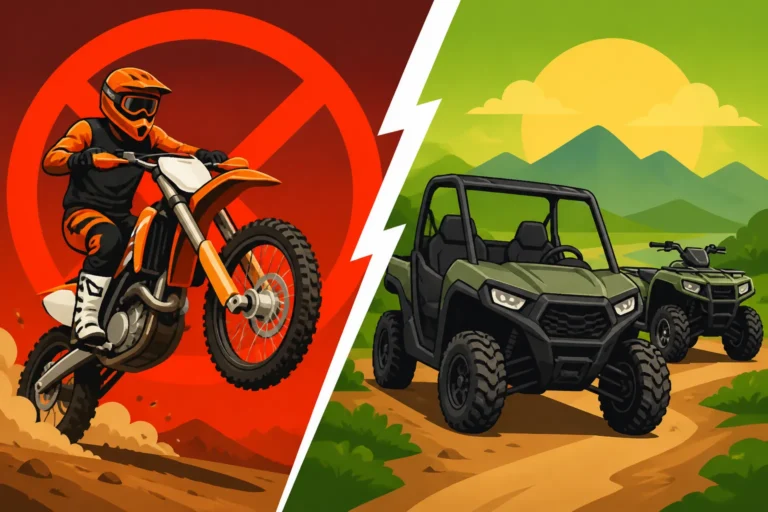
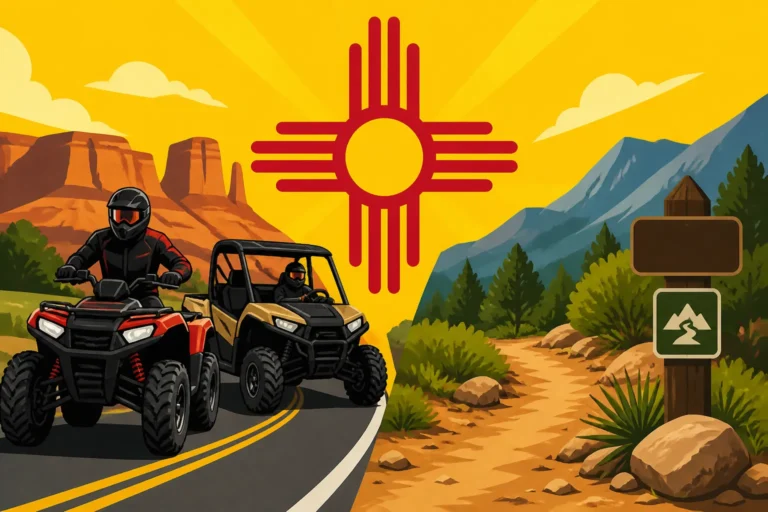
This is where things can get a little nuanced, but the core safety gear rules for minors remain constant. New Mexico has an "opt-in" law that allows counties and municipalities to open certain paved roads to OHV use. This means you might be able to legally ride your OHV on some city streets in places like Red River, or on certain county roads in Sierra County or Eddy County. However, even when riding on these designated paved roads, if you are under 18, the helmet and eye protection requirements absolutely still apply. In fact, due to the increased speeds and different hazards present on paved surfaces, some might argue that these rules become even more critical.
When you transition from dirt trails to pavement, you're sharing the road with cars, trucks, and other conventional vehicles. The dynamics are different, and the risk of a high-speed collision is increased. While a minor must wear a helmet and eye protection regardless of the surface, paved road riding also introduces additional requirements like [New Mexico ATV Insurance Requirement] and [A Driver's License on a New Mexico Paved Road] for adults. For young riders, the focus remains on personal protective equipment. So, if your family is cruising through an open-to-OHV town like Red River on a side-by-side, every minor passenger and driver must have their DOT-compliant helmet and eye protection securely in place. You can learn more about general county road rules at [New Mexico Rules for Riding a County Road].
Enforcement, Penalties, and Parental Responsibility
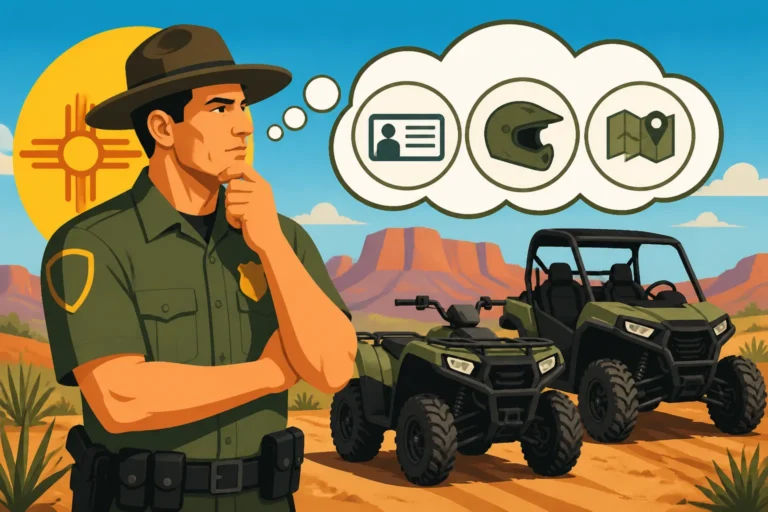
No one wants to encounter law enforcement on the trail, especially if it's for a safety violation involving a child. But it's important to understand that New Mexico's OHV laws, including those for minors' safety gear, are enforced by various agencies across the state. This means a New Mexico State Police officer, a county sheriff's deputy, an MVD agent, a Department of Game and Fish warden, or even a federal land manager (like a Forest Service Ranger or BLM agent) could potentially issue a citation if a young rider isn't properly equipped. Ignorance of the law is rarely an excuse, and these regulations are in place for serious reasons.
The penalties for non-compliance aren't just a slap on the wrist. They are designed to deter unsafe practices and ensure that parents and guardians take these rules seriously. Beyond the immediate legal consequences, there's the far greater impact of a preventable injury. Understanding who is responsible for these violations, and what those consequences entail, is a crucial part of being a responsible OHV enthusiast in New Mexico.
What Happens if a Young Rider Isn't Wearing Proper Gear?
If a law enforcement officer observes a rider under 18 operating or riding as a passenger on an OHV without a DOT-compliant helmet or proper eye protection, they can issue a citation. The specific penalties can vary, but generally, OHV violations in New Mexico can carry fines. It's important to remember that these aren't just minor infractions; they're considered violations of safety statutes. An officer at a trail check-point, for instance, might simply ask to see your registration and confirm your safety gear is in compliance. If a young rider is found to be in violation, that friendly encounter could quickly turn into a formal citation. You can get more details on potential fines at [New Mexico Fines for an OHV Violation].
The officer's primary concern will be the safety of the minor. Depending on the situation and the officer's discretion, they might require the rider to cease operation until the proper gear is acquired, or they might allow the group to return to their staging area. However, the issuance of a citation is always a possibility. This is why a proactive approach is always the best strategy: double-check all gear before leaving the staging area and ensure every young rider understands why these rules are in place. An officer at a roadside stop will definitely be checking for these items, as detailed in [What a New Mexico Officer Checks Roadside].
The Weight of Parental Responsibility
One of the most critical aspects of New Mexico's OHV laws for minors is the concept of parental responsibility. In most cases, if a minor is found to be in violation of the safety gear requirements, the parent or legal guardian accompanying them, or the one who provided the OHV, can be held responsible for the violation. This means that the fine, the citation, and the legal headache will typically fall on the adult. This isn't unique to OHV laws; it's a common legal principle designed to ensure adults uphold their duty to protect and supervise minors under their care. For further context on this, see [New Mexico Penalties for a Parent].
This parental responsibility extends beyond just avoiding a fine. It's a moral and ethical obligation to ensure the safety of the children entrusted to our care. Leading by example is incredibly powerful here. When parents and other adults also wear their helmets and eye protection, it normalizes the behavior for younger riders and reinforces the importance of safety. Before every ride, take the time to inspect helmets for damage, ensure goggles are clean and unscratched, and confirm that everything fits properly. It's a small investment of time that can make a monumental difference in preventing a serious injury and ensuring many more happy and safe rides in New Mexico's beautiful backcountry. This also ties into [New Mexico OHV Safety Permit Requirements], which often involves parental certification.
Table: Comparing Helmet & Eye Protection Features for Young Riders
Choosing the right gear can feel overwhelming with all the options out there. Here’s a quick overview of some common features and considerations when selecting helmets and eye protection for your young OHV enthusiast in New Mexico.
| Feature Type | Helmets (DOT-Compliant) | Eye Protection (Goggles/Face Shields) |
|---|---|---|
| Key Requirement | DOT Certification (FMVSS 218) | Secure fit, impact-resistant, full coverage |
| Common Styles | Full-face, Open-face (with separate goggles) | Off-road goggles, Integrated helmet face shields |
| Primary Benefit | Head injury prevention, impact absorption | Debris/dust protection, clear vision, UV defense |
| Material/Lens | EPS foam liner, composite shell (PC, fiberglass) | Polycarbonate lenses, anti-fog coatings |
| Ventilation | Intake/exhaust vents for airflow | Airflow channels, foam filtration for dust |
| Fit Importance | Snug, no excessive movement, comfortable liner | Seals against face, compatible with helmet, adjustable strap |
| Maintenance | Clean exterior, removable/washable liner, check for damage | Clean lenses, check for scratches, replace damaged foam/strap |
| Brands to Consider | Polaris, Fox Racing, Bell, Fly Racing, HJC | Oakley, Scott, 100%, Thor, EKS Brand, SuperATV |
| Consider for Kids | Lighter weight, easy buckle system, youth sizing | Adjustable straps, good peripheral vision, anti-fog |
When you're equipping your child for a New Mexico OHV adventure, remember that these requirements aren't just bureaucratic hurdles. They are critical safeguards designed to protect our most precious cargo – our kids. By understanding and adhering to these rules, we ensure that the thrill of the ride remains a joy, not a risk.
Disclaimer
This article is for general informational purposes only and does not constitute professional advice. Laws, prices and regulations vary by location and change over time. Consult a qualified professional for guidance on your specific situation.