Goose Lake and the Climb Up
Goose Lake is a memorable ride near Red River, but the climb can feel much harder than it looks on a map. Rocky, uneven ground, changing weather, high elevation, and uncertainty about which routes are open can turn a casual outing into a stressful one. This guide explains how to plan the ride, prepare your ATV or UTV, and make sensible decisions on the way up.
What to Expect on the Goose Lake Climb
The route is a mountain ride, not a casual cruise
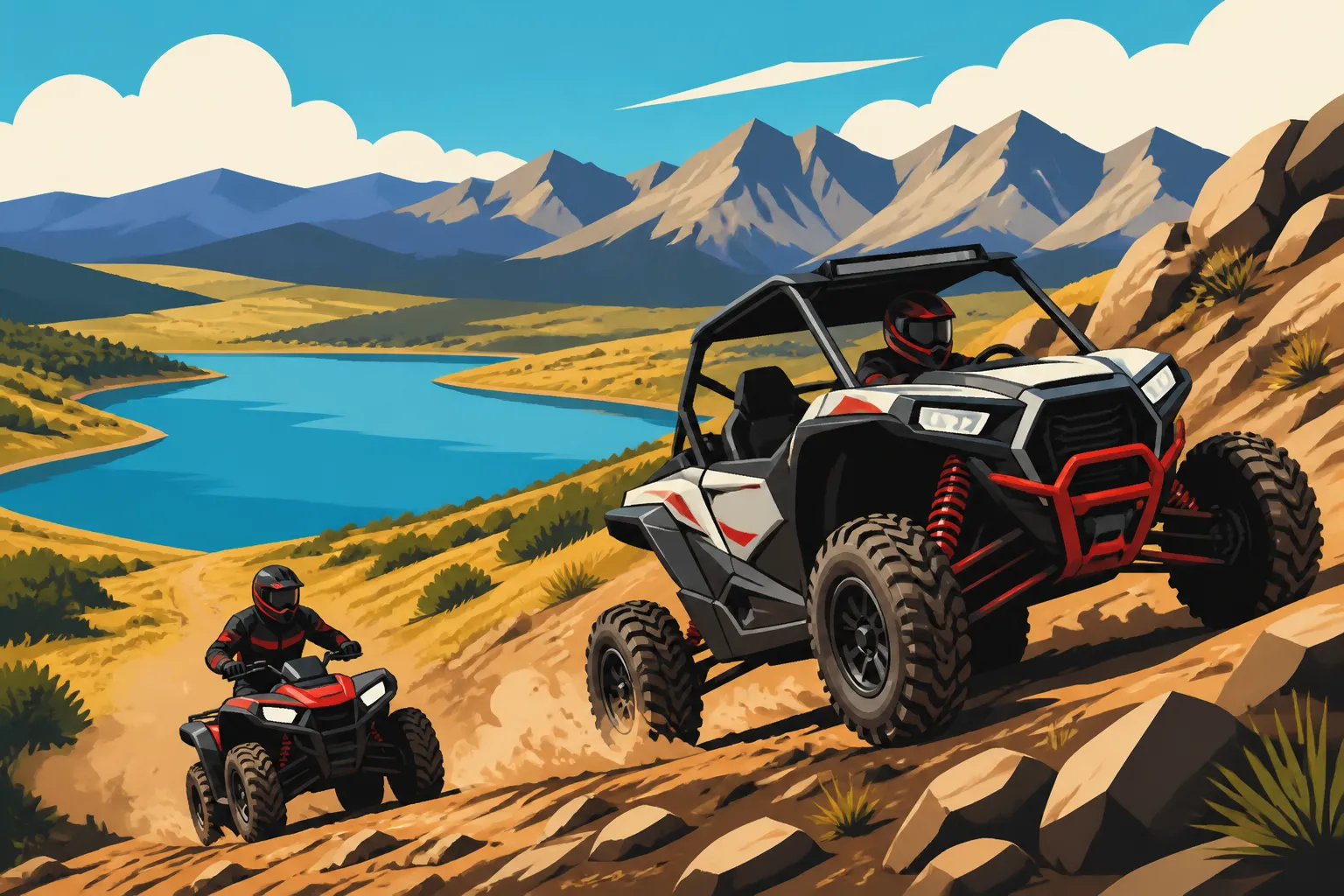
The ride to Goose Lake is known for its climb through the mountains near Red River. Expect uneven terrain and sections where you may need to pay close attention to your line, rather than simply follow the vehicle ahead. A route that looks short on a screen can take longer than expected when you are moving carefully, stopping to let other riders pass, or dealing with loose rock and changing conditions.
The ascent can also make the ride feel more demanding than a low-elevation desert trail. Your machine has to work harder, and you may notice the difference in its power and handling. Riders who are used to open, relatively flat terrain should allow time to adjust before tackling a steep or rough section. If you are unsure about a pitch, stop somewhere safe and assess it rather than committing because other riders are waiting behind you.
Goose Lake is a destination as well as a trail ride, so it is tempting to focus on reaching the water. Make the route itself part of the plan. Take breaks, keep enough daylight for the return, and resist the urge to push on just because the lake seems close. A safe turnaround is a good decision if weather, vehicle condition, or rider confidence changes.
Elevation affects both riders and machines
At elevation, a ride can feel tiring sooner than you expect. The climb may leave a new rider winded, while an experienced rider may still find that the thinner air and sustained effort change how a machine responds. Take a gradual pace, drink water throughout the trip, and avoid treating a short mileage estimate as proof that the ride will be easy.
High elevation can affect engine performance, particularly if a machine is not running well or has not been maintained. Before leaving, check for warning lights, unusual noises, tire damage, loose components, and fluid leaks. If your vehicle starts running poorly on the climb, stop in a safe place and investigate instead of continuing uphill under strain. A minor issue is easier to handle near the trailhead than after you have committed to a difficult section.
Give your group time to acclimate, especially if anyone has arrived from a lower-elevation area. A slower start can make the whole ride more comfortable. Keep children and less experienced riders within sight, and agree in advance on where the group will stop if it gets spread out.
Planning Your Trip From Red River
Confirm access and route conditions before you go
A route being shown on a map does not guarantee it is open or appropriate for your vehicle on the day you arrive. Forest roads and motorized routes can be affected by seasonal closures, weather damage, maintenance, fire restrictions, or other land-management decisions. Check current information with the responsible land manager before setting out, and follow posted signs at the route.
Use an up-to-date travel map to understand where the route begins, where it goes, and what alternatives exist. onX Offroad can help riders review mapped routes and plan offline navigation, but treat any digital map as a planning aid—not permission to ride. Compare what the app shows with current official notices and signs on the ground. If you are not sure whether a road or trail is open to your machine, do not assume that it is.
Red River also has local rules about where off-highway vehicles may travel. Do not assume you can ride an ATV or UTV from your lodging through town to the trailhead. Review [Red River's ROV-Only Streets] and [Red River's 7 p.m. to 8 a.m. Curfew] before planning any in-town travel, and check the rules that apply to your specific machine and route.
Build a realistic ride plan
Before unloading, agree on the basics with everyone in your group: the intended route, a turnaround time, the order of riders, and what to do if someone stops or becomes separated. Share your plan with someone who is not riding. Cell service may be unreliable in mountain terrain, so do not rely on a phone call as your only way to get help.
Check the weather for the mountain route, not just for the town. Conditions can shift quickly with elevation, and a sunny morning in Red River does not guarantee a clear afternoon higher up. If clouds are building, rain is moving in, or visibility is dropping, reconsider the climb. Wet rock and muddy sections can change the character of a route, while lightning makes exposed areas especially risky.
Pack for a longer outing than you expect. Bring water, food, warm layers, gloves, basic tools, a first-aid kit, and a charged phone or other communication device. A paper map or downloaded offline map is useful if your phone loses service or battery. Riders who use onX Offroad should download the relevant map area before leaving coverage and carry a backup navigation option.
| Planning question | Why it matters | Practical approach |
|---|---|---|
| Is the route open? | Closures and restrictions can change access | Check current land-manager notices and obey signs |
| Is the route suitable for my machine? | Width, clearance, and terrain vary by vehicle | Review route information and turn around if conditions exceed your ability |
| Will the weather hold? | Mountain conditions may differ from town conditions | Check the forecast for the route and set a turnaround point |
| Can the group handle the climb? | A short route can still be demanding | Match the pace to the least experienced rider |
| What if we lose service? | Cell coverage may be limited | Download maps and tell someone your plan |
For more area context, see [Riding Out of Red River on Forest Roads] and [Questa District Roads and Their Seasons]. If your plan includes other routes in the Carson National Forest, [Riding the Carson National Forest at Red River] can help you think through the broader riding area and its seasonal considerations.
Prepare Your ATV or UTV for the Ascent
Match the machine to the terrain
Before the ride, consider whether your ATV or UTV is appropriate for a steep, uneven mountain route. Ground clearance, tire condition, braking, steering, and the vehicle’s width all matter. A wide side-by-side may feel stable, but narrow or restricted routes can make its dimensions a concern. Check route information and posted restrictions rather than assuming that every route shown on a general map accommodates every machine.
Inspect the tires for cuts, embedded debris, and low pressure. Check that the brakes work properly and that the throttle, steering, and controls respond as they should. Secure loose cargo and make sure any passengers have appropriate seating and safety gear. If the machine has recently been serviced or repaired, a short test ride close to your starting point can reveal a problem before you are far from assistance.
Riding technique matters as much as equipment. Use a steady pace and avoid abrupt throttle or brake inputs on loose or uneven surfaces. Leave enough space between vehicles to see the trail and respond to changes without eating another rider’s dust. If a section looks beyond your experience or the machine’s capability, pause and choose a safe alternative rather than attempting it under pressure.
Carry what you need for a breakdown
A small tool kit, tire repair supplies suitable for your machine, and basic recovery equipment can make a difference when a problem occurs away from a road. Bring only equipment you know how to use. A recovery strap, for example, is not automatically safe just because it is in the vehicle; riders should understand the proper attachment points and keep people clear of tensioned equipment.
Think through the likely problems before leaving. A flat tire, loose fastener, overheating, or a stalled machine can delay a group. Decide who will stay with the affected rider and who will communicate with the rest of the group. Do not leave someone alone in a remote area simply to get back to town faster.
If the machine becomes unsafe to operate, stop riding it. Avoid trying to force a damaged vehicle up or down a difficult section. Depending on the location and circumstances, the safest option may be to wait for assistance or use a planned recovery method. A group that has discussed this possibility beforehand is less likely to make a rushed decision.
For additional preparation, [New Mexico Trail Maps Worth Carrying] offers a useful planning angle, while [Breaking Down Far From a Road] covers the kind of problem riders should consider before heading into a remote area. Review [New Mexico Rules for Riding a National Forest] as well, since route access and operating rules matter just as much as the trail’s physical difficulty.
Ride Responsibly and Know When to Turn Around
Keep to authorized routes and respect the area
Stay on routes open to motorized travel. Cutting around a muddy spot, widening a turn, or creating a new line can damage vegetation and soils, and may put riders in a place where motorized travel is not allowed. Follow posted route markers and closure signs even if another track appears to continue in the direction you want to go.
Be considerate around hikers, other motorized users, wildlife, and nearby residents. Slow down when visibility is limited, keep dust under control where possible, and give other trail users room. Close gates if you pass through them, unless signs or instructions say otherwise. Never assume that a gate, track, or open-looking stretch of land means you have permission to ride there.
Pack out everything you bring in, including food wrappers and damaged parts. Avoid disturbing the shoreline or vegetation when you reach the lake. The destination is part of the experience, but it is not a reason to leave the route or ride beyond designated access.
Make the return trip part of the decision
The climb is only half the outing. A descent can require careful braking and attention, especially if the surface is loose, the trail is crowded, or weather has changed. Leave time and energy for the ride back. If the group reaches Goose Lake later than planned, take a longer break than expected, or encounters worsening conditions, reassess before beginning the return.
Turn around if a rider is uncomfortable, a machine is struggling, or the route has become more difficult than anticipated. That is not a failed trip. It is a sensible response to the conditions in front of you. The same goes for a closure, a weather change, or uncertainty about whether a route remains open.
Before heading out, review [New Mexico Trail Closures to Check First] and [New Mexico Riding Seasons by Elevation]. They can help you build a more flexible plan for a mountain ride. The best Goose Lake trip is not necessarily the one that reaches the destination at all costs; it is the one where the whole group gets back safely, with enough time and energy to enjoy the rest of the day.
Disclaimer
This article is for general informational purposes only and does not constitute professional advice. Laws, prices and regulations vary by location and change over time. Consult a qualified professional for guidance on your specific situation.