Riding From a Campsite to a Trailhead
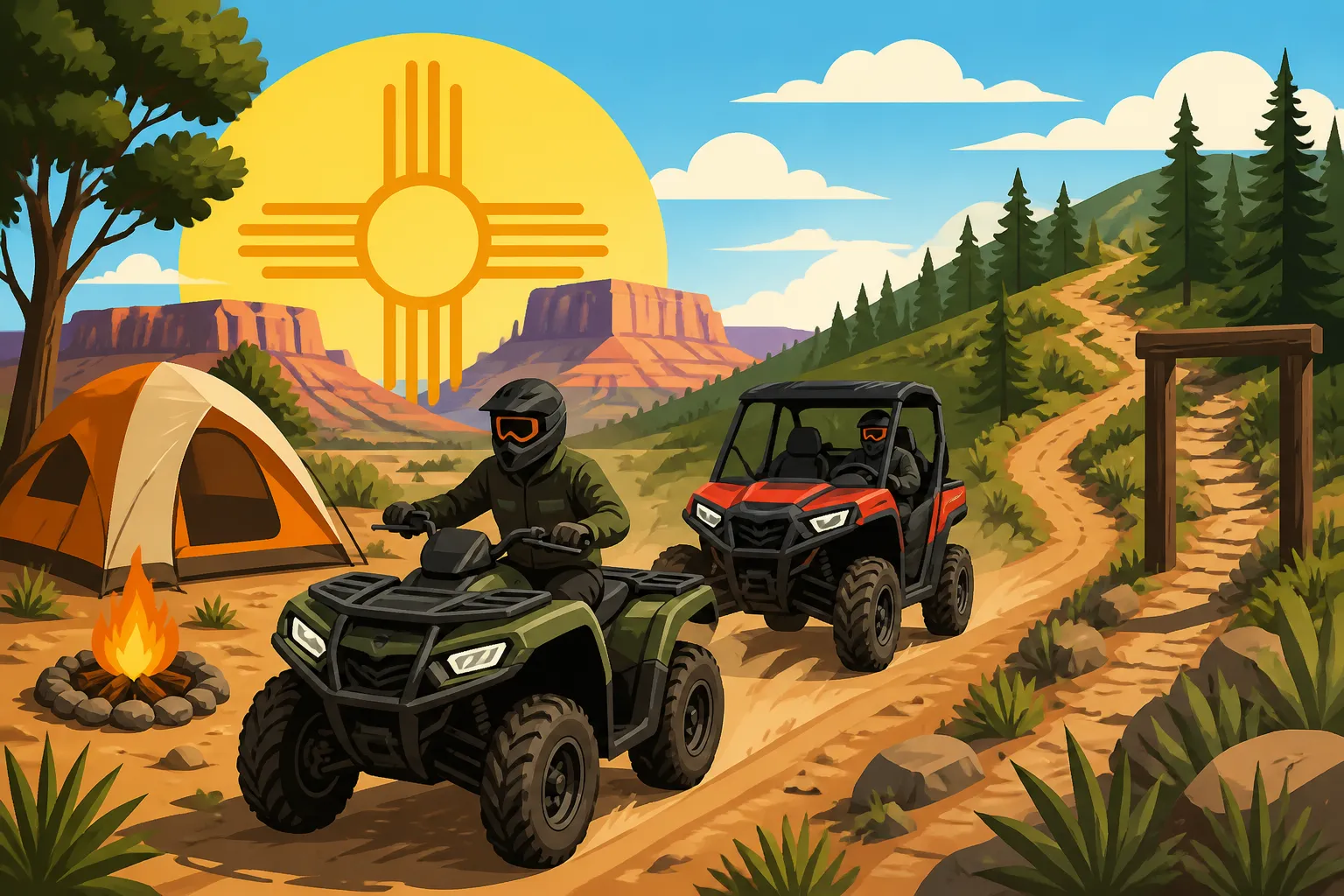
It's incredibly frustrating when you're all set for an epic ride in the New Mexico backcountry, your campsite is perfectly nestled, but then you realize that the trailhead you want to hit is just a little too far to walk, or you’re not sure if you can legally drive your ATV or UTV on the actual road to get there. Many riders face the headache of navigating public lands and the often-confusing web of state, county, and local ordinances that dictate where and how your off-highway vehicle can traverse from your temporary home base to the thrilling trails. This guide is here to untangle that knot, offering clear, actionable steps and insights so you can confidently ride directly from your campsite to the trailhead, maximizing your adventure time and minimizing your worries about breaking the rules.
Understanding New Mexico's Rules for Campground-to-Trailhead Travel
Navigating New Mexico's vast and diverse landscapes on your ATV or UTV is a unique joy, but understanding the specific regulations about riding on roads, even short distances, is absolutely critical. It’s not simply a matter of having wheels and a motor; there are distinct requirements that differentiate a legitimate campsite-to-trailhead journey from an illegal one. Ignoring these rules can lead to hefty fines and a spoiled outing, which is the last thing any rider wants.
The Importance of OHV Registration and Decals
First and foremost, any off-highway vehicle (OHV) operating on public lands or public access roads in New Mexico must be properly registered with the Motor Vehicle Division (MVD). This isn't just a suggestion; it's a mandatory step for almost all machines, whether you're riding a quad, a side-by-side, or a dirt bike. The registration process ensures your machine is recognized by the state and is a prerequisite for obtaining the necessary decals that dictate where you can legally ride. Without a current registration, you're immediately offside, no matter how short your journey from camp to trail might be.
Once your OHV is registered, the MVD will issue you a decal. For anyone planning to touch pavement, even momentarily, the [New Mexico's Green On and Off-Highway Decal] is your golden ticket. This green decal explicitly signifies that your machine meets the basic requirements for limited road use, in addition to being allowed on designated off-highway trails. It's a visible declaration that you’ve done your part and are prepared for the nuances of shared road access. Ensure this decal is properly affixed to your machine in the designated spot, as law enforcement will be looking for it. A yellow decal, on the other hand, strictly limits your riding to off-highway terrain and private property, meaning any venture onto a paved public road with a yellow decal is a definite no-go.
Understanding which decal you have and what it permits is foundational. Many riders assume that once they’re registered, they can go anywhere, but New Mexico has a tiered system. If you plan to leave the dirt of your campsite and momentarily cruise on asphalt to reach another dirt trail, that green decal is non-negotiable. It acknowledges that your machine has passed the checks to operate both off-highway and, under specific conditions, on-highway. Always double-check your decal color before you even think about putting a tire on a paved surface.
What "Street Legal" Really Means in New Mexico for OHVs
The term "street legal" can be a bit of a misnomer when it comes to ATVs and UTVs in New Mexico. Unlike a car or truck, your OHV isn't suddenly granted full freedom to drive on any road, any time, just because it has a license plate or a green decal. Instead, New Mexico operates on an "opt-in" system for certain roads, primarily county roads and some designated municipal streets. This means that while your OHV can gain limited road access, it's not truly "street legal" in the same sense as a conventional vehicle. It’s a privilege for specific routes, not a blanket right. The key is understanding [Why the Green Decal Lets You Onto Pavement] under these specific circumstances.
To qualify for even this limited road access, your OHV must meet several equipment requirements beyond just registration. This includes working headlights and taillights that are visible from specific distances, a horn, a muffler, a spark arrester, and mirrors. These aren't just suggestions; they are mandates designed to ensure your safety and the safety of others on shared roadways. Imagine trying to signal a turn or see a vehicle behind you without proper mirrors—it's a recipe for disaster. Aftermarket accessories from companies like SuperATV can often help you meet these requirements, offering robust mirrors, lighting kits, and other safety enhancements specifically designed for OHVs.
Furthermore, even with the right decal and equipment, there are still limitations. State highways, for example, are generally off-limits for OHVs, except for direct, perpendicular crossings. Interstates are entirely out of the question. Each county or municipality has the authority to open or close its roads to OHV traffic, so what's legal in one county might be prohibited just across the line. This means that a little pre-trip research into the specific area you plan to ride is invaluable. Don't assume that just because you have a green decal and all the right gear that every paved road is fair game for your ride to the trailhead.
Preparing Your Machine and Yourself for Pavement and Dirt Transitions
Making the switch from a rugged campsite trail to a paved county road, and then back to a dirt trail, requires your machine to be properly equipped and you to be adequately prepared. This isn't just about avoiding a ticket; it's fundamentally about safety for everyone on the road and ensuring your adventure doesn't end prematurely. Neglecting these preparation steps can expose you to unnecessary risks and potential mechanical issues.
Essential Equipment for Road-Legal OHV Travel
For your OHV to legally travel even short distances on designated paved roads in New Mexico, it must be outfitted with specific safety equipment. Think of it like bringing your machine up to a minimal standard that allows it to coexist safely, if briefly, with street traffic. Firstly, working headlights and taillights are non-negotiable. Your headlights must be capable of illuminating objects at least 150 feet ahead, and your taillights must be visible from a distance of 200 feet from the rear. This is crucial for visibility, especially during dawn, dusk, or in adverse weather conditions, ensuring other drivers can see you clearly. Many stock OHVs might have adequate lighting for off-road use, but it's worth verifying their brightness and range for road compliance.
Beyond lighting, a functional horn is required to alert others to your presence, and a muffler to keep noise within acceptable limits—generally, no more than 96 decibels. A spark arrester is also mandatory, not only for road use but for any riding on public lands, to prevent wildfires. Mirrors are equally vital; at least one rearview mirror is needed to see traffic approaching from behind, and many riders opt for two for better situational awareness. Companies like SuperATV offer a range of aftermarket accessories, from DOT-compliant mirrors and turn signal kits to powerful LED light bars and quieter exhaust systems, that can help bring your machine up to snuff for road-legal travel. [New Mexico Equipment Rules for Road Use] provides a comprehensive list, and ensuring your machine ticks every box is paramount before leaving your campsite.
Lastly, inspect your tires, brakes, and steering components. While rugged tires are great for dirt, they can wear quickly on pavement and affect handling. Ensure your brakes are responsive and your steering is tight, as operating on paved roads often requires more precise control than off-road trails. A pre-ride check, especially when you know you'll be transitioning between surfaces, can identify potential problems before they become serious issues. It's not just about the legal requirements; it's about the mechanical integrity of your machine for varying conditions.
Personal Safety Gear and Documentation
Your personal preparedness is just as important as your machine's. When you're riding your OHV on any public road in New Mexico, even just to a trailhead, specific safety gear and documentation are required to ensure both your safety and your compliance with state law. For anyone under the age of 18, wearing a DOT-compliant helmet is mandatory, whether you're on the trail or a designated road. While adults aren't legally required to wear a helmet on roads (though it's highly recommended for all riders for obvious safety reasons), eye protection is a must for all riders on paved surfaces. Goggles or a helmet with a face shield can protect your eyes from wind, dust, and debris, which can be more prevalent and disruptive on roads at higher speeds. You can find more details on these requirements in [New Mexico Helmet Law for ATV Riders].
Equally important is having the correct documentation readily accessible. This includes your valid driver's license (if you are operating the OHV on a public road that requires it), your OHV registration, and proof of liability insurance. New Mexico's Mandatory Financial Responsibility Act applies to OHVs operating on public roads, meaning you must carry proof of insurance. This insurance must meet minimum liability coverage requirements, protecting you against potential costs if you cause an accident involving other vehicles or property. Losing your wallet or forgetting these documents back at the campsite can turn a simple trip into a stressful encounter with law enforcement, potentially resulting in fines or other penalties.
Before you even start your engine, make a habit of a quick gear and document check. Do you have your helmet, eye protection, and any other recommended safety gear? Is your driver's license, registration, and insurance card securely in a waterproof bag or pocket on your person or machine? These small steps can prevent big headaches. Consider a robust storage solution, perhaps a secured bag on your UTV, that keeps these vital items safe and dry. Being prepared physically and logistically ensures that your ride from camp to trail is smooth, safe, and legally sound, allowing you to focus on the thrill of the ride rather than potential complications. For further information on financial requirements, refer to [New Mexico OHV Registration and Liability Insurance].
Navigating Different Road Types Between Your Camp and the Trail
The journey from your campsite to the trailhead often involves traversing a mix of road types, each with its own set of rules and considerations. Understanding these distinctions is crucial, as the regulations for a county road can differ significantly from those for a forest service road, and both are vastly different from crossing a state highway. A lack of awareness here is where many riders get into trouble, inadvertently breaking laws simply by being on the wrong type of road.
County Roads and Designated City Streets
In New Mexico, county roads are often your best bet for connecting a campsite to a nearby trailhead. Many counties have exercised their option to open certain roads to OHV traffic, creating a network that allows riders to access trail systems without trailering their machines. However, this "opt-in" system means that not all county roads are open, and what's permissible in one county might be forbidden in another. It's a patchwork, and you absolutely must do your homework on the specific county you're riding in. [New Mexico Rules for Riding a County Road] is an excellent resource for understanding these nuances, but always verify current local ordinances. Some counties, like Sierra County, have opened nearly all their roads, while others are more restrictive.
Even within an open county, designated city or town streets can present another layer of complexity. Some municipalities, like Red River, have specific ordinances that dictate where and when OHVs can operate on their streets, with some even distinguishing between ATVs and UTVs. While Red River generally allows UTVs (or ROVs) on most of its streets during specific hours, it has historically banned ATVs from its main thoroughfares. This highlights the importance of checking local municipal rules, as these can override general county guidelines. You don't want to get pulled over just blocks from your destination because you weren't aware of a specific town's regulations.
When riding on these roads, remember you are sharing them with cars, trucks, and other vehicles. This means adhering to speed limits, using proper hand signals or turn signals, and generally exercising extreme caution. Road conditions can vary, from smooth pavement to rough, washboard gravel. Be mindful of dust on unpaved county roads, especially when passing homes or other vehicles. Your OHV must be properly equipped (lights, horn, mirrors, etc.) and you must carry appropriate documentation (registration, insurance, driver's license) for all road sections. This transition often requires a shift in your riding mindset, from aggressive trail navigation to more defensive, observant road travel.
Federal Lands: Forest Roads and BLM Routes
Many of New Mexico's prime riding areas are located on federal lands, managed by the U.S. Forest Service (USFS) or the Bureau of Land Management (BLM). These agencies have their own set of regulations regarding OHV use, and for the most part, their designated roads and trails are more permissive for registered OHVs than state or county paved roads. Forest roads and BLM routes are often unpaved and serve as direct arteries to trailheads, making them ideal for riding from a primitive campsite. The general rule on these lands is to "stay on designated routes." This means you should only ride on marked roads and trails, never venturing off into open country or creating new paths.
For specific guidance, consult [New Mexico Rules for Riding a Forest Road] and [New Mexico Rules for Riding BLM Land]. These regulations emphasize responsible use, including having a spark arrester on your exhaust to prevent wildfires and adhering to noise limits. While a green decal signifies you can touch pavement, it's generally not a requirement for riding on dirt forest or BLM roads, as long as your machine is otherwise registered and compliant. However, the green decal does allow you to connect between these dirt roads if there's a short paved section managed by a county that permits OHV use. It's all about connecting the dots of legality.
Before heading out, it's a smart practice to obtain a map of the specific forest or BLM district you plan to explore. These maps clearly mark designated OHV routes and identify any roads or areas that are closed to motorized travel. Many federal land agencies have comprehensive Motor Vehicle Use Maps (MVUMs) available online or at local ranger stations. These maps are the ultimate authority on where you can and cannot ride your OHV. Remember, while federal roads might feel more like trails, you are still sharing them, sometimes with other vehicles, campers, hikers, or even livestock. Always be courteous, control your speed, and minimize your impact on the environment.
Crossing State Highways and Interstates
One of the most critical distinctions to understand in New Mexico OHV law is the absolute prohibition against riding on state highways or interstates, with very limited exceptions for crossing. You simply cannot cruise down a state highway on your ATV or UTV, even if it's the shortest route to your trailhead. The only exception for state highways is a direct, perpendicular crossing at an intersection or designated crossing point. This means you must approach the highway, stop completely, check for traffic, and then cross as directly and quickly as possible, aiming to make your crossing as close to a 90-degree angle as feasible. This rule is in place for your safety and the safety of high-speed highway traffic. For a deeper dive into these rules, check out [New Mexico Rules for Crossing a Highway].
Interstate highways are even more restrictive. OHVs are absolutely not permitted on interstate ramps, frontage roads, or the main travel lanes. In fact, you generally cannot even cross an interstate highway on your OHV, as there are no designated crossing points for these types of machines. If your planned route from camp to trail involves an interstate, you'll need to find an alternative route that utilizes local roads or other federal lands, or simply trailer your machine around the interstate section. This might mean adding significant mileage or time to your journey, but it's a non-negotiable safety and legal requirement.
The importance of respecting these limitations cannot be overstated. State highways and interstates are high-speed environments where OHVs, with their lower top speeds, open cockpits, and different handling characteristics, pose a significant safety risk. Attempting to ride on these roads illegally will almost certainly result in a citation, and more importantly, puts you at extreme risk of a serious accident. Always plan your route carefully, using maps and local knowledge to identify OHV-permissible roads that avoid state highways and interstates entirely, or only require legal crossings where permitted. Prioritize safety and legality over convenience when dealing with these major arteries.
| Road Type | OHV Access Requirements | Key Considerations |
|---|---|---|
| Paved County Roads | – Green decal required. – County must have "opted in" to allow OHVs. – Proper equipment (lights, horn, mirrors, etc.). – Driver's license & insurance. |
– Varies by county; check local ordinances. – Share with vehicles; adhere to speed limits. |
| Designated City Streets | – Green decal required. – City/town must have specific ordinance. – Proper equipment. – Driver's license & insurance. |
– Highly variable; check specific municipal rules (e.g., Red River). – Often time restrictions or vehicle type bans. |
| Forest/BLM Roads (Dirt) | – OHV registration (yellow or green decal). – Spark arrester required. – Stay on designated routes. |
– Generally more permissive than paved roads. – Use Motor Vehicle Use Maps (MVUMs). – Share with other users. |
| State Highways | – Green decal, equipment, license, insurance only for perpendicular crossings. – NO riding on the highway. |
– Cross at designated intersections only. – Stop fully, yield to traffic, cross quickly. |
| Interstates | – Absolutely NO OHV access or crossing permitted. | – Plan alternate routes; trailer around interstates if necessary. |
Practical Considerations for a Smooth Camp-to-Trail Transition
Beyond the legalities, a successful journey from your campsite to the trailhead often comes down to smart planning and understanding the practical challenges. Even with all your ducks in a row regarding registration and equipment, overlooking logistical details or failing to prepare for contingencies can quickly derail your adventure. A truly seamless transition requires a holistic approach, considering everything from navigation to what happens if your machine isn't quite ready for public roads.
Route Planning and Local Ordinances
Effective route planning is your best friend when trying to ride from your campsite to a trailhead. Don't rely on assumptions or vague memories of past trips. Technology has made this easier than ever, with GPS apps and online mapping tools that can display OHV-friendly routes, land ownership boundaries, and even real-time trail closures. Before you even pack your bags, spend some time studying maps of your chosen riding area. Identify your campsite, pinpoint your desired trailhead, and then look for the most direct, legal route using permissible county roads, forest roads, or BLM routes. Remember that a simple glance at a map might show a paved road connecting two dirt sections, but it won't tell you if that particular stretch of asphalt is open to OHVs.
This is where checking local ordinances comes in. As discussed, county and municipal rules can vary wildly. A quick call to the county sheriff's office or the local MVD field office can provide clarity on specific road access. Many rider forums and local OHV clubs are also excellent resources for up-to-date information on permissible routes and any recent changes. For example, if you're exploring areas near Ruidoso or Cloudcroft, verifying the specific rules for Lincoln County roads is essential. Don't be afraid to ask questions; it's far better to get clear answers before you leave than to face a fine or an accident while you're out.
Consider carrying both a digital map on a reliable device (with offline capabilities) and a physical paper map as a backup. Cell service can be spotty, especially in remote New Mexico areas, and a dead phone battery is a real possibility. Mark your planned route, identifying potential trouble spots like state highway crossings or sections with known closures. Knowing the terrain and the rules will allow you to relax and enjoy the ride, confident that you're staying within legal boundaries. Companies like SuperATV also offer GPS systems and mounts for your UTV, making navigation on varied terrain much easier and more secure.
What to Do If Your Machine Isn't Road Legal
Despite your best intentions, you might discover that your ATV or UTV doesn't meet all the requirements for limited road use in New Mexico. Perhaps you have a yellow decal, or your machine is missing mirrors, turn signals, or a horn. This doesn't mean your adventure is over, but it does mean you need to adjust your plans rather than risk illegal operation. Attempting to ride an non-compliant machine on public roads will almost certainly result in a fine, and potentially even more serious legal trouble, which is a swift way to ruin any outdoor experience.
The most straightforward solution for a non-road-legal machine is to trailer it. If your campsite is near a road that's off-limits to your OHV, but the trailhead is accessible via a short trailer ride, that's your safest and most legal option. Many campsites, particularly those in designated OHV areas, have ample space for trailer parking, and local roads will allow you to transport your machine to a staging area closer to the trails. This might add a few minutes to your travel time, but it guarantees compliance and peace of mind.
Another option, if available, is to stick strictly to private land or designated off-highway areas where road legality isn't a factor. If your campsite is on private property with direct access to a private trail system, then the public road rules don't apply until you hit public access points. However, this is a niche scenario and usually not applicable for reaching distant public trailheads. Ultimately, the choice is between upgrading your machine to meet the requirements (which could involve adding accessories from vendors like SuperATV), or using a trailer to bridge the gap between your campsite and the legally accessible trails. Never compromise on legality; it’s simply not worth the risk.
Disclaimer
This article is for general informational purposes only and does not constitute professional advice. Laws, prices and regulations vary by location and change over time. Consult a qualified professional for guidance on your specific situation.