How Much Liability Coverage New Mexico Requires
It’s a common frustration for off-highway vehicle (OHV) enthusiasts in New Mexico: you just want to hit the trails, enjoy the wide-open spaces, and soak in the incredible scenery, but then you start hearing whispers about insurance. Do you really need it for your ATV or UTV? And if so, how much? This guide is here to clear up that confusion, explaining exactly what New Mexico law mandates for liability coverage and when it applies to your riding adventures.
Understanding New Mexico's Mandatory Financial Responsibility Act
Navigating the rules for off-highway vehicles can feel like trying to find a clear path through a mesquite thicket – lots of twists and turns, and sometimes you just want to know the direct route. When it comes to insurance, the most crucial piece of legislation to understand is New Mexico's Mandatory Financial Responsibility Act. This isn't just for cars and trucks; it extends to any motor vehicle operating on public roads in the state. And here's the kicker: your ATV or UTV, under specific circumstances, can absolutely fall under this umbrella.
This act specifies the minimum liability coverage you must carry if your vehicle is going to be driven on a public street or highway. Think of it as a safety net, protecting other drivers if you’re at fault in an accident. The numbers often thrown around are usually expressed as a series of three figures, like 25/50/10 or similar. These aren't just arbitrary figures; they represent very specific coverage amounts. The first number is the maximum dollar amount your insurance will pay for bodily injury to one person in an accident you cause. The second number is the maximum amount your insurance will pay for bodily injury to all persons in one accident you cause. And the third number? That's the maximum your insurance will pay for property damage in an accident you cause. It’s important to note that these minimums can change, so you always want to check the most current figures directly with the New Mexico Motor Vehicle Division or a reputable insurance provider. This is the baseline you must meet if your machine ever touches pavement, even for a short stretch.
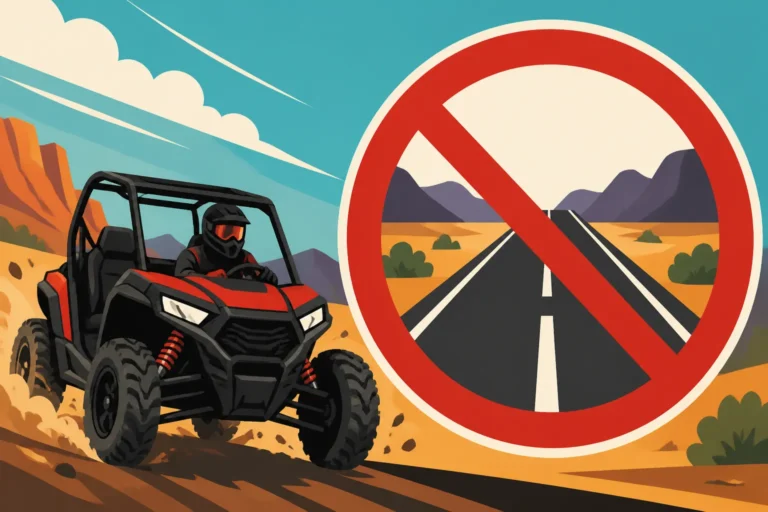
The key takeaway here is that if your OHV is going to be used on any public road, you absolutely need to meet these minimum liability requirements. It doesn't matter if it's just for five minutes to cross a highway, or if you're planning a scenic ride down an open county road. The moment your wheels hit that asphalt or graded public surface, you're expected to have that coverage. Without it, you're not just breaking the law; you're leaving yourself incredibly vulnerable to significant financial penalties and legal headaches should an unfortunate incident occur. It’s not just about avoiding a ticket; it’s about protecting yourself and others when you’re out enjoying the open road.
Why Paved Road Use Triggers This Requirement
The reason New Mexico draws this line in the sand regarding insurance is straightforward: safety and accountability. When you’re riding an OHV purely on private land or within designated off-highway areas like Red Sands or Glade Run, the state typically doesn't mandate liability insurance. Your own personal injury risk is on you, and property damage is usually contained to the off-road environment itself. However, the moment you bring your machine onto a public road, you're now interacting with other motorists, pedestrians, and public infrastructure. The risks escalate dramatically.
This is precisely why New Mexico has an "opt-in" provision for certain OHVs to use paved public roads, often referred to as [New Mexico's Paved Street Opt-In]. This opt-in comes with responsibilities, and chief among them is carrying proper insurance. Imagine a scenario where you're riding your side-by-side down a county road that has been designated as open to OHVs. You're enjoying the ride, maybe heading to a favorite fishing spot, when suddenly an unforeseen event causes you to swerve and collide with a parked car or even another moving vehicle. Without liability insurance, you would be personally responsible for the costs of repairing that vehicle, covering medical bills for any injured parties, and potentially facing lawsuits that could easily bankrupt you. The state wants to ensure that if such an unfortunate event happens, there's a mechanism in place to cover the damages, protecting everyone involved.
The rationale is rooted in the broader legal framework of vehicle operation. A motor vehicle capable of causing significant damage or injury when involved in an accident on a public thoroughfare is expected to have financial backing to cover potential liabilities. This isn't unique to New Mexico; it’s a standard across most states. So, while your machine might be built for rugged trails and navigating challenging terrain, when it’s on a paved road, it’s treated much like any other vehicle in the eyes of the law, at least concerning its financial responsibility. This distinction is vital for every rider to understand before they even think about leaving the dirt for the asphalt.
The Difference Between OHV and Auto Policies
One of the biggest misconceptions riders often have is assuming their existing car insurance will simply extend to their ATV or UTV. While it's a nice thought, and some policies might offer very limited coverage for certain situations, it’s generally not the case for regular road use or comprehensive OHV protection. A standard auto policy is designed for passenger vehicles and typically excludes the unique risks and uses associated with off-highway vehicles. You wouldn't expect your motorcycle insurance to cover your family sedan, right? The same principle applies here.
OHVs require specialized insurance policies. These policies are crafted to address the specific characteristics of ATVs, UTVs, dirt bikes, and other off-road machines, including their usage, potential damages, and liability risks. For instance, an OHV policy can often cover things like theft, vandalism, fire, or damage incurred while trailering your machine – aspects that a typical auto policy just won't touch. Moreover, many OHV policies offer coverage for aftermarket accessories and modifications, which is crucial for riders who've invested in upgrading their machines with items from companies like SuperATV. If you’ve added a heavy-duty winch, a custom roll cage, or advanced lighting systems, you want to make sure these investments are protected, not just the base value of your vehicle.
When you’re seeking to meet New Mexico’s liability requirements for road use, you absolutely need an OHV-specific policy that includes liability coverage. This will provide the necessary bodily injury and property damage protection required by the state. You’ll find that many reputable insurance companies offer these specialized policies, understanding the unique needs of the OHV community. It's not just about ticking a box for the MVD; it’s about having peace of mind that if something goes wrong, you’re adequately protected and won't face devastating financial repercussions. Be sure to specifically ask for OHV insurance that meets New Mexico's minimum liability requirements for road use when you're getting quotes. [Which Insurers Write OHV Policies in New Mexico] is a great place to start looking.
Scenarios Where Insurance Becomes Critical
The question of insurance often boils down to a fundamental point: are you going to ride on public roads? If the answer is yes, even for a short distance, then you need to ensure you’re properly covered. New Mexico offers some fantastic opportunities for riding, from high mountain trails to vast desert landscapes. Many of these adventures might require you to briefly share the road with other vehicles, and that’s precisely where the state’s mandatory financial responsibility laws come into play. It's not always intuitive, and some riders only learn the hard way.
Consider the reality of getting to many of our amazing trailheads. Often, you might be trailering your machine, but then you arrive at a staging area that requires you to ride a short paved stretch to access the actual dirt trails. Or perhaps you're on a long-distance ride that connects various dirt roads and forest trails with brief sections of state highway or county road. These are exactly the moments when your OHV transitions from a recreational vehicle into a street-legal (or street-permitted) vehicle, even if temporarily, and therefore demands the appropriate insurance. It's not about how long you're on the pavement, but simply that you're on it.
The intent of the law is to mitigate risk for everyone. An OHV can be just as much a hazard on a paved road as any other motor vehicle if operated negligently or if an unforeseen accident occurs. Therefore, it's not a question of inconvenience, but rather a matter of ensuring public safety and financial accountability. Understanding these critical scenarios will help you plan your rides responsibly and ensure you're always on the right side of the law.
Crossing a State Highway or Designated City/County Roads
One of the most common scenarios where New Mexico OHV riders encounter paved roads is when they need to cross a state highway or ride on a city or county road that has been specifically designated as open to OHVs. You might be exploring a vast area of Bureau of Land Management (BLM) land or National Forest, and a paved state highway bisects your path. According to [New Mexico Rules for Crossing a Highway], you are permitted to cross these roads, but only under very specific conditions, and carrying liability insurance is absolutely one of them. You must come to a complete stop, look both ways, and cross perpendicularly to minimize the time you are on the pavement.
Similarly, many counties and even some cities in New Mexico have passed ordinances or resolutions to open certain roads to OHV traffic. This is fantastic for expanding riding opportunities, allowing riders to travel from town to trailhead, or connect different sections of trails without having to trailer their machines every time. For example, some parts of Sierra County and Eddy County have open county roads that are very popular with OHV users. However, these privileges come with the expectation that you are operating a legally compliant vehicle. That means having your machine registered and carrying the mandatory liability insurance. A local sheriff's deputy or a state police officer won't care if you're only on the paved road for a mile or two; if it's a public road, the rules apply.
Imagine you're riding with friends, and your planned route includes a five-mile stretch of a paved county road to get to the next section of dirt trails. While you might be focused on the adventure ahead, this is exactly the time when you're most exposed to potential accidents involving other road users. If you're involved in a fender bender with a pickup truck on that paved county road, and you don't have the required liability insurance, you could be facing not only significant fines under [New Mexico Fines for Illegal Road Riding] but also personal financial ruin if injuries or major property damage occur. It’s a risk that no one wants to take, especially when affordable OHV insurance is readily available.
Riding in Towns Like Red River
Some of New Mexico's charming mountain towns, like Red River, have unique ordinances that allow OHVs, specifically UTVs and side-by-sides, to use certain municipal streets. This is a huge perk for tourists and locals alike, enabling them to ride directly from their lodging to access mountain trails, visit shops, or grab a bite to eat. However, it's crucial to remember that these are public streets, and all state-level requirements, including liability insurance, remain firmly in place. While Red River allows ROVs (Recreational Off-Highway Vehicles), they typically ban ATVs (All-Terrain Vehicles) on town streets, further highlighting the specific rules for different machine types.
When you're cruising down Main Street in Red River on your side-by-side, you're sharing the road with cars, motorcycles, and pedestrians. This urban environment, while convenient for riders, also presents a higher density of potential interactions and, consequently, a higher risk of accidents. The convenience of being able to ride from your cabin to a restaurant is fantastic, but it must be balanced with responsibility. If you were to accidentally back into a parked car while maneuvering for a parking spot, or misjudge a turn and clip another vehicle, your liability insurance would be the safety net you absolutely need.
The local law enforcement in these towns is well aware of the state's requirements. They're not just looking for registration decals; they're also ensuring that anyone operating a motor vehicle on their streets is financially responsible. If you're stopped and cannot provide proof of insurance that meets New Mexico's minimums, you could face hefty fines and other penalties. It’s a situation that could quickly turn a fun mountain getaway into a stressful and expensive ordeal. So, if you're planning to take advantage of these town-specific ordinances, double-check your [New Mexico ATV Insurance Requirement] to ensure you're fully covered before you even pull out of your driveway or rental spot.
What About Off-Road Only? And Proving Coverage
It's natural to wonder if you need insurance if your OHV literally never touches a public road. Perhaps you ride exclusively on private ranch land, or you always trailer your machine directly to a closed-course track or a dedicated OHV park where no public roads are involved. While the state's mandatory liability insurance requirements for public road use are clear, the rules for purely off-road scenarios are a bit different. However, common sense and good practice often dictate a level of protection that goes beyond the bare minimum required by law.
Even when not legally mandated, having some form of insurance for your OHV is almost always a wise decision. These machines represent a significant investment, often costing as much as a used car, if not more, especially after adding performance upgrades or accessories from companies like SuperATV. Accidents can happen anywhere, whether it’s a rollover on a challenging trail, a collision with another rider on private land, or even just a tree falling on your parked UTV at a campsite. Without insurance, the costs of repairs or replacement fall squarely on your shoulders.
Beyond the financial aspect, knowing what constitutes acceptable proof of insurance is critical for those moments when you do venture onto public roads. A friendly wave and a promise won't cut it when a law enforcement officer asks for documentation. Being prepared means having your paperwork in order, just like you would for your daily driver.
Is Insurance Needed for Pure Trail Riding?
For those who strictly stick to private land, designated OHV parks that are entirely off-road, or trail systems that have no public road access points requiring a ride-in, New Mexico does not mandate liability insurance. This is a crucial distinction. The state's financial responsibility laws are explicitly tied to operating a motor vehicle on public roads. So, if your machine genuinely never leaves private property or a completely contained off-road area, you are not legally required to carry liability insurance by the State of New Mexico.
However, "not legally required" is vastly different from "not recommended." Your ATV or UTV is a powerful piece of machinery, and accidents can happen regardless of where you're riding. A simple misjudgment on a technical climb could lead to a rollover, damaging your machine significantly. A loose rock could fly up and crack a friend's windshield while you're riding together. Even on private land, you could still be held liable for property damage or injuries you cause to others. This is where personal responsibility and smart planning come into play.
Many riders choose to carry comprehensive or collision coverage even if they never touch pavement, simply to protect their investment. Think about the cost of replacing an engine, repairing a bent frame, or fixing extensive body damage after an unforeseen incident on the trail. These costs can easily run into thousands of dollars. An OHV insurance policy, even if not legally mandated for your specific riding style, provides invaluable protection for your machine and your wallet. It's truly about peace of mind, knowing that if the unthinkable happens while you’re enjoying the beautiful New Mexico backcountry, you won’t be left facing crippling repair bills or legal fees all on your own.
Acceptable Proof of Insurance
If you plan to ride your OHV on any public road in New Mexico, even just to cross a highway, you need to be able to prove you have the required liability insurance. This isn't just a suggestion; it’s a legal requirement. Just like with your car, law enforcement officers can and will ask for proof of insurance if they stop you on a public roadway. Failure to provide it can lead to fines and other penalties, so it's best to be prepared.
The most common and universally accepted form of proof is your insurance card. This card, typically provided by your insurance company, should clearly state the policy holder's name, the vehicle covered (usually by VIN), the policy number, the effective dates of coverage, and the types and limits of coverage. It’s critical that this card specifically lists your OHV and confirms it has the necessary liability coverage that meets New Mexico's minimums. A generic "auto insurance" card that doesn't detail your specific ATV or UTV and its road-use coverage might not be sufficient. Therefore, it's a good idea to ensure your OHV policy issuer provides a dedicated card for your machine. [Carrying an Insurance Card on Pavement] is not just good practice, it's often a legal necessity.
It's highly recommended to keep this insurance card with you on your person or securely stored on your OHV whenever you're riding, especially if there's any chance you'll encounter a public road. A waterproof wallet or a small, secure pouch on your machine is a great place for it. Some insurance companies also offer digital proof of insurance through smartphone apps, which can be accepted in many situations. However, always confirm with local law enforcement or the MVD if a digital copy is sufficient in all circumstances. Having a physical copy is often the safest bet, especially in areas with spotty cell service. Being ready with your proof of insurance shows you’re a responsible rider and can help smooth over any roadside stops.
The Consequences of Riding Uninsured on Paved Roads
Ignoring New Mexico's requirement for liability insurance when operating your OHV on paved public roads is a gamble with potentially severe consequences. It’s not just a minor infraction; it’s a serious offense that can lead to significant financial penalties, legal troubles, and a world of stress. Many riders hear about these requirements and think, "Oh, I'll just risk it for a short crossing," but that short risk can turn into a lifetime of regret if an accident occurs.
Firstly, if you are stopped by law enforcement on a public road and cannot provide proof of valid liability insurance, you will likely face fines. These fines can be substantial, often increasing with subsequent offenses. Beyond the initial fine, you could also face administrative penalties, such as the suspension of your driver's license or OHV registration. This means you might not be able to legally drive any vehicle on New Mexico roads until you rectify the situation, which can be a huge disruption to your daily life. [New Mexico Fines for an Unregistered OHV] or [New Mexico Fines for Illegal Road Riding] can give you an idea of the costs involved, and an uninsured incident can add to those.
Secondly, and perhaps most devastatingly, if you are involved in an accident while riding your uninsured OHV on a public road and you are found to be at fault, you will be personally responsible for all damages and injuries. This could mean paying for the repair or replacement of another vehicle, covering medical bills for injured parties, and potentially facing lawsuits for pain and suffering. These costs can quickly escalate into tens or even hundreds of thousands of dollars, easily bankrupting an individual or family. Without an insurance company to step in and cover these costs, every penny comes out of your pocket. This is why [New Mexico's Mandatory Financial Responsibility Act] exists: to ensure victims of accidents have recourse. It's a risk simply not worth taking, especially when protecting your riding privileges and financial future is so vital.
Choosing the Right OHV Insurance for Peace of Mind
While New Mexico sets a minimum for liability coverage on paved roads, that minimum is often just the starting point for truly comprehensive protection. For many OHV owners, their machine is a significant investment and a source of immense enjoyment. Protecting that investment and ensuring peace of mind, whether on or off the pavement, means looking beyond the bare legal requirements. The right OHV insurance policy can be tailored to fit your specific machine, riding style, and desired level of protection, ensuring you're covered for a wide range of unforeseen events.
When shopping for OHV insurance, it’s worth considering what your machine is worth, how you use it, and what risks you're comfortable carrying yourself versus what you want an insurer to cover. Many factors can influence your premium, but finding a policy that truly protects you and your passion is invaluable. Don't just settle for the cheapest option; explore what different policies offer in terms of coverage limits, deductibles, and additional benefits.
The goal here isn't just to stay legal; it’s to ride with confidence, knowing that you’ve taken responsible steps to protect yourself, your passengers, your machine, and others you might encounter on your adventures. This includes exploring options that go well beyond the state’s minimum liability for public road use.
Beyond the Minimum: Why More Coverage Might Be Smart
New Mexico’s minimum liability requirements, while necessary for legal road use, often provide just that: the bare minimum. In today's world, where vehicle repair costs and medical expenses can skyrocket, those minimums might not be enough to fully cover the damages in a serious accident. If the costs of an accident exceed your policy's liability limits, you, as the at-fault party, would still be personally responsible for paying the difference. This is why many riders opt for higher liability limits than the state minimum.
But comprehensive OHV insurance offers much more than just enhanced liability. You can typically add coverage for collision, which pays for damage to your own OHV if it collides with another object or vehicle, regardless of fault. Comprehensive coverage protects against non-collision events like theft, vandalism, fire, or even hitting an animal on the trail. For riders who’ve invested in aftermarket parts and accessories, like robust bumpers, heavy-duty suspension, or a powerful SuperATV winch, specialized coverage for these customizations is often available and highly recommended. Standard policies might only cover the stock value of your machine, leaving your valuable upgrades unprotected.
Another important consideration is uninsured/underinsured motorist (UM/UIM) coverage. While New Mexico mandates liability insurance for road use, not everyone adheres to the law. If you’re involved in an accident with an uninsured rider or driver who is at fault, UM/UIM coverage can help pay for your medical expenses and damage to your OHV. This acts as a crucial layer of protection against those who fail to follow the rules. Thinking about these additional coverages means thinking proactively about all the ways your riding experience could go wrong, and putting safeguards in place.
Factors Affecting Your Premium
Just like with car insurance, several factors go into determining the cost of your OHV insurance premium. Understanding these can help you find ways to potentially save money or choose a policy that fits your budget without sacrificing essential coverage. It’s not just a flat rate; it’s a personalized calculation based on a variety of risk assessments.
One of the biggest factors is the type of machine you own. A high-performance UTV or a powerful sport ATV will generally have a higher premium than a smaller, lower-horsepower youth ATV or a utility-focused side-by-side. The potential for damage and the cost of repairs for more complex or powerful machines are simply higher. Your riding history also plays a significant role; a clean record with no accidents or violations will usually result in lower premiums, while a history of claims or traffic infractions can increase costs. The location where you primarily store and ride your OHV can also influence rates, as areas with higher theft rates or more frequent accidents might see slightly higher premiums.
Other factors include your age and experience (younger, less experienced riders often pay more), the deductible you choose (a higher deductible usually means a lower premium, but you’ll pay more out-of-pocket if you file a claim), and any safety courses you’ve completed. Many insurers offer discounts for riders who have taken approved OHV safety courses, demonstrating a commitment to safe riding practices. Asking your insurance provider about available discounts, bundling options (e.g., combining OHV insurance with your auto or home policy), and evaluating different coverage levels can help you find a policy that offers both protection and affordability.
Disclaimer
This article is for general informational purposes only and does not constitute professional advice. Laws, prices and regulations vary by location and change over time. Consult a qualified professional for guidance on your specific situation.