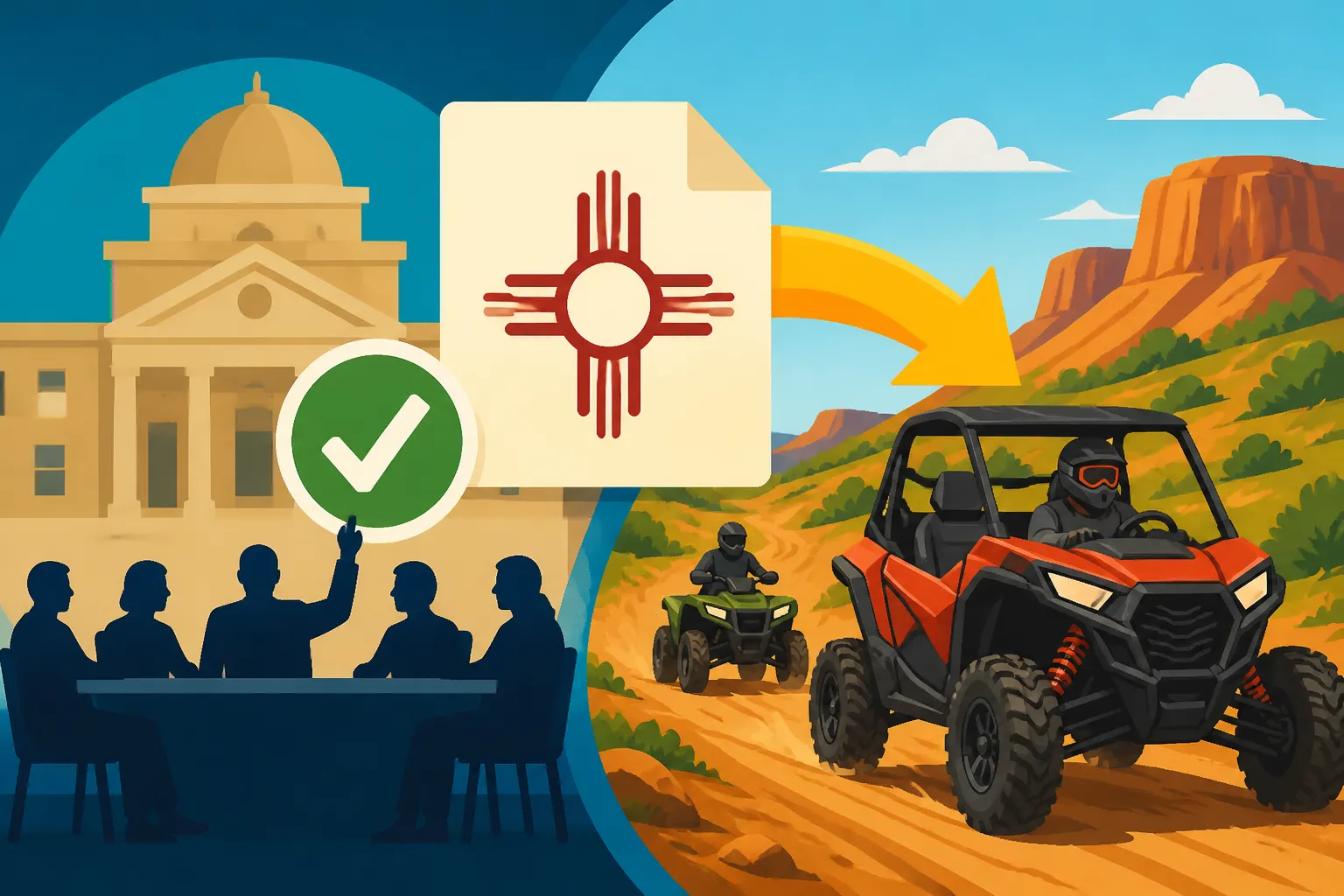
When a County Uses a Resolution to Open Roads
It's incredibly frustrating when you're just trying to figure out where you can legally ride your ATV or UTV in New Mexico, only to be met with a confusing patchwork of regulations. One county might seem completely open, while the next county over feels like a minefield of potential fines. This guide is here to untangle the specific way some New Mexico counties use formal resolutions to open up their roads to off-highway vehicles, helping you understand what to look for and how to ride responsibly.
Understanding New Mexico's OHV Road Rules
Navigating New Mexico's roads with your off-highway vehicle (OHV) can feel like a riddle. The general rule of thumb across the state is that OHVs aren't allowed on paved public roads. You know, those nice, smooth ribbons of asphalt that connect towns and trailheads? Those are typically off-limits. This default closure is in place for safety, traffic flow, and to manage the wear and tear on our roadways. It's a blanket rule designed to keep everyone safe, but it often leaves OHV enthusiasts feeling limited.
The General "No" and the Important "But"
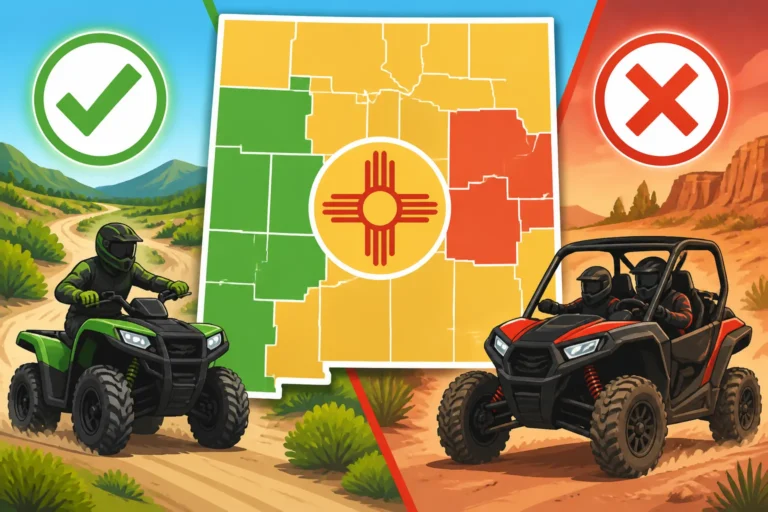
So, while the initial answer to "Can I ride my ATV on the road?" is often a resounding "no," there's a really important "but" that many riders miss. New Mexico law does provide a pathway for local jurisdictions—specifically counties and municipalities—to create exceptions to this general prohibition. This means that while the state sets the baseline, local governments have the power to decide if, and how, OHVs can access certain public roads within their boundaries. This local control is key to understanding why riding rules can change so dramatically just by crossing a county line. You might be cruising legally in one area, only to be in violation a mile down the road without even realizing it.
This is where the real complexity kicks in. It's not just about knowing state law; it's about staying informed about hyper-local decisions. A lot of the frustration riders feel comes from this inconsistency. You want to explore, but you don't want to break the law, and the information isn't always easy to find. This is precisely why some counties choose to act, creating specific allowances that cater to their unique communities and riding cultures.
Why Counties Need a Resolution
For a county to legally open its roads to OHVs, it needs to go through a formal process, typically by passing a resolution or ordinance. This isn't just a casual decision; it's a legislative act by the county commission. A resolution is a formal expression of opinion or intention adopted by an assembly, in this case, the county's governing body. It carries the weight of law within that county's jurisdiction. Without such a formal action, the state's default rules stand, keeping OHVs off the paved roads.
This need for a resolution serves a couple of important purposes. Firstly, it ensures that such a significant decision is made publicly, with proper debate and consideration of all impacts, including safety, noise, environmental concerns, and economic benefits. Secondly, it provides a clear legal framework that riders and law enforcement can understand and follow. It removes ambiguity and establishes precisely which roads are open, under what conditions, and for what types of vehicles. It's the county's way of saying, "Yes, we've thought about this, and here are the rules we've decided upon for our community." This process is crucial because it allows local communities to tailor OHV access to their specific needs, rather than relying on a one-size-fits-all state mandate.
The Local Control Factor
The biggest takeaway here is the immense power of local control. New Mexico empowers its counties and municipalities to make these choices for themselves. What might be perfectly fine in Sierra County, for example, could be strictly prohibited in a neighboring county that hasn't passed a similar resolution. This leads to the "patchwork" of rules that many riders find so challenging. It means that while the core rules for [New Mexico's Green On and Off-Highway Decal] might be consistent statewide for vehicles that do get pavement access, the decision to allow that access is purely local.
This local control isn't just about opening roads; it also allows counties to impose their own specific restrictions. They might designate certain roads as open, but only during daylight hours, or with specific speed limits, or requiring certain safety equipment beyond what's usually needed for off-road riding. For instance, a county might open most of its unpaved, rural roads but keep core town streets completely closed. This nuance means that simply knowing a county has "opened its roads" isn't enough; you need to dig deeper into the specifics of their resolution. This is where researching before you ride becomes absolutely critical to avoid an unwelcome surprise. You'll want to be familiar with the specifics of [New Mexico Rules for Riding a County Road] well before you hit the trail.
The County Resolution Process Explained
So, how does a county actually go about opening its roads to OHVs? It's not always a quick or simple process, but understanding the steps can help you appreciate why some counties have embraced it and others haven't. It also gives you an idea of how to advocate for changes in your own local area if you believe it would benefit the community.
From Idea to Official Action
The journey often starts with an idea, perhaps from a group of local riders, a tourism board, or even a county commissioner who sees the potential economic benefits of opening roads to OHVs. These proponents usually present their case to the county commission. This often involves public meetings where residents can voice their support or concerns. It's a chance for the community to weigh in on something that affects everyone, from increased tourism revenue to potential noise or safety issues for rural residents.
Once the idea gains traction, county staff might be tasked with researching other counties' resolutions, drafting proposed language, and consulting with law enforcement agencies like the county sheriff's office. This ensures that the resolution is not only legally sound but also practical to enforce. There might be multiple readings and discussions before a final vote is taken by the county commissioners. It’s a transparent, democratic process, and every step is usually recorded in public meeting minutes. This is where you might learn about specific conditions, such as requirements for [New Mexico OHV Registration and Liability Insurance] or particular equipment.
What a Resolution Typically Covers
When a county passes a resolution to open its roads, it’s rarely a blanket "anything goes" situation. These documents are usually quite specific, outlining the exact parameters under which OHVs can operate. For example, a resolution might specify:
- Which Roads Are Open: It could be all unpaved county roads, specific paved county roads, or even certain roads connecting to trailheads. City streets within the county usually remain separate, governed by municipal ordinances like [Red River Ordinance 2000-5].
- Operating Hours: Some resolutions might restrict OHV use to daylight hours, or prohibit it during certain late-night periods to minimize noise impacts on residents.
- Vehicle Types: While often broadly covering ATVs, UTVs, and dirt bikes, some resolutions might have specific rules for wider side-by-sides, or exclude certain types of off-road motorcycles entirely, as is the case with [Why a Dirt Bike Cannot Use the Opt-In] on state-designated paved roads.
- Safety Equipment: Beyond the standard OHV safety gear, a resolution might require additional equipment for road use, such as turn signals, rearview mirrors, or even specific reflective gear for riders. Many of these requirements are similar to those for [New Mexico Equipment Rules for Road Use] on state-approved paved roads.
- Speed Limits: Counties often impose specific speed limits for OHVs on their roads, sometimes lower than the posted car speed limit, to enhance safety.
- Driver Requirements: Age restrictions, driver's license requirements (especially for paved road access), and mandatory [New Mexico OHV Safety Permit Requirements] for younger riders are common inclusions.
These detailed specifications are essential for clarity and to address community concerns. You won't find a one-size-fits-all resolution, which is why local research is so important. Companies like SuperATV offer a range of accessories that can help riders meet these varying requirements, from turn signal kits to mirrors and upgraded lighting, making the transition to road-legal more feasible if your county allows it.
How to Find Out About Your County's Rules
So, you're fired up to ride, but you need to know the rules specific to your county. Where do you even start? The best place to begin your quest for information is your county's official website. Look for sections related to "County Ordinances," "Resolutions," "Public Works," or "Sheriff's Office." Most counties have a dedicated page where they publish their official legislative documents.
If you can't find it online, don't hesitate to call or visit the County Clerk's office or the County Manager's office. These individuals are usually very helpful and can point you to the correct department or document. It might even be worth checking in with the local sheriff's department, as they are the ones who will be enforcing these rules. Sometimes, local OHV clubs or enthusiast groups also have up-to-date information, as they are often involved in advocating for or understanding these resolutions. Remember, a quick phone call or web search before you head out can save you a lot of grief (and money) in potential fines.
Navigating Open County Roads Safely and Legally
Once you've done your homework and confirmed that a New Mexico county has opened certain roads to OHVs, the responsibility shifts to you, the rider. It's not just about what's allowed; it's about riding in a way that ensures your safety, the safety of others, and preserves the privilege of road access for all OHV enthusiasts.
Equipment Requirements for Paved Roads
If you're riding on any paved public road in New Mexico, even if opened by county resolution, your OHV needs to meet certain state-level equipment standards for road use. This typically includes:
- Headlights and Taillights: You'll need at least one headlight that illuminates the road for at least 150 feet and at least one taillight visible from 200 feet. This isn't just for night riding; it's often a requirement during the day for visibility, especially in dusty conditions or challenging weather. [New Mexico Headlight and Taillight Rules] are pretty clear on this.
- Brakes: Your OHV must have functional brakes on all wheels. This is a basic safety requirement, but it’s worth checking before you hit any paved surfaces.
- Mirrors: At least one rearview mirror is typically required, allowing you to see traffic approaching from behind. Many OHV models don't come standard with mirrors, so this is a common aftermarket addition. SuperATV, for instance, offers a variety of rearview and side mirrors designed for different OHV models to help meet these requirements.
- Muffler and Spark Arrester: While more for off-road noise and fire prevention, these are still relevant. Your exhaust system needs to be in good working order and not exceed [New Mexico's 96 Decibel Ceiling]. A spark arrester is often required for riding on public lands, and it's good practice to have one even on roads if you might transition to trails.
- Proof of Insurance: For any paved road use, even those opened by county resolution, you must carry proof of liability insurance. This is a non-negotiable state law, mirroring the requirements for regular vehicles. [New Mexico ATV Insurance Requirement] mandates a minimum level of coverage.
- Driver's License: If you're operating on a paved public road, you generally need a valid driver's license, just as if you were driving a car. This applies to adults. [New Mexico Driver's License Rules for OHVs] clarify this.
It's a lot to keep track of, but ensuring your machine is properly equipped isn't just about avoiding a ticket; it's about being visible and safe sharing the road with cars, trucks, and even pedestrians.
Riding Etiquette and Respect
Opening county roads to OHVs is a privilege, and maintaining that privilege requires responsible behavior from riders. It's not just about following the letter of the law, but also about common courtesy and showing respect for other road users and residents.
- Mind Your Speed: Even if the posted speed limit is higher, often slow down on unpaved roads, especially near homes, or where dust is a concern. Kicking up huge dust clouds near someone's home or garden is a surefire way to generate complaints and potentially lead to tighter restrictions.
- Be Mindful of Noise: While your machine might be within the legal decibel limit, excessive revving or noisy behavior, especially in residential areas, can be irritating. Be a good neighbor.
- Yield to Others: Remember, OHVs are sharing the road with cars, trucks, farm equipment, bicycles, and even horses. Always yield to larger vehicles and give ample space to cyclists and equestrians.
- Stay on Designated Routes: Just because a county road is open doesn't mean you can venture off into private property or undesignated areas. Stick to the road surface itself. [New Mexico Rules for Riding a Forest Road] and [New Mexico Rules for Riding a BLM Road] have similar principles – stay on the marked routes.
- Pack It In, Pack It Out: Don't litter. It sounds obvious, but leaving trash behind not only spoils the scenery but also contributes to a negative perception of OHV riders.
By riding responsibly and courteously, you help build goodwill within the community, making it more likely that these open road policies will continue and potentially even expand. Nobody wants to see a county reverse its decision because of irresponsible behavior.
The Difference Between County and City Rules
One of the most crucial distinctions to understand when riding on county roads is that a county resolution almost never overrides city or village ordinances. Even if an entire county has opened its roads to OHVs, the moment you cross into an incorporated town or city limit within that county, you are subject to the municipality's rules, which are often much stricter.
For example, a county might declare all its unpaved roads open for OHV use. You could be riding along happily, and then suddenly you see a sign that says "Welcome to [Your Town Here]." At that point, you're likely back to strict prohibitions on OHV street use, unless that specific municipality has also passed its own ordinance. Many towns have explicit bans on OHVs on city streets, like [Why Red River Bans ATVs but Allows ROVs] with specific exceptions. Always assume that city limits mean "no OHVs on pavement" unless you have specifically researched that particular city's ordinances. It's a common trap for riders, so pay close attention to city limit signs!
Specific Examples of New Mexico Counties Opening Roads
New Mexico is a diverse state, and the approaches counties take to OHV access reflect that. Some have embraced opening roads broadly, while others have opted for more limited or no access. Understanding these differences helps illustrate the impact of local resolutions.
Sierra County's Approach
Sierra County, which includes popular destinations like Truth or Consequences and Elephant Butte Lake, is a fantastic example of a county that has largely embraced OHV access on its roads. They've recognized the economic benefits that OHV tourism can bring to their communities, especially with riders visiting for events like the [What the Chile Challenge at Caballo Lake Is] or simply exploring the vast scenic landscapes. Their resolution has opened up a significant portion of their county road network, allowing riders to connect trails, access services in towns, and explore more of the area without needing to trailer their machines constantly. This approach has positioned Sierra County as a welcoming destination for OHV enthusiasts, which has been great for local businesses. You can find more specific details on [How Sierra County Opened Nearly All Its Roads].
However, even in Sierra County, riders still need to be aware of the specific rules. While county roads are largely open, municipal ordinances within towns like Truth or Consequences might still restrict OHV use on city streets. This means you can ride a network of dirt roads around the town, but you might need to park your OHV at the edge of town and walk or use other transportation to get to a restaurant or shop. It's a balance, designed to support tourism while maintaining quality of life for residents.
Other Counties and Their Specific Ordinances
While Sierra County offers a broad example, other counties have taken different, often more specific, approaches.
- Eddy County: Down in the southeastern part of the state, Eddy County has an ordinance (O-18-95) that provides some OHV access, particularly on unpaved county roads. This allows riders to navigate areas around towns like Carlsbad and Artesia, often connecting to federal lands or private properties where riding is permitted. However, their resolution might have specific hours of operation or only allow certain types of vehicles on these roads. The aim is often to facilitate access for residents and tourists to reach riding areas, while keeping high-traffic or sensitive areas clear. You can dig deeper into [Eddy County Ordinance O-18-95] for specifics.
- Otero County: Similar to Eddy County, Otero County also has its own ordinances governing OHV use. This might mean certain designated roads near Alamogordo or Cloudcroft are open, but again, riders need to consult the specific language of [Otero County's OHV Ordinance]. Often, these ordinances are driven by local needs, such as access for ranchers, hunters, or to specific recreational zones.
The key takeaway is that each county's resolution is unique. There's no single "New Mexico county roads are open" declaration. It's about granular, local decisions that require your attention to detail.
Resources for Riders: SuperATV and Trail Planning
Understanding and complying with county-specific resolutions can sometimes mean modifying your OHV to meet road-legal requirements. This is where companies like SuperATV become incredibly helpful. They offer a vast array of aftermarket parts that can transform an off-road-only machine into one that can legally navigate open county roads. This includes items like turn signal kits, horns, DOT-approved windshields, and mirrors – all components that might be stipulated in a county's resolution for road use. Many riders find that equipping their UTVs with a full cab enclosure from SuperATV also enhances comfort and protection when covering longer distances on open county roads.
Beyond physical modifications, planning your route is paramount. Online maps, county websites, and local OHV clubs are invaluable resources. Look for maps that clearly delineate county roads, city limits, and designated OHV trails. Cross-referencing these with the county's resolution will ensure you stay on legal ground. Always have a plan B, and remember that rules can change, so always check for the most current information before embarking on your ride.
| Feature / Rule | General New Mexico OHV Road Rule (Default) | New Mexico County Resolution (Example) |
|---|---|---|
| Paved Road Access | Generally Prohibited | Permitted on Designated County Roads |
| Unpaved Road Access | Varies, often permitted on federal/state land, but not all county roads | Permitted on Designated County Roads (often broadly) |
| Governing Authority | New Mexico State Statutes | County Commission Ordinance/Resolution |
| Required Equipment | State Minimums for Off-Road Use | State Road-Legal Minimums (headlights, taillights, mirrors, insurance, etc.) |
| Driver's License | Not always required for off-road use | Required for paved road use |
| Jurisdiction Overlap | State law is primary | Does not override city/municipal ordinances |
| Purpose | Safety, land management | Local economic benefit, resident access, recreational opportunity |
Disclaimer
This article is for general informational purposes only and does not constitute professional advice. Laws, prices and regulations vary by location and change over time. Consult a qualified professional for guidance on your specific situation.