New Mexico Rules for Riding a Ranch Road
There’s a special kind of freedom that comes with riding your ATV or UTV across the wide-open spaces of a New Mexico ranch, but that freedom also comes with a unique set of responsibilities and rules. Many folks assume that "ranch land" means "anything goes," and that couldn't be further from the truth. Navigating these roads requires a keen understanding of property rights, local customs, and safety regulations, all while respecting the land and those who work it. This guide is here to walk you through exactly what you need to know to enjoy your ranch road adventures without causing headaches for yourself or the landowners.
The Unique World of New Mexico Ranch Roads
Ranch roads in New Mexico are a tapestry of history, hard work, and breathtaking scenery. They can range from meticulously maintained graded paths to barely discernible two-tracks winding through arroyos and over rocky outcrops. But before you even think about firing up your engine, it's crucial to understand the fundamental nature of these roads, especially whether they're public or private, and why that distinction makes all the difference in the world.
Understanding Public vs. Private Ranch Roads
This is probably the biggest misconception out there, and it’s one that can quickly get you into trouble. Many people see a road cutting across what looks like open country and assume it’s fair game, especially if it doesn't have a fence or a "No Trespassing" sign every fifty feet. But in New Mexico, vast stretches of land are privately owned, and even a well-traveled dirt path might still be entirely on private property. Just because a road looks like a public thoroughfare doesn't mean it is.
The reality is that a significant portion of what we commonly refer to as "ranch roads" are indeed private. These roads are built and maintained by landowners for their own use – for moving livestock, accessing pastures, checking fences, or simply getting from their home to other parts of their property. They are not intended for general public recreational use unless explicitly stated or granted. There are, of course, public roads that traverse ranch lands, such as county roads or designated Bureau of Land Management (BLM) or National Forest roads that cut through grazing allotments. Identifying these requires some homework, often involving detailed maps from government agencies or direct communication with local authorities. The challenge for riders is that the visual cues aren't always clear, and what appears to be an open access road could suddenly turn private. This ambiguity is precisely why it's so important to proceed with caution and verify your route.
The Importance of Permission and Access
Let's be absolutely clear: if you are riding on private ranch land, you must have permission from the landowner. This isn't just a polite suggestion; it's a legal requirement. Riding without permission is trespassing, plain and simple, and it can carry significant penalties, not to mention creating ill will that can jeopardize future access for everyone. Many riders get caught off guard by this, assuming that because they're not causing damage, it's okay. But imagine someone driving through your backyard without asking – it’s the same principle.
Gaining permission might seem daunting, but it's often as straightforward as asking. Sometimes, ranchers are amenable to responsible riders, especially if you demonstrate a clear understanding of their needs and concerns. This might involve calling ahead, stopping at the ranch headquarters, or having a contact through a local riding club or outfitter. Always respect a "No Trespassing" sign. If you see one, even if you’ve ridden that route before, it means access is denied. Sometimes, ranchers allow limited access for hunting or other specific activities, but this doesn't automatically extend to general ATV or UTV riding. Always clarify the scope and duration of any permission granted. Having a written agreement or at least a text message can prevent misunderstandings later. Remember, building a reputation as a respectful and responsible rider can open doors, while a single incident of unauthorized riding can shut them for good.
Common Etiquette on Shared Ranch Lands
Even when you have explicit permission to ride on ranch roads, or if you're on a public road that crosses private grazing allotments, there's a certain etiquette that comes into play. These lands are working landscapes, not just playgrounds. Respecting the operations of the ranch is paramount. This means being mindful of livestock, farm equipment, and ranch personnel. You might encounter cowboys moving cattle, a farmer checking irrigation lines, or heavy machinery performing maintenance. Your presence, especially with a noisy off-highway vehicle, can be disruptive.
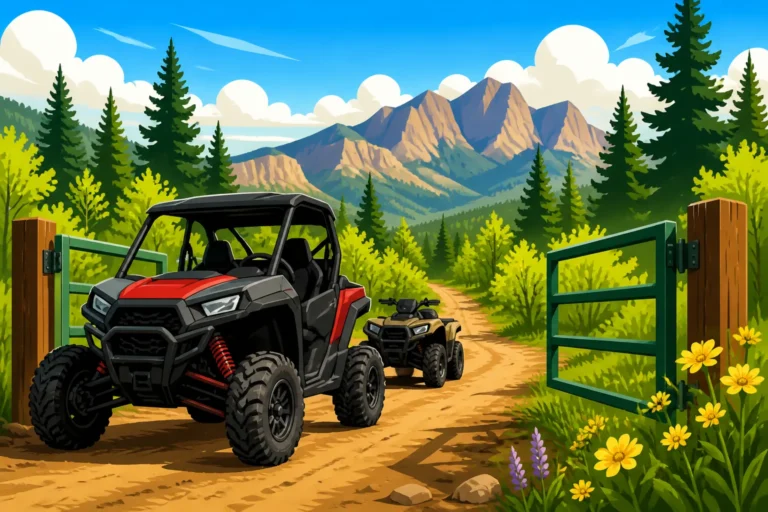
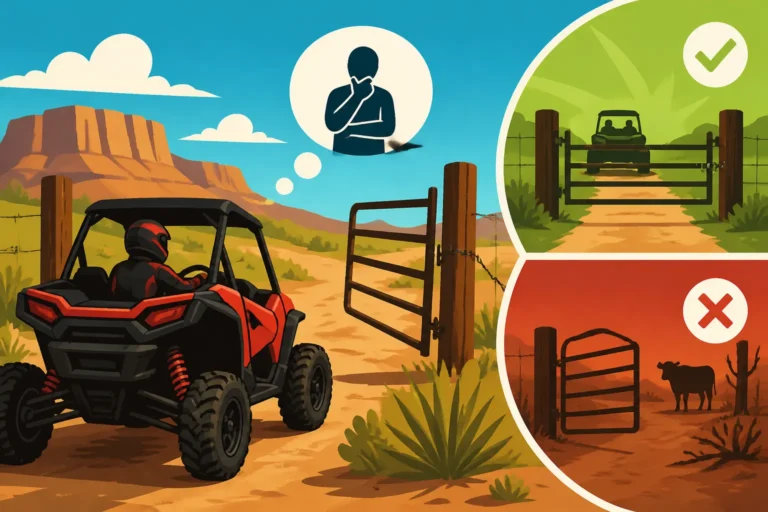
One of the most fundamental rules of ranch etiquette revolves around gates. [New Mexico Rules for Opening a Gate] are pretty straightforward: if a gate is closed, close it behind you. If it's open, leave it open. This is crucial for livestock management. Leaving a closed gate open, even accidentally, can lead to cattle wandering off, mixing herds, or ending up on public roads, creating a huge problem for the rancher. Always slow down around livestock, giving them a wide berth and avoiding any actions that might spook them. Dust is another major concern; driving at high speeds kicks up enormous clouds of dust that can impact visibility, degrade air quality for residents, and even harm crops or irritate livestock. Keep your speed down, especially near homes, corrals, or where you see other vehicles. Think of it this way: you are a guest in someone's workplace, and politeness goes a long way.
Navigating Legalities and Responsibilities on Ranch Roads
Beyond the unwritten rules of etiquette, there are concrete legal requirements and responsibilities that come with riding your ATV or UTV on New Mexico ranch roads, whether they are public access through private land or purely private with permission. Ignoring these can lead to fines, legal issues, or even liability if an accident occurs. It's not just about what's polite; it's about what's lawful and safe.
Registration and Decal Requirements for ATVs/UTVs
Even if you're riding exclusively on private land with permission, New Mexico law often still requires your OHV to be registered. [Registering an OHV in New Mexico] is not just for public trails; it applies broadly to off-highway vehicles operating in the state. Many people mistakenly believe that if they "never take it on public land," they don't need to register. However, the definition of an "off-highway motor vehicle" and its operation can still fall under registration requirements, especially for machines that might eventually cross public roads or are used in a commercial capacity on the ranch.
For machines primarily used off-road, you'll generally need the yellow off-highway decal. [New Mexico's Yellow and Green Decals] differentiate between off-highway-only use (yellow) and on-and-off-highway use (green). If you plan on ever traversing a public paved road, even if it's just to get from one part of a ranch to another, you might need the green decal and potentially a paved road plate. The best practice is to ensure your machine is properly registered and decaled according to its intended use, even if that use is primarily confined to ranch roads. This ensures that if you ever need to access an adjacent public road, or if you encounter law enforcement, you are in compliance. It removes any doubt and protects you from potential citations.
| Decal Type | Primary Use | Where It Allows Riding | Additional Requirements for Road Use |
|---|---|---|---|
| Yellow | Off-Highway | Designated off-highway trails, private land with permission | None for road use (prohibited) |
| Green | On- and Off-Highway | Designated off-highway trails, private land with permission, and permitted paved public roads | Paved road plate, insurance, driver's license, specific equipment |
Insurance Considerations on Private Lands
This is an area where riders often find themselves exposed. While New Mexico has specific insurance requirements for OHVs operating on public paved roads, the rules for private land are less prescriptive, but no less critical. However, just because the state might not mandate liability insurance for private land use doesn't mean it's a good idea to skip it. [New Mexico OHV Registration and Liability Insurance] is a topic often misunderstood. Imagine this scenario: you're riding on a ranch road with permission, you accidentally hit a fence post, or worse, you collide with ranch equipment or injure someone. Without liability insurance, you could be personally responsible for significant damages and medical bills.
Many landowners, when granting permission, will specifically ask about your insurance coverage. Some may even require proof of liability insurance as a condition of access. This isn't them being difficult; it's them protecting their assets and their operation. A good off-road vehicle insurance policy should cover not only damage to your machine but also liability for property damage and bodily injury you might cause to others. If you're using your ATV or UTV for actual ranch work, such as hauling feed or inspecting lines, you might even need to ensure your personal policy covers "farm use" or inquire about a specific commercial policy, depending on the circumstances. Don't leave yourself vulnerable; a conversation with your insurance agent about your intended use on ranch roads is always a smart move.
Respecting Property Boundaries and Posted Signs
Navigating ranch roads means you are likely traversing land that is either entirely private or public land that abuts or intermingles with private property. This makes understanding and respecting property boundaries absolutely essential. Even if you have permission to be on one part of a ranch, that permission might not extend to all parts of it, or to neighboring properties. Always look for signs, fences, and natural boundaries. A fence line, a cattle guard, or even a change in the road surface can sometimes indicate a property line. [New Mexico Rules for Riding a Grazing Allotment] often involve similar considerations, where public land is used by private ranchers.
Posted signs are there for a reason and must be obeyed without exception. "No Trespassing," "Private Road," "Keep Out" – these aren't suggestions. They are legal declarations. Ignoring them is not only illegal but also incredibly disrespectful to the landowner. You might not see a sign at every turn, which is why it's so important to study maps beforehand. Many GIS (Geographic Information System) apps can now show property lines, making it easier to stay on track. If you're ever in doubt about whether you're on private land without permission, or if your permission covers a specific area, the safest bet is to turn back. Don't risk getting caught, getting fined, or alienating a landowner who might otherwise be open to responsible recreational use.
Practical Tips for a Safe and Respectful Ranch Road Experience
Riding ranch roads isn't just about following rules; it's about adopting a mindset of respect and preparedness. The environment can be rugged, and the presence of livestock, gates, and other ranch infrastructure adds layers of complexity that you might not encounter on a dedicated public trail system. Being aware and equipped can make all the difference for a safe and enjoyable experience for everyone involved.
Dealing with Livestock and Gates
Encountering livestock is almost a guarantee on New Mexico ranch roads. Cattle, horses, sheep, and even domestic dogs are common. [New Mexico Rules for Riding Near Livestock] dictate a cautious approach. Always slow down, stop if necessary, and give animals plenty of space. Loud noises, sudden movements, or aggressive driving can spook animals, causing them to bolt, get injured, or even become aggressive themselves. If you see a herd being moved, pull over, shut off your engine, and wait patiently for them to pass. Do not try to weave through them or rush the process. A rancher might be working those animals, and your interference could undo hours of effort or endanger everyone.
Gates, as mentioned earlier, are critical infrastructure. [New Mexico Rules for Opening a Gate] are simple: leave them as you found them. If it's closed, close it after you pass through. If it's open, leave it open. Always ensure the latch is secure. It sounds basic, but forgetting to latch a gate can have serious consequences for the rancher, leading to stray animals, lost revenue, and dangerous situations. It's a small act that demonstrates immense respect for the working landscape you're passing through. Sometimes you'll encounter a "cattle guard," which is a grate in the road designed to prevent livestock from crossing but allows vehicles to pass without opening a gate. Treat these with care; some can be rough, so reduce your speed.
Equipment Checks Specific to Ranch Environments
Ranch roads can be unpredictable. You might encounter deep ruts, sharp rocks, muddy sections, or soft sand. Before heading out, a thorough equipment check is vital, arguably even more so than for a dedicated trail system. Your tires, for instance, need to be in good condition, and considering a tougher, multi-terrain tire for enhanced puncture resistance, perhaps from a brand like SuperATV, can provide peace of mind. Ranch debris like thorns, barbed wire, or sharp rocks can quickly flatten a weaker tire.
Check your fluid levels, brakes, and lights. [New Mexico Rules for Riding After Dark] are important, as ranch work or an extended ride might mean you’re out past sunset. You need fully functional headlights and taillights. Carrying a spare tire (if applicable to your UTV), a tire repair kit, a small air compressor, and basic tools can save you a long walk back to the truck. A robust winch, which you might find as an aftermarket accessory from SuperATV, can also be a lifesaver if you get stuck in a muddy arroyo or need to move a fallen tree. Remember, you might be far from cell service and assistance. Be self-reliant. [New Mexico Rules for Towing With a UTV] could also be relevant if you're pulling a small trailer for ranch supplies.
Environmental Stewardship on Ranch Roads
Riding on ranch roads is a privilege, and preserving the environment is part of that responsibility. New Mexico's arid landscape is fragile, and off-road vehicles can have a significant impact if not used thoughtfully. Stick to established roads and trails. Do not create new tracks, especially on sensitive soils or near waterways. Going off-road unnecessarily can damage vegetation, contribute to erosion, and disrupt wildlife habitats.
Be mindful of fire danger, especially during dry seasons. A hot exhaust or a spark from your ATV can quickly ignite dry grass. Always ensure your machine has a properly functioning spark arrester. [New Mexico Spark Arrester Requirement] applies to public lands but is a good practice everywhere. Avoid parking in tall, dry grass. Pack out everything you pack in – and if you see trash left by others, consider packing that out too. Leave no trace. By demonstrating excellent environmental stewardship, you help ensure that ranch owners and land managers remain open to responsible OHV use for years to come. It’s about being a good steward of the land, whether it’s your land or someone else’s.
Disclaimer
This article is for general informational purposes only and does not constitute professional advice. Laws, prices and regulations vary by location and change over time. Consult a qualified professional for guidance on your specific situation.