Riding a New Mexico Frontage Road
It's easy to get excited about taking your ATV or UTV out for a spin in New Mexico, envisioning endless miles of open trail. But when those trails intersect with public roads, especially the often-confusing category of "frontage roads," navigating what's legal and what's not can feel like trying to solve a Rubik's Cube blindfolded. Many riders just want to get from Point A to Point B, or access a trail system, and these specific roads often spark questions. This guide will clarify exactly what New Mexico law says about riding your off-highway vehicle on these particular routes, helping you stay legal, safe, and stress-free on your next adventure.
Understanding New Mexico Frontage Roads and OHV Access
Frontage roads, sometimes called service roads or access roads, exist for a very specific purpose: to provide access to properties adjacent to a main thoroughfare, typically a state highway or interstate, without requiring direct access points onto the high-speed road itself. They act as a parallel route, usually at a lower speed, connecting local businesses, homes, and sometimes even trailheads to the broader road network. For OHV riders, they represent a peculiar grey area, often looking like a normal road but having a unique legal status.
The key distinction for OHV riders in New Mexico isn't just what kind of road it is, but who owns and maintains it, and whether that entity has decided to open it to OHV traffic. Unlike strictly off-highway trails, frontage roads are very much part of the "public road" system, meaning they fall under a different set of rules. You can't just assume that because it's a smaller, slower road, your ATV or UTV automatically has free rein.
What Defines a Frontage Road in New Mexico?
In New Mexico, a frontage road typically runs alongside a major highway, providing local access. Think about those roads that parallel I-25 or US-285, serving gas stations, motels, or residential areas. They're designed to separate local traffic from the faster, through traffic on the main highway. This separation is crucial, as it often means these roads have different speed limits, traffic patterns, and, significantly, different jurisdictional oversight.
Sometimes, these roads are maintained by the New Mexico Department of Transportation (NMDOT), just like the highway they flank. Other times, a county or even a municipality might take responsibility for them, especially if they are within or bordering a town's limits. This jurisdictional ambiguity is precisely what makes them tricky for OHV riders. Without a clear understanding of who governs that particular stretch of road, it's hard to know which set of rules applies. Is it considered a state highway where OHVs are generally prohibited, or a county road that might be open?
Why Frontage Roads are Different for OHV Riders
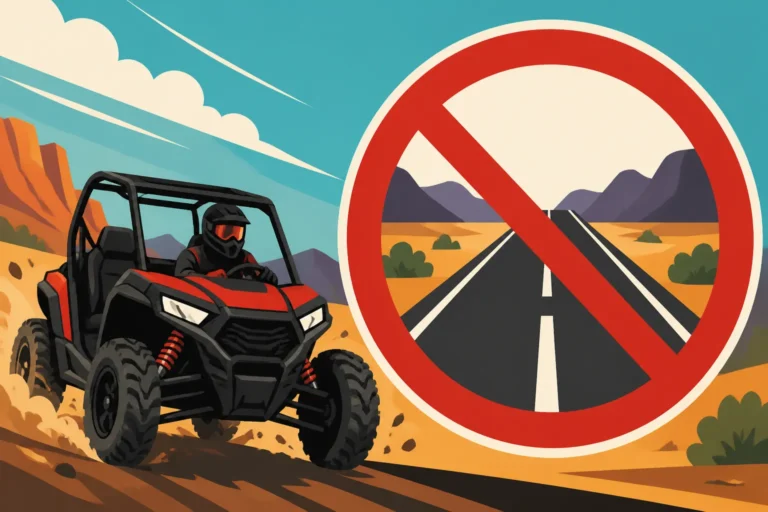
The main reason frontage roads are different from your typical dirt trail or even a regular county road boils down to their connection to state highways. New Mexico state law is quite clear: off-highway vehicles are generally prohibited from operating on state highways, except for specific instances like crossing at a right angle or for agricultural purposes in certain areas. Since many frontage roads are either extensions of, or directly tied to, state highway systems, this often means the same prohibition extends to them.
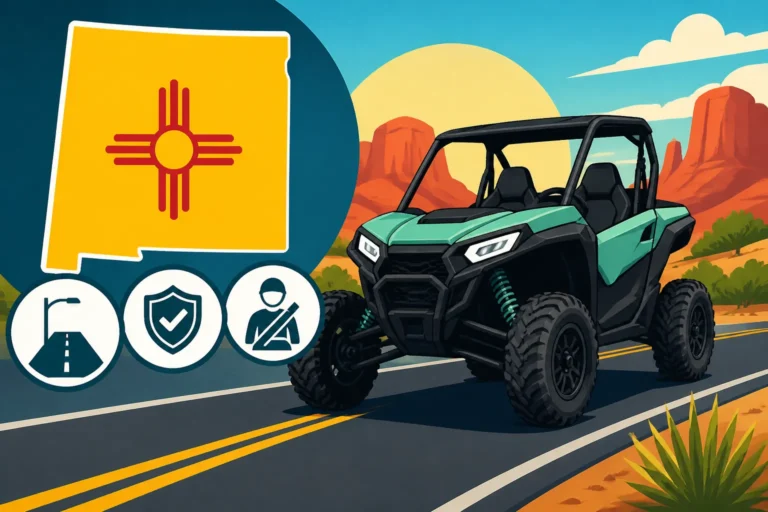
However, there are exceptions, and this is where it gets interesting. If a frontage road is officially designated and maintained by a county or municipality that has passed an ordinance opening its roads to OHV traffic, then riding might be permissible. This is part of the [New Mexico's Paved Street Opt-In] provision, which allows local governments to make their own decisions about OHV access on the roads they control. So, the first step is always to identify the jurisdiction and then check their specific ordinances. It's not about the physical appearance of the road, but its legal classification.
General New Mexico OHV Road Use Rules You Need to Know
Before we dive deeper into frontage roads, it's vital to have a solid grasp of New Mexico's broader regulations for riding OHVs on any paved public road. These are the foundational rules that apply across the board, and any specific permission for a frontage road will always require adherence to these general mandates. Getting caught unprepared can lead to fines and a ruined day, so understanding these requirements is non-negotiable.
New Mexico has made efforts to create a framework that allows for limited, responsible OHV use on certain public roads. This isn't a free-for-all, however; it's a carefully structured system designed to ensure safety for both OHV operators and other motorists. It's a balance between recreational access and public safety, and it demands that riders are well-informed and equipped.
The Paved Road Plate and Decal System
For an OHV to be legally ridden on any paved public road that has been opened to OHV traffic in New Mexico, it must be properly registered with the Motor Vehicle Division (MVD) and display the correct decals and/or plate. This typically means you'll need a "Green Decal," which signifies that your machine is registered for both off-highway and on-highway use. You can learn more about this in [New Mexico's Green On and Off-Highway Decal].
In some cases, if you intend to primarily use the OHV on paved roads where permitted, you might also have obtained a New Mexico Paved Road Plate, which used to be an option. However, the system has evolved, and understanding [New Mexico's Yellow and Green Decals] is paramount now. The green decal essentially superseded the old paved road sticker program. Your machine must have current registration, and the green decal must be affixed in the proper location for your vehicle type, which varies slightly between ATVs, UTVs, and dirt bikes.
Essential Equipment for Road Use
Just having the right registration isn't enough; your OHV needs to be equipped to meet New Mexico's safety standards for road use. This isn't about making your machine street legal in the traditional car sense, but about meeting specific requirements for visibility and control on public roads. These requirements ensure that your OHV can interact safely with other vehicles.
Here's a quick rundown of some key equipment:
- Headlights and Taillights: Your machine must have at least one headlight that can illuminate objects at least 150 feet ahead and one taillight visible from at least 200 feet to the rear. This is crucial for visibility, especially during dawn, dusk, or in inclement weather.
- Brakes: A properly functioning brake system is obvious, but it's specifically required to be effective on all wheels.
- Horn or Warning Device: You need an audible warning device, like a horn, to alert other road users.
- Mirrors: At least one rearview mirror is required. This is often an aftermarket addition for many OHVs. Companies like SuperATV offer robust mirrors designed to withstand the rigors of off-road use while providing the necessary visibility for on-road compliance.
- Muffler and Spark Arrester: While important for off-road noise limits and fire prevention, specific sound limits (96 decibels) also apply on public roads, and a spark arrester is generally required on public lands.
- Eye Protection: All riders on paved roads, regardless of age, must wear eye protection. Helmets are required for riders under 18, and strongly recommended for all. Check [New Mexico Helmet Law for ATV Riders] for details.
Failure to meet these equipment standards, even on an otherwise "open" frontage road, can result in a citation. It's about being prepared for the conditions and interactions you'll encounter with regular vehicle traffic.
Navigating Frontage Roads: What's Permitted and What's Not
Now, let's zero in on frontage roads themselves. Given their variable ownership and connection to state highways, determining legality isn't always straightforward. The most common scenario is that they fall under the same rules as the main highway they parallel, meaning OHV access is restricted. However, local ordinances can create exceptions, and knowing how to find that information is key.
Riding on a frontage road when it's not explicitly permitted can land you in serious trouble. New Mexico law enforcement takes illegal road use seriously, primarily due to safety concerns. OHVs aren't designed for highway speeds, nor do they offer the same level of protection as a passenger vehicle. Therefore, caution and legal diligence are your best tools.
When is Riding on a Frontage Road Allowed?
The short answer is: when the governmental entity with jurisdiction over that specific frontage road has passed an ordinance explicitly opening it to OHV traffic. This is where the local "opt-in" provision comes into play. If a frontage road is maintained by a county or city, and that county or city has decided to allow OHVs on its roads, then you might be in luck.
For example, if a frontage road is within Sierra County, which has opened nearly all its county roads to OHVs, you might be able to ride there, provided the frontage road is indeed classified as a county road and not a state highway extension. You'd still need to meet all the general requirements discussed above (registration, green decal, equipment, license, insurance). The critical step is verifying the road's jurisdiction. You can often find this information by looking at county road maps, or by contacting the county road department or local MVD office. It's always best to have written confirmation or refer to a published ordinance. This is also why knowing [New Mexico Rules for Riding a County Road] is so important.
The Strict Rules for State Highway Frontage Roads
Many frontage roads are, in fact, owned and maintained by NMDOT, making them extensions of the state highway system. In these cases, the default rule is that OHVs are prohibited. New Mexico law explicitly restricts OHV operation on state highways, with very limited exceptions:
- Perpendicular Crossing: You can cross a state highway at a right angle, but only after coming to a complete stop and yielding to all traffic. This is a quick maneuver, not continuous travel. [New Mexico's Perpendicular Crossing Rule] explains this in detail.
- Emergency Situations: In genuine emergencies, an OHV might be used, but this is extremely rare and specific.
- Agricultural Purposes: In certain agricultural zones, an OHV might be permitted for specific farm-related tasks on short stretches of road, but this is highly localized and usually requires specific signage or local agreement.
If a frontage road is part of the state highway system, even if it looks like a quiet local street, you generally cannot ride your OHV on it. This is a major source of confusion for riders, who might assume a slower, less trafficked road is fair game. Always err on the side of caution.
Consequences of Illegal Frontage Road Use
Riding an OHV on a prohibited frontage road can lead to significant penalties. These aren't minor infractions; they carry fines and potentially other legal consequences. Depending on the exact circumstances and the discretion of the officer, you could face:
- Fines: These can range from moderate to substantial, especially for repeat offenses. [New Mexico Fines for an Unregistered OHV] or other road violations can add up quickly.
- Impoundment: Your OHV could be impounded, leading to additional towing and storage fees.
- Misdemeanor Charges: In some cases, repeated or egregious violations could result in misdemeanor charges.
Beyond the legal ramifications, there's the critical issue of safety. OHVs are not designed for road use in the same way cars are. They have different handling characteristics, braking distances, and offer less protection in a collision. Riding illegally on any public road, including frontage roads, puts you and others at unnecessary risk.
| Type of Road | General OHV Status in New Mexico | Key Considerations for Frontage Roads |
|---|---|---|
| State Highway | Generally Prohibited | If a frontage road is part of the state highway system (NMDOT owned), OHVs are generally not allowed. |
| County Road | Permitted if "Opted In" by County | If a frontage road is a county road AND the county has passed an ordinance, OHVs are permitted with proper registration. |
| City/Municipal Road | Permitted if "Opted In" by City | If a frontage road is within city limits AND the city has passed an ordinance, OHVs are permitted with proper registration. |
| Private Road | Permitted with Owner's Permission | If a frontage road is private, you need explicit permission from the landowner. |
Staying Legal and Safe on New Mexico's Frontage Roads
The best approach to riding New Mexico's frontage roads is proactive research and strict adherence to the law. Don't rely on assumptions or what you've seen others do. Every stretch of road can be different, and ignorance of the law is never an excuse. Your goal is to enjoy your ride without the anxiety of a potential citation.
Beyond the legal aspects, safety should always be your top priority. Even on roads where OHVs are permitted, you are sharing the space with cars, trucks, and other vehicles that operate at different speeds and with different expectations. Defensive riding and constant awareness are crucial for a positive experience.
Researching Jurisdictional Rules
Before you even load up your machine, do your homework. Identify the specific frontage road you plan to use and determine its jurisdiction. Here's how you can try to find this information:
- County Websites: Many New Mexico counties publish their ordinances online. Look for sections related to "OHV," "off-highway vehicle," or "road use."
- Local MVD Offices: While they primarily handle registration, they may have resources or be able to direct you to the correct local government department.
- County Road Departments: These departments are responsible for road maintenance and classification. A quick call to the county administrative office can often clarify who owns a specific road.
- Local Law Enforcement: Your local Sheriff's office or city police department can often provide clarity on local OHV ordinances.
- Official Maps: Detailed county or city maps often differentiate between state, county, and municipal roads.
- Ask Experienced Local Riders: While not a substitute for official sources, local clubs or long-time riders often have valuable insights into specific areas.
Remember, if you can't find clear documentation that a particular frontage road is open to OHVs under county or municipal jurisdiction, assume it is closed and treat it as a state highway. It's better to be safe than sorry.
Essential Paperwork and Personal Readiness
Even on open frontage roads, you need to be fully prepared personally and legally. This includes having all your required documentation readily accessible. An officer may ask to see these during a roadside stop.
- Proof of Registration: Your current New Mexico OHV registration, along with the green decal properly affixed to your machine. [New Mexico OHV Registration Paperwork] goes into detail about what you need.
- Driver's License: If you are operating an OHV on a paved public road, you generally need a valid driver's license. [New Mexico Driver's License Rules for OHVs] can clarify age and license specifics.
- Proof of Insurance: New Mexico requires liability insurance for any OHV operating on paved public roads. Have your insurance card or policy readily available. For more information, refer to [New Mexico ATV Insurance Requirement].
- Safety Permit (for minors): If a rider under 18 is operating the OHV on a paved road, they must have completed an approved OHV safety course and carry proof of their safety permit.
Beyond paperwork, make sure you are in a fit state to ride. This means no impairment from alcohol or drugs. New Mexico's DWI laws apply to OHV operators just as they do to car drivers. Also, dress appropriately with protective gear, especially if you anticipate a mixed-use ride with both off-road and paved sections.
Safe Riding Practices on Paved Roads
When you are legally on a frontage road, shift your mindset from trail riding to road riding. This means:
- Drive Defensively: Assume other drivers don't see you. OHVs are smaller and less visible than cars.
- Obey Traffic Laws: Adhere to all posted speed limits, stop signs, traffic signals, and yield signs.
- Maintain Lane Position: Ride predictably and stay to the right side of the lane, but ensure you are visible.
- Signal Turns: Use hand signals or, if your machine is equipped, turn signals to indicate your intentions.
- Avoid High Speeds: Even if the speed limit is higher, most OHVs are not designed for sustained high-speed paved road travel. Stick to a speed where you feel completely in control and safe.
- Watch for Potholes and Debris: While roads are generally smoother than trails, frontage roads, especially in rural areas, can have significant potholes, gravel, or debris that can be hazardous for an OHV.
By taking the time to understand the specific rules for frontage roads, ensuring your machine is properly equipped (with a little help from brands like SuperATV for those essential road-legal accessories), and riding responsibly, you can make these segments of your journey safe and enjoyable. Always prioritize knowledge and safety over guesswork.
Disclaimer
This article is for general informational purposes only and does not constitute professional advice. Laws, prices and regulations vary by location and change over time. Consult a qualified professional for guidance on your specific situation.