New Mexico Driver’s License Rules for OHVs
Navigating the rules for riding your ATV or UTV in New Mexico can sometimes feel like trying to read a trail map upside down, especially when it comes to something as fundamental as needing a driver's license. Many riders, myself included, have wondered exactly when that little plastic card is essential for hitting the trails or connecting them via paved roads. This guide will meticulously break down New Mexico's driver's license requirements for OHV operation, ensuring you understand the nuances and can ride with confidence and compliance.
Understanding the Basics: Do You Even Need a Driver's License for Off-Road Riding in New Mexico?
This is often the first question that pops into a new rider's head, or even an experienced one who's just moved to New Mexico. The answer, like many things in the world of OHV regulations, isn't a simple yes or no, but rather depends entirely on where you plan to ride your machine. Let's clarify that crucial distinction.
Off-Highway Riding: No License Required for Private or Permitted Public Land
Here’s a piece of good news for many: if your adventures are strictly confined to off-highway terrain, you generally do not need a standard driver's license in New Mexico. This applies to a couple of key scenarios. If you’re riding on private property with the landowner's explicit permission, the state isn’t typically concerned with your driver's license status. The same goes for vast swathes of public lands that are specifically designated for OHV use, such as certain Bureau of Land Management (BLM) areas or National Forest trails.
In these environments, the focus is squarely on safe operation and adherence to specific OHV regulations, such as having your machine registered if it's on public land, or ensuring minors have the necessary safety permits. This distinction means that individuals who might not yet have a traditional car driver's license—perhaps a responsible teenager who has completed an OHV safety course—can still experience the thrill of New Mexico’s incredible backcountry trails. It's about enabling recreation while maintaining safety for those purely off-road excursions.
The Catch: When You Hit the Pavement
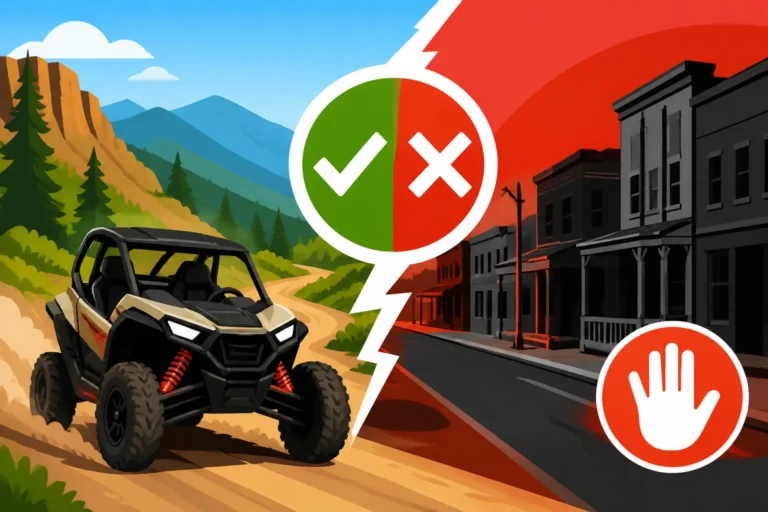
This is where the rules pivot significantly. The moment your ATV, UTV, or dirt bike touches a paved public road, even if it's just for a short stretch to link two trails or cross a highway, the game changes. New Mexico law dictates that if you operate an OHV on any "opted-in" paved public roadway—meaning a county or municipal road that has been specifically opened for OHV use—then a valid driver's license becomes an absolute requirement. This isn't just a suggestion; it’s a critical legal mandate.
The rationale behind this rule is straightforward and important for everyone's safety. When your OHV is on a paved public road, it enters the same traffic ecosystem as cars, trucks, and motorcycles. You're sharing the road, interacting with conventional traffic, and subject to the same traffic laws. Therefore, the state requires that anyone operating any motor vehicle in such an environment possesses a driver's license, proving they've met a minimum standard of driving competence and knowledge of road rules. It's a fundamental aspect of road safety. [Why the Green Decal Lets You Onto Pavement]
Paved Road Riding: When Your Driver's License Becomes Essential
So, you've understood the basic distinction. Now, let's drill down into the specifics of what that means when you decide to take your OHV onto paved public roads in New Mexico. It's not just about having a license, but understanding the context and the accompanying requirements.
The "Opt-In" Rule: County and Municipal Roads
New Mexico employs a somewhat unique "opt-in" system for OHV access on paved roads. This means that unlike some states where there might be blanket rules, here, individual counties and even specific municipalities have the authority to decide if and which of their paved roads can be legally used by OHVs. This localized control can lead to a patchwork of regulations across the state, making it vital for riders to do their homework.
For example, you might find that certain areas within Sierra County or Eddy County have embraced OHV tourism and opened many of their paved roads, creating fantastic opportunities to connect trails or access town services. Conversely, another town or county might choose to keep all its paved roads closed to OHVs. The crucial takeaway here is that you must always verify the local ordinances for your specific riding area. If you're on a paved public road that hasn't been "opted-in," or if you're on an "opted-in" road without a driver's license, you're looking at potential citations. [New Mexico Rules for Riding a County Road]
What Type of License New Mexico Requires
When a driver's license is required for OHV operation on an "opted-in" paved public road, New Mexico isn't asking for anything exotic. You'll need to possess a valid driver's license issued by any state, district, or territory of the United States, or even a foreign country. For most New Mexico residents, this simply means a current, non-suspended Class D operator's license – the same one you use to drive your everyday car or truck. There's no special "OHV endorsement" you need to add to your license.
The purpose of this requirement is to ensure that anyone operating a motor vehicle on a public road has demonstrated a basic level of proficiency and understanding of traffic laws. While an OHV handles differently than a sedan, the core principles of road safety – obeying speed limits, stopping at signs, signaling turns, and being aware of other traffic – remain the same. This legal baseline helps ensure a safer environment for everyone sharing the road. Therefore, [A Driver's License on a New Mexico Paved Road] is just as non-negotiable as it is for any other vehicle in these specific situations.
Insurance and Registration: More Paved Road Essentials
While our primary focus here is on driver's license requirements, it's impossible to discuss legal paved road OHV use in New Mexico without acknowledging the other critical components: registration and insurance. These elements are not just add-ons; they are mandatory partners to your driver's license when you hit the asphalt. If your OHV is going to be operated on an "opted-in" paved public road, it must be properly registered with the New Mexico Motor Vehicle Division (MVD), and you need to display the correct decal. For paved road use, you'll specifically need [New Mexico's Green On and Off-Highway Decal].
Beyond registration, carrying proof of financial responsibility—liability insurance—is also a strict legal requirement. This falls under [New Mexico's Mandatory Financial Responsibility Act], which applies to all motor vehicles operating on public roads. These requirements ensure that in the event of an accident, there's financial protection for any damages or injuries. So, as you plan your ride, remember that a valid driver's license, a properly registered machine, and sufficient insurance coverage form the trifecta of legal compliance for paved road use. Neglecting any one of these can lead to penalties and legal complications. [New Mexico OHV Registration and Liability Insurance]
Special Circumstances: Young Riders and Non-Residents
The world of OHV riding often involves diverse groups, from eager young adventurers to visitors from out of state. These groups sometimes have unique circumstances that require a closer look at driver's license rules and related requirements.
Minors and Safety Permits: The Rules for Under-18 Riders
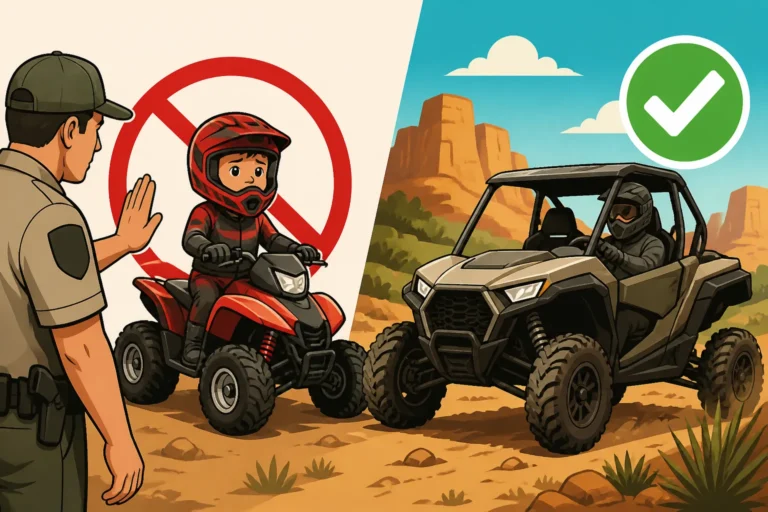
New Mexico is committed to promoting safe OHV operation, especially among its younger riders. While a standard driver's license isn't typically required for off-road use, minors—defined as anyone under 18 years of age—must meet a different set of criteria. For a minor to legally operate an OHV on public land in New Mexico, they are generally required to possess a New Mexico OHV safety permit. This permit is earned by completing an approved safety course, which instills crucial riding skills, hazard awareness, and knowledge of OHV-specific regulations.
It's vital to understand that this safety permit is distinct from a conventional driver's license. A minor might have a learner's permit or even a provisional driver's license for a car, but that doesn't exempt them from the OHV safety permit requirement for public land riding. Furthermore, even with a driver's license, minors are still subject to the same paved road rules as adults: if they ride an OHV on an "opted-in" paved road, they must have that valid driver's license in addition to their safety permit. For purely off-road excursions, however, the safety permit is the key for minors to ride legally and safely. [New Mexico OHV Safety Permit Requirements]
Non-Residents: Honoring Out-of-State Licenses
New Mexico extends a warm welcome to OHV enthusiasts visiting from other states and countries. When it comes to driver's license requirements for non-residents, the state generally practices reciprocity. This means that if you possess a valid driver's license from your home state, a U.S. territory, or even a foreign country, it will be recognized as sufficient for operating your OHV on New Mexico's "opted-in" paved public roads. You won't need to obtain a temporary New Mexico driver's license just for your visit.
This policy significantly simplifies the logistics for out-of-state riders who want to experience the Land of Enchantment's incredible riding opportunities. You can arrive with your existing license and, provided you meet all other requirements (like appropriate OHV registration/permit and insurance), you're good to go for those paved road connections. Always carry your physical license with you when riding, as law enforcement may request to see it. It's a courtesy and a legal expectation when you're operating any vehicle on public roads.
Equipment and Compliance: Beyond Just Your License
While possessing the correct driver's license is paramount for paved road use, it's just one part of the broader compliance picture. To truly ride legally and safely on New Mexico's roads, your OHV also needs to meet certain equipment standards.
Vehicle Equipment for Street Legal Use
For those instances where you’ll be operating your OHV on an "opted-in" paved public road, simply having a driver's license isn't enough. Your machine itself must also be equipped to safely share the road with other vehicles. These aren't necessarily the same exhaustive requirements as for a full-fledged street-legal car, but they are crucial for visibility and safe operation. Common equipment requirements often include functional headlights and taillights, a horn, at least one rearview mirror, and a muffler that keeps noise within legal limits.
Many riders find themselves needing to add aftermarket accessories to bring their stock OHVs up to these standards. For example, installing robust rearview mirrors, perhaps from a trusted brand like SuperATV, is essential for seeing traffic behind you. Adding turn signal kits, also available from reputable suppliers like SuperATV, allows you to clearly communicate your intentions to other drivers, which is critical for road safety. These aren't just legal niceties; they are fundamental safety features designed to prevent accidents. Always consult [New Mexico Equipment Rules for Road Use] to ensure your machine is fully compliant before venturing onto paved surfaces. Investing in quality parts, like those from SuperATV, helps ensure durability and proper function for peace of mind.
Avoiding Penalties: Why Compliance Matters
The state of New Mexico takes its OHV regulations seriously, and non-compliance, particularly concerning driver's license requirements for paved road use, can lead to real consequences. Operating an OHV on an "opted-in" paved public road without a valid driver's license is akin to driving any other motor vehicle without a license, and it can result in fines, potential impoundment of your vehicle, and even more severe legal ramifications if you're involved in an accident.
Beyond the immediate financial and legal penalties, ignoring these rules undermines the efforts to maintain and expand OHV access. Every time a rider is cited for non-compliance, it can fuel negative perceptions of the OHV community. By ensuring you have your driver's license (when required), your machine is properly registered and insured, and it's equipped with necessary safety accessories (which might include a sturdy roll cage or enhanced lighting from SuperATV for added peace of mind), you're not just protecting yourself. You're also acting as a responsible ambassador for the entire sport, helping to preserve and enhance future riding opportunities. Always research your route, know the rules, and ride prepared. [New Mexico Fines for an Unregistered OHV] can give you an idea of the financial stakes, but being an unlicensed driver on pavement could face even stiffer penalties.
Here's a quick summary of when a driver's license is generally needed for OHV operation in New Mexico:
| Riding Scenario | Driver's License Required? | Additional Requirements (General) |
|---|---|---|
| Private Land (with permission) | No | OHV Safety Permit for minors (if applicable) |
| Designated Public Off-Road Trails | No | Registration (if public land), OHV Safety Permit for minors |
| Crossing a State Highway (Perp.) | Yes | Registration, Insurance, Green Decal, OHV Equipment |
| Opted-In Paved County Roads | Yes | Registration, Insurance, Green Decal, OHV Equipment |
| Opted-In Paved City Streets | Yes | Registration, Insurance, Green Decal, OHV Equipment |
| Off-Road (Non-Resident) | No | Out-of-state registration (or NM permit), OHV Safety Permit for minors |
| Paved Road (Non-Resident) | Yes | Out-of-state registration (or NM permit), Insurance, OHV Equip. |
Disclaimer
This article is for general informational purposes only and does not constitute professional advice. Laws, prices and regulations vary by location and change over time. Consult a qualified professional for guidance on your specific situation.