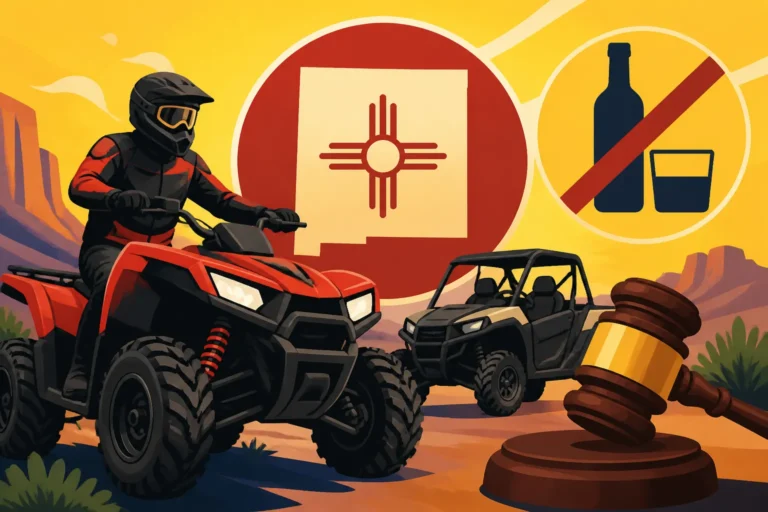
New Mexico Rules for a Machine on a Dirt County Road
It's incredibly frustrating when you just want to get out and explore the vast, beautiful landscapes of New Mexico on your ATV or UTV, but you're constantly second-guessing whether you're even allowed to be on that dirt road ahead. The rules can feel like a tangled mess, changing from one county line to the next, leaving you worried about fines instead of enjoying the ride. This guide is here to untangle that confusion, giving you a clear, comprehensive breakdown of everything you need to know about riding your machine on New Mexico's dirt county roads, so you can ride with confidence and peace of mind.
Understanding New Mexico's County Roads and OHV Access
Let's face it, New Mexico is a state defined by its wide-open spaces, and a huge part of that is its extensive network of county roads, many of them unpaved. These aren't just pathways; they're lifelines for rural communities, access points for ranchers, and often, the gateways to some of the best off-highway vehicle (OHV) riding areas. But just because a road is dirt doesn't automatically mean it's an open invitation for all OHVs. There's a method to the madness, a specific legal framework that dictates where and how you can ride.
The core of New Mexico's OHV road use laws stems from the idea that while OHVs are welcome recreationally, their integration with traditional vehicle traffic on public roads requires careful consideration for safety and order. This is where the distinction between "off-highway" and "on-highway" gets tricky, and county roads often exist in a fascinating legal gray area.
What Constitutes a County Road in New Mexico?
When we talk about a "county road" in New Mexico, we're generally referring to a public road that is maintained by the county government. These roads are distinct from state highways, city streets, or private roads. They're part of the county's infrastructure network, connecting towns, rural residences, and often leading to public lands like Bureau of Land Management (BLM) areas or National Forests. The key here is "public" and "county-maintained."
Many of these roads, especially in the more remote parts of the state, are unpaved. They can range from well-graded gravel roads to rugged, two-track dirt paths that feel more like trails than roads. It's easy to assume that because a road is dirt, it falls under a different set of rules than a paved road, and to some extent, that's true for OHVs. However, it's critical to remember that dirt county roads are still roads in the eyes of the law, and that means certain regulations apply regardless of the surface. They are not the same as riding a designated off-road trail on federal land.
How Counties Open Roads to OHVs
This is where it gets really interesting, and frankly, a bit confusing for many riders. In New Mexico, the state provides a framework, but it's often up to individual counties to decide whether they want to open their county roads for OHV use. This means what's permissible in Sierra County might be different from what's allowed in Eddy County, and vice-versa. [Why New Mexico Counties Open Only Their Own Streets] delves into this more deeply.
Counties typically "open" their roads to OHVs through a resolution or ordinance passed by their county commission. This isn't a blanket decision; some counties might open all their dirt roads, while others might designate specific routes, or even impose time-of-day restrictions. It’s not uncommon for a county to open most of its roads but keep a few specific ones, perhaps near residential areas or critical infrastructure, closed to OHV traffic. This local control is why it's absolutely essential to do your homework before you head out, especially if you're venturing into a new area. Relying on what "felt right" last time could lead to an unwelcome interaction with law enforcement.
It's also worth noting that this process is continually evolving. New resolutions can be passed, existing ones can be amended, and what was open last year might be closed this year. That's why I always recommend checking the county's official website or contacting their administrative office directly for the most current information. Don't just rely on outdated forum posts or hearsay, because the rules that govern [Sierra County's Open County Roads] might not be the same as [Eddy County Ordinance O-18-95].
Essential Requirements for Riding Dirt County Roads
So, you've identified a dirt county road that's open to OHVs in New Mexico. Great! But before you fire up your engine, there are a few non-negotiable requirements you need to meet. These aren't just suggestions; they're legal mandates designed to ensure safety and accountability on public thoroughfares. Ignoring them can lead to significant fines and a spoiled riding experience.
Many riders, especially those new to New Mexico or coming from states with different regulations, assume that if a road isn't paved, the rules are lax. This simply isn't the case for county roads. Think of it this way: while the surface might be dirt, you're still sharing that space with cars, trucks, and potentially even tractors or livestock. The state wants to make sure everyone is operating safely and responsibly.
Registration and Decal Requirements
First and foremost, your OHV must be properly registered with the New Mexico Motor Vehicle Division (MVD). This isn't just for paved road riding; it applies to all public land and designated public routes, including dirt county roads. Without current registration, you're looking at a potential citation. The MVD issues a biennial registration, so you'll typically renew it every two years. [Why New Mexico Renews Every Two Years] explains more about this cycle.
When you register your OHV, you'll receive a decal that must be prominently displayed on your machine. For dirt county roads, you'll generally need the yellow "off-highway only" decal. If the county road is truly "open" and you plan to connect to paved county roads or designated paved routes, then you might need the green "on and off-highway" decal, which signifies you've met additional requirements for paved road use, such as insurance. [New Mexico's Yellow Off-Highway Decal] and [New Mexico's Green On and Off-Highway Decal] provide crucial details on these.
Proper placement of this decal is also critical. For ATVs, it typically goes on the left-rear fender or body panel. For side-by-sides, it's usually on the left-rear quarter panel. Dirt bikes have their own specific placement on the fork leg. A misplaced or obscured decal can be just as problematic as no decal at all if an officer needs to verify your registration quickly. Make sure it's visible and clean!
Operator Licensing and Age Restrictions
To operate an OHV on a New Mexico dirt county road, the operator generally needs a valid driver's license. This is a common requirement for any vehicle operating on a public road, regardless of the surface. If you're old enough to drive a car, you're generally good to go from a licensing perspective. However, this gets a little more nuanced for younger riders.
For riders under 18, there are specific age restrictions and safety permit requirements. While a younger rider might be able to operate an OHV on private land or designated off-road trails without a driver's license, operating on a public county road is different. [New Mexico Rules for Riders Under 18] outlines these regulations in detail. Typically, a rider under 18 must have completed an approved OHV safety course and carry proof of their safety permit. There are also minimum age requirements for operating certain types of machines and for carrying passengers, especially for younger operators. For instance, a rider under 13 is generally prohibited from operating an OHV on public lands, which includes county roads.
It’s always a good idea to ensure every rider in your group understands and meets these age and licensing requirements, particularly when you’re riding on any public thoroughfare.
Required Equipment for Road Use
Even on a dirt county road, your OHV needs to be equipped with certain safety features, particularly if the county has officially "opened" its roads for OHV use. This moves beyond just the basic off-road equipment and into what's considered necessary for sharing the road with other vehicles.
- Headlights and Taillights: Your machine needs to have working headlights and taillights. These aren't just for night riding; they're essential for visibility, especially in dusty conditions or during dawn/dusk. The headlights need to illuminate objects at least 150 feet ahead, and the taillights must be visible from 200 feet away.
- Brakes: A properly functioning brake system is non-negotiable. You must be able to stop safely and effectively.
- Muffler and Spark Arrester: While sound limits are often more strictly enforced on paved roads, all OHVs on public land, including county roads, need an adequate muffler to keep noise within legal limits (typically 96 decibels). Additionally, a spark arrester is required on public lands (like BLM or Forest Service land) to prevent wildfires. Many county roads lead directly into or through these areas, so it's a good practice to always have one. [New Mexico Spark Arrester Requirement] goes into more detail.
- Mirrors: If the dirt county road is part of a designated "on-highway" route or leads directly to one, you may need at least one rearview mirror. This helps you monitor traffic behind you, a critical safety feature when sharing the road with faster vehicles. Many riders proactively add side mirrors, like those available from SuperATV, to their machines for enhanced visibility and safety, even if it's not strictly required on every single dirt county road.
- Helmet and Eye Protection: For all riders under 18, a helmet is mandatory when operating an OHV on public land, which includes dirt county roads. Eye protection (goggles or a face shield) is also required for all riders, regardless of age, when operating on public roads or highways. This protects against dust, debris, and insects, making your ride safer and more enjoyable. [New Mexico Helmet Law for ATV Riders] outlines these rules.
Meeting these equipment requirements isn't just about avoiding a ticket; it's about making your ride safer for yourself and everyone else using the road.
Navigating Open Dirt County Roads Responsibly
Once you've got your registration, permits, and equipment in order, and you're confident the county road you're eyeing is open for OHV use, the next step is to ride responsibly. This means adhering to traffic laws, exercising common sense, and being a good steward of the land. Remember, even though it's a dirt road, you're not in an exclusive off-road park.
Responsible riding on dirt county roads is crucial for several reasons. Firstly, it ensures your safety and the safety of others. Secondly, it helps maintain positive relations with local residents and other road users, which is vital for keeping these roads open to OHV access in the future. Irresponsible riding can quickly lead to public outcry and stricter regulations.
Rules of the Road and Traffic Laws
When you're on a dirt county road, you're expected to follow the same basic traffic laws as any other vehicle. This includes things like obeying posted speed limits (yes, even on dirt roads!), stopping at stop signs, yielding the right-of-way, and driving on the right side of the road. Don't assume that because it's a remote dirt road, traffic laws don't apply. They absolutely do.
One specific rule to remember, particularly if you need to cross a paved state highway to continue on another dirt county road, is the perpendicular crossing rule. New Mexico law requires OHVs to cross paved highways at a 90-degree angle, stopping completely before entering the roadway, and proceeding only when safe. This minimizes your time in the flow of traffic. [New Mexico's Perpendicular Crossing Rule] offers more details.
Dust can also be a major issue on dirt roads. Be mindful of how much dust you're kicking up, especially when approaching homes, livestock, or other vehicles. Slow down to reduce dust, and always maintain a safe following distance. Passing other vehicles in heavy dust is incredibly dangerous and should be avoided.
Interacting with Other Road Users and Wildlife
Dirt county roads are often shared by a variety of users. You might encounter cars, trucks, farm equipment, bicycles, pedestrians, horseback riders, and even livestock. Always be prepared to yield, slow down, and give them ample space. A friendly wave goes a long way in fostering good relationships. If you encounter horses, pull over, stop your engine, and let them pass to avoid spooking them.
Livestock are common in many rural areas. If you see cattle, sheep, or other animals on or near the road, slow down significantly and give them a wide berth. Close any gates you open behind you, even if you found them open; ranchers often leave gates open intentionally but rely on responsible users to close them. [New Mexico Rules for Opening a Gate] can help you understand the etiquette here.
Wildlife is another consideration. New Mexico is home to diverse animals, from deer and elk to smaller critters that can dart across the road unexpectedly. Be vigilant, especially at dawn and dusk, and be prepared to stop quickly to avoid collisions. These roads often serve as corridors for wildlife movement.
Respecting Private Property and Land Boundaries
Many dirt county roads run through or alongside private property. It's easy to get lost in the scenery and accidentally trespass, but this can lead to serious consequences. Always stay on the public road and respect private property boundaries. Look for fences, "No Trespassing" signs, or other indicators. If a road ends at a gate with "Private Property" signs, turn around.
Using GPS or a good paper map that clearly delineates public and private land is invaluable. Don't assume that a faint two-track leading off the county road is also public access. When in doubt, assume it's private and stay on the known public route. Understanding where public land ends and private land begins is crucial, especially when you are [Riding From a Campsite to a Trailhead].
Table: New Mexico OHV Road Use Comparison
| Feature | Dirt County Road (Open to OHVs) | Paved County Road (Green Decal Needed) | Designated OHV Trail (e.g., BLM/Forest) | Private Land (With Permission) |
|---|---|---|---|---|
| Registration | Required (Yellow or Green Decal) | Required (Green Decal) | Required (Yellow Decal) | Not required |
| Operator License | Required (Driver's License) | Required (Driver's License) | Safety Permit (Under 18); No License for Adults | Not required |
| Helmet (Under 18) | Mandatory | Mandatory | Mandatory | Recommended |
| Eye Protection (All Ages) | Mandatory | Mandatory | Recommended | Recommended |
| Headlights/Taillights | Required | Required | Recommended (esp. for visibility/night) | Recommended (esp. for visibility/night) |
| Mirrors | Recommended (potentially required if linking to paved) | Required | Not typically required | Not typically required |
| Spark Arrester | Highly Recommended (often required due to adjacent public land) | Not typically required | Mandatory | Recommended |
| Insurance | Not mandatory (unless connecting to paved roads, then liability required) | Mandatory (liability required) | Not mandatory | Not mandatory |
| Speed Limits | Apply (often posted or implied) | Apply (posted) | Designated limits or prudent speed | As landowner dictates |
| Traffic Laws | Apply | Apply | Not applicable | Not applicable |
| County Ordinance | Must be "Open" by County | Must be "Open" by County | N/A (Federal/State Rules Apply) | N/A |
Common Pitfalls and How to Avoid Them
Riding on New Mexico's dirt county roads can be an incredibly rewarding experience, offering access to stunning scenery and fantastic riding opportunities. However, there are common mistakes riders make that can turn a great day into a frustrating or even costly one. Being aware of these pitfalls and knowing how to avoid them is part of being a responsible and prepared OHV enthusiast.
It’s easy to get caught up in the adventure and overlook some of the nuances of the rules, especially when you're in a new area. But a little bit of foresight and preparation can save you a lot of headaches later on. We all want to spend our time riding, not dealing with legal issues or mechanical problems miles from anywhere.
Misinterpreting "Open" Roads and Signage
One of the biggest mistakes is assuming a dirt road is open to OHVs simply because it's unpaved or because you've seen others riding there. As we discussed, a county has to specifically open its roads via resolution. Just because a road is physically passable doesn't mean it's legally open for OHV use.
How to avoid it:
- Check County Ordinances: Before heading out, specifically look up the county's OHV ordinances. Many counties, like Sierra County, proudly list which roads are open.
- Look for Official Signage: While not always comprehensive, official signs can indicate "No OHV Access" or, conversely, welcome OHVs. Don't rely solely on the absence of a "No" sign; actively look for positive confirmation.
- Ask Locals (with caution): While locals can be a good source of information, always try to verify their claims with official sources. What one person considers "open" might be informal or outdated.
This diligence is essential, as the fine for [New Mexico Fines for an Unregistered OHV] or for riding where you shouldn't be can quickly ruin your day and lighten your wallet.
Lack of Preparedness for Remote Conditions
Dirt county roads often lead to incredibly remote areas. Running out of fuel, getting a flat tire, or experiencing a breakdown far from cell service is a serious concern. Many riders underestimate the distances, the roughness of the terrain, and the sheer isolation that New Mexico's backcountry can offer.
How to avoid it:
- Carry Essential Tools: A basic tool kit, tire repair kit, and a portable air compressor are non-negotiable. Many riders, like those who equip their machines with robust SuperATV components, also carry spare parts specific to their vehicle that are prone to wear or breakage.
- Fuel Management: Know your machine's fuel range and always carry extra fuel, especially if you're exploring unfamiliar territory. Distances between fuel stations can be vast in New Mexico.
- Navigation: Don't rely solely on your phone. Carry a physical map and compass, or a dedicated GPS device. Understanding how to use them can be a lifesaver when cell service disappears.
- Emergency Supplies: Pack plenty of water, snacks, a first-aid kit, and warm clothing, even if the day starts warm. Weather can change quickly, especially at higher elevations or during monsoon season.
- Communication Device: A satellite messenger or personal locator beacon (PLB) is a wise investment for truly remote adventures where cell service is non-existent.
Overlooking the "Street Legal" Nuances for Paved Sections
Some dirt county roads might momentarily connect to a short paved section before returning to dirt, or you might need to use a paved county road to get from one dirt section to another. This is where the green "on and off-highway" decal and associated requirements for "street legal" operation become critical. [Why New Mexico Wants Both Decals for Pavement] can clarify this.
How to avoid it:
- Plan Your Route: If your route involves any paved segments, even short ones, ensure your machine meets all paved road requirements: the green decal, mirrors, and crucially, proof of liability insurance. [New Mexico ATV Insurance Requirement] mandates a minimum level of financial responsibility for paved road use.
- Get the Green Decal: If there's any chance you'll touch pavement on an open county road, get the green decal. It saves a lot of hassle and potential fines.
- Understand the Limits: Even with a green decal, OHVs generally cannot ride on state highways (marked with a Zia symbol) or interstates, except for perpendicular crossings. Your ability to ride on paved county roads is based solely on that county's specific ordinance.
By being meticulous about your route planning and preparing for any eventuality, you can ensure a smooth and legal ride across New Mexico's diverse county road network. It’s all about informed preparation.
Riding Seasonality and Environmental Considerations
New Mexico's climate and diverse geography mean that "riding season" isn't a single, fixed period. What's perfect for riding in the southern desert in winter might be completely inaccessible or even dangerous in the high country during the same time of year. Understanding these seasonal variations and being environmentally conscious are crucial for safe and sustainable OHV recreation on county roads.
Responsible riders are not just mindful of laws and safety; they also consider their impact on the environment and respect the natural cycles of the land. Our access to these incredible places depends on all of us doing our part.
Seasonal Riding Challenges and Opportunities
- Summer (Monsoon Season): While summer offers warm weather, it also brings the monsoon season, particularly from July through September. Afternoon thunderstorms can quickly turn dry arroyos into raging torrents and make dirt roads slick, muddy, and even impassable. Flash floods are a real danger in washes and low-lying areas. [Monsoon Afternoons and Flash Floods] are no joke; always check the weather forecast and be prepared to turn back if conditions deteriorate. High country roads, however, might be at their prime in summer, offering a cool escape from the desert heat.
- Autumn: This is often considered prime riding season, especially in the northern parts of the state where the aspens turn brilliant gold. Temperatures are mild, and dust is often at a minimum after the monsoons. County roads leading into national forests or mountains offer spectacular views.
- Winter: Riding in the southern deserts can be fantastic in winter, with cool, crisp air. However, higher elevation county roads, especially those in national forests like the Carson National Forest, often close for the winter due to snow. [Forest Roads That Close From December Onward] can become completely snow-packed and impassable until late spring. Always check forest service or county road conditions before you go.
- Spring: As the snow melts, many higher elevation roads reopen. However, melting snow can lead to very muddy, rutted conditions that can damage roads and machines. Spring can also bring high winds and dust in the desert.
Minimizing Environmental Impact
Even on designated county roads, minimizing your environmental impact is paramount. These roads pass through sensitive ecosystems, and our actions can have lasting effects.
- Stay on Designated Routes: Never venture off the established county road onto undesignated tracks. This prevents erosion, protects fragile vegetation, and avoids disturbing wildlife habitats. Even if you see what looks like an old track, if it's not part of the official county road or a marked trail, don't ride it.
- "Tread Lightly!" Principles: Embrace the "Tread Lightly!" ethic. This includes:
- Travel and recreate with minimum impact: Don't spin your tires unnecessarily, especially on muddy roads.
- Respect the rights of others: Be courteous to all users, as mentioned above.
- Educate yourself: Know the rules and regulations for the area you're visiting.
- Avoid sensitive areas: Stay out of wetlands, private property, and designated wilderness areas.
- Do your part: Pack out all trash, and leave the area cleaner than you found it.
- Dust Control: Excessive dust not only creates a hazard for other users but also impacts air quality and can stress vegetation. Slowing down, especially when passing others or near residences, is the best way to manage dust.
- Fire Prevention: Always be mindful of fire danger, especially in dry conditions. Ensure your OHV has a working spark arrester and avoid parking on dry grass where hot exhaust pipes could ignite a fire. Adhere to any fire restrictions that may be in place, as these can close entire areas, including county roads. [New Mexico Fire Restrictions That Close Trails] are serious and must be obeyed.
By being mindful of the seasons and our environmental responsibility, we ensure that New Mexico's stunning landscapes remain accessible and beautiful for generations of riders to come. Enjoy the ride, and ride smart!
Disclaimer
This article is for general informational purposes only and does not constitute professional advice. Laws, prices and regulations vary by location and change over time. Consult a qualified professional for guidance on your specific situation.