Bringing a Quad From Colorado
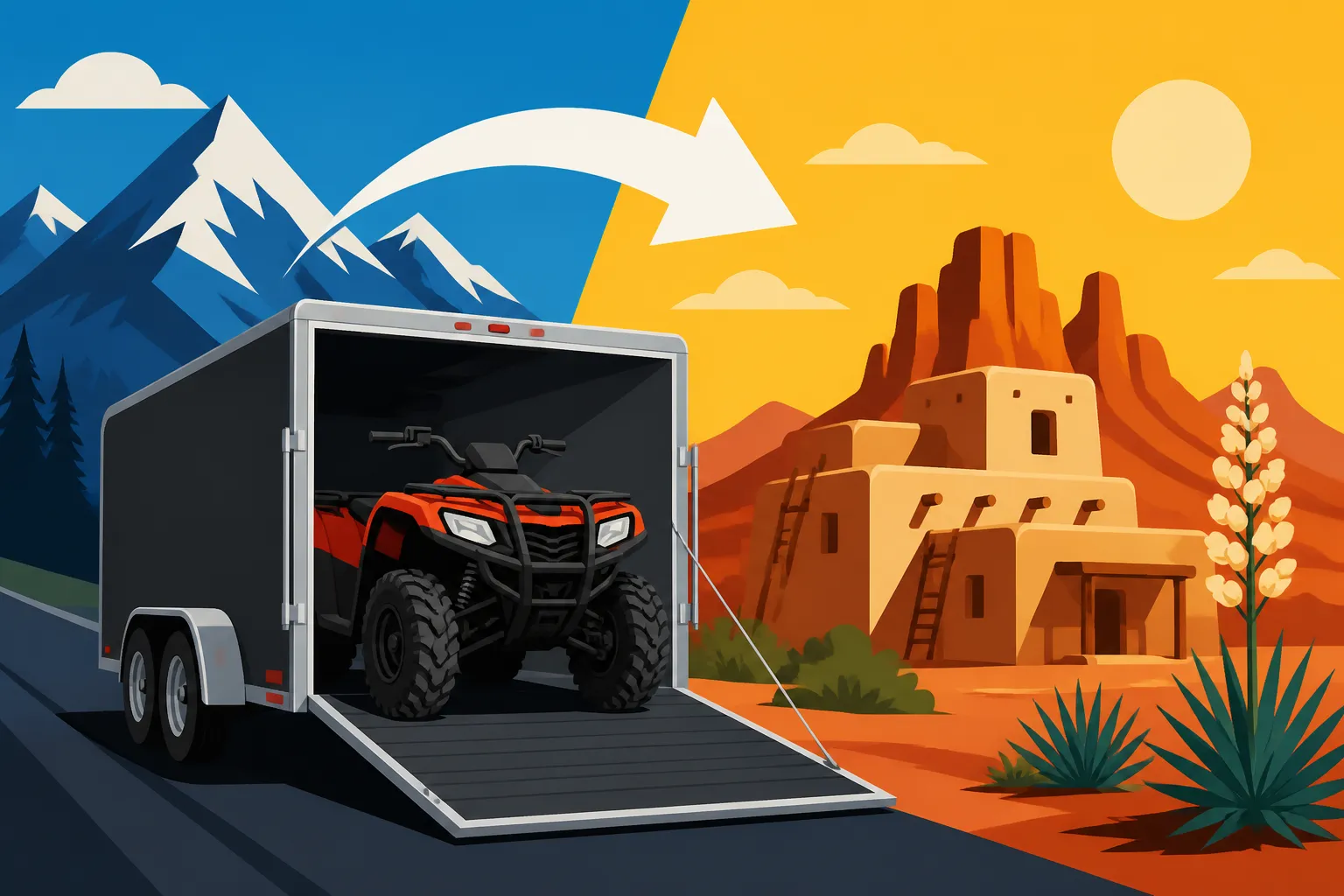
So, you've made the move to our beautiful Land of Enchantment, or maybe you just snagged a fantastic deal on a quad or UTV from a private seller up in Colorado, and now you're scratching your head wondering how to legally get that machine out on New Mexico's incredible trails. It can feel like a bureaucratic maze trying to figure out which pieces of paper you need, what office to visit, and what fees you'll be staring down. This guide is here to untangle that process, walking you through everything you need to know to bring your Colorado-acquired off-highway vehicle (OHV) into compliance with New Mexico's regulations, from titles to decals.
Why New Mexico Cares About Your Colorado Quad
Moving states or buying an OHV from out-of-state can definitely add a layer of complexity to what should be a straightforward process: getting out and riding! But New Mexico has its own set of rules, and understanding why they're in place can help make the registration journey a little smoother. It's not just about collecting fees; it's about ensuring public safety, funding trail maintenance, and maintaining clear ownership records.
The Shift from Colorado's System to New Mexico's
One of the first things you'll notice when bringing an OHV from Colorado to New Mexico is the difference in how each state approaches registration. Colorado, for example, typically issues registration stickers that are renewed annually through Colorado Parks and Wildlife. While they have titling for certain OHVs, the emphasis for legal operation often leans heavily on that annual sticker. New Mexico, however, operates quite differently. We consider OHVs much like other motor vehicles in terms of title and registration, even if they aren't driven on paved roads. This means your Colorado quad, which might have simply had a sticker, will now need a proper title and a biennial registration managed through the state's Motor Vehicle Division (MVD). This shift requires a change in mindset from just "getting a sticker" to full vehicle documentation.
This focus on formal titling and registration in New Mexico ensures that there's a clear chain of ownership, which is vital for preventing theft and for recovering stolen machines. It also means that when you eventually decide to sell your quad, the process will be much more robust and transparent for the next owner, whether they're a New Mexico resident or from another state.
How New Mexico's MVD Handles OHVs
In many states, off-highway vehicle registration might fall under the purview of a state's parks and wildlife department, or even remain unregistered if only used on private land. New Mexico, however, takes a different approach for its residents. For most resident OHV owners, the Motor Vehicle Division (MVD) is your primary point of contact for registering and titling your quad. This is a crucial distinction that often surprises new residents or those accustomed to other states' systems. The MVD treats OHVs similarly to cars and trucks in terms of needing a formal title and registration, even though the decals you receive are specific to off-highway use.
This centralization at the MVD streamlines the process somewhat, as it means you typically only need to deal with one state agency for both titling and registration. The MVD's role also underscores New Mexico's commitment to having a comprehensive database of OHV ownership within the state. When you visit the MVD, you'll be navigating a system designed for vehicle transactions, which means having all your ducks in a row – particularly your ownership documents from Colorado – is paramount. Understanding [Why MVD Registers New Mexico OHVs] can help clarify this critical function.
Gathering Your Colorado Documents for New Mexico
When you're bringing a quad from Colorado, the paperwork is your best friend. New Mexico's MVD needs to establish a clear chain of ownership and ensure that the vehicle you're trying to register isn't stolen or subject to undisclosed liens. This means digging up your old Colorado documents will be the first, and arguably most important, step in the process. Without the right original documents, you'll find yourself stuck in a loop of trying to acquire duplicates or prove ownership, which can significantly delay your ability to hit the trails.
Your Colorado Title: The Star of the Show
The single most important document you can bring from Colorado is the official Certificate of Title for your quad or UTV. New Mexico MVD absolutely needs this to establish proper ownership and to issue a new New Mexico title in your name. Think of the title as the machine's birth certificate and deed rolled into one. It shows who legally owns the vehicle and if there are any liens (like a loan) against it. If you've financed your quad in Colorado, the title might be held by your lender, which adds an extra step to the process as you'll need to coordinate with them to get it released for registration purposes in New Mexico.
Without this original title, you're going to face significant hurdles. MVD staff cannot simply take your word for it that you own the machine. If you've misplaced your Colorado title, your first step will be to contact the Colorado Division of Motor Vehicles (DMV) to apply for a duplicate title. This can take time, so it's best to address it before you even think about stepping foot in a New Mexico MVD office. Understanding [Do You Need a Title for an ATV in New Mexico?] is crucial here, as it lays out the baseline expectation for all OHVs in our state.
The Importance of a Solid Bill of Sale
Even if you have a perfectly clear Colorado title in hand, a comprehensive bill of sale is still a highly recommended, and often essential, document when you bring your quad from Colorado, especially if you purchased it in a private sale. While the title establishes legal ownership, the bill of sale provides crucial details about the transaction itself: who bought it, who sold it, the date of sale, the purchase price, and a detailed description of the OHV, including its Vehicle Identification Number (VIN). This document can clear up any ambiguities about the transfer of ownership from the previous Colorado owner to you, and it helps the New Mexico MVD determine sales tax owed, if any.
For private sales, a robust bill of sale protects both the buyer and the seller. It confirms that the OHV was sold "as-is" or with any agreed-upon conditions, and it serves as proof that money changed hands for the vehicle. If you're looking for a reliable template for a bill of sale, especially one that can stand up to MVD scrutiny, services like LawDepot offer easy-to-use forms that ensure all necessary legal details are included. Having a well-documented [A New Mexico Bill of Sale for an ATV] can save you headaches down the road.
Proving You're a New Mexico Resident Now
Since you're moving your quad to New Mexico, you'll need to prove that you are, in fact, a resident of our state to register it here. The MVD isn't just handing out registrations to anyone with an out-of-state quad; they need to establish a legal nexus to New Mexico. This usually means presenting documents that confirm your physical address within the state. Typical acceptable proofs include a valid New Mexico driver's license or identification card, a utility bill in your name for your New Mexico address, a rental agreement or mortgage statement, or even a bank statement showing your local address.
Gathering these documents is as important as having your OHV's title. Without them, the MVD won't be able to process your application, regardless of how perfect your Colorado title is. It's all part of establishing you as a legitimate resident who intends to operate your OHV within our state's regulations and contribute to our local economy through registration fees. Ensuring you have these personal proofs ready will help you smoothly transition your residency status for your OHV. For a comprehensive list of what might be needed, checking the MVD website or speaking with an agent about [Registering After Moving to New Mexico] is always a good idea.
Navigating the New Mexico Registration Process
Once you've meticulously gathered all your documents from Colorado and established your New Mexico residency, the next phase is to actually go through the registration process. This isn't just a simple online form; it typically involves a visit to a local MVD office and some specific steps to ensure your Colorado quad officially becomes a New Mexico OHV. Being prepared for each step will help make your MVD experience as efficient as possible.
Your Visit to a New Mexico MVD Office
For residents bringing an OHV from another state like Colorado, an in-person visit to a New Mexico Motor Vehicle Division (MVD) office is almost always required. This isn't a process you can typically complete entirely online, especially for a first-time out-of-state registration. When you go, be prepared with all the documents we've discussed: your original Colorado Certificate of Title, a comprehensive bill of sale (even if not strictly required, it's excellent to have), your New Mexico driver's license or ID, and proof of your New Mexico residency. You might also need proof of insurance if you plan on getting a "green" decal for paved road use.
Once at the MVD, you'll fill out the necessary application forms, which will include details about yourself and your OHV. An MVD agent will review all your paperwork, verify the VIN, and process your application. Patience is key, as these offices can sometimes be busy. Going during off-peak hours, if possible, can help. Having all your [New Mexico OHV Registration Paperwork] organized in a folder will greatly assist the MVD staff and speed up your transaction.
Decals, Fees, and the Two-Year Cycle
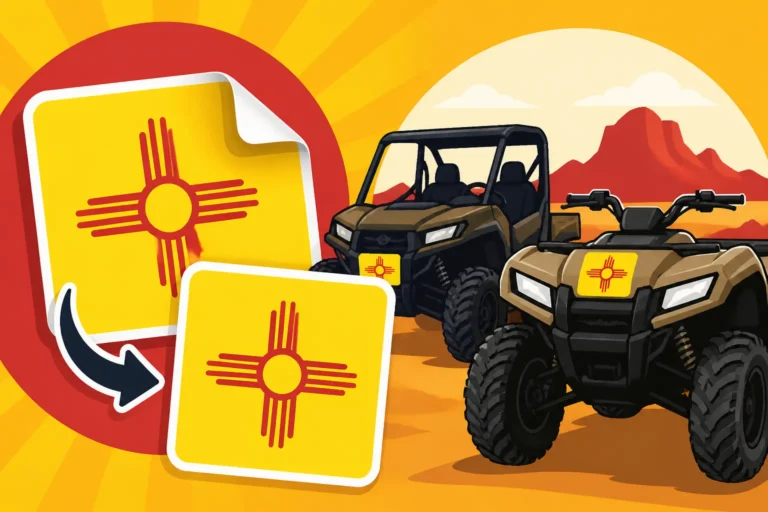
After your paperwork is approved at the MVD, you'll pay the applicable fees. These typically include a title fee and the registration fee. Unlike annual renewals in some states, New Mexico OHV registrations are typically valid for a two-year period, which is a nice perk for many riders as it means less frequent trips to the MVD. When you successfully complete the registration, you'll receive your New Mexico OHV decals. These aren't just decorative; they are your proof of legal registration and must be properly affixed to your machine.
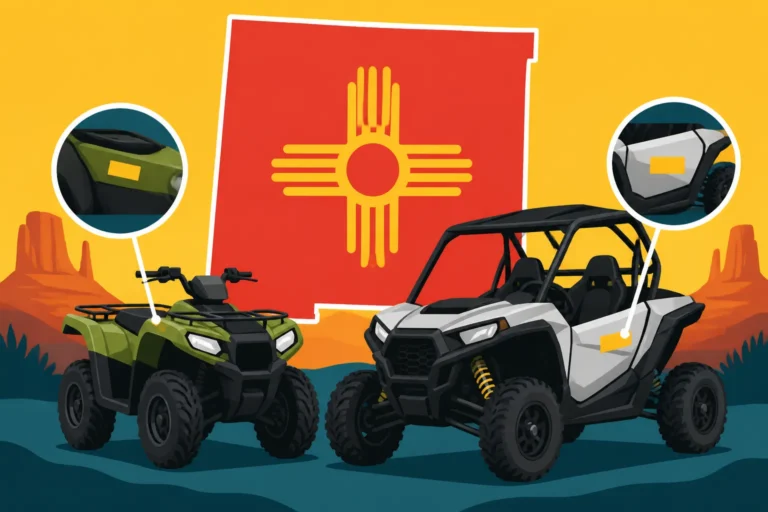
New Mexico has a two-decal system that often causes a bit of confusion: the yellow decal and the green decal. The yellow decal is for strictly off-highway use. The green decal allows you to operate your OHV on designated paved public roads and highways (where permitted by local ordinance), in addition to off-highway. If you want the flexibility to ride on approved paved roads, you'll need to ensure you obtain the green decal, which may also require proof of financial responsibility (insurance). Each decal type has its own specific placement rules depending on your machine type. Understanding [New Mexico OHV Registration Cost] and how it covers this two-year period, as well as the distinction between [New Mexico's Yellow Off-Highway Decal] and [New Mexico's Green On and Off-Highway Decal], is crucial for compliance.
Understanding VIN Verification for Out-of-State Machines
One critical step when bringing a quad from Colorado to register in New Mexico is the Vehicle Identification Number (VIN) verification. This isn't just a formality; it's a vital security measure. The MVD needs to ensure that the VIN on your Colorado title and documents perfectly matches the VIN stamped on your actual OHV. This helps prevent fraud, the registration of stolen vehicles, and ensures that the machine's identity is correctly recorded in New Mexico's system.
Sometimes, an MVD agent might step outside to physically inspect your OHV's VIN. In other cases, particularly if the VIN is difficult to access or if the machine isn't at the MVD office, you might be required to get a VIN inspection done by a law enforcement officer or an authorized MVD agent at a different location. It's always a good idea to know where your VIN is located on your quad or UTV before heading to the MVD, typically stamped on the frame. This step, while sometimes inconvenient, is non-negotiable for out-of-state vehicles and is part of upholding [New Mexico OHV VIN Requirements].
Troubleshooting Common Hurdles with Out-of-State Quads
Even with the best intentions and preparations, bringing an OHV from another state can sometimes throw a few curveballs. Colorado's titling and registration practices might differ slightly from New Mexico's, leading to unexpected issues. Knowing how to anticipate and address these common hurdles can save you a lot of time and frustration, getting you closer to enjoying New Mexico's trails.
When Your Colorado Title is Missing or Flawed
Let's face it, life happens. Titles get misplaced during a move, accidentally thrown out, or sometimes a seller in Colorado simply didn't provide one, especially for older machines. If you show up at the New Mexico MVD without an original Colorado Certificate of Title, you're going to hit a roadblock. The MVD cannot issue you a new New Mexico title without establishing clear prior ownership. Your first course of action will be to contact the Colorado Division of Motor Vehicles (DMV) to apply for a duplicate title. This process often requires you, as the last registered owner, to fill out specific forms and pay a fee. It can take several weeks for a duplicate to be mailed, so it's best to handle this proactively.
If you bought the quad from a private seller in Colorado and they never gave you a title, or if they themselves misplaced it, you might be in for a more complex situation. New Mexico MVD does have procedures for titling vehicles without a traditional title, often involving a "bonded title" process where you put up a surety bond to protect against future claims of ownership. This is a more involved and sometimes costly route. It's a tough lesson, but always ensure you receive the original title when purchasing an OHV, as outlined in guides like [Buying a Quad With Nothing but a Key].
Dealing with Liens on Your Imported Quad
Another common issue arises when there's a lien recorded on your Colorado title. A lien means that a bank or financial institution still has a legal claim to your quad because you have an outstanding loan on it. If the Colorado title shows a lien, the New Mexico MVD will not be able to issue a clean New Mexico title in your name until that lien is satisfied and officially released. This often means you'll need to contact your lender directly. They will typically have a process to release the lien once the loan is paid off, or they might be able to provide a lien release letter that the New Mexico MVD can accept.
It's absolutely critical to address any liens before attempting to register your quad in New Mexico. Trying to circumvent this step will only lead to delays and potential legal issues down the line. If you're bringing a financed machine across state lines, coordinating with your lender is a non-negotiable part of the process. For more on this, you might find information on [Titling a Machine With a Lien in New Mexico] helpful.
Private Sales and Ensuring Proper Documentation
When you've purchased your quad from a private seller in Colorado, the burden of ensuring proper documentation often falls entirely on you. Unlike a dealership that handles all the paperwork, a private sale requires vigilance. Beyond the original title, a thorough bill of sale is your best defense against future disputes. This document should clearly state the names and addresses of both buyer and seller, the date of sale, the purchase price, and a detailed description of the OHV, including the VIN. Both parties should sign and date it, and it's always a good idea to have it notarized, although not always legally required in New Mexico, it adds an extra layer of authenticity.
If you find yourself with an OHV from a private sale where the seller "misplaced" the title, or perhaps never had one for an older machine, a detailed bill of sale can become your primary proof of ownership. While it doesn't replace a title, it's a crucial piece of the puzzle if you need to pursue a bonded title or other MVD processes for untitled vehicles. Websites like LawDepot are excellent resources for creating legally sound bills of sale quickly and easily, ensuring you don't miss any critical information that MVD might need. This proactive approach can prevent situations described in [Buying From a Seller Who Misplaced the Title].
Here's a quick overview of document requirements:
| Scenario | Required from Colorado | Crucial for New Mexico MVD | Potential Hurdles | Best Practice |
|---|---|---|---|---|
| Purchased with Clear Title | Original Colorado Title | Proof of NM Residency, Bill of Sale, NM ID | Sales tax calculation, VIN verification | Have notarized Bill of Sale and NM residency documents ready. |
| Purchased with Lien on Title | Original Colorado Title with Lien | Lien Release Letter, Proof of NM Residency, NM ID | Lien must be released before NM title issued. | Contact lender before MVD visit for release letter. |
| Missing Colorado Title | – | Duplicate Colorado Title (first) | Significant delays, potential bonded title process. | Apply for duplicate Colorado title immediately. Consider LawDepot for a robust Bill of Sale in interim. |
| Private Sale (Older, No Title Issued) | – | Comprehensive Bill of Sale, Proof of NM Residency, NM ID | MVD may require bonded title. | Create a detailed Bill of Sale (e.g., via LawDepot), seek MVD guidance early. |
Disclaimer
This article is for general informational purposes only and does not constitute professional advice. Laws, prices and regulations vary by location and change over time. Consult a qualified professional for guidance on your specific situation.