Bringing a Quad From Texas
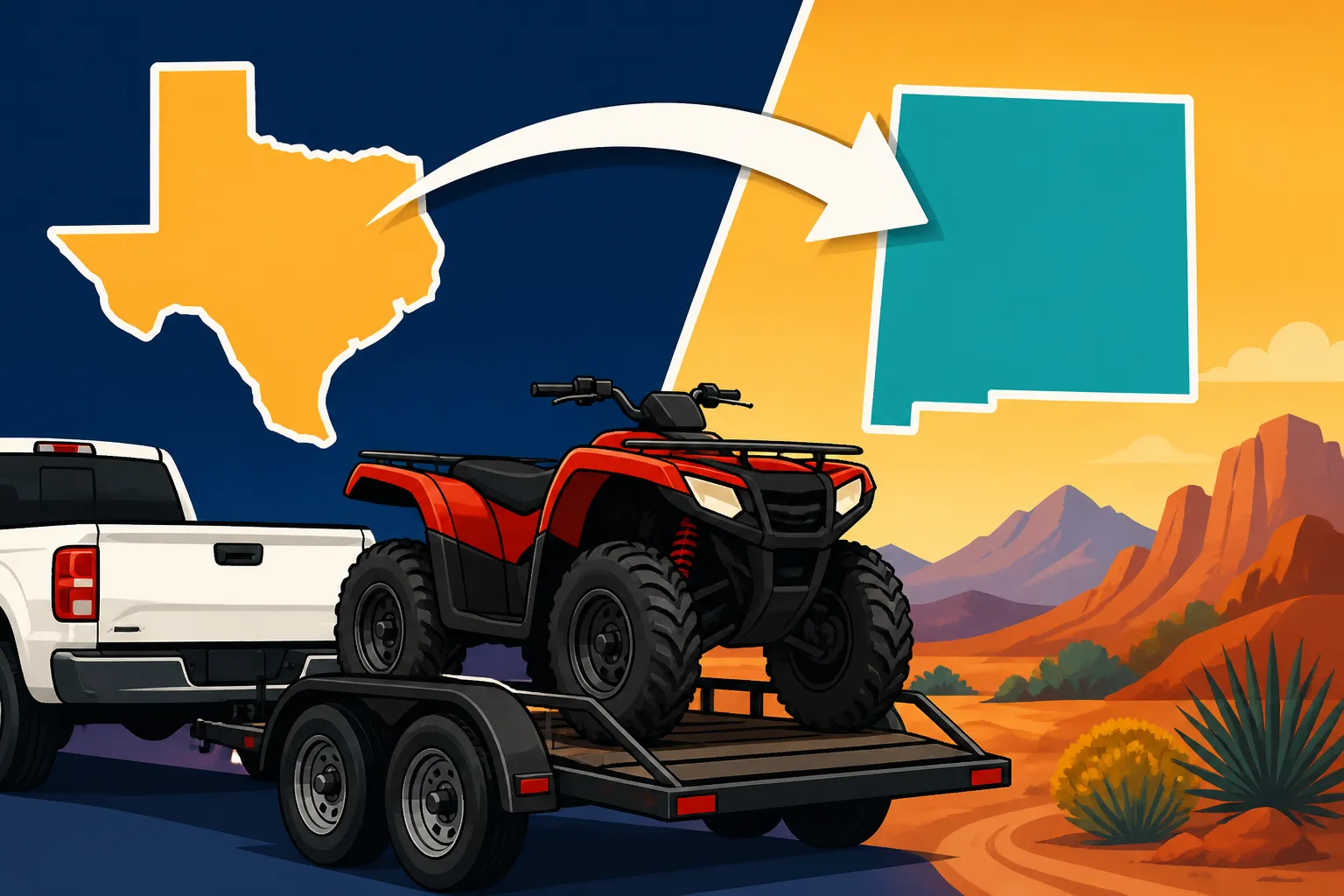
So, you've found your dream quad or UTV in the Lone Star State, or maybe you're relocating to our beautiful Land of Enchantment and bringing your trusty machine with you. That's fantastic! There's nothing quite like exploring New Mexico's diverse landscapes on an off-highway vehicle. But before you hit our trails, you might be scratching your head about what exactly needs to happen to get that Texas-born machine legally registered and ready for adventure here in New Mexico. It can feel like a maze of paperwork and rules, especially when states have different approaches to OHV registration and titling. This guide is designed to cut through that confusion, giving you a clear path to bring your quad or UTV from Texas and register it right here in New Mexico.
Understanding New Mexico's OHV Approach for Out-of-State Machines
Bringing an off-highway vehicle (OHV) across state lines, especially from a state like Texas that has a slightly different system, can be a bit of a head-scratcher. You might assume your Texas registration or lack of a title will just carry over, but New Mexico has its own set of expectations that you'll need to meet. It's not about making things difficult, but about ensuring all machines on public lands are accounted for and that proper ownership is established. This helps with everything from trail maintenance funding to deterring theft.
Titling Differences Between Texas and New Mexico
One of the most significant areas of confusion often stems from titling. In Texas, for instance, older ATVs or off-road motorcycles might not even have a title. It's not always a requirement for every machine, especially if it was purchased many years ago or falls below a certain engine size or value. For a Texas resident, this might not be an issue at all. However, New Mexico generally requires a title for all OHVs, regardless of age or engine size, if you intend to register them for use on public land. This can be a major hurdle if your Texas quad has only ever had a bill of sale or simply a registration sticker.
If you arrive at the New Mexico Motor Vehicle Division (MVD) without a title for your Texas machine, you'll likely be asked to prove ownership in another way or go through a process to establish a title here. This often means providing multiple forms of documentation, like a notarized bill of sale, previous registration records from Texas, or even an affidavit of ownership. It's a bureaucratic dance, but it's essential for New Mexico to recognize you as the legal owner. Don't be surprised if the MVD agent looks at your Texas paperwork and politely asks for a New Mexico title – it's standard operating procedure. For a deeper dive, check out our guide on [Titling an Off-Highway Vehicle in New Mexico].
New Mexico's Registration Mandate for Public Land Use
Another critical difference is New Mexico's steadfast requirement for all OHVs to be registered if they are used on public lands. This isn't just a suggestion; it's the law. Whether you're planning to ride the dusty trails of Red Sands, explore the forests near Red River, or cruise the BLM roads near Truth or Consequences, your machine needs to display a valid New Mexico decal. Your Texas registration, while perfectly valid in Texas, doesn't cut it here for long-term use, especially if you're a New Mexico resident.
Even if your Texas machine has a current registration, New Mexico wants its own stamp of approval. This is largely because the fees collected from OHV registrations in New Mexico directly support trail maintenance, safety programs, and law enforcement efforts in our state. So, while you might feel like you're paying twice, the New Mexico registration is an investment in the trails and riding opportunities you'll enjoy here. Getting familiar with [Registering an OHV in New Mexico] will definitely help smooth this transition.
Navigating the New Mexico MVD Process with Your Texas Machine
Once you understand the basic requirements, the actual process of registering your Texas quad or UTV in New Mexico starts with a visit to your local MVD office. It can feel a bit daunting, like walking into a labyrinth of forms and regulations, but going prepared makes all the difference. Remember, the MVD staff are there to help, but they need you to have your ducks in a row.
Gathering Your Texas Paperwork
Before you even step foot in an MVD office, you'll need to pull together all the documentation related to your Texas machine. This is where most of the critical groundwork happens.
- Texas Title (if applicable): If your quad or UTV has a Texas title, this is your golden ticket. Make sure it's signed over correctly to you by the previous owner. If the title is still in the previous owner's name and you haven't transferred it yet, you'll need to complete that step, possibly even getting a new Texas title in your name first, or at least ensuring the assignment of title is properly filled out.
- Bill of Sale: Even if you have a title, a detailed bill of sale is incredibly helpful, especially when coming from out of state. It should clearly state the buyer's and seller's names and addresses, the vehicle's make, model, year, and most importantly, the Vehicle Identification Number (VIN), along with the purchase price and date. Sometimes, if you bought your quad from a friend or a private party in Texas, you might find yourself without a formal bill of sale that New Mexico MVD prefers to see for machines coming from out of state. This is where a resource like LawDepot can be incredibly helpful. You can generate a custom, state-specific bill of sale form that includes all the necessary details to satisfy New Mexico's requirements, ensuring you have clear proof of transfer. This is especially true if your machine didn't come with a title. For more on this, check out [A New Mexico Bill of Sale for an ATV].
- Previous Texas Registration (if any): While not a substitute for a New Mexico registration, having a copy of your previous Texas registration can help prove continuous ownership and use.
- Proof of New Mexico Residency: You'll need documents like a New Mexico driver's license, utility bills, or a lease agreement showing your current New Mexico address.
Having these documents neatly organized will save you a lot of back-and-forth and potential headaches at the MVD counter. It helps the MVD agent understand the chain of ownership and ensure everything is legitimate for your [New Mexico's First OHV Registration].
The Inspection and VIN Verification
New Mexico MVD, like many states, requires a VIN inspection for any vehicle being registered from out of state. This isn't a mechanical inspection; it's purely to verify that the VIN on your paperwork matches the VIN on the machine itself and that it hasn't been tampered with. This is a crucial step to prevent stolen vehicles from being registered in New Mexico.
You'll typically need to bring your quad or UTV to an MVD office, or in some cases, an authorized law enforcement officer can perform the inspection. They'll physically check the VIN plate or sticker on your machine against your title or bill of sale. Make sure the VIN is clean, easily accessible, and readable before you go. This inspection is a standard part of the process for [Registering an Out-of-State Machine in New Mexico] and helps the MVD confirm the machine's identity.
Completing the New Mexico Application
Once you have your paperwork in order and your VIN verified, you'll fill out the official New Mexico OHV registration application. This form will ask for all the details of your machine, your personal information, and confirm your New Mexico residency.
You'll then pay the applicable registration fees. New Mexico OHV registrations are typically biennial (every two years). The cost can vary, but generally, there's a set fee for the initial registration. These fees are vital for funding the state's OHV programs. While I can't give you exact numbers, be prepared for a fee that contributes to the trails and safety measures. You can learn more about this in [New Mexico OHV Registration Cost].
Here’s a simplified breakdown of the paperwork you'll likely need:
| Document Type | Purpose | Texas Origin Specifics |
|---|---|---|
| Proof of Ownership | Establishes you as the legal owner. | Texas Title: Preferred. Must be properly assigned/signed. No Texas Title? You'll need a robust, notarized Bill of Sale from the seller. Consider using a service like LawDepot to generate a legally sound bill of sale if the original is missing or inadequate. Previous Texas registrations might help as supporting evidence. |
| Bill of Sale | Details the transaction, price, and parties involved. | Crucial if no Texas title exists. Even with a title, a detailed bill of sale is often requested for out-of-state purchases. Ensure it includes VIN, make, model, year, seller/buyer info, and date. |
| Proof of Residency | Confirms you live in New Mexico. | Valid New Mexico driver's license, state ID, utility bill, or lease agreement. |
| Photo ID | Verifies your identity. | Your current driver's license or state-issued ID. |
| VIN Verification | Ensures the vehicle is legitimate and matches paperwork. | Performed by MVD or authorized law enforcement. You must bring the physical machine or arrange for an inspection. |
| Application Form | Official request for New Mexico OHV registration. | Filled out at the MVD office. |
Remember, gathering [New Mexico OHV Registration Paperwork] upfront will make your MVD visit much smoother and prevent multiple trips.
Beyond Registration: Decals, Plates, and Riding Rules
Getting your Texas quad or UTV officially registered in New Mexico is a huge step, but it's not the only thing you need to think about. New Mexico has a specific decal system and rules for street-legal conversion that might be different from what you're used to in Texas. Understanding these will ensure you're riding legally and safely from day one.
Understanding New Mexico's Decal System
New Mexico uses a distinctive two-decal system for OHVs, which can be a bit confusing if you're not familiar with it.
- Yellow Decal (Off-Highway Use Only): This is the standard decal for most OHVs. If you only plan to ride on designated off-road trails, forest roads, BLM land, or other areas specifically open to OHVs, the yellow decal is what you need. It signifies your machine is registered for off-highway recreation.
- Green Decal (On-Highway and Off-Highway Use): If you intend to ride your OHV on paved public roads and highways (where allowed by local ordinance or specific state law), you'll need the green decal. This essentially makes your OHV "street legal" in a limited capacity, allowing it to traverse certain paved roads to access trails or get through towns like Red River. To qualify for the green decal, your machine must meet additional equipment requirements, such as headlights, taillights, mirrors, and proof of liability insurance.
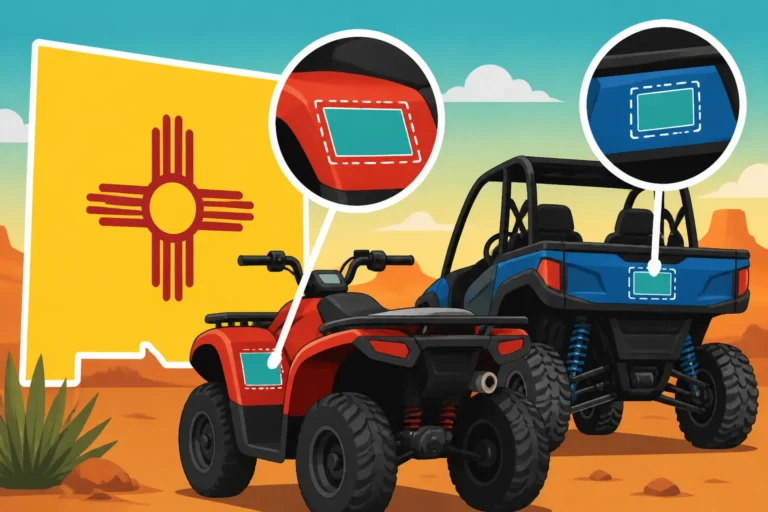
Many Texas riders might just be used to one type of off-road sticker. Here, you need to decide how you plan to use your machine to get the correct decal. Most riders start with the yellow decal and can always upgrade to the green later if their riding needs change. You can read more in detail about [New Mexico's Yellow Off-Highway Decal] and [New Mexico's Green On and Off-Highway Decal]. Correct placement is also key; make sure you understand the [New Mexico OHV Decal Placement Rules] for your specific machine type.
Insurance and Other Riding Essentials
While New Mexico doesn't generally require liability insurance for off-highway use on public land, it becomes absolutely mandatory if you opt for the green decal and plan to ride on paved public roads. This is a critical distinction and often different from how other states might handle OHV insurance. If you plan to travel on any public asphalt, even just to cross a road, you need to be insured.
Beyond insurance, consider other safety essentials:
- Helmets: Riders under 18 are required to wear a helmet in New Mexico on public land. It's always a good idea for riders of all ages, no matter how short the ride.
- Eye Protection: Essential for all riders to protect against dust, debris, and glare.
- Spark Arrestor: All OHVs operating on public land must be equipped with a U.S. Forest Service approved spark arrestor to prevent wildfires.
- Sound Limits: New Mexico also has sound limits for OHVs, generally 96 decibels.
Ensuring your machine is registered correctly and you're aware of New Mexico's specific riding regulations is the best way to enjoy our incredible outdoor spaces responsibly. Being prepared with [New Mexico Registration and Insurance Proof] will give you peace of mind on the trails. Welcome to New Mexico, and happy trails!
Disclaimer
This article is for general informational purposes only and does not constitute professional advice. Laws, prices and regulations vary by location and change over time. Consult a qualified professional for guidance on your specific situation.