New Mexico OHV Plate Versus Sticker
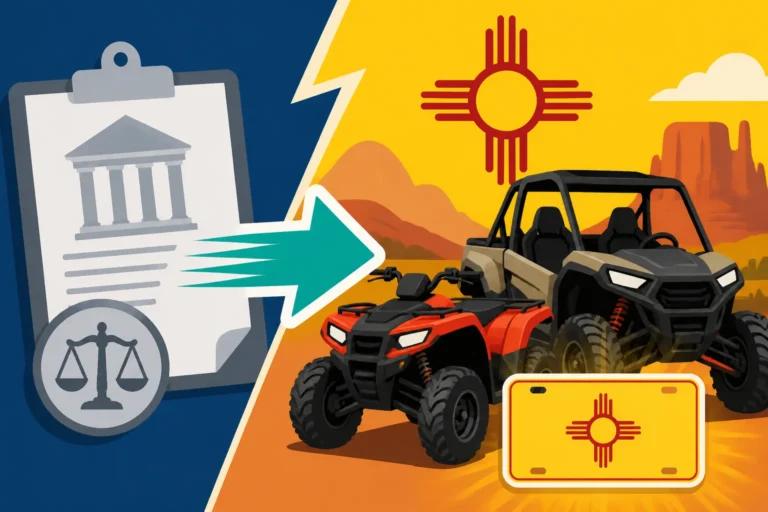
It’s easy to feel lost in the shuffle when New Mexico updates its rules for off-highway vehicles. Many riders are understandably confused about the difference between an OHV plate and a sticker, especially with past changes and new requirements. This guide will clarify the distinct purposes of the yellow off-highway decal, the green decal, and the specialized paved road plate, helping you understand what you need to ride legally in the Land of Enchantment.
The Evolution of OHV Identification in New Mexico
New Mexico's system for identifying off-highway vehicles (OHVs) has seen its share of changes, and it's completely understandable if you're trying to keep up. What was once a relatively simple sticker system for paved road access has evolved, leading to some natural confusion among even the most seasoned riders. Let's peel back the layers and look at how we got to where we are today.
Remembering the Paved Road Sticker
For a good while, if you wanted to take your ATV or UTV on a paved county or city road in New Mexico, you'd apply for a specific "paved road sticker" from the Department of Game and Fish. This sticker was distinct from your standard off-highway registration decal, and it signified that your machine was authorized for limited on-road travel in areas where local ordinances allowed it. It was a visual cue for law enforcement, indicating that you'd taken the extra step to comply with the road-use rules.
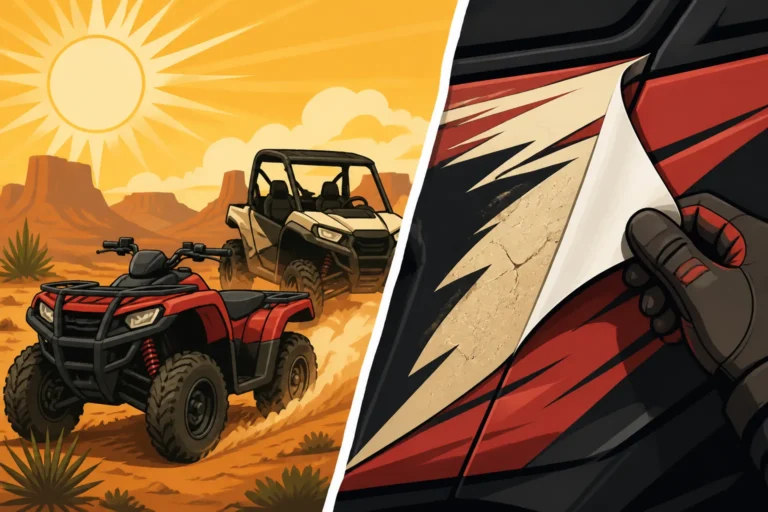
However, this system had its quirks. Sometimes the stickers were small, or they could get worn out, making them hard to read. There was also a push to standardize how OHVs were identified for road use across the state. This led to legislative changes that ultimately phased out the paved road sticker program. It wasn't an overnight change, but a deliberate move towards a more robust and easily identifiable system, which we'll discuss next. If you're wondering about the exact timeline, you might want to read about [Why Paved Road Stickers Ended in December 2025].
The Transition to Paved Road Plates
The shift away from the paved road sticker ushered in the era of the New Mexico Paved Road Plate. This change, which became more prominent after the 2017 law updates, aimed to provide a clearer, more durable form of identification for OHVs that are permitted on paved roads. Think of it like a mini license plate specifically for your OHV, signifying its compliance with the requirements for street-legal operation in designated areas.
These plates are issued by the Motor Vehicle Division (MVD) – a key difference from the stickers, which typically came from the Department of Game and Fish. The MVD's involvement brought the registration of OHVs for road use more in line with how traditional vehicles are handled, standardizing the process. The idea was to make it easier for law enforcement to identify compliant machines and for riders to understand the requirements. For a deeper dive into these legislative shifts, check out [What the 2017 Law Changed for New Mexico Plates]. These plates are now the standard for legitimate paved road access, replacing the older sticker system entirely. To understand what actually replaced the old stickers, you can learn more in [Plates That Replaced the Old Stickers].
Decoding the Current System: Decals and Plates
It's easy to get tangled up in the terminology when talking about New Mexico OHV identification. We've got decals, and we've got plates, and they all serve slightly different, but interconnected, purposes. Let's break down the current landscape so you can clearly see what's required for your riding adventures, whether they're on the trail or a permitted paved road.
The Foundation: Your Yellow Off-Highway Decal
First things first: every OHV that operates on public land in New Mexico needs to be registered. This primary registration is identified by a yellow decal. This isn't for paved roads; this is your core identification for hitting the dirt, the dunes, the trails, and the forest roads. When you go through the initial registration process, whether it's for a brand new machine or one you've just acquired, this yellow decal is what you'll receive to affirm your machine is legally registered for off-highway use.
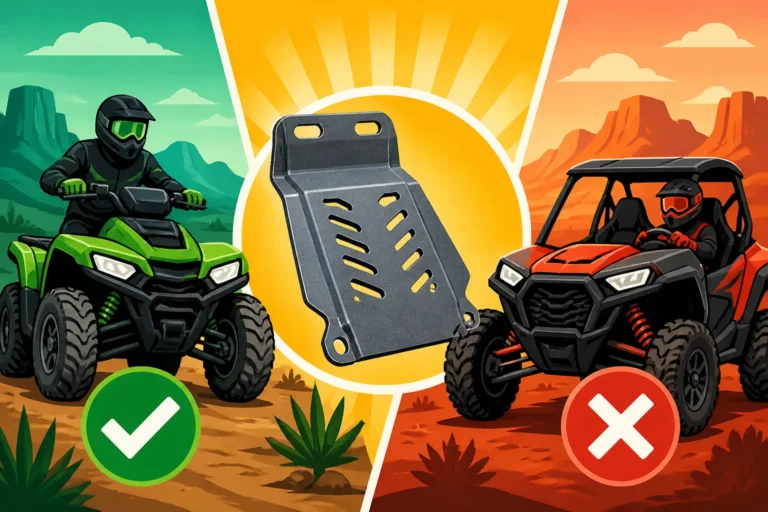
This yellow decal must be prominently displayed on your machine, but the exact placement can vary depending on the type of OHV you own. For instance, an ATV typically has it on the left-rear fender, while a side-by-side might have it on a rear quarter panel. It's crucial to mount it correctly so it's visible and doesn't get obscured by mud or debris. This decal acts as proof that you've paid your dues for using New Mexico's incredible public lands. Make sure you understand [New Mexico's Yellow Off-Highway Decal] and review the specific [New Mexico OHV Decal Placement Rules] for your type of vehicle to ensure you're compliant.
Adding Paved Road Access: The Green Decal and Plate
Now, here's where the "plate versus sticker" question really comes into play, and it's often the source of confusion. While the yellow decal is for off-highway registration, if you want to legally ride your OHV on paved county roads or city streets where allowed, you'll need the New Mexico Paved Road Plate.
Historically, there was sometimes a "green decal" associated with on-highway use or reciprocity, but the current, definitive method for legal paved road access is the dedicated Paved Road Plate. This plate acts as a specific endorsement for road use, but it's crucial to understand that it doesn't stand alone. You must first have your machine registered for off-highway use, meaning you'll already have that yellow decal. The paved road plate is an additional layer of registration, confirming your machine meets certain equipment requirements and that you've secured the necessary liability insurance.
So, in essence, you don't choose between a yellow decal or a paved road plate; you get the yellow decal for off-highway use, and then you can apply for the paved road plate if you intend to ride on designated paved roads. It's an important distinction that many riders miss. The Paved Road Plate is what enables you to explore areas like the wide-open county roads of Sierra County or specific city streets in towns like Red River, provided local ordinances permit it. To fully grasp this, you'll want to investigate [New Mexico's Green On and Off-Highway Decal] and understand [Which Riders Actually Need a Paved Road Plate]. While there are costs associated, having both can open up new riding possibilities, so it's wise to consider the [New Mexico OHV Paved Road Plate Cost] if you plan on paved road adventures.
| Identification Type | Primary Purpose | Issued By | Requires Base OHV Reg? | Paved Road Use? | Status Today |
|---|---|---|---|---|---|
| Yellow OHV Decal | Off-highway registration | MVD | No | No (by itself) | Essential for all public land OHV use |
| Green OHV Decal (Historical) | On-highway/reciprocity (older system) | DGF | Yes | Yes (limited) | Largely replaced |
| New Mexico Paved Road Plate | Legal paved road access where permitted | MVD | Yes | Yes | Essential for legal paved road use |
Navigating Registration: What You Need and How to Get It
Alright, so you understand the different types of identification. Now comes the practical part: figuring out exactly what you need for your riding style and then actually getting it. The process can seem a bit daunting with forms, fees, and requirements, but breaking it down makes it much more manageable.
Matching Your Needs to the Right OHV Identification
The first step is always to assess your riding habits. Are you exclusively an off-road enthusiast, trailer your machine to designated trailheads, and never touch asphalt? If so, your primary concern is ensuring you have a current yellow New Mexico off-highway decal. This covers your legal bases for riding on BLM land, National Forest trails, and state trust land (with the appropriate permit, of course!). This is the base layer of compliance for virtually all OHV riders in the state. You can find out more about the general expenses in [New Mexico OHV Registration Cost].
However, if you envision riding from your campsite down a paved county road to grab some groceries, or traversing a short stretch of city street to reach another trail, then the New Mexico Paved Road Plate becomes essential. Remember, this plate is an addition to your yellow off-highway decal. You can't just have the plate; it functions as an endorsement on top of your fundamental OHV registration. Think about how you'll use your machine. If any part of your journey involves a paved road, even a short one, the paved road plate is your ticket to staying legal. Keep in mind that having a plate doesn't automatically mean you can ride anywhere on pavement; always check local ordinances! For clarity on general road legality, see [Are ATVs Street Legal in New Mexico?].
The MVD Process: Paperwork and Preparation
Once you know which identification you need, it's time to gather your paperwork and head to the MVD. This is where many riders feel a bit of a headache coming on, but a little preparation goes a long way. For both your initial yellow off-highway decal and adding a paved road plate, you'll generally need proof of ownership, which means a title or a manufacturer's certificate of origin (MCO). If you bought your machine used, a properly filled-out bill of sale is absolutely critical, along with the signed-over title.
When you're dealing with used machines, especially from private sales, ensuring you have a solid bill of sale is paramount. It protects both the buyer and the seller and is often a non-negotiable document for the MVD. Resources like LawDepot can be incredibly helpful here, offering customizable templates for bills of sale and other legal documents that ensure all necessary information is included for New Mexico's requirements. This can save you a frustrating trip back home to get missing information! Make sure you understand all the [New Mexico OHV Registration Paperwork] you'll need.
For the paved road plate, you'll also need to demonstrate proof of liability insurance that meets New Mexico's minimum requirements. This is a crucial step because riding on paved roads comes with additional responsibilities, just like driving a car. The MVD will confirm that your OHV meets specific equipment standards, such as mirrors, a horn, and proper lighting, before issuing the paved road plate. If you're buying or selling, make sure to read [Titling an Off-Highway Vehicle in New Mexico] and [New Mexico ATV Bill of Sale Requirements] to avoid any hiccups. LawDepot can be a great place to start for creating a professional bill of sale if you're engaging in a private transaction, ensuring all the legal boxes are checked for MVD.
Beyond the Stickers and Plates: Important Considerations
Getting the right decals and plates is a huge step, but it's only part of the journey toward responsible and legal OHV riding in New Mexico. There are still some common misconceptions and ongoing responsibilities that every rider should be aware of. Understanding these can save you a lot of grief, from hefty fines to disappointing trail closures.
The Reality of "Street Legal" in New Mexico
This is probably one of the biggest points of confusion. Many riders mistakenly believe that once they have a New Mexico Paved Road Plate, their OHV is "street legal" everywhere, just like a car. This is absolutely not the case. The paved road plate allows you to ride on paved roads where specifically permitted by local ordinance. It does not grant universal access to all paved roads.
For example, New Mexico state highways are generally off-limits to OHVs, even with a paved road plate. [Why New Mexico State Highways Are Off Limits] is a critical read for any rider. Instead, the plate primarily enables you to ride on paved county roads and certain city streets where the local government has passed an ordinance to open them up. Towns like Red River have specific rules, sometimes allowing UTVs but not ATVs on certain streets, and even then, with curfews and designated routes. Other counties, like Sierra County, have opened many of their paved roads. It's vital to research the specific rules for any area you plan to ride. Always check [What New Mexico Law Says About Road Use] and local government websites before venturing onto paved surfaces.
Staying Compliant: Renewals and Avoiding Penalties
Just like your car's registration, your OHV registration and paved road plate aren't a one-and-done deal. Your yellow off-highway decal needs to be renewed regularly, typically every two years. Similarly, if you have a paved road plate, that too will have a renewal cycle, often tied to your base off-highway registration. It's easy to let these dates slip, but the consequences of riding with expired identification can be significant.
New Mexico has clear penalties for operating an unregistered OHV or one without the proper identification for its use. These fines can quickly add up and definitely put a damper on your riding fun. Beyond the monetary penalties, a lack of current registration or the correct plate can lead to your machine being impounded or you being cited, which nobody wants. Staying on top of your renewals is simple and saves you a lot of potential hassle. The MVD usually sends out reminders, but it's always a good idea to mark your calendar. Don't let an expired sticker or plate turn your adventure into a costly mistake. You can learn more about [New Mexico's Fines for an Unregistered OHV] and the process of [Renewing a New Mexico OHV Registration] to keep everything current. LawDepot can also assist with general legal documents related to vehicle ownership, which might be helpful if you ever need to transfer ownership or prove historical compliance.
Disclaimer
This article is for general informational purposes only and does not constitute professional advice. Laws, prices and regulations vary by location and change over time. Consult a qualified professional for guidance on your specific situation.