New Mexico OHV Decal Colors Explained
It can be incredibly confusing trying to figure out all the ins and outs of registering an off-highway vehicle (OHV) in New Mexico, especially when you start looking at those colorful little stickers – the decals. What do they mean? Do you need one or both? What happens if you pick the wrong one? It's easy to feel like you're navigating a bureaucratic maze, but don't worry, we're going to break down the mystery behind New Mexico's OHV decal colors so you can ride confidently and legally.
Decoding New Mexico's OHV Decal System
For anyone who loves exploring New Mexico's breathtaking landscapes on an ATV, UTV, or dirt bike, understanding the state's decal system is absolutely fundamental. These aren't just decorative stickers; they are your official pass to ride on various types of terrain. Ignoring them, or having the wrong one, can lead to unwelcome fines and spoil a perfectly good ride.
The Importance of Decals for Public Land Use
Think of your OHV decal as its passport. Without it, your machine can't legally "travel" on public lands, whether that's sprawling Bureau of Land Management (BLM) acreage, National Forest trails, or designated OHV parks. The state of New Mexico requires all OHVs operating on public lands to be registered and display a current decal. This requirement ensures that riders are contributing to the maintenance of the trails and that there's a record of machines in case of theft or accidents. It's all part of making sure our amazing outdoor spaces remain accessible and safe for everyone.
Understanding the Two Primary Decal Colors
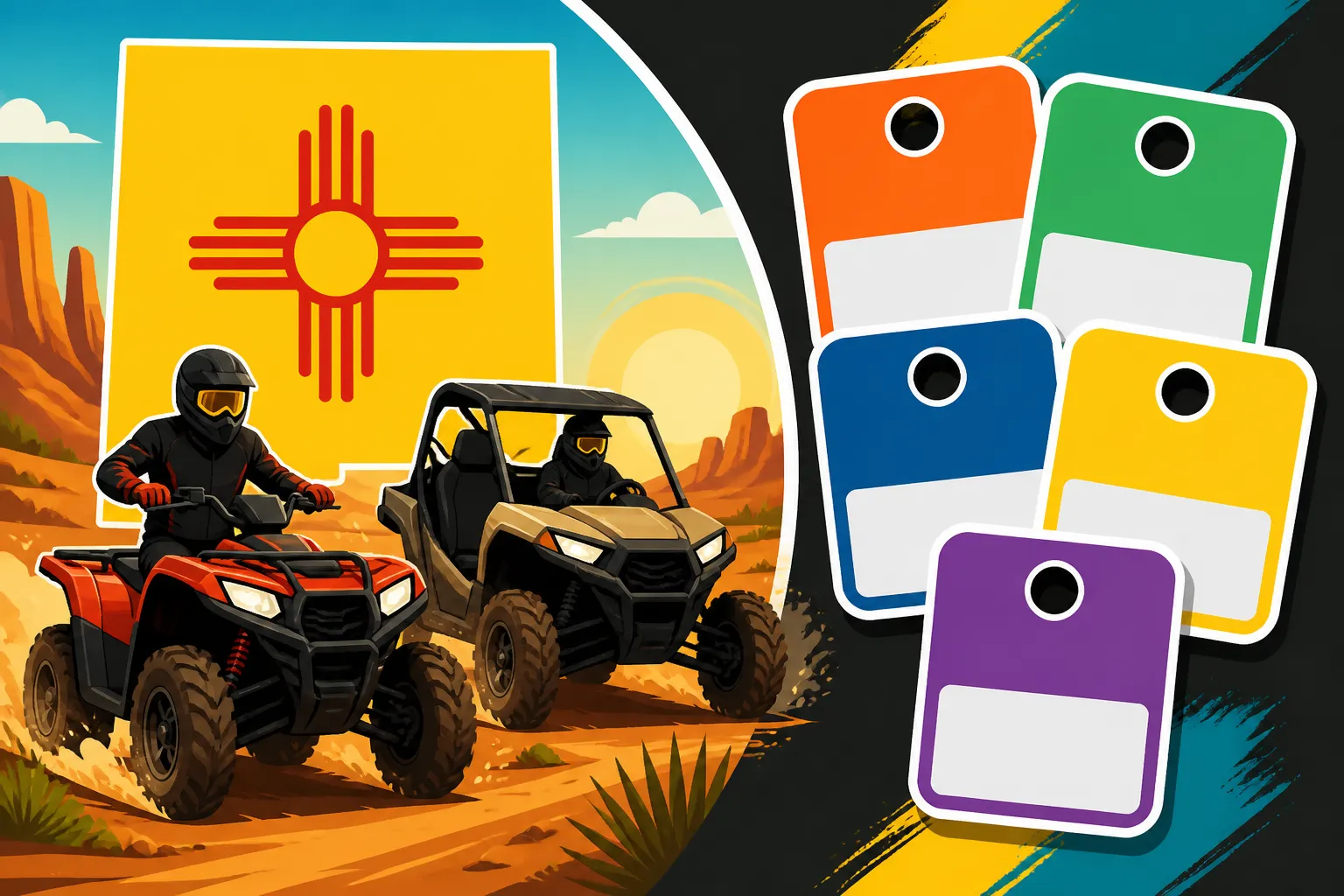
New Mexico keeps things relatively straightforward with two main colors for OHV decals: yellow and green. At a glance, they might look similar, but their purpose is distinctly different, and choosing the right one depends entirely on where and how you plan to ride your machine. One is solely for off-pavement adventures, while the other opens up some limited on-pavement privileges, but with extra responsibilities. We're going to dive deep into each one so you know exactly which decal is right for your riding style.
The Yellow Decal: Your Dedicated Off-Highway Pass
The bright yellow decal is probably what most people picture when they think about off-roading. It's the bread and butter for anyone who sticks exclusively to the dirt, rocks, and dunes that New Mexico is famous for.
What the Yellow Decal Signifies
When you see a yellow decal proudly displayed on an OHV, it tells you one very clear thing: this machine is registered for off-highway use only. This means it's perfectly legal for hitting the trails at places like Red Sands OHV Area, exploring BLM roads around Truth or Consequences, or navigating the designated routes in the Carson National Forest. It's your ticket to all the unpaved fun you can imagine.
However, and this is a big "however," a yellow decal explicitly does not permit you to ride on paved roads, highways, or city streets. Period. If you've got a yellow decal, you should be trailering your machine to the trailhead. Riding it down a paved county road to connect to another trail, or to grab a bite in town, is a no-go. This is why it's so important to understand [New Mexico's Yellow Off-Highway Decal] and what its limitations are. You're set for the wilderness, but not for the asphalt.
Who Needs a Yellow Decal
Most riders who are dedicated to the off-road experience will find the yellow decal perfectly suits their needs. If your machine is primarily used for recreational trail riding, exploring open desert areas, or even working on a ranch entirely on private, unpaved property (though even ranch machines often benefit from registration for other reasons), then the yellow decal is likely all you'll need. This applies to a wide range of machines:
- Dirt Bikes: These agile machines are built for trails and dirt.
- ATVs (Quads): From sport quads to utility models, if they're not hitting the pavement, yellow is the color.
- UTVs/Side-by-Sides: Many larger side-by-sides are exclusively for off-road adventures, perfect for a yellow decal.
- Youth Machines: Smaller OHVs intended for younger riders typically operate solely in off-highway environments. [New Mexico Registration for a Youth Machine] covers these.
Essentially, if your riding plans involve keeping all four (or two, or three) wheels off the asphalt, the yellow decal is your champion.
The Green Decal: The Paved Road and Trail Combo
Now, if you're looking for a bit more versatility, if you dream of connecting trails by crossing a short stretch of paved county road, or if your machine doubles as a way to access remote fishing spots that might involve a brief paved journey, then the green decal is your friend.
What the Green Decal Allows You To Do
The green decal is the state's way of saying, "Okay, we get it, sometimes you need to use a bit of pavement." This decal allows your registered OHV to be operated on both off-highway trails and on designated paved county roads and city streets where local ordinances permit. It also allows for perpendicular crossings of state highways and other paved roads. This is a significant step up in flexibility compared to the yellow decal, but it comes with a crucial caveat: it's not a blanket "street legal" pass. You can't just cruise down any state highway or interstate with a green decal. The permissions are specific and often limited to county and municipal roads that have been explicitly opened by local authorities. To fully grasp this, it's worth reviewing [New Mexico's Green On and Off-Highway Decal].
Think about those moments when your favorite trail ends, and the next one picks up just a mile down a paved county road. With a green decal, you can legally make that connection without having to load your machine back onto a trailer. This makes planning routes much more fluid and can greatly enhance your riding experience, especially in areas with a mix of public lands and rural roads.
The Additional Requirements for Green Decal Holders
Here's where the green decal gets a little more complex. Because you're now venturing onto public roads, even in a limited capacity, the state imposes additional safety and responsibility requirements. It's not just about the sticker; it's about making sure your machine and you are ready for the road environment. These include:
- Proof of Insurance: You must carry proof of liability insurance, just like you would for a car. This is a non-negotiable requirement for paved road use. You'll want to be familiar with [New Mexico OHV Registration and Insurance Proof] before you head out.
- Driver's License: The operator of the OHV on paved roads must possess a valid driver's license.
- Appropriate Equipment: Your OHV needs to be equipped with specific features to be road-ready. This typically includes:
- Headlights (visible from 150 feet)
- Taillights (visible from 200 feet)
- Brake lights
- Mirrors (at least one rearview mirror)
- A horn or audible warning device
- A spark arrester on the exhaust
- A muffler that keeps noise levels below 96 decibels.
You can read more about these requirements in [New Mexico Paved Road Plate Requirements] – though that article talks about plates, the underlying equipment needs are tied to the privilege of road use that the green decal also grants.
These extra requirements are designed to keep everyone safe when OHVs share the road with traditional vehicles. When purchasing a used machine, especially if you plan to use it on pavement, it's vital to ensure you get a clear bill of sale and title from the seller. This ensures a smooth transfer of ownership and helps verify any lien status, which can be critical for securing insurance. Reputable services like LawDepot can provide customizable bill of sale templates that protect both buyer and seller, making sure you have all the necessary documentation for registration and insurance. Clear documentation is the bedrock of compliance.
Why the Colors Matter and Where They Go
Understanding the distinction between yellow and green decals isn't just academic; it has real-world consequences for your riding experience and your wallet.
Avoiding Fines and Staying Compliant
Riding an OHV on a paved road with only a yellow decal is a clear violation, and you can expect a fine if caught. Similarly, riding with an expired decal, or no decal at all, will also land you in trouble. New Mexico law enforcement takes these regulations seriously, and ignorance is rarely an acceptable excuse. Fines for an unregistered OHV can certainly add up, putting a damper on your outdoor adventures. It’s always best to be educated on [New Mexico Fines for an Unregistered OHV] to fully understand the financial risks. The decal serves as visible proof of your compliance, signaling to rangers, deputies, and other riders that you're operating within the law.
Decal Placement and Visibility
Once you have your shiny new decal, knowing where to put it on your machine is just as important as having it. The decal must be clearly visible, and the placement rules vary slightly depending on the type of OHV. This isn't just about aesthetics; it's about ensuring law enforcement can easily verify your registration without having to stop you.
Here's a quick rundown, though it's always good to consult [New Mexico OHV Decal Placement Rules] for the most precise details:
- ATVs (Quads): The decal typically goes on the left rear fender. You can find more specific guidance in [Where the Decal Goes on an ATV's Left Rear].
- UTVs/Side-by-Sides: For these larger machines, the decal is usually affixed to the left rear quarter panel. Check out [Where the Decal Goes on an ROV Quarter Panel] for an example.
- Dirt Bikes/Off-Highway Motorcycles: On dirt bikes, the decal is generally placed on the left fork leg. For a visual, see [Sticking the Decal on a Dirt Bike's Fork Leg].
The reason [Why Decal Placement Differs by Machine Type] is often due to the unique construction of each vehicle, ensuring the decal remains visible and isn't easily obscured by riding gear, passengers, or cargo. Always make sure your decal is firmly attached and free from mud or dirt that could obscure its color or registration number.
Getting Your Decals: The Registration Process
Getting your decals is part and parcel of the OHV registration process, which is handled by the New Mexico Motor Vehicle Division (MVD). It's a fairly straightforward process, but knowing what to expect can save you time and headaches.
Initial Registration and Renewal
Whether you're registering a brand-new machine or one you just purchased used, the MVD is your destination. You'll need to provide proof of ownership (title or manufacturer's certificate of origin), a bill of sale, and potentially a VIN inspection. This is why having all your paperwork in order, especially a well-drafted bill of sale, is so important when you're buying or selling. While a basic bill of sale can be handwritten, using a professional template from a service like LawDepot ensures all critical information is included, which can prevent issues down the line with the MVD. Once registered, your OHV receives a decal that is valid for two years. This process is detailed in [New Mexico OHV Registration at MVD].
When it comes to renewals, the process is usually simpler. Your registration, and therefore your decal, is valid for two years, after which you'll need to renew it. The cost for a biennial renewal is typically a set fee, which you can learn more about in [New Mexico's $50 Biennial Renewal].
Changing Decal Type or Replacing Lost Decals
Life happens, and sometimes your riding needs change. Maybe you started with a yellow decal because you only rode trails, but now you've discovered some amazing routes that require short paved road connections. In this case, you can often upgrade your registration to get a green decal. This might involve revisiting the MVD, providing additional documentation (like proof of insurance), and ensuring your vehicle meets the paved road equipment requirements.
What if your decal gets damaged, peels off, or you simply lose it? Don't despair! You can apply for a replacement decal through the MVD. It's a relatively simple process to get a fresh sticker for your machine. Check out [Replacing a Lost New Mexico Decal] for the steps involved.
If you're in the market for a used machine, say you're looking at [Buying a Used ATV in New Mexico], it's crucial to verify the current registration and decal status. A seller should always provide a clear [A New Mexico Bill of Sale for an ATV] and the vehicle's title. This documentation is essential not only for transferring ownership but also for ensuring you can easily register the OHV in your name and get the correct decal.
Here's a quick comparison of the two New Mexico OHV decal colors:
| Feature | Yellow Decal | Green Decal |
|---|---|---|
| Primary Use | Off-highway trails, dunes, unpaved roads | Off-highway trails + Limited paved road access |
| Paved Road Access | No (must trailer OHV) | Yes (designated county/city roads, highway crossings) |
| Additional Requirements | Basic OHV registration | Valid driver's license, liability insurance, specific road-worthy equipment (headlights, mirrors, etc.) |
| Machine Types Covered | Most ATVs, UTVs, Dirt Bikes | Most ATVs, UTVs (must meet equipment rules) |
| Cost | Included with standard OHV registration fee | Included with standard OHV registration fee |
Understanding New Mexico's OHV decal colors is more than just knowing a color; it’s about understanding your rights and responsibilities as a rider. Whether you stick to the pure off-road adventure of the yellow decal or embrace the versatility of the green, being informed keeps you safe, legal, and ready for all the stunning terrain New Mexico has to offer. Happy riding!
Disclaimer
This article is for general informational purposes only and does not constitute professional advice. Laws, prices and regulations vary by location and change over time. Consult a qualified professional for guidance on your specific situation.