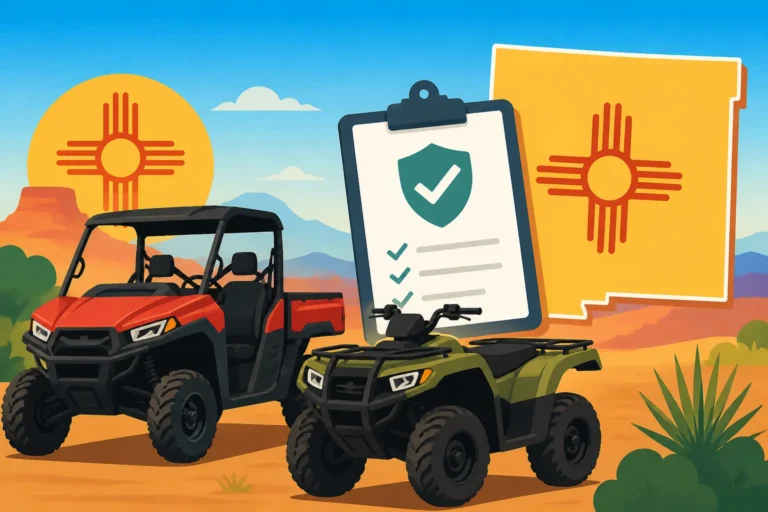
Replacing a Lost New Mexico Decal
There's nothing quite as irritating as gearing up for an epic ride across New Mexico's stunning landscapes, only to notice that the crucial registration decal on your ATV or UTV has vanished or become utterly unreadable. Whether it succumbed to the harsh desert sun, a rogue branch on the trail, or simply fell off somewhere between your last adventure and now, a missing or illegible decal can put a real damper on your plans and even land you in a sticky situation with local authorities. This guide is here to walk you through the straightforward process of getting a replacement decal, so you can get back to enjoying the Land of Enchantment without a hitch.
Why Your OHV Decal Is More Than Just a Sticker
It might seem like a small, sticky piece of paper, but your New Mexico OHV registration decal is a vital piece of identification for your off-highway vehicle. Without it, your machine isn't legally registered to operate on public lands, designated trails, or even cross approved paved roads in the state. Ignoring a missing or unreadable decal isn't just a minor oversight; it's a direct violation of state regulations that can lead to fines and spoil a perfectly good day outdoors.
Proof of Legal Operation
The decal serves as instant visual proof that your ATV, UTV, or dirt bike is properly registered with the New Mexico Motor Vehicle Division (MVD). Law enforcement officers, land managers, and even concerned fellow riders rely on these decals to quickly verify that a machine is operating legally. Think of it as your OHV's license plate for the trails – small but mighty in its importance. Without a valid, clearly displayed decal, you're essentially riding an unregistered vehicle, even if you paid all your fees and completed the initial paperwork.
This also extends to safety and accountability. In the unfortunate event of an accident or if your machine is stolen, the registration information tied to that decal becomes critical for identification and recovery. It helps ensure that everyone out on the trails is doing their part to contribute to the maintenance and management of New Mexico's incredible riding areas, as a portion of registration fees often goes toward these efforts.
Avoiding Unnecessary Fines and Hassles
Picture this: You're halfway through a fantastic ride on a BLM trail near Truth or Consequences, admiring the vast open spaces, when a New Mexico Game and Fish warden pulls up. The first thing they'll likely look for is that decal. If it's missing, faded beyond recognition, or improperly placed, you could be facing an unexpected fine. It's a quick way for a fun day to turn stressful, and it's completely avoidable with a replacement decal. [New Mexico Fines for an Unregistered OHV] can be significant, so it's always better to be proactive.
Beyond fines, there's the inconvenience. An officer might ask for your original registration paperwork, which you might not have on your person. They could detain you while they verify your machine's status, or even worse, require you to trailer your OHV out of the riding area until you can prove its legal registration. This is the last thing you want when you've planned a weekend getaway, so treating that decal as a crucial document is key. It's the silent ambassador of your OHV's legal status, and keeping it current and visible is an essential part of responsible riding.
Common Reasons Your Decal Might Need Replacing
New Mexico's diverse environment, from scorching desert sun to muddy mountain trails, can be tough on OHV decals. It's not always neglect that causes them to fail; often, it's just the wear and tear of enjoying our incredible state. Understanding why decals give up the ghost can help you appreciate why replacements are a common request.
Environmental Wear and Tear
The high desert sun is beautiful but brutal, especially on adhesive-backed vinyl. Over time, UV radiation can cause the colors of your decal to fade dramatically, rendering the registration numbers unreadable. It's a common complaint, especially for machines stored outdoors or frequently ridden in the direct sun. [When Desert Sun Peels a Decal Off] is a very real phenomenon many riders experience. The relentless heat can also affect the adhesive, causing the decal to crack, peel at the edges, and eventually detach entirely.
Then there's the wind, dust, and rain. Sand and grit act like sandpaper on the exposed surface, slowly eroding the printed numbers. Hard rain or even a vigorous power washing after a muddy outing can attack a compromised decal, peeling it away bit by bit until it's gone. These elements are just part of the reality of off-roading in New Mexico, so a decal's lifespan isn't always as long as the registration period itself.
Accidental Damage or Loss
It's not always the elements; sometimes, it's an unfortunate mishap. Imagine riding through a narrow section of trail, and a thorny branch snags the corner of your decal, tearing it. Or maybe you're loading your machine onto a trailer, and a tie-down strap inadvertently rubs against the decal, scratching it beyond recognition. Even a simple bump against another vehicle in a crowded staging area can be enough to damage it.
And then there's the mystery disappearance. You park your side-by-side after a ride, and the next time you go to use it, the decal is just… gone. Perhaps the adhesive failed suddenly, or it was brushed off without you noticing. Whatever the reason, if the decal isn't there, or if [What to Do About an Unreadable Decal Number] becomes your predicament, it's time to act quickly to get a new one. These instances aren't reflections of poor care; they're simply part of owning and actively using an OHV.
The Step-by-Step Process for a Replacement Decal
Fortunately, replacing a lost or damaged New Mexico OHV decal isn't an arduous task. The state's Motor Vehicle Division (MVD) has a clear process in place to help you get a new one without too much hassle. It's designed to be straightforward, so you can spend less time on paperwork and more time on the trails.
Initiating the Replacement Request
Your first step is to contact the New Mexico MVD. While some vehicle services can be done online, requesting a replacement decal often requires a visit to a local MVD office or at least starting the process over the phone or through mail if your local office allows it. It’s always a good idea to check the MVD's official website or call ahead to confirm their current procedures for replacement decals, as these can sometimes change. They'll be able to tell you if an in-person visit is mandatory or if there are other options available.
When you contact them, you'll need to explain that you are requesting a replacement for a lost, stolen, or damaged OHV registration decal. Be prepared to provide the necessary identifying information about your machine and yourself. This ensures they can quickly pull up your existing registration records and process your request efficiently.
Required Documentation and Information
Even for a replacement, you'll need to provide some basic information to confirm your ownership and the machine's identity. Typically, this includes your driver's license number, the vehicle identification number (VIN) of your OHV, and your current New Mexico OHV registration number (if you still have the paperwork, even if the decal is gone). If you don't have your registration card, they can usually look it up with your VIN and driver's license. It's also helpful to have the make, model, and year of your OHV readily available.
Sometimes, if your original registration documents are also lost or stolen along with the decal, you might need to take additional steps to prove ownership. This is where having good records comes in handy. Tools like LawDepot can be useful for creating and storing digital copies of important documents like bills of sale or affidavits of ownership, which can be invaluable in a pinch. While MVD might not directly require a specific form from LawDepot for a decal replacement, having a well-organized personal record system can save you immense headaches if more extensive documentation is ever requested. Make sure you keep copies of your original registration and title in a safe, separate place, not just on the machine itself.
Completing the Application
Once you've provided the necessary information, the MVD will guide you through completing a "Replacement Plate/Decal Application" or a similar form. This form usually asks for details about your machine, the reason for the replacement (lost, damaged, stolen), and your contact information. Be thorough and accurate when filling it out to avoid any delays. If your decal was stolen, you might be asked to provide a police report, though this is less common for simple decal replacements than for stolen license plates.
After the form is completed and any applicable fees are paid (which we'll discuss next), the MVD will process your request. They might print a temporary document for you on the spot, or simply process the order for a new decal to be mailed to your address. The goal is to get you a valid, physical decal as quickly as possible. This process is generally quite smooth if all your information is in order.
Understanding the Costs and Timeframe for Replacement
Nobody likes unexpected expenses or waiting periods, especially when you're eager to hit the trails. Thankfully, replacing a New Mexico OHV decal is generally quite affordable and the turnaround time isn't excessively long, provided everything goes smoothly.
New Mexico OHV Decal Replacement Cost
The cost for a replacement New Mexico OHV decal is typically quite modest. While I can't give you exact figures (always check with the New Mexico MVD for current fees), it's generally a nominal fee designed to cover the administrative costs and the physical production of the new decal. This replacement fee is separate from your biennial registration renewal fee. For example, if you just paid the [New Mexico's $50 Biennial Renewal] fee last month and then lost your decal, you'll only pay the small replacement decal fee, not the full renewal amount again.
It's a good idea to confirm the exact fee when you contact the MVD or visit their office. They usually accept various forms of payment, including cash, credit/debit cards, and checks, but again, verify preferred methods beforehand. This small investment is well worth it to avoid the potential fines and stress associated with riding an improperly marked OHV.
How Long Until Your New Decal Arrives
The processing time for a replacement decal can vary. If you visit an MVD office in person, they might be able to issue you a temporary document immediately, allowing you to legally operate your OHV while you await the physical decal. In some cases, if they have the decals in stock, they might even issue the new decal on the spot, depending on their procedures and availability.
If the decal needs to be mailed to you, expect it to arrive within a reasonable timeframe, typically a couple of weeks. Factors like mail volume, state holidays, or the specific MVD office's processing queue can influence this. It's always best to inquire about the estimated mailing time when you submit your application. This waiting period is why it's wise to request a replacement as soon as you notice your decal is missing or damaged, rather than waiting until the day before a big trip. Proactive replacement ensures you don't miss out on prime riding opportunities.
Proper Decal Placement for Your New Sticker
Receiving your shiny new replacement decal is exciting, but the job isn't quite done until it's properly affixed to your OHV. New Mexico has specific rules about where your decal must be placed, and following these guidelines is crucial for compliance and visibility. Incorrect placement can be just as problematic as a missing decal when a law enforcement officer is trying to verify your registration.
Placement Rules by Vehicle Type
The exact location for your decal depends on the type of off-highway vehicle you own. It's not a one-size-fits-all situation, and understanding these nuances will save you a headache. The MVD provides clear guidelines on [New Mexico OHV Decal Placement Rules], which are designed to ensure maximum visibility for enforcement personnel without interfering with your machine's operation.
For ATVs (quads), the decal typically goes on the left rear fender. This spot is generally flat, visible from the rear and side, and away from common grab points or heavy wear areas. [Where the Decal Goes on an ATV's Left Rear] is a precise instruction to follow. Make sure the surface is clean and dry before applying to ensure good adhesion.
For ROVs (Recreational Off-Highway Vehicles), like side-by-sides or UTVs, the decal is usually placed on the left rear quarter panel. This area offers a flat, visible surface that's usually protected from immediate impact or debris. [Where the Decal Goes on an ROV Quarter Panel] specifies this location. Again, clean the area thoroughly before application.
For dirt bikes or off-highway motorcycles, the decal has a different home: the left fork leg. This is a common place for motorcycle registration stickers, ensuring it's visible while also being relatively secure. [Sticking the Decal on a Dirt Bike's Fork Leg] guides you to this spot. Ensure the fork leg is clean and free of grease or dirt for the best bond.
It's important to remember that New Mexico uses distinct decals: a yellow one for off-highway use only, and a green one for on- and off-highway use if you've opted for the paved road privilege. [New Mexico's Yellow and Green Decals] each have specific purposes, but their placement rules generally follow the same guidelines for visibility.
Tips for Durable Application
Applying your new decal correctly is key to ensuring it lasts and doesn't become another replacement candidate too soon. First, clean the surface thoroughly. Use a degreaser or rubbing alcohol to remove any dirt, grime, wax, or oil from the designated area. Let it dry completely. A clean surface ensures the adhesive can form a strong bond.
Next, apply in moderate temperatures. Avoid extreme cold or heat, as this can affect the decal's flexibility and the adhesive's performance. Room temperature or a mild day is ideal. When applying, peel back only a small portion of the backing paper at first, align the decal carefully, and then slowly press it down, working from one end to the other. Use a credit card or a squeegee to smooth out any air bubbles as you go, ensuring a flat, even application. This gradual method helps prevent wrinkles and trapped air, which can weaken the adhesive bond over time.
Finally, avoid immediate exposure to water or harsh cleaning. Give the adhesive some time to fully cure and bond to the surface, typically 24-48 hours. This means holding off on that power wash or a heavy rain ride right after application. Taking these few extra steps will significantly increase the lifespan of your replacement decal and keep your New Mexico adventures worry-free.
Avoiding Future Decal Woes
While replacing a decal is manageable, it's certainly better to avoid the need for replacements in the first place. A little proactive care and thoughtful placement can go a long way in protecting your OHV registration decal from the elements and everyday wear and tear.
Strategic Storage and Protection
How you store your OHV can have a huge impact on your decal's longevity. If possible, store your machine indoors in a garage or shed. This protects it from the relentless New Mexico sun, extreme temperatures, and harsh weather conditions that are primary culprits for decal fading and peeling. Even covering your OHV with a breathable cover when stored outdoors can significantly extend the life of your decal, shielding it from UV rays and physical abrasion.
Consider applying a clear protective film or a thin layer of UV-resistant sealant over the decal once it's properly applied and cured. These products are designed to create an additional barrier against UV degradation, scratches, and abrasion, offering an extra layer of defense against the elements. Just be sure the product is compatible with the decal material and won't cause discoloration or adhesive issues.
Mindful Cleaning Practices
While a clean machine is a happy machine, how you clean it matters when it comes to your decal. When power washing, be mindful of the decal's location. Direct, high-pressure streams aimed directly at the edges of the decal can lift the adhesive and cause it to peel prematurely. Instead, use a gentler spray or manually wash the area around the decal with a soft sponge and mild soap.
Avoid abrasive cleaners or harsh chemicals, especially those containing solvents, near your decal. These can degrade the decal material, fade the colors, or weaken the adhesive. Stick to automotive-specific soaps and rinse thoroughly. By integrating these simple habits into your OHV maintenance routine, you can significantly reduce the chances of needing another replacement decal down the line. It's all about being a little bit gentle and thoughtful, ensuring your crucial registration remains visible and intact for all your adventures.
Disclaimer
This article is for general informational purposes only and does not constitute professional advice. Laws, prices and regulations vary by location and change over time. Consult a qualified professional for guidance on your specific situation.