Where New Mexico Requires the Decal Placed
Navigating the ins and outs of off-highway vehicle (OHV) regulations in New Mexico can sometimes feel like trying to solve a puzzle, especially when it comes to something seemingly simple yet critically important: where exactly to stick that registration decal. Many riders get frustrated, worried they'll put it in the wrong spot and face hassles on the trail or road. This comprehensive guide will clear up all the confusion, providing precise, machine-specific instructions on where New Mexico requires your OHV decal to be placed, ensuring you ride legally and with peace of mind.
The Importance of Correct Decal Placement in New Mexico
It might seem like a small detail, but the correct placement of your New Mexico OHV registration decal is far more significant than just aesthetics. It's about compliance, safety, and ensuring your riding adventures in the Land of Enchantment are as smooth as a freshly graded forest road. Ignoring these rules can lead to unnecessary headaches, from roadside stops to potential fines, which nobody wants when they're out enjoying the beautiful New Mexico terrain.
Why Decals Matter for Enforcement and Safety
Think of your OHV decal as the vehicle's passport. It's the visual proof that your machine is legally registered with the state, allowing you to operate it on designated public lands and, with the right decal, even some paved roads. For law enforcement, whether it's a State Park Ranger, a Sheriff's Deputy, or a BLM officer, a properly placed and visible decal is the first thing they look for. It allows them to quickly verify that you've met your registration obligations without needing to flag you down and request paperwork, saving everyone time and hassle.
Moreover, decals contribute to the overall safety and management of riding areas. In crowded staging areas or on busy trails, a clearly visible decal helps identify registered machines from those that might not be compliant. It's a quick identifier that you're part of the system, helping to ensure that the funds collected through registration fees are being used to maintain the trails and facilities you enjoy. An incorrectly placed decal, or one that's obscured by mud, gear, or even an aftermarket accessory, is essentially invisible, defeating its entire purpose.
Understanding New Mexico's Yellow and Green Decals
Before we dive into the specific placement, it's crucial to understand that New Mexico utilizes two primary types of OHV registration decals, each with distinct purposes. You might have one or both, depending on how and where you plan to ride your machine.
The [New Mexico's Yellow Off-Highway Decal] is your ticket for strictly off-highway use. This decal signifies that your OHV is registered for trails, dunes, and unpaved county roads that have been opened to OHV use. It's for the hardcore trail rider who sticks to the dirt and doesn't plan on venturing onto any paved public roads. If you're riding with just a yellow decal and you find yourself on pavement, even for a short stretch, you're likely in violation.
Then there's the [New Mexico's Green On and Off-Highway Decal]. This is the more versatile option, allowing you to operate your registered OHV both off-highway and on designated paved public streets and highways where OHV use is permitted. This usually involves meeting additional requirements like insurance, a driver's license, and specific equipment, but the green decal is the visual cue that you've opted into the paved road program. For riders who want the flexibility to connect trails, access fuel in town, or simply enjoy a scenic ride down a county road, the green decal is indispensable. Regardless of which color decal you have, the placement rules we're about to discuss apply equally to both, ensuring they're always visible for inspection.
Decal Placement for All-Terrain Vehicles (ATVs)
ATVs, with their unique design and common uses, have specific requirements for decal placement in New Mexico. It's not just a matter of slapping it anywhere; there's a designated spot that ensures visibility and compliance with state regulations. Understanding this spot and how to properly affix your decal will save you a lot of grief down the line.
The ATV's Left Rear Fender: Your Primary Target
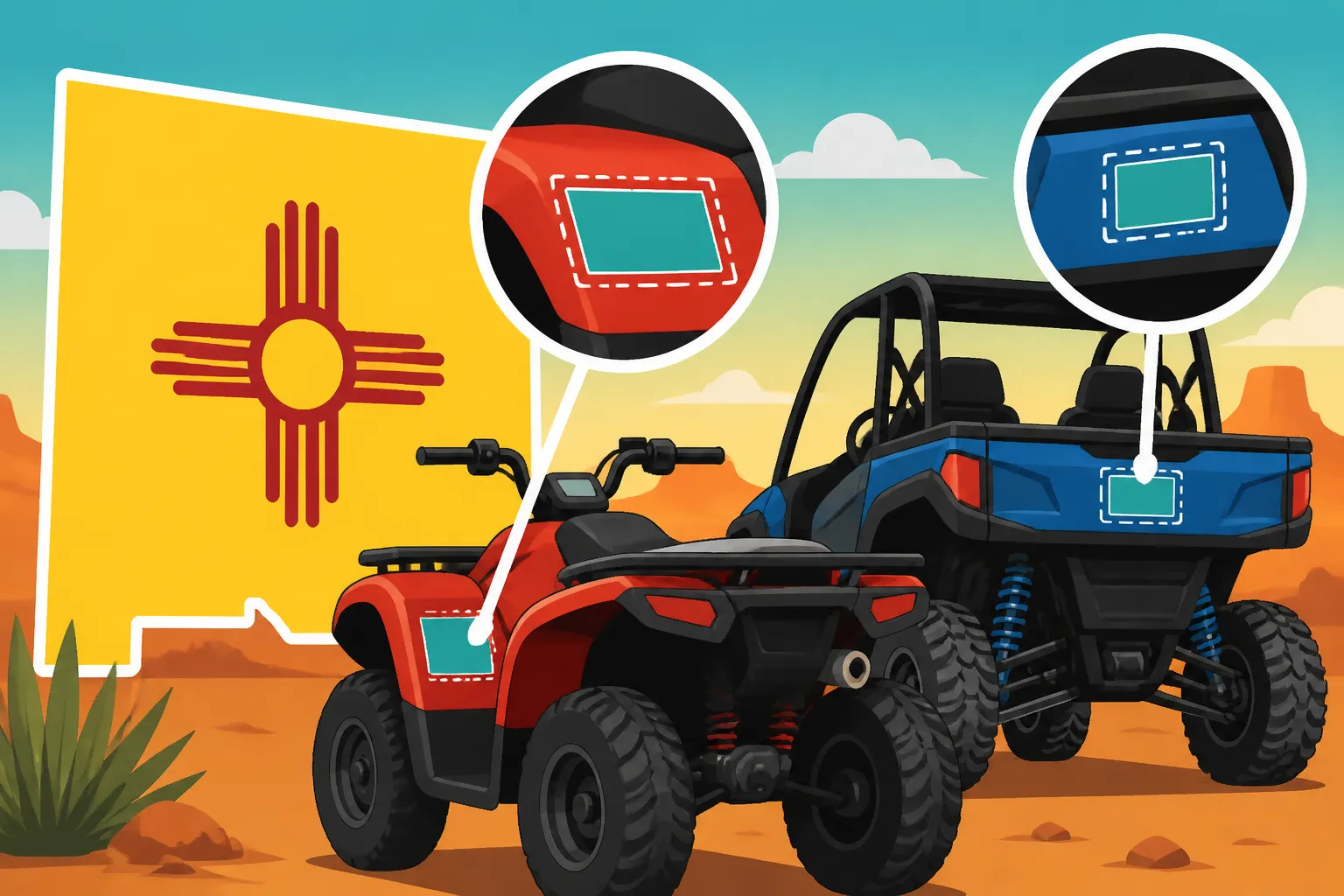
For nearly all ATVs, the official home for your New Mexico OHV registration decal is unequivocally the left rear fender. This isn't an arbitrary choice; it's a carefully considered location that offers the best combination of visibility and protection. When you're riding, or when your ATV is parked, the left rear fender provides a prominent, relatively flat surface that is easily seen from both the rear and the left side of the machine. This makes it simple for law enforcement or trail managers to quickly identify your registration status without needing to walk around your machine or ask you to dismount. For a visual guide, check out [Where the Decal Goes on an ATV's Left Rear].
Before you stick your decal, take a moment to prepare the surface. The fender needs to be thoroughly clean and dry. Any dirt, dust, or oily residue will prevent the adhesive from bonding properly, leading to peeling or loss of your decal, especially after a few rough rides or washes. Use a mild cleaner and let it air dry completely. Once the surface is ready, carefully peel the decal from its backing, position it squarely on the left rear fender, and press firmly from the center outwards, pushing out any air bubbles. This ensures maximum adhesion and longevity.
Ensuring Clear Visibility and Adhesion
While the left rear fender is the mandated spot, you still need to be mindful of exactly where on that fender you place it. Avoid areas that might be frequently obscured by mud splatter from the rear wheel, or too close to the exhaust pipe where excessive heat could degrade the decal over time. Also, be cautious of placement near tie-down points or other areas that might experience constant rubbing from straps or gear when the ATV is being trailered. The goal is clear, unobstructed visibility at all times.
Once applied, give the decal some time to set before exposing it to harsh conditions, if possible. The adhesive strengthens over the first 24-48 hours. If your decal ever becomes damaged, unreadable, or lost – it happens, especially with the wear and tear of off-road riding – you'll need to order a replacement. This process usually involves contacting the New Mexico Motor Vehicle Division (MVD). You'll typically need your registration information, which might include details you'd find on a [A New Mexico Bill of Sale for an ATV] if you purchased it recently, to process the request. Making sure your current decal is always clear and legible is a small but important part of responsible OHV ownership in New Mexico.
Decal Placement for Utility Terrain Vehicles (UTVs) and Side-by-Sides
UTVs, often referred to as side-by-sides or ROVs (Recreational Off-Highway Vehicles), share some similarities with ATVs but also have distinct design features that necessitate a different decal placement strategy in New Mexico. Their larger size, passenger seating, and sometimes enclosed cabs mean the ATV's left rear fender isn't always the most practical or visible location.
The Rear Quarter Panel: The ROV Sweet Spot
For UTVs and side-by-sides, New Mexico regulations stipulate that the registration decal must be placed on the rear quarter panel, specifically on the left side of the vehicle. The rear quarter panel is the bodywork section behind the rear wheel and in front of the taillight assembly. This spot is chosen because it's a large, generally flat surface that remains highly visible from the side and rear, even when the UTV is loaded with passengers or gear. For side-by-sides, visibility from the left side is particularly important for passing vehicles or for quick inspection by authorities on the trail. You can find detailed instructions on [Where the Decal Goes on an ROV Quarter Panel].
Just like with ATVs, the preparation of the surface is paramount. Ensure the rear quarter panel is meticulously clean and completely dry before attempting to apply the decal. Residues from mud, wax, or even cleaning agents can compromise the adhesive. A good wash and wipe-down with an alcohol-based cleaner can help create an ideal surface for the decal to bond. Take your time aligning the decal before pressing it down firmly, working out any air bubbles to ensure a smooth, durable application.
Maximizing Decal Longevity on UTVs
UTVs are often put through their paces, from dusty desert trails to muddy forest roads, and they frequently carry more passengers and gear than ATVs. This means choosing the exact spot on the rear quarter panel needs a bit of thought to ensure your decal lasts as long as your registration period. Try to pick a section that isn't prone to heavy abrasion from branches, rocks, or frequently bumped equipment. Avoid placing it too close to door hinges or areas that flex significantly during operation.
Consider the potential for obstructions. If you frequently carry spare tires, fuel cans, or other accessories mounted to the rear of your UTV, make sure the decal won't be consistently covered. The point is for it to be visible at all times during operation. Aftermarket additions, like cargo racks or flag mounts, can sometimes inadvertently block the decal. Always do a quick visual check after loading up your UTV to confirm your decal is still clearly displayed. Remember that a properly affixed and visible decal means you're less likely to encounter issues, which is exactly what you want when you're headed out for a fun ride in the mountains or desert.
Decal Placement for Off-Highway Motorcycles (Dirt Bikes)
Off-highway motorcycles, or dirt bikes, present their own set of challenges when it comes to decal placement. Their minimalist design and the dynamic nature of their suspension mean there are fewer large, flat surfaces compared to ATVs or UTVs. However, New Mexico has a clear directive for these machines, ensuring the decal is always where it needs to be.
The Left Fork Leg: Where Your Dirt Bike Decal Belongs
For dirt bikes and other off-highway motorcycles, New Mexico mandates that the registration decal be affixed to the left front fork leg. This specific location is chosen for its relative prominence and visibility, despite the often-muddy conditions dirt bikes encounter. The fork leg is usually a clean, accessible spot when viewed from the side, making it easy for officials to verify your registration quickly. For more detailed instructions, refer to [Sticking the Decal on a Dirt Bike's Fork Leg].
Applying a decal to a cylindrical surface like a fork leg requires a bit more care than a flat fender. First and foremost, the fork leg must be impeccably clean. This means scrubbing off all mud, grease, and grime that accumulates from regular riding. Use a degreaser or alcohol prep pad to ensure the surface is completely free of contaminants and dry. Once clean, carefully position the decal to avoid placing it on a part of the fork that might be heavily obscured by brake lines or mudguards. It's best to apply it to a smooth section of the upper or lower fork, making sure it won't interfere with the suspension's travel. Press it firmly around the curve of the leg, smoothing out any wrinkles or air bubbles as you go.
Avoiding Common Dirt Bike Decal Mistakes
One common mistake dirt bike riders make is placing the decal too high or too low on the fork leg, or even on the fork guard itself. The decal should ideally be placed on the rigid, non-moving part of the fork leg that remains visible even when the suspension is compressed. Placing it on a flexible fork guard or in an area that gets constant impact from roost or debris might lead to it peeling off prematurely or becoming unreadable.
Another pitfall is not cleaning the fork leg thoroughly enough. Dirt bike forks are constantly exposed to the elements, and a hastily applied decal on a dirty surface is almost guaranteed to fail. Take the extra five minutes to ensure the surface is pristine. Also, resist the urge to trim the decal to fit a smaller space. The entire decal, with its registration numbers, must be intact and legible. When you're out on the trails of New Mexico, a correctly placed and clearly visible decal on your dirt bike means you're playing by the rules, keeping yourself and everyone else safe, and contributing to the upkeep of the riding areas. Sometimes, having all your official documents in order, even down to a robust [New Mexico ATV Bill of Sale Requirements] when you bought the machine, can make all the difference if you ever need to replace your decal, and templates from services like LawDepot can be a huge help with that.
What Happens When Placement Goes Wrong
It's easy to assume that if you just have the decal somewhere on your machine, you're good to go. However, in New Mexico, proper decal placement is a legal requirement. Misplaced, obscured, or damaged decals can lead to unpleasant encounters with law enforcement and can disrupt your riding experience. It's not just about having the decal; it's about making sure it's where it needs to be and easily visible.
Consequences of Incorrect or Obscured Decals
Picture this: you're enjoying a beautiful ride through the Lincoln National Forest or tackling the dunes at Mescalero Sands. Suddenly, a ranger flags you down. You're confident your machine is registered, but the officer points out that your decal is peeling off, covered in mud, or worse, stuck in a spot that's impossible to see. This is a common scenario that riders face when they haven't paid attention to [New Mexico OHV Decal Placement Rules].
The primary consequence of incorrect or obscured decals is often a citation or a fine. While the initial stop might just be a friendly reminder, repeat offenses or particularly egregious placement (like the decal being hidden under a seat or in a storage compartment) can result in [New Mexico Fines for an Unregistered OHV], even if your machine is technically registered. Law enforcement officers need to be able to quickly verify compliance. If they can't see the decal, or if it's not in the designated spot, they have to assume the worst and treat it as if the machine isn't registered at all. This can lead to delays, paperwork, and certainly puts a damper on your day of riding. It's a frustrating situation that is entirely avoidable by simply following the placement guidelines.
Replacing Lost, Damaged, or Unreadable Decals
Even if you place your decal perfectly, the rigors of off-road riding, exposure to the harsh New Mexico sun, or even an accidental scrape can render it unreadable or cause it to peel off. When this happens, it's critical to address it promptly. Riding with an unreadable or missing decal is just as problematic as not being registered at all.
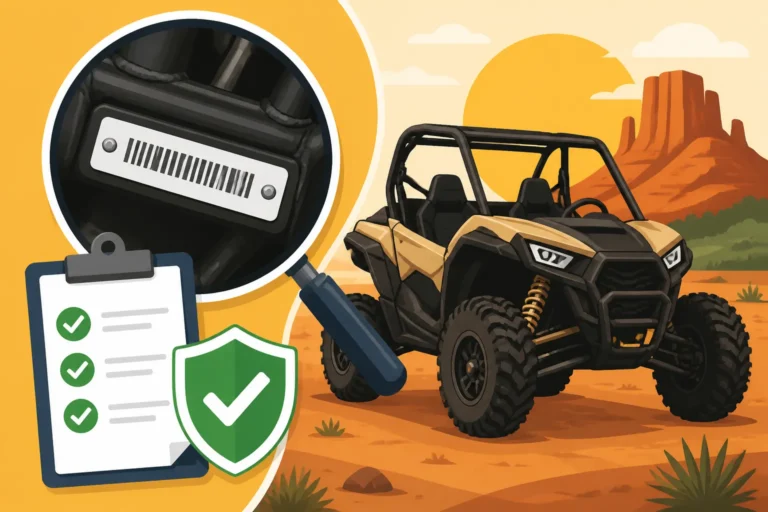
If your decal is lost, damaged, or its numbers become illegible, you'll need to apply for a replacement. The process typically involves contacting the New Mexico Motor Vehicle Division (MVD) or visiting one of their offices. You'll usually need your current registration information, possibly a VIN verification, and be prepared to pay a small fee for the replacement. It's often easier to have all your [New Mexico OHV Registration Paperwork] organized, perhaps kept digitally or in a waterproof pouch, so you can quickly provide the necessary details. Some riders keep important documents like their bill of sale, which can be easily generated using platforms like LawDepot, in a secure location. The MVD wants you to be compliant, so they make the replacement process relatively straightforward. Just be sure to do it before your next ride to avoid any unnecessary penalties or disruptions. Getting a [Replacing a Lost New Mexico Decal] is a small investment for continuous peace of mind on the trails.
Decal Placement at a Glance
To make it easy to remember exactly where your decal belongs, here’s a quick overview of the New Mexico OHV decal placement rules for different vehicle types. This summary covers the essentials for [New Mexico OHV Decal Colors Explained] and where they should be displayed.
| Vehicle Type | Decal Placement | Key Considerations |
|---|---|---|
| ATV | Left rear fender | Clean surface thoroughly; avoid areas prone to mud, heat, or abrasion. |
| UTV / Side-by-Side | Left rear quarter panel | Ensure clear visibility from side and rear; avoid obstruction from accessories. |
| Dirt Bike | Left front fork leg (rigid, non-moving part) | Clean surface meticulously; avoid placement on fork guards or highly flexible areas. |
This table provides a handy reference point, but remember to always consult the official MVD guidelines or this detailed guide for any specific questions. Proper placement is a simple step that goes a long way in ensuring your New Mexico OHV adventures are fun, safe, and legal.
Disclaimer
This article is for general informational purposes only and does not constitute professional advice. Laws, prices and regulations vary by location and change over time. Consult a qualified professional for guidance on your specific situation.