Permission From a Ranch Owner
A ranch road can look like a convenient shortcut to a trail, but a visible track is not an invitation to ride it. In New Mexico, land boundaries, grazing leases and public-land routes can be confusing. Getting clear permission from the person with authority—and agreeing on where, when and how you may ride—helps prevent trespass, protects livestock and keeps a day out from becoming a dispute.
Confirm Who Can Give Permission
Start by identifying the land you want to ride on and who controls it. “Ranch land” can describe privately owned property, leased public land, or a mix of parcels. A rancher may own some ground and lease grazing rights on other ground, so permission from one person may not cover every stretch of a route.
A fence, cattle guard, gate or established two-track does not reliably tell you who owns the land or whether recreational access is allowed. Check property and route information before you ask, and treat an uncertain boundary as a reason to pause—not as permission to continue. What a Cattle Guard Marks on a Ranch Boundary explains why that roadside feature is not a substitute for knowing where the boundary lies.
If the intended ride includes federal or state land, the rancher’s permission may not be enough. A grazing permit or lease generally relates to grazing, not automatic public permission to ride. You may need to follow the land manager’s access rules as well as coordinate with the ranch operator. For background, see New Mexico Rules for Riding a Grazing Allotment and New Mexico Rules for Riding a Ranch Road. If the route crosses tribal land, permission must come from the appropriate authority; a rancher’s approval does not grant access there. Permission to Ride Tribal Roads covers that separate issue.
Ask the person with authority
A useful first question is: “Do you have authority to allow recreational riding on this particular route?” That keeps the conversation straightforward and can reveal that a land manager, co-owner, lessee or another person must also approve access.
Try to reach the owner or authorized manager before arriving with machines. A cold approach at a gate, especially during a busy workday or while livestock are being handled, puts the rancher on the spot. A call or message gives both sides time to discuss the route, timing and conditions without pressure.
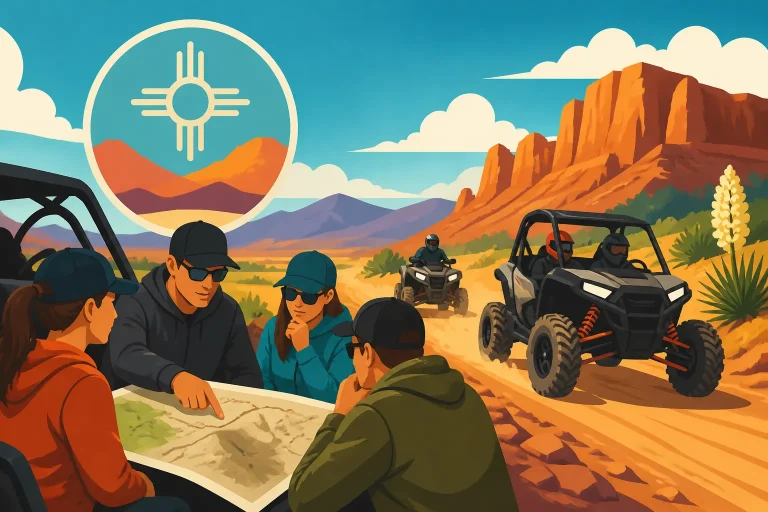
Be specific about your plan. Explain:
- The dates and approximate hours you want to ride.
- How many machines and riders will be in the group.
- Whether you will use ATVs, UTVs or both.
- Where you expect to enter and exit.
- The route or area you hope to use.
- Whether you are asking only to cross the property or to ride there.
- Whether you plan to bring a trailer, dog, passengers or guests.
A request to cross one ranch road is not the same as a request to explore the surrounding pastures. Describe the actual trip rather than asking vaguely to “ride the ranch.” If your route changes, ask again before treating the new route as covered.
Separate private access from public-land rules
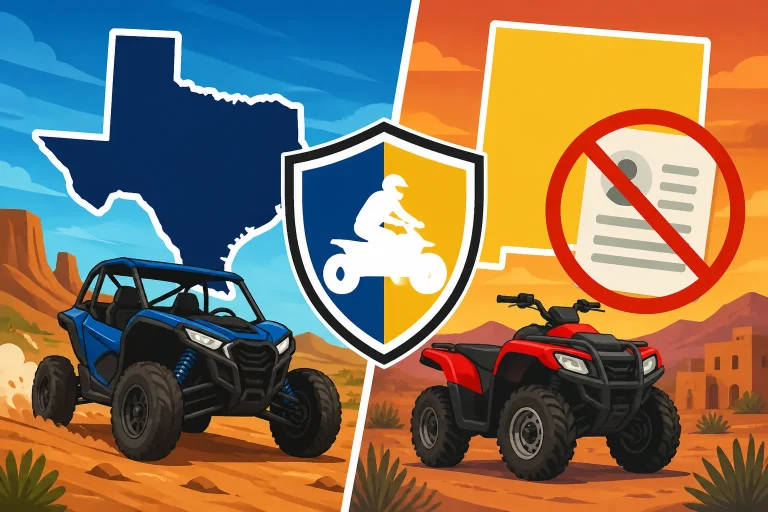
Landowner permission answers one question: whether you may enter the land or use the route the person controls. It does not automatically satisfy vehicle requirements that apply elsewhere. Rules can depend on whether you are a resident or visitor, whether the machine is registered, and whether you ride on private property, public land or a road open to OHVs.
If your outing also reaches public land, check the applicable permit and route requirements before setting out. Start with New Mexico OHV Permits Explained and, for visitors, New Mexico’s Nonresident OHV Permit. A permit does not give you permission to cross private property, and private permission does not make a closed public route legal to ride.
Make the Permission Specific and Keep a Record
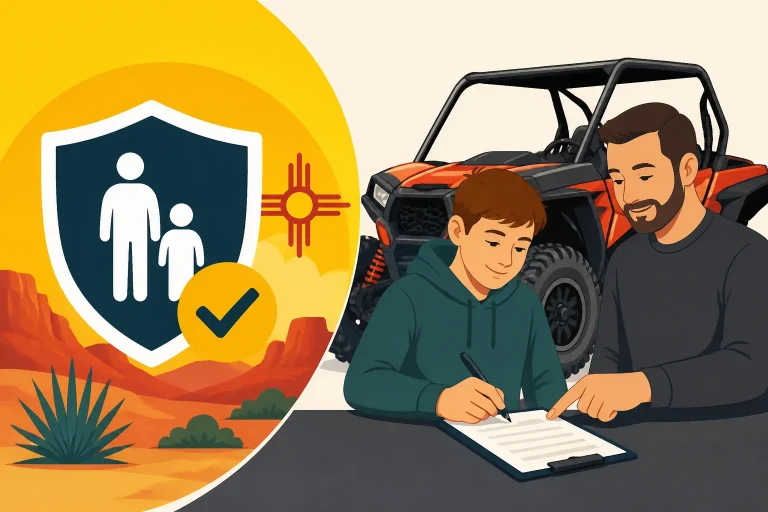
A brief written agreement is often more useful than a general verbal “sure.” It gives everyone the same understanding of where you may go and what conditions apply. A text or email can be enough to record the basic arrangement, although a more formal agreement may be appropriate for repeated access, a large group or a paid activity.
Ask the rancher to confirm the permission in their own words. Keep the response available on your phone and, where practical, carry an offline copy in case there is no signal. If another person in the group is likely to lead or follow a different route, make sure they know the limits too.
| Confirm before riding | What to make clear |
|---|---|
| Authority | Who is granting permission and whether they control the whole route |
| Location | The entrance, exit, roads, trails and areas that are off limits |
| Timing | Approved dates, hours and any seasonal restrictions |
| Group | Number of machines, riders, passengers and any guests |
| Conduct | Speed expectations, livestock distance, noise, gates and stopping |
| Conditions | Whether permission changes with weather, ranch work or fire danger |
| Responsibility | Who to contact about a problem, damage or emergency |
Be precise about route boundaries. “Stay on the ranch road” should not be interpreted as permission to turn onto a side track, ride across a pasture or follow a trail beyond the property. Ask whether the route ends at a particular gate, fence, road crossing or landmark. If the route crosses more than one parcel, confirm each section with the person authorized to grant access there.
Also agree on whether the permission is for a single ride or ongoing access. Do not assume a past invitation covers a later visit, a different group or another season. A ranch’s schedule can change with calving, fencing, water work, hunting activity or other operations. The owner may also set conditions or withdraw access; respect a change rather than treating an earlier approval as permanent.
Avoid informal assumptions about shared access
A friend’s family connection, a neighbor’s permission, or a ranch employee’s casual comment may not establish that the person has authority to approve recreational use. Ask who can give a clear answer. If a rancher says another owner or land manager controls part of the route, stop there and seek that approval.
A road may appear to connect two public areas but still cross private property. Likewise, a route shown on a map does not necessarily mean you may use it. When the status of a road is unclear, do not rely on tire tracks, an open gate or another rider’s presence as evidence of access. Confirm the route with the relevant owner or agency.
Agree on Safe, Ranch-Friendly Riding Rules
Permission is not just about getting through a gate. A ranch is a working place, and a machine can disrupt livestock, damage roads or interfere with daily operations. Ask what conditions matter most to the rancher, then follow them consistently.
Gates, fences and livestock
Agree on how to handle gates before you reach one. If the rancher says to leave a gate as found, make sure the group understands that means checking its original position and securing it properly. If the gate’s position is unclear, contact the owner rather than guessing. Keep the gate rule in the written message if the route has several entrances. Why You Close Every Gate Behind You explains why a small mistake can have consequences for livestock and ranch work.
Give animals room and avoid chasing, crowding or splitting a herd. If cattle, horses or other livestock are on the route, slow well in advance and follow the rancher’s instructions. Do not assume animals will move safely away from a machine. If the route is blocked, wait at a safe distance and call the contact rather than pushing through the herd or leaving the approved route.
If you see a broken fence, an animal in trouble or an unsecured gate, report it promptly. Do not try to make repairs or move livestock unless the rancher has asked you to do so and explained how. A machine can spook animals even when the rider is trying to help.
Speed, noise and ground conditions
Ask what speed is appropriate and whether there are areas where you should idle or shut off the engine. Even if no speed is written into the permission, ride slowly enough to stop safely and avoid throwing dust, rocks or mud toward livestock, buildings, vehicles or other people.
Stay on the agreed road or trail. Cutting a corner can damage vegetation, loosen soil or create a new track that encourages later riders to leave the route. Avoid riding when wet ground is soft enough to rut, unless the rancher has specifically approved it. Ruts can channel water and make the road harder to maintain.
Use a machine that suits the route. A wide UTV may not fit a narrow ranch road or may cause more damage at a tight turn than an ATV. Tell the owner what you plan to bring rather than assuming that permission for one type of machine covers another. If the route is narrow, steep or shared with ranch vehicles, ask whether the machine’s width is acceptable. New Mexico Trails for a Wide Side-by-Side offers useful considerations when route width is part of the planning.
Ranch work takes priority
Ranch operations can change quickly. A road that was open during the first part of a ride may become unsafe or unavailable when workers, trucks, livestock or equipment move through the area. Yield, follow directions and be prepared to turn around.
Agree on what to do if you encounter a locked gate, a “no entry” notice, active work or a person who says the route is closed. The safest answer is to stop and contact the person who granted permission. Do not climb a fence, drive around a locked gate or continue because you have already traveled part of the route.
If the rancher asks riders to avoid an area, treat that limit as part of the permission. It may protect livestock, water facilities, a home site, wildlife or a work zone. Do not photograph or approach private buildings unless invited, and do not bring additional riders without approval.
If Plans Change or Something Goes Wrong
Good preparation includes a plan for the unexpected. Before leaving, make sure someone in the group has the rancher’s contact details and knows the approved route. Save the route information offline if coverage is unreliable. Carry basic recovery and repair supplies appropriate to the machines and terrain, but do not assume you can access a different road to get help.
If weather, fire danger, a breakdown or a route closure changes the plan, contact the rancher before leaving the approved area if you can do so safely. If there is an immediate safety emergency, prioritize getting people out of danger and then notify the owner as soon as practical. Do not use an emergency as a reason to make a new route the default for later rides.
Report damage honestly and promptly, even if it appears minor. A flat tire, a damaged gate, a new rut or a machine that has disturbed livestock may create a problem the owner needs to handle right away. Clear communication is more useful than hoping the issue goes unnoticed. If the rancher asks the group to leave, do so calmly and by the approved route where safe.
Permission also does not settle every question about responsibility. Before riding, ask whether the owner has specific safety expectations or conditions, and check your own insurance and machine requirements. Avoid assuming that an informal invitation waives liability or covers damage. If access is recurring, commercial, organized or involves a large group, discuss a written agreement and seek qualified advice about the arrangement.
A simple checklist can prevent common misunderstandings:
- Identify the property and every parcel the route crosses.
- Confirm that the person granting access has authority.
- Get approval for the specific date, machines, riders and route.
- Record the conditions and keep them available during the ride.
- Check separate permit and access rules for any public-land segments.
- Review gate, livestock, speed, noise and weather expectations with the group.
- Stop and ask if the route or circumstances differ from what was approved.
- Report problems and leave the property as directed.
The clearest permission is limited, specific and easy to verify. If the owner cannot confirm the route or authority, choose another place to ride rather than trying to sort it out at the fence. For more on conduct around working land, see Riding a Grazing Allotment Politely and New Mexico Rules for Riding Private Land.
Disclaimer
This article is for general informational purposes only and does not constitute professional advice. Laws, prices and regulations vary by location and change over time. Consult a qualified professional for guidance on your specific situation.