New Mexico Rules for a Passenger Under 18
A child riding on an ATV or UTV raises two different questions: whether the machine can carry a passenger, and whether the person driving it is old enough to do so. In New Mexico, those distinctions matter. Here’s how to think through a minor riding as a passenger, a minor operating the machine, and the permits and safety rules that apply.
The passenger’s age is not the same as the driver’s age
A person under 18 riding as a passenger is not automatically subject to the same rules as a person under 18 operating the ATV or UTV. If an adult is driving, the key passenger question is whether the machine was designed by its manufacturer to carry a passenger and has an appropriate passenger seat.
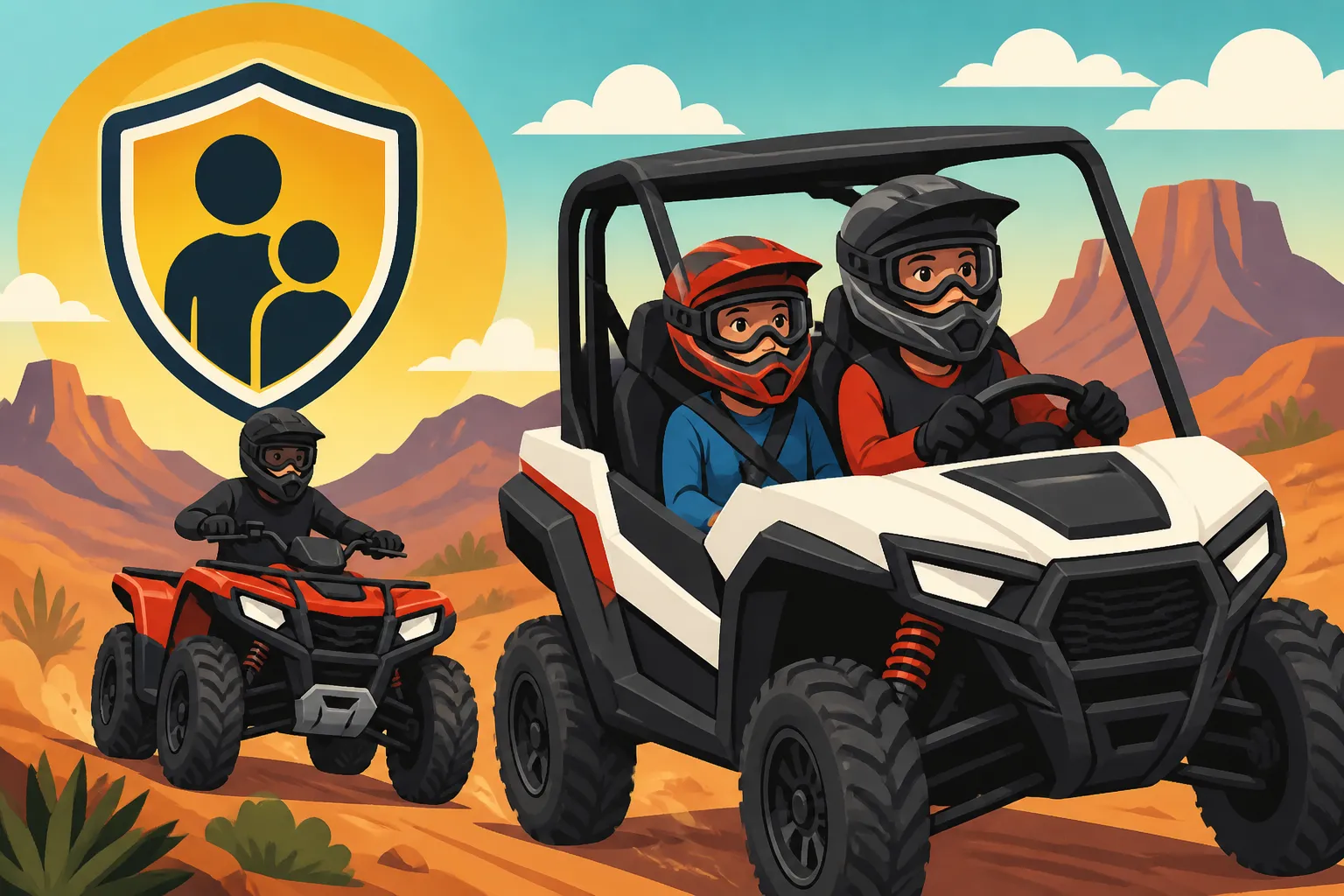
A passenger should ride only in a seat intended for that purpose, with the passenger’s feet on the footrests or floorboards and hands on the available handholds. A child should never ride on a lap, in a cargo bed, on a rear rack, or in any other improvised spot. A machine’s size or appearance does not make it a two-person vehicle. Check the manufacturer’s guidance for the specific model.
A youth passenger also needs properly fitted protective gear. On public land, New Mexico requires riders under 18 to wear a helmet and eye protection. A passenger is still a rider, even when an adult is driving. A helmet that shifts, sits too high, or has a loose chin strap may not protect a child well. If buying gear online, including through Amazon, check the product’s safety certification and fit carefully rather than relying on age ranges alone.
| Situation | What to check |
|---|---|
| A minor rides with an adult | The machine is manufacturer-designed for a passenger, and the child has a proper seat and protective gear |
| A minor operates alone | The rider meets the applicable age and safety requirements for the place of use |
| A minor operates with a passenger | Do not assume a second seat makes this permissible; follow the under-18 operator rule |
| The machine is rented or borrowed | Confirm passenger capacity, age rules, and any owner or rental restrictions |
| The ride is on public land | Check registration or permit requirements, route rules, and youth safety requirements |
The distinction between a passenger and an operator also matters for the youth safety permit. New Mexico’s safety permit requirements apply to young people who operate an OHV; a passenger does not become an operator merely by riding along. But having a permit, completing a course, or being supervised does not override a restriction on carrying a passenger. See New Mexico Safety Permit for a Minor and New Mexico Supervision Rules for Young Riders for the separate rules that apply when a young person is driving.
Before carrying a child, check the machine’s owner’s manual and the rules for the land where you plan to ride. A manufacturer-approved passenger seat is a starting point, not a guarantee that every route or riding situation is appropriate for a child. A narrow trail, steep climb, rough surface, or fast-moving group can make a ride unsuitable even when the machine can legally carry a passenger.
What changes when the driver is under 18
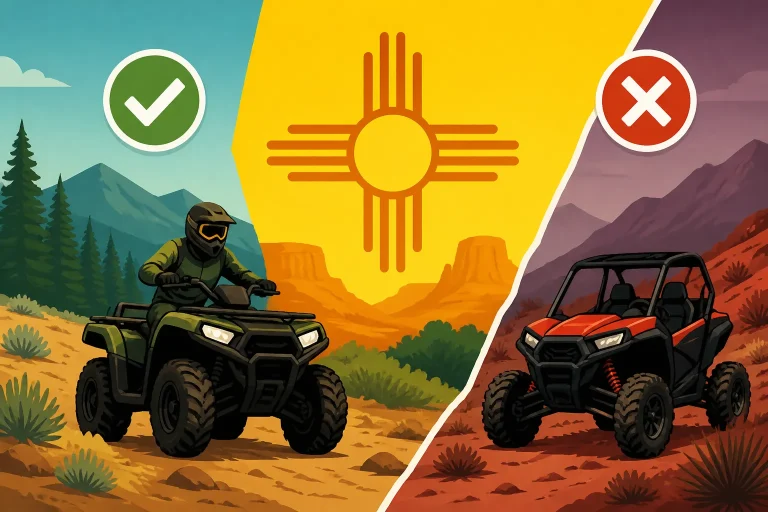
The most important practical rule for families is to treat a rider under 18 as a no-passenger operator. Do not assume that a youth can carry another person simply because the ATV or UTV has a passenger seat. A two-seat machine does not, by itself, make it appropriate for a minor to drive with someone aboard.
That rule is easy to confuse with the general requirement that an OHV must be designed to carry passengers before anyone rides as a passenger. These are separate checks. A machine can be built for two people, yet a restriction may still apply to a driver under 18. The safest approach is not to let a minor carry a passenger unless you have confirmed the current rule with the relevant official source for the location and type of riding.
This also means that a parent’s presence does not automatically make a passenger ride permissible. Supervision rules and passenger rules address different things. A supervising adult may be required when a minor operates an OHV, but supervision does not necessarily create an exception to a no-passenger restriction. For the adult’s role and the meaning of supervision, see Visual Supervision and What It Means.
A minor who rides alone still needs to meet the requirements for operating the machine. Those can depend on the rider’s age, the machine, and whether the ride takes place on public land. New Mexico’s safety permit requirements for young operators are separate from registration, nonresident permits, and rules about where the vehicle may travel. A permit for a rider does not replace the machine’s required registration or permission to use a particular route.
The rules may also differ depending on the land. Public land, private land, and roads open to OHV use can have different requirements. A family ride on private property is not automatically governed by every public-land rule, but permission from the landowner does not authorize riding on a public road or a closed route. For a broader explanation of youth operating requirements, see New Mexico Minimum Age to Ride Public Land and New Mexico Rules for a Rider Under 13.
When you are unsure, separate the questions rather than treating a safety course or adult supervision as a general approval:
- Is the person driving legally allowed to operate this kind of machine in this location?
- Does the rider need a New Mexico safety permit or other proof?
- Is the machine registered or otherwise authorized for the ride?
- Is the machine designed for a passenger?
- Does the under-18 operator rule allow a passenger?
- Are the route and land open to this type of OHV?
If the answer to the passenger question is uncertain, have the adult operate the machine and carry the child only in a manufacturer-designated passenger seat, or arrange separate machines with no passenger on the youth-operated vehicle. Do not try to solve uncertainty by having the child sit in a cargo area or by putting two riders on a one-person ATV.
Check permits, machine rules, and the ride before setting out
Passenger rules are only one part of a legal ride. New Mexico residents and visitors may have different registration or permit obligations, and a machine’s home-state paperwork does not necessarily answer every question about its use in New Mexico. Before leaving, confirm what applies to the vehicle and where you intend to ride. The distinction between an OHV registration and a visitor permit is explained in New Mexico OHV Reciprocity Rules.
For a nonresident, do not assume that every out-of-state registration is treated the same way. Whether New Mexico recognizes a home-state registration can depend on whether that state has an OHV program and what proof the rider can show. If the machine does not meet the applicable reciprocity conditions, a New Mexico permit may be needed. Carry the required proof with you, and check current requirements before a trip rather than relying on another rider’s experience.
A rented or borrowed vehicle adds another layer. Rental companies and owners may set stricter age, passenger, or route conditions than the minimum rules. A machine that is legally able to carry a passenger may still be off-limits to a child under the rental agreement. Read the agreement and ask the provider to identify which seat is intended for a passenger. For more on rentals, see New Mexico Rules for a Rented Machine.
Use this practical pre-ride check:
- Confirm who is driving. If the operator is under 18, do not plan to carry a passenger unless you have verified that the current rule clearly allows it.
- Confirm the passenger seat. Use only a seat and restraints intended by the manufacturer for a passenger. Do not use a cargo bed or rack as a substitute.
- Fit the gear. Make sure the child’s helmet and eye protection fit securely and are suitable for the ride. On public land, under-18 riders need the required protection.
- Check the youth requirements. If a minor will operate, verify the applicable age, safety permit, and supervision rules before starting the engine.
- Check the machine’s paperwork. Confirm that the registration or visitor permit requirements are met and that the required proof is available.
- Check the route. A permitted machine is not necessarily allowed on every road or trail. Look for current land-manager information and obey posted closures.
- Set expectations. Explain that the passenger must stay seated, keep hands and feet inside the machine, use the available restraints, and follow the driver’s instructions.
These checks help avoid a common misunderstanding: “It has two seats” does not answer whether a particular person may drive it with a passenger. The operator’s age, the machine’s design, and the location all matter. When the situation involves a young driver and a second rider, confirm the current rule before the ride rather than relying on assumptions.
Disclaimer
This article is for general informational purposes only and does not constitute professional advice. Laws, prices and regulations vary by location and change over time. Consult a qualified professional for guidance on your specific situation.