New Mexico’s Yellow and Green Decals
It’s easy to feel overwhelmed by the alphabet soup of regulations and requirements when you’re just trying to enjoy the stunning landscapes of New Mexico on your ATV or UTV. One of the most common sources of head-scratching is the state’s dual decal system – those vibrant yellow and green stickers that appear on so many off-highway vehicles. This guide aims to clear up the confusion, helping you understand exactly what each decal signifies, who needs which one, and how to get your machine legal for the trails and, in some cases, even the pavement.
Unpacking New Mexico's Dual Decal System
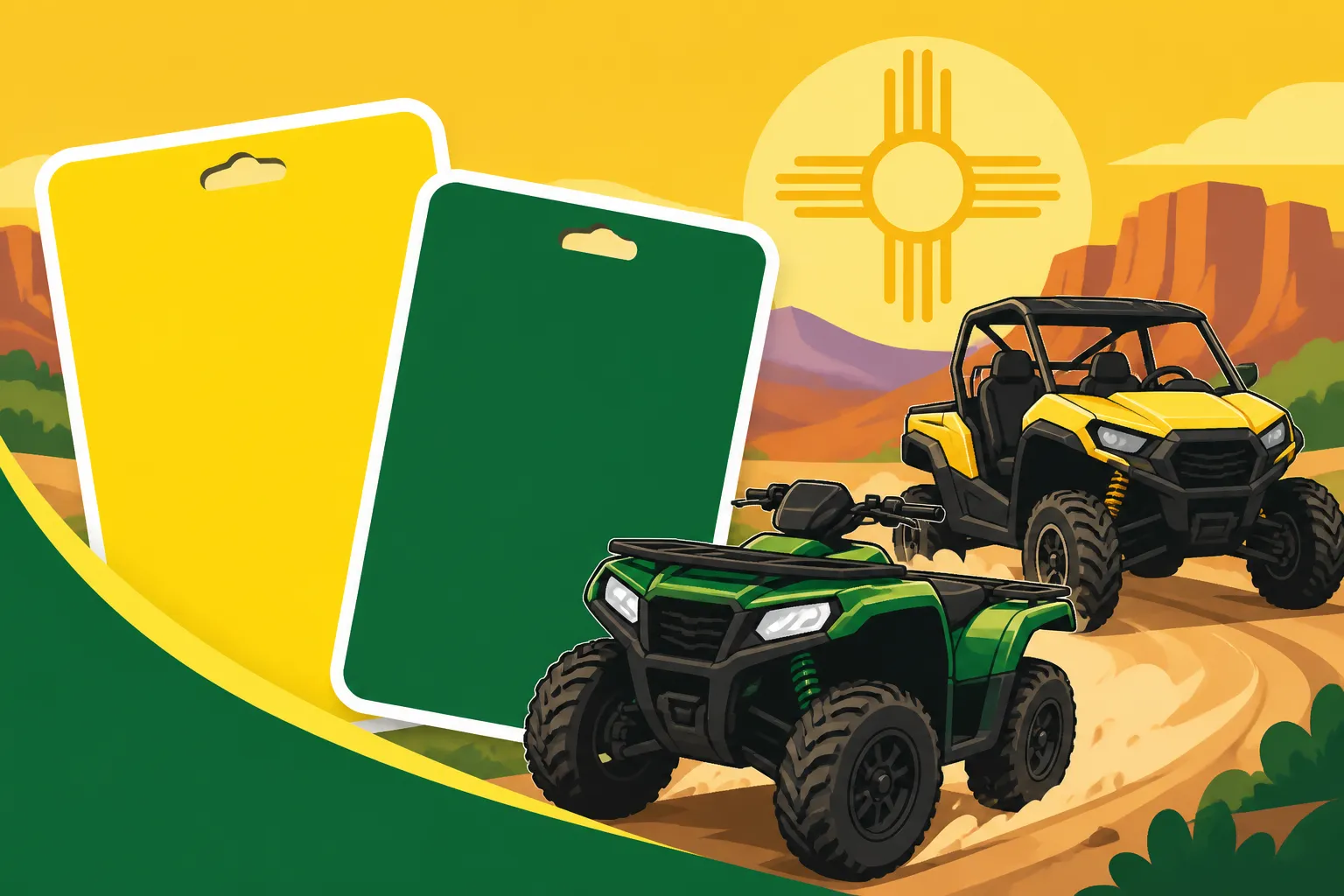
For years, New Mexico riders have navigated a somewhat complex system of off-highway vehicle (OHV) identification. It’s not just about having a sticker; it’s about having the right sticker in the right place for the type of riding you intend to do. The state developed these distinct decals to categorize OHVs based on their intended use, primarily differentiating between machines that will strictly stay off paved roads and those that might occasionally venture onto them. This distinction is crucial for both rider safety and environmental protection, as it helps define legal riding areas and ensures compliance with state statutes.
The Distinct Purpose of the Yellow Decal
Think of the yellow decal as your passport to New Mexico’s incredible network of dirt trails, arroyos, and designated off-road areas. This is the standard registration decal for any off-highway vehicle that will only be ridden off paved public roads. If your side-by-side lives on the ranch, or your dirt bike only sees action on dedicated trails, the yellow decal is what you need. It signifies that your machine is properly registered with the state, contributing to the funding of OHV programs and trail maintenance, but it explicitly prohibits riding on public paved roads. Many riders choose this decal because their adventures rarely, if ever, cross paths with asphalt, making it a straightforward and cost-effective option for pure off-road enthusiasts. This decal is a clear indicator to law enforcement and land managers that your machine is compliant for off-pavement use. You'll find more details on its specific requirements in [New Mexico's Yellow Off-Highway Decal].
It’s important to understand that while this decal grants you access to countless miles of off-road fun, it does not grant you the right to ride on paved public roads. Attempting to do so with only a yellow decal can lead to fines and other penalties. The yellow decal is a testament to the state's commitment to managing its vast natural resources, ensuring that vehicles operating on sensitive terrain are accounted for and contribute to the system that maintains those very trails. For many, the yellow decal represents the freedom of the open desert and the challenge of mountain paths, all within the bounds of responsible recreation.
The Expanded Scope of the Green Decal
Now, if your riding adventures sometimes involve connecting trails via a short stretch of paved county road, or if you need to travel a few blocks through a small town to reach your favorite staging area, the green decal becomes your essential companion. The green decal, officially known as the "On-Highway and Off-Highway Decal," signals that your OHV meets additional requirements allowing it to legally operate on certain paved public roads within New Mexico. This isn't a free pass to cruise the interstate, mind you, but it opens up significant possibilities for more seamless journeys between off-road areas. It’s particularly useful for riders who frequent areas where trails aren’t continuous, or where towns have ordinances allowing OHV use on specific streets. This decal acknowledges the reality that sometimes, to get to the best dirt, a little asphalt is unavoidable. You can learn more about this versatile decal in [New Mexico's Green On and Off-Highway Decal].
The green decal comes with a few extra stipulations. Beyond the standard OHV registration, your machine must typically meet certain equipment requirements (like mirrors, headlights, and taillights) and you, as the operator, must carry proof of financial responsibility (insurance) and a valid driver's license. These additional requirements are put in place to ensure safety when OHVs share the road with traditional motor vehicles. The green decal is a game-changer for many, allowing for extended rides and greater flexibility in route planning. It represents an acknowledgment by the state that OHVs are a legitimate form of transportation for recreation and sometimes even for practical purposes, provided they adhere to the rules of the road.
The Vision Behind the Two-Tiered Approach
The dual decal system in New Mexico isn't just about different colors; it's a carefully considered approach to managing the diverse ways people use their off-highway vehicles. The primary vision is to ensure that all OHVs operating on public lands are registered, which helps fund vital programs like trail maintenance, rider education, and enforcement efforts. By differentiating between purely off-road machines and those that will occasionally use paved roads, the state can tailor regulations and requirements to specific use cases, enhancing safety for everyone. It acknowledges that a dirt bike ripping through the desert has different implications than a UTV briefly navigating a small town's main street.
This two-tiered system also helps to minimize confusion and conflict between OHV users and other road users. When a machine displays a green decal, it visually communicates to other drivers and law enforcement that it's authorized for certain paved road use, assuming all other conditions (insurance, license, equipment) are met. Conversely, a yellow decal immediately clarifies that a machine should not be on the pavement. This clear visual distinction is a practical solution to a complex issue, helping to define boundaries and responsibilities. The system ultimately aims to promote responsible riding, ensure the sustainability of New Mexico's OHV opportunities, and provide a framework for both compliance and enjoyment.
Who Needs Which Decal? Navigating Eligibility
Deciding between a yellow and a green decal boils down to one critical question: do you intend to ride your OHV on any paved public roads, even for short distances? Your answer will directly dictate which decal you need to pursue. It’s not just a matter of preference; it’s a legal distinction with real consequences if you choose incorrectly. Many riders, especially those new to the state or new to OHV ownership, find themselves scratching their heads over this. The key is to think about your typical riding habits and any potential scenarios where you might briefly need to traverse paved asphalt.
Requirements for the Standard Yellow Off-Highway Decal
Getting your yellow off-highway decal is the baseline requirement for most OHV owners in New Mexico. If your quad, side-by-side, or dirt bike will be used exclusively off-road—whether on designated trails, private property, or permitted public lands—this is the decal you need. The requirements are generally straightforward: you must register your OHV with the New Mexico Motor Vehicle Division (MVD). This typically involves providing proof of ownership, such as a title or manufacturer's certificate of origin, and a valid form of identification. Sometimes, if you're buying a used machine without a formal title, a well-drafted bill of sale, perhaps generated through a service like LawDepot, can be crucial for establishing ownership. The MVD is the central authority for this process, streamlining what could otherwise be a fragmented system.
During the registration process, you'll pay the applicable fees, which contribute directly to the state’s OHV recreation fund. Once registered, you'll receive your yellow decal, which must then be properly affixed to your machine. This decal confirms that your vehicle is legitimate for off-pavement use. Remember, the yellow decal is your signal that you are a responsible off-road enthusiast who contributes to the maintenance and future of New Mexico's incredible trail systems. It ensures that your machine is accounted for, and that you're playing by the rules when you head out to explore the stunning New Mexico backcountry. For a first-timer, understanding [New Mexico's First OHV Registration] can be quite helpful.
Qualifying for the On and Off-Highway Green Decal
If your riding plans extend to occasionally traversing paved roads, the green on and off-highway decal is your target. To qualify for this decal, you must first complete the standard OHV registration process for the yellow decal. Think of the green decal as an add-on to your basic registration, not a replacement. Beyond basic registration, your OHV needs to meet additional safety and equipment standards that are mandated for road-legal vehicles. These often include:
- Headlights and Taillights: Functioning lights are a must, visible from specified distances.
- Brakes: Effective braking systems are non-negotiable for road safety.
- Mirrors: At least one rearview mirror, and often two, are required to see traffic behind you.
- Muffler and Spark Arrester: Your exhaust system must meet noise limits and be equipped with a spark arrester if you're riding on federal lands.
- Horn: A working horn is necessary for signaling.
In addition to these equipment upgrades, you, the operator, must possess a valid driver's license and carry proof of liability insurance that meets New Mexico's minimum financial responsibility requirements. This insurance is critical because it protects you and others in the event of an accident on a public road. You'll need to present proof of this insurance when applying for the green decal. The requirements can feel like a bit of a hurdle, but they are all in place to ensure that when your OHV shares the road with cars and trucks, it does so safely and responsibly. The state relies on the MVD to verify all these requirements before issuing the green decal, so come prepared with all your documentation. For specifics on the financial aspect, check out [New Mexico OHV Registration and Liability Insurance].
What If You Already Have a Paved Road Plate?
This is a common question, especially for long-time New Mexico OHV owners. Prior to 2017, New Mexico offered a "paved road plate" program that allowed certain OHVs to operate on designated paved roads. However, this program has since been superseded. If your machine currently has one of these older paved road plates, it’s important to understand that the system has transitioned. The state moved away from the physical plate to the current two-tiered decal system (yellow and green) to simplify enforcement and standardize requirements across various OHV types.
If you have an older paved road plate, you should verify its current validity with the MVD, as it might have a sunset date. In most cases, you will eventually need to transition to the new green decal system if you wish to continue riding on paved roads. This would involve ensuring your machine meets all the current green decal equipment requirements and that you have the necessary insurance and driver’s license. Essentially, while your old plate might have grandfathered you in for a time, the long-term expectation is to convert to the current decal system. It’s always best to check with the MVD directly for the most up-to-date information on how to handle an older paved road plate, ensuring you remain compliant and avoid any unexpected issues while riding.
The Nuts and Bolts of Decal Placement
You’ve gone through the effort of registering your OHV and securing the correct decal. Now comes a seemingly simple but critically important step: proper decal placement. It's not just about slapping it on wherever it looks good. New Mexico has specific regulations regarding where these decals must be affixed on different types of off-highway vehicles. Incorrect placement can lead to citations, as law enforcement needs to easily verify your registration and road-use authorization. Think of it as putting your license plate in the right spot on your car – it’s about clear identification and compliance.
Where the Yellow Decal Must Be Affixed
For the standard yellow off-highway decal, the placement rules are designed for maximum visibility and durability, considering the rugged environments OHVs operate in. The general rule is that the decal must be prominently displayed on the rear of the vehicle, visible from the rear. However, the exact spot can vary slightly depending on the type of machine:
- ATVs (Quads): The yellow decal is typically required on the rear fender or another prominent, flat surface on the rear of the machine, often on the left-rear side. It needs to be clean and unobstructed.
- Side-by-Sides (ROVs/UTVs): For side-by-sides, the decal is usually affixed to the rear quarter panel, again, ensuring it's clearly visible from behind. Many manufacturers include designated flat areas for this purpose.
- Dirt Bikes/Off-Highway Motorcycles: On dirt bikes, the decal is often placed on the left fork leg or a clearly visible spot on the rear fender. The goal is easy readability without being obscured by mud or riding gear.
The decal should be applied to a clean, flat surface to ensure proper adhesion. Peeling or damaged decals can be hard to read and may need replacement. It’s a good practice to ensure your decal is protected from excessive wear and tear, as an unreadable decal is as good as no decal in the eyes of an officer. You can find more precise instructions for your specific machine in [Where New Mexico Decals Mount by Vehicle Type].
Specifics for Green Decal Mounting
The green on and off-highway decal follows essentially the same placement rules as the yellow decal. Because it's an enhancement to the base registration, it needs to be placed in the same location where the yellow decal would typically go, or, in some cases, directly adjacent to it if there's enough space. The critical factor remains visibility from the rear of the machine.
- ATVs: Rear fender, visible from the left-rear.
- Side-by-Sides: Rear quarter panel.
- Dirt Bikes/Off-Highway Motorcycles: Left fork leg or rear fender.
Since the green decal indicates additional privileges (and responsibilities) for road use, its clear display is even more paramount. When you're briefly on a paved road, law enforcement needs to quickly identify that your machine is authorized for that use. An improperly placed or obscured green decal could lead to an unnecessary stop or a citation, even if your machine meets all other requirements. Therefore, take extra care to ensure it’s firmly attached, clean, and positioned exactly as mandated by the MVD. A bit of upfront attention here can save you a lot of hassle down the road.
Why Decal Placement Matters for Enforcement
The seemingly minor detail of decal placement holds significant weight when it comes to enforcement. Law enforcement officers, whether on an ATV trail or a county road, rely on the quick visual identification of your decal to confirm your machine's legal status. If your decal is missing, obscured, or placed incorrectly, it raises immediate red flags. This can lead to:
- Traffic Stops: On paved roads, an officer might stop you if they can't clearly see your green decal, assuming you're operating an unregistered or unauthorized OHV.
- Trail Checks: In off-road areas, rangers or deputies conduct routine checks. An unreadable or improperly placed yellow decal can invite closer scrutiny of your registration status.
- Fines: Operating an OHV without a visible, valid decal can result in citations and fines, sometimes equivalent to operating an unregistered vehicle.
Beyond legal implications, proper decal placement contributes to the overall order and safety of OHV recreation. It's part of being a responsible rider and showing respect for the regulations designed to protect riders, the environment, and the broader community. Always take a moment to double-check your decal before heading out on your next adventure, ensuring it’s exactly where it needs to be. This simple step is an integral part of [New Mexico Fines for an Unregistered OHV] and staying compliant.
The Journey to Obtaining Your New Mexico OHV Decals
The process of getting your New Mexico OHV decals isn't overly complicated, but it does require attention to detail and a visit to the right place. Just like registering a car, it involves paperwork, identification, and a little bit of patience. Understanding the steps beforehand can make the experience much smoother and get you out on the trails faster. The Motor Vehicle Division (MVD) is your key point of contact for this, as they handle all OHV registrations in the state.
Starting with Registration at the MVD
The very first step in obtaining either a yellow or green decal is to register your off-highway vehicle with the New Mexico Motor Vehicle Division. This isn't something you can typically do online or at a simple sporting goods store; it's a formal process handled by the state's vehicle registration agency. Whether you’re registering a brand-new machine or one you’ve just purchased used, the MVD is where you’ll begin. This centralization helps ensure consistent record-keeping and proper fee collection across the state. Remember, even if you only plan to ride on private land, if you ever transport your OHV on public roads (even just trailering it), or if you venture onto public trails, it needs to be registered.
When you head to the MVD, it’s always best to be over-prepared rather than under-prepared. Expect to present your personal identification, proof of ownership for the OHV, and any necessary forms. Don't be surprised if there's a bit of a wait, especially during peak hours, so plan your visit accordingly. The staff at the MVD are there to help guide you through the process, but having your ducks in a row will make everything go much more quickly. For a deeper dive into why the MVD is the go-to agency, check out [Why MVD Registers New Mexico OHVs].
Required Paperwork and Proof of Ownership
Gathering the correct paperwork is crucial for a smooth registration experience. Here's a rundown of what you'll typically need to bring to the MVD:
- Proof of Ownership: This is the most critical document.
- New Machines: A Manufacturer’s Certificate of Origin (MCO) or Manufacturer’s Statement of Origin (MSO) is required.
- Used Machines: A title (if the machine was previously titled) or a bill of sale that clearly identifies the buyer, seller, vehicle identification number (VIN), and purchase price. Sometimes, especially with older machines or private sales, a robust bill of sale, perhaps drafted using a service like LawDepot, can serve as essential proof.
- Personal Identification: A valid driver's license or state-issued ID.
- Application for Vehicle Registration: The MVD will provide this form, or you can often download it from their website beforehand to fill out.
- Proof of Insurance (for Green Decal only): If you're applying for the green on and off-highway decal, you'll need to show proof of New Mexico-compliant liability insurance for your OHV.
- Power of Attorney (if applicable): If someone else is registering the vehicle on your behalf.
- Lien Holder Information (if applicable): If there's a lien on the vehicle, you'll need the lienholder's name and address.
Ensuring you have all these documents in order before your MVD visit can prevent frustrating delays. Missing even one piece of paper can mean having to reschedule, costing you precious riding time. Make copies of everything for your records, too! You can find a complete list of what to bring in [New Mexico OHV Registration Paperwork].
Understanding Initial Fees and Renewals
There are fees associated with registering your OHV and obtaining your decals, and these fees play a vital role in supporting the OHV community in New Mexico. The initial registration fee covers the processing and issuance of your decal. These funds are not just for administrative costs; a significant portion is often directed towards the New Mexico Department of Game and Fish (NMDGF) OHV program, which uses the money for things like:
- Trail Development and Maintenance: Keeping trails open, safe, and enjoyable.
- Rider Education and Safety Programs: Promoting safe riding practices.
- Signage: Ensuring clear trail markers and regulatory signs.
- Law Enforcement: Funding patrols to ensure compliance and safety on trails.
Understanding [New Mexico OHV Registration Cost] can help you budget for this important step.
OHV registrations in New Mexico are typically valid for two years, after which they need to be renewed. The renewal process is usually simpler than the initial registration, often requiring just a renewal form and the appropriate fee. However, if you are renewing a green decal, you will still need to show proof of current insurance. The MVD will usually send out a renewal notice as your expiration date approaches, but it’s always a good idea to mark your calendar and keep track of your renewal date yourself. Keeping your registration current is key to avoiding fines and ensuring you can continue to enjoy New Mexico's trails legally. Check out [Renewing a New Mexico OHV Registration] for more details on this recurring process.
| Decal Type | Purpose | Paved Road Use Allowed | Key Requirements (Beyond Registration) | Typical Placement | Valid For |
|---|---|---|---|---|---|
| Yellow | Standard Off-Highway Use | No | None (beyond basic OHV registration) | Rear fender/quarter panel, left fork leg | 2 Years |
| Green | On-Highway and Off-Highway Use | Yes (designated roads) | Valid Driver's License, Liability Insurance, Road-Legal Equipment (lights, mirrors, horn, etc.) | Rear fender/quarter panel, left fork leg | 2 Years |
Riding Legally: Connecting Decals to Road Use
The yellow and green decals aren't just decorative stickers; they are legal permissions that define where and how you can operate your off-highway vehicle in New Mexico. Understanding these limitations and permissions is paramount to enjoying your ride without running afoul of the law. Many riders get into trouble not because they intend to break the rules, but because they simply don't understand the nuances of the decal system and its implications for road use.
Limitations of the Yellow Decal on Paved Surfaces
If your OHV proudly displays a yellow decal, it means your machine is registered for off-highway use only. This is a critical distinction. With a yellow decal, you are generally prohibited from operating your OHV on any paved public roads in New Mexico. This includes state highways, county roads, and city streets. The only exception often allowed is a perpendicular crossing of a paved road to get from one off-road section to another, but even this has strict rules: you must stop completely, yield to traffic, and cross as directly and safely as possible. You cannot ride down the shoulder, even for a short distance.
The rationale behind this restriction is primarily safety. Off-highway vehicles, by their nature, are designed for different terrain and speeds than typical street vehicles. They may lack the stability, braking, and signaling capabilities required for safe operation in traffic. Furthermore, operators with only a yellow decal aren't required to have a driver's license or liability insurance, which are fundamental for legal road use. Violating this rule by riding on paved roads with only a yellow decal can result in significant fines and penalties. It's a clear signal from the state: if you have a yellow decal, stick to the dirt!
The Freedoms and Responsibilities of Green Decal Holders
The green decal, however, offers a much broader scope of operation. If your OHV is equipped with a green on and off-highway decal, it means you are legally permitted to operate your machine on certain paved public roads in New Mexico. This is a huge advantage for riders who need to connect trails, access fuel, or navigate small towns where OHV use is permitted on specific streets. However, this freedom comes with significant responsibilities and important limitations:
- Designated Roads Only: The green decal does not authorize you to ride on all paved roads. State highways and interstate highways are generally off-limits. Most authorized road use applies to county roads and city streets where local ordinances explicitly allow OHV traffic. It's crucial to check local regulations before riding on any paved road.
- Driver's License and Insurance: You must have a valid driver's license and carry proof of New Mexico-compliant liability insurance at all times when operating on paved roads. These are non-negotiable requirements that elevate your OHV to a status similar to any other vehicle on the road.
- Road-Legal Equipment: As mentioned earlier, your OHV must be equipped with working headlights, taillights, brake lights, mirrors, a horn, and a muffler meeting noise standards.
- Traffic Laws: When on a paved road, your OHV is subject to all the same traffic laws as cars and trucks. This means obeying speed limits, traffic signals, stop signs, and yielding rules.
Ignoring any of these responsibilities can lead to fines, citations, and even serious accidents. The green decal is a privilege, not an absolute right, and it demands a higher level of awareness and compliance from the operator. For more information on this, refer to [New Mexico Rules for Riding a County Road].
Navigating Designated OHV Routes and Public Lands
Regardless of whether you have a yellow or green decal, both are essential for legal riding on designated OHV routes and public lands across New Mexico. The decals signify that your vehicle is registered and contributes to the system that manages these areas. Most public lands, including those managed by the Bureau of Land Management (BLM) and the U.S. Forest Service, require OHVs to be registered with the state (or have an equivalent nonresident permit).
When riding on public lands, always be aware of local rules and designated routes. "Open riding" areas are becoming less common, and many federal and state lands operate under a "travel management plan" that restricts OHV use to marked trails and roads. Your decal simply gets you through the gate; it doesn't give you carte blanche to ride anywhere. Always look for signage, consult maps, and respect environmental closures. Adhering to these guidelines helps preserve these valuable resources for future generations of riders.
Troubleshooting Common Decal Dilemmas
Even the most meticulous riders can run into issues with their decals. Whether it's a decal that peels off under the desert sun, one that gets torn on a low-hanging branch, or simply forgetting when it's time to renew, these small problems can lead to big headaches if not addressed promptly. Knowing how to handle these common dilemmas can save you from potential fines and keep your riding adventures worry-free.
What to Do If Your Decal Is Lost, Damaged, or Stolen
It happens. Your vibrant yellow or green decal might get sun-faded, torn by an errant branch, peel off in extreme weather, or even go missing altogether. If your decal is no longer clearly visible or is gone, you need to replace it. Operating your OHV without a visible, valid decal is essentially the same as operating an unregistered vehicle and can result in fines.
Here’s what you should do:
- Stop Riding: If your decal is unreadable or missing, refrain from riding on public lands or roads until you have a replacement.
- Contact the MVD: The New Mexico Motor Vehicle Division is the agency that issued your original decal, so they are the ones who can issue a replacement. You’ll likely need to fill out a form for a duplicate decal and pay a small replacement fee.
- Provide Proof of Ownership/Registration: Have your vehicle's registration information and personal ID handy. They'll need to verify you are the registered owner.
It's a relatively simple process, but one you shouldn't delay. A fresh, clearly visible decal ensures you remain compliant and avoids any unnecessary interactions with law enforcement. Don't risk a ticket for something so easily fixed.
Renewing Your Decals: Timing and Process
New Mexico OHV registrations and decals are typically valid for two years. Knowing when your decals expire and initiating the renewal process in a timely manner is essential. The MVD usually sends out renewal reminders via mail, but these can sometimes get lost or overlooked. It's a good habit to check the expiration date on your decal or registration card periodically.
The renewal process is generally less involved than the initial registration:
- MVD Notification: You'll usually receive a renewal notice from the MVD a few weeks or months before your expiration date.
- Online or In-Person: Many renewals can be handled online through the MVD website, which is often the quickest and most convenient option. You can also renew in person at an MVD office.
- Payment of Fees: You'll pay the biennial renewal fee. This fee helps continue funding the OHV programs.
- Proof of Insurance (for Green Decal): If you have a green decal, you must provide proof of current liability insurance.
- Receive New Decal: Once processed, your new decal will be mailed to you or issued on the spot if renewing in person.
Renewing early ensures there's no lapse in your registration, preventing any issues if you plan an impromptu ride close to your expiration date. Timely renewals are a small but significant part of responsible OHV ownership.
Transferring Decals with a Change of Ownership
When you sell an OHV, or buy one from a private party, the registration and decals are not automatically transferred to the new owner. The registration is tied to the individual, not just the machine itself. This is a point of frequent confusion for both buyers and sellers.
If you are selling an OHV:
- You should remove your decals.
- Provide the buyer with the original title or a comprehensive bill of sale. Services like LawDepot can assist in creating a clear, legally sound bill of sale.
- It's the buyer's responsibility to register the machine in their name.
If you are buying an OHV:
- You must register the OHV in your name with the MVD as soon as possible.
- You will need the original title (if applicable) or a bill of sale from the previous owner.
- Once registered, you'll receive your own decals. Do not assume the previous owner's decals are valid for you, even if they are still current. The clock for registration validity resets with a change of ownership.
This process ensures that the state’s records accurately reflect the current owner responsible for the OHV. It protects both buyers and sellers and maintains the integrity of the registration system. Understanding [Buying a Used ATV in New Mexico] is critical to avoiding post-purchase headaches.
Beyond the Sticker: Comprehensive OHV Responsibilities
While obtaining and properly displaying your yellow or green decal is fundamental, it's just one piece of the larger puzzle of responsible and legal OHV operation in New Mexico. There are other crucial responsibilities that riders must embrace, especially concerning insurance, equipment, and local ordinances. Overlooking these aspects can lead to more than just fines; it can result in serious safety hazards and legal complications.
Insurance and Driver's License Considerations for Paved Roads
This is perhaps one of the most significant distinctions for green decal holders. If your OHV is authorized for paved road use, you are essentially operating a motor vehicle on public thoroughfares, and with that comes specific obligations:
- Liability Insurance: New Mexico's Mandatory Financial Responsibility Act applies. This means you must carry proof of liability insurance that meets the state’s minimum coverage requirements. This insurance is there to protect you financially in case you are at fault in an accident causing injury or property damage to others. Without it, you could face severe penalties, including fines, suspension of driving privileges, and even vehicle impoundment. Always keep your insurance card or digital proof with you when riding on roads.
- Valid Driver's License: You, as the operator, must possess a valid driver's license (not just a learner's permit, generally) when operating your OHV on any paved public road where it is permitted. This is because you are operating a motor vehicle in traffic, and the state requires you to be a licensed driver to do so.
These requirements highlight the elevated responsibility that comes with the green decal. They are not merely suggestions but legal mandates designed to ensure public safety and accountability.
Understanding Equipment Requirements
Beyond the basic operation, the type of decal you have also informs the equipment your machine might need, especially if you plan on paved road use.
- For Green Decal Holders (Paved Road Use): As discussed, your OHV must be outfitted with road-legal equipment. This includes working headlights and taillights, brake lights, at least one rearview mirror, a horn, and an exhaust system that meets state noise limits (typically 96 decibels). These items are not optional; they are a condition of operating on roads. Regularly inspect these components to ensure they are fully functional.
- For All OHVs (Off-Highway Use): Even for purely off-road machines with a yellow decal, certain equipment is universally recommended or required for public land use:
- Spark Arrester: If you ride on federal lands (BLM, Forest Service), your OHV generally must have a U.S. Forest Service-approved spark arrester to prevent wildfires.
- Muffler: While noise limits might be more relaxed off-road than on, excessive noise can still lead to complaints and restrictions. A properly functioning muffler is always a good idea.
- Helmets: New Mexico has helmet laws, especially for riders under 18, and it's always strongly recommended for all OHV operators and passengers, regardless of age, for safety.
- Eye Protection: Essential for all riders to protect against dust, debris, and insects.
Neglecting equipment requirements isn't just a legal risk; it's a safety risk that can have dire consequences on the trail or road.
Adhering to Local Ordinances and State Laws
New Mexico is a diverse state with many different jurisdictions, and what's legal in one county or town might not be in another.
- Local Ordinances: While the state issues the green decal, it's local county commissions and city councils that often decide which of their specific paved roads are open to OHV traffic. A green decal doesn't mean every city street is fair game. Always check with the local municipality or county for their specific ordinances before riding on paved roads within their jurisdiction. For instance, some towns, like Red River, have very specific rules about OHV use on their streets.
- State Laws: Beyond decals, insurance, and equipment, all OHV operators are subject to broader state laws, including those regarding reckless driving, driving while intoxicated (DWI), and environmental protection. It's crucial to understand these laws to ensure your safety and the safety of others.
- Public Land Rules: When on BLM or Forest Service land, always adhere to their specific rules regarding designated routes, seasonal closures, speed limits, and environmental protection. "Tread Lightly!" is a great motto for all responsible riders.
Being a responsible OHV owner in New Mexico means doing your homework, staying informed about the rules, and riding respectfully. The goal is to ensure that OHV recreation remains accessible and enjoyable for everyone, for years to come.
Disclaimer
This article is for general informational purposes only and does not constitute professional advice. Laws, prices and regulations vary by location and change over time. Consult a qualified professional for guidance on your specific situation.