New Mexico Rules for Campfires at a Trailhead
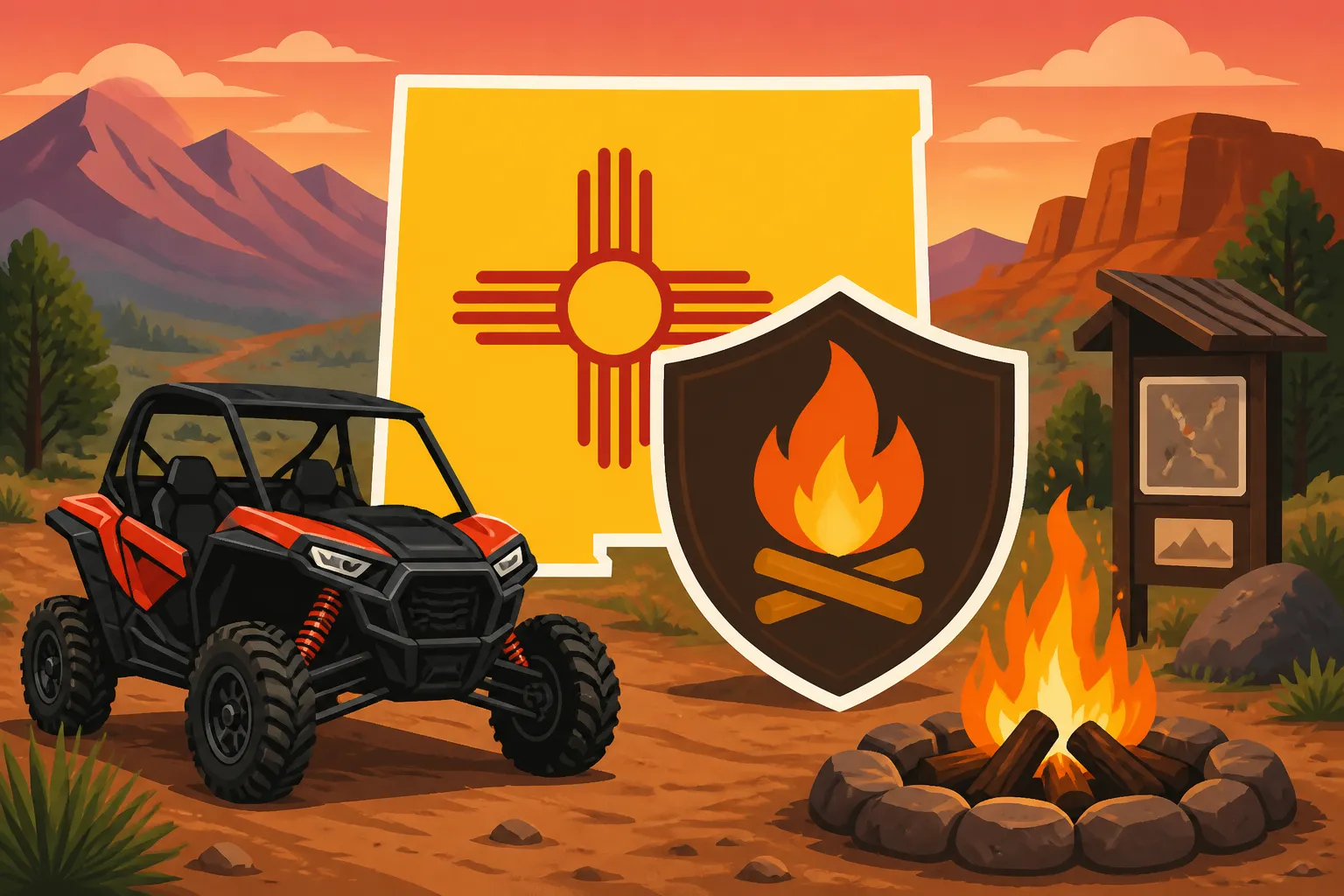
A campfire after a ride can seem like a simple way to warm up or cook, but a trailhead is not automatically an approved place to burn. In New Mexico, the answer depends on who manages the land, the site’s rules, and any current fire restrictions. Here’s how to check before you light anything—and what to do if fires aren’t allowed.
Are campfires allowed at New Mexico trailheads?
There is no single statewide yes-or-no rule that makes every New Mexico trailhead a place where you can build a campfire. A trailhead may be on federal, state, county, tribal, or private land, and each land manager can set different rules. Fire restrictions can also change with conditions, sometimes closing fires at a site where they were previously permitted.
Start by identifying who manages the trailhead and the land around it. A route that begins near a national forest, for example, may have different rules from a nearby county staging area. Check the applicable land manager’s notices for the specific site and date of your ride. General advice from a riding group or an old trip report is not a substitute for a current restriction.
For forest recreation, consult the relevant forest or district information. For BLM land, check the local BLM office or its current notices. The rules for riding on those lands are covered separately in [New Mexico Rules for Riding a National Forest] and New Mexico Rules for Riding BLM Land, but remember that permission to ride does not automatically include permission to have a fire.
Even when no temporary fire restriction is in effect, a site may prohibit fires outside designated rings or may not allow fires at all. A trailhead parking area is not necessarily a campground or picnic site. Do not assume you can use a fire ring just because one is present; it may be closed, intended for a different use, or subject to an active restriction.
Check the site, not just the general area
Before you leave, look for site-specific signs and official notices. If the rules are unclear, contact the land manager and ask about the exact trailhead, the kind of fire you’re considering, and the date of your visit. A fire restriction may treat wood fires, charcoal, and gas stoves differently, so ask about the device rather than relying on the broad question “Are campfires allowed?”
The same check matters if you plan to camp near the riding area. A designated campsite may allow fires only in an established ring, while an adjacent staging lot does not. See Camping at a New Mexico OHV Area for planning around riding and overnight stays, but verify the fire rules for the specific campground or public land unit.
If you are riding a designated route, follow its land-use rules and any posted closures as well as fire restrictions. A permit or registration that allows a machine to use an area does not grant fire privileges. You can review route-use basics in New Mexico Rules for Riding a Designated Route.
How fire restrictions affect riders
New Mexico’s fire danger varies by location and conditions. Dry vegetation, wind, low humidity, and recent weather can all affect whether a land manager restricts fires. Restrictions may be issued for a particular area and can change; a rule that applies at one trailhead may not apply at another.
During a restriction, the terms of the current order are what matter. Restrictions may prohibit certain kinds of open flame, limit fires to approved sites, or set conditions for equipment used to cook. The exact wording can vary. Don’t assume a campfire is allowed because it is small, inside a portable ring, or intended only for cooking. Likewise, don’t assume a stove is exempt: some restrictions cover devices that would normally be treated differently from an open wood fire.
Check the restriction itself for its boundaries, effective dates, and definitions. If you cannot confirm that the fire you have in mind is allowed, leave it unlit. New Mexico Fire Restrictions That Close Trails explains why closures and restrictions need to be checked before a ride, and New Mexico Rules for Riding During Fire Season provides related riding considerations.
| Situation | A sensible next step |
|---|---|
| You have not confirmed who manages the trailhead | Identify the land manager before planning a fire |
| The site has a posted fire ring | Check whether fires are currently allowed and whether the ring is approved for use |
| A fire restriction is in effect | Follow its exact terms; do not rely on past practice |
| You are unsure whether a stove or charcoal grill is included | Ask the land manager or choose a no-flame option |
| The area is windy or unusually dry | Skip the fire even if you believe it may be allowed |
| You cannot find current information | Do not light a fire until you can confirm the rules |
A land manager’s fire restriction and a trail closure are related but not identical. One may prohibit fires without closing the riding area; another may close routes or facilities because conditions are unsafe. Check both before setting out. New Mexico Trail Closures to Check First can help you build that check into your ride planning.
Also consider where the fire would be in relation to parked machines, fuel containers, trailers, dry grass, and people. A legal fire can still be a poor decision at a crowded or exposed staging area. If smoke, sparks, or embers could reach vehicles or vegetation, choose another way to cook or warm up.
Safer choices when fires are permitted
If the land manager allows a fire, use only an approved location and follow any site-specific requirements. Do not create a new fire ring, move rocks to make one, or build a fire in a vehicle parking space. A contained fire still produces sparks and hot material, and a portable fire pan does not by itself make a fire legal.
Keep the fire modest and attended by a responsible adult. Have water available before lighting it, and keep it well away from dry brush, tents, vehicles, fuel, and anything that can catch. Wind can carry embers beyond the fire area, so be prepared to put the fire out immediately if conditions change. If you cannot manage sparks safely, don’t start it.
Extinguish it completely
When it is time to leave, do not rely on the fire looking finished. Coals and ash can remain hot after visible flames are gone. Use water to soak the material, stir it, and continue adding water until there is no heat, smoke, or glowing ember. If water is not available in sufficient quantity, don’t light a wood fire.
Never bury hot coals or leave them for the next visitor. Do not dump warm ash into dry vegetation, a wash, or a trash container. Follow the site’s directions for ash disposal; if there is no safe disposal option, plan not to have a fire.
A useful checklist before leaving the site is:
- Stop adding fuel early enough to extinguish the fire properly.
- Pour water over the coals and ash.
- Stir the material so water reaches underneath.
- Add more water and check for heat or smoke.
- Leave only when the fire is cold and the site’s disposal instructions have been followed.
The responsibility does not end when the group climbs back onto its machines. A fire left smoldering can escape after riders have departed, especially if wind picks up. If a fire escapes or you see smoke that may signal an uncontrolled fire, move to safety and contact emergency services or the appropriate land manager.
Keep riding equipment away from flames
OHVs, trailers, spare fuel, and cooking fires do not mix well in a tight staging area. Keep fuel containers closed and away from heat, and do not refuel beside an active fire. Avoid placing hot equipment or cookware where someone may brush against it while loading. Children and pets need close supervision around flames, embers, and hot surfaces.
A campfire can also create a nuisance for other trail users. Smoke may drift across the staging area, and a crowded trailhead may leave little room to keep a fire separated from people and equipment. Good shared-ground habits matter whether or not a fire is technically allowed; New Mexico Trail Etiquette on Shared Ground covers other ways to reduce conflict at riding sites.
A practical pre-ride fire check
Treat the fire decision as part of your ride plan, not something to decide after unloading. Before departure, identify the land manager, check current restrictions and closures, and confirm whether the exact type of fire or cooking device is permitted at the site. If you cannot get a clear answer, plan a meal that does not require an open flame.
At the trailhead, read posted signs even if you checked online. Conditions and orders can change, and signs may give instructions specific to that location. If a notice says no fires, do not try to interpret it as applying only to large fires or only to overnight camping. Follow the posted restriction and ask the land manager if you need clarification.
For a trip that crosses different land jurisdictions, recheck the rules when you move between them. A fire allowed at one campground is not automatically allowed at a nearby trailhead or on the next parcel. Riders should also avoid using fire as a reason to leave an approved site or designated route.
A simple decision rule works well:
- Confirm that the land manager allows the fire at that specific site.
- Check for current restrictions that apply to the date and location.
- Confirm that your chosen device is covered by the permission.
- Consider wind, dryness, nearby fuel, and crowding.
- If any part is uncertain or unsafe, skip the fire.
This approach may mean giving up a campfire even when you see signs of past use. That is a small trade-off compared with the risk of starting a wildfire, damaging a riding area, or facing consequences for violating a restriction. For a warm meal, use only a cooking method expressly allowed by the current rules; if that is not clear, bring food that needs no cooking.
Disclaimer
This article is for general informational purposes only and does not constitute professional advice. Laws, prices and regulations vary by location and change over time. Consult a qualified professional for guidance on your specific situation.