Why New Mexico Renews Every Two Years
It can be incredibly frustrating to keep track of renewal dates for all the vehicles and toys in your life, especially when different states have different rules. In New Mexico, off-highway vehicle (OHV) registrations operate on a biennial, or two-year, cycle, which can sometimes catch riders off guard if they're used to annual renewals elsewhere. This guide will dive deep into why New Mexico has chosen this two-year cycle for ATVs, UTVs, dirt bikes, and other OHVs, what it means for you, and how to navigate the process smoothly to keep your machine legal and ready for the trails.
Understanding New Mexico's Biennial OHV Registration Cycle
New Mexico's approach to OHV registration, requiring renewal every two years, might seem a bit unique compared to some other states that stick to an annual rhythm. But there's a thoughtful rationale behind this system that aims to balance administrative efficiency with ensuring rider compliance and funding for crucial OHV programs. It's not just a random number; it's a deliberate choice designed to create a more manageable system for both the state and its riders.
The Rationale Behind the Two-Year Term
The decision to implement a biennial registration cycle for OHVs in New Mexico primarily boils down to administrative streamlining and resource allocation. Imagine the sheer volume of paperwork and processing that would be involved if every OHV owner had to renew annually. By shifting to a two-year cycle, the New Mexico Motor Vehicle Division (MVD), the agency responsible for OHV registration, can significantly reduce the administrative burden. This means fewer forms to process each year, fewer queues at the MVD offices, and more efficient use of state resources. For riders, it translates into fewer trips to the MVD and less frequent reminders to update their registration, offering a bit more breathing room between renewal periods. It's a system that tries to make life a little easier for everyone involved, cutting down on repetitive tasks and allowing the MVD to focus on other important services.
Furthermore, the biennial cycle helps ensure a more stable funding stream for the state's OHV programs. When you pay your [New Mexico OHV Registration Cost], a portion of those funds often goes directly back into maintaining and improving the very trails you love to ride, supporting educational programs, and enforcement efforts. A two-year cycle means a larger sum is collected less frequently, which can provide more predictable revenue for these initiatives, allowing for better long-term planning for trail development and maintenance. This helps New Mexico ensure its vast and beautiful landscapes remain accessible and safe for future generations of riders.
How the Biennial Cycle Impacts Riders
For us riders, the two-year registration cycle means we need to mark our calendars a bit differently than if we were in a state with an annual renewal. It’s easy to forget about something that only comes around every 24 months, which is why setting a reminder is crucial. Missing that renewal deadline can lead to complications, from fines to being unable to legally ride on public lands. It’s not just about paying a fee; it’s about maintaining your legal right to enjoy the incredible trails New Mexico has to offer, from the high mountain forests to the sprawling desert dunes.
The impact also extends to managing your vehicle's documentation. When you register your machine, you'll receive a decal that clearly displays the expiration year. This decal needs to be correctly placed on your OHV, and for many, that means remembering to peel off the old one and stick on the new one every other year. It's a small task, but an important one for compliance. Keeping all your registration paperwork, like the initial [New Mexico's First OHV Registration] documents, safe and easily accessible is always a good practice, especially if you ever need to prove ownership or transfer it. This biennial cycle really encourages a system of good record-keeping to avoid any future headaches.
What Sets New Mexico Apart from Other States
While many states might opt for annual OHV registration, New Mexico’s biennial approach isn't entirely unique in the broader vehicle registration landscape. However, it does differentiate the state for OHV enthusiasts. For instance, a rider moving from a state with annual renewals to New Mexico might initially find the two-year cycle an adjustment. They might be used to a yearly reminder, and suddenly that reminder only comes every other year. This can lead to some confusion if not properly understood, potentially causing a lapse in registration.
New Mexico's system is part of its broader legislative framework for off-highway vehicles, which has evolved over time to address the state's specific needs, rider demographics, and land use patterns. The focus here is on efficiency and a sustained commitment to OHV recreation. By understanding that this isn't just an arbitrary rule but a calculated administrative choice, riders can better prepare for their obligations. It’s also worth noting that while the registration is biennial, other aspects of OHV operation, like safety courses for minors, might have different or ongoing requirements. This distinction highlights New Mexico’s tailored approach to managing its OHV community, aiming to create a system that works for its unique environment and vibrant riding culture.
Navigating the Renewal Process at the MVD
Renewing your New Mexico OHV registration doesn't have to be a daunting task, even if it only comes around every two years. The MVD strives to make the process as straightforward as possible, offering several avenues for completion. The key is to be prepared with the correct documentation and to understand your options, so you can avoid unnecessary delays and get back to riding. For many, the thought of any MVD visit brings a sigh, but knowing what to expect can significantly reduce that stress.
Required Documents for a Smooth Renewal
When your two-year renewal window approaches, having all your ducks in a row concerning paperwork will make the process incredibly smooth. The MVD generally requires proof of current registration, your OHV's vehicle identification number (VIN), and valid identification. If you're renewing in person, your driver's license or state ID is usually sufficient. It's always a good idea to bring your previous registration card as well, as it contains all the pertinent information the MVD clerk will need to easily pull up your record. This helps ensure that the correct machine is being renewed and that all information matches what's on file.
In some cases, especially if there's been a change in ownership or other significant events since your last registration, you might need additional documents. For instance, if you're renewing a machine that you recently purchased, even if the registration is technically due, you'll likely need the bill of sale and possibly the title to ensure proper transfer and renewal. Programs like LawDepot can be a lifesaver here, providing templates for legally sound bills of sale and other documents if you're buying or selling a used OHV. Having these ready prevents delays and ensures that the MVD has a complete and accurate record for your vehicle. Always double-check the MVD website or call ahead if you anticipate any unusual circumstances to avoid making multiple trips.
Online, Mail, or In-Person Renewal Options
New Mexico understands that not everyone can drop everything to visit an MVD office during business hours. That's why they typically offer several convenient ways to renew your OHV registration. The most popular option for many is online renewal. This allows you to complete the process from the comfort of your home, often with just a few clicks, and have your new decal mailed directly to you. It's fast, efficient, and avoids the need for travel or waiting in line. Make sure you have your current registration information handy, as you'll likely need your plate or decal number and your VIN to initiate the online process.
If you prefer traditional methods or don't have easy internet access, renewing by mail is another viable option. You'll typically receive a renewal notice in the mail that includes instructions and a form to fill out. Simply complete the form, include your payment, and send it off. Just be sure to mail it with enough time for processing before your current registration expires. Finally, for those who prefer face-to-face interaction or need assistance with more complex issues, visiting an MVD office in person is always an option. While it might involve a wait, it allows you to speak directly with a clerk who can answer questions and ensure all paperwork is correctly handled. Remember, [Why MVD Registers New Mexico OHVs] in the first place is to ensure all machines on public lands are accounted for and compliant, so they're there to help.
Important Deadlines and Avoiding Lapses
Because the renewal is biennial, it's easy to lose track of the specific date. Your OHV registration will expire on a specific day in a specific month, every two years. It's your responsibility as the owner to ensure it's renewed before that date. The MVD usually sends out renewal notices as a courtesy, but these can sometimes get lost in the mail or overlooked. Therefore, relying solely on a mailed reminder is not the best strategy. Setting a reminder on your phone, marking it on a physical calendar, or even using a digital calendar that sends you alerts well in advance can prevent a lapse in registration.
A lapse in registration isn't just an administrative oversight; it can have real consequences. Riding an unregistered OHV on public land in New Mexico can lead to fines and penalties. Imagine planning a big weekend trip to the mountains, only to realize your registration expired last month, forcing you to sit out the fun. This scenario, while frustrating, is entirely avoidable with a bit of proactive planning. The system for [New Mexico's $50 Biennial Renewal] is designed to be spaced out, giving you plenty of time to remember and complete the process. Don't let that longer interval lull you into forgetting!
Costs and Fees Associated with Biennial Renewal
When it comes to renewing your New Mexico OHV registration, understanding the costs involved is a key part of responsible ownership. While the biennial nature of the renewal means you're paying less frequently, it's still an expense that needs to be factored into your budget. These fees aren't just arbitrary charges; they play a vital role in supporting the OHV community and infrastructure throughout the state.
Breaking Down the Renewal Fee Structure
The basic fee for a biennial OHV registration in New Mexico is generally a set amount, which covers the administrative costs of processing your renewal and contributes to the state's OHV fund. This fee is typically straightforward and is the primary cost you'll encounter during the renewal process. Unlike other vehicles, there usually aren't complex calculations based on vehicle weight or value for OHV renewals, making it easier to anticipate the exact amount. However, if you opt for additional services, such as a paved road plate, those will incur separate charges.
It's important to remember that this fee structure is what helps keep the trails open and safe. When you pay your [New Mexico OHV Registration Cost], you're directly contributing to things like trail maintenance, safety education programs, and law enforcement patrols that ensure everyone has a good time responsibly. While the exact figure might change over time, the purpose remains consistent: to support the OHV community. Always check the official New Mexico MVD website for the most current fee schedule before you plan your renewal, as specific numbers can fluctuate.
Potential Late Fees and Penalties
Life happens, and sometimes a renewal deadline slips by. Unfortunately, letting your OHV registration expire in New Mexico can lead to additional costs in the form of late fees. These fees are designed to encourage timely renewals and cover the extra administrative work involved in processing overdue registrations. The amount of a late fee can vary and often increases the longer the registration remains expired. It's a penalty that no one wants to pay, especially when it could have been avoided.
Beyond late fees, operating an OHV with an expired or non-existent registration on public lands can result in citations and fines. Law enforcement officers have the authority to check for valid registration, and if yours is found to be out of date, you could face a monetary penalty. This is why it's so important to mark your calendar and handle your [New Mexico's $50 Biennial Renewal] proactively. No one wants to end a great day of riding with an unexpected ticket, so making sure your decal is current is just as crucial as having the right safety gear.
Where Your Registration Fees Go
Ever wonder where your registration money actually goes? In New Mexico, the fees collected from OHV registrations, including your biennial renewal, are not just absorbed into the general state fund. A significant portion is often dedicated to specific OHV-related programs and initiatives. This is a common practice designed to ensure that the user fees directly benefit the user community. For example, these funds are often used to maintain existing OHV trails, develop new riding areas, and install signage.
These funds also support critical safety and educational programs, helping to promote responsible riding habits and reduce accidents. They might also contribute to enforcement efforts, ensuring that rules are followed and that the trails remain accessible and enjoyable for everyone. Knowing [Where New Mexico OHV Fees Go] can give you peace of mind that your contribution is making a tangible difference in the quality and availability of OHV recreation across the state. It's an investment in your passion and the longevity of the sport in New Mexico.
Decals and Plates: What Changes Upon Renewal
The most visible sign of your New Mexico OHV registration is the decal affixed to your machine. Every two years, with your renewal, comes a fresh decal. But for some riders, especially those who venture onto paved roads, there's another piece of identification to consider: the paved road plate. Understanding the difference between these and knowing which one you need upon renewal is essential for staying compliant, whether you're sticking to the dirt or briefly hitting the asphalt.
Understanding the Yellow Off-Highway Decal
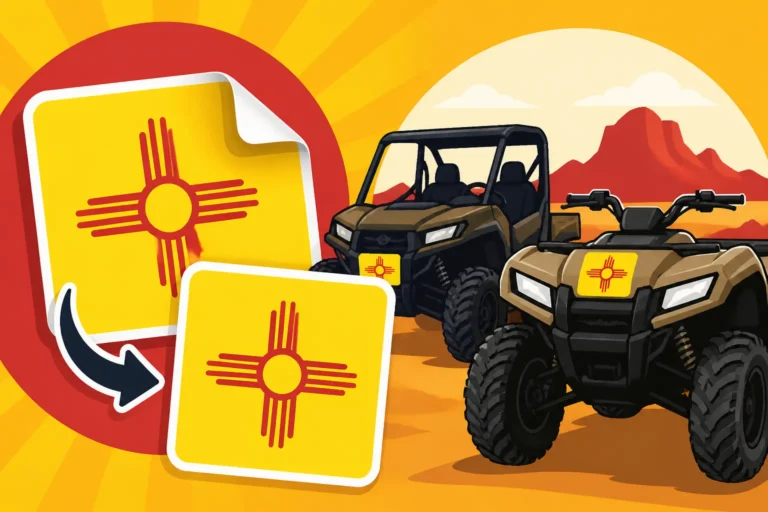
The yellow decal is the most common type of OHV registration sticker in New Mexico and signifies that your machine is registered for off-highway use only. If your ATV, UTV, or dirt bike is primarily ridden on designated trails, private property, or other unpaved surfaces, this is the decal you'll receive and renew every two years. It's a clear, bright yellow sticker with the expiration year prominently displayed, making it easy for rangers and law enforcement to quickly verify your registration status.
When you complete your [New Mexico's Yellow Off-Highway Decal] renewal, you'll be issued a new decal. It's crucial to properly remove the old, expired decal and apply the new one in its designated location on your OHV. For ATVs, this typically means the left rear fender; for UTVs, a quarter panel; and for dirt bikes, the left fork leg. Proper placement ensures visibility and avoids any confusion during a roadside check. This decal is your passport to New Mexico's vast network of off-road adventures, so keeping it current is paramount.
The Green On and Off-Highway Decal for Pavement Use
For those who wish to operate their OHV on certain public paved roads where permitted by local ordinance, New Mexico offers a specialized "on and off-highway" registration, identified by a green decal. This green decal, also renewed biennially, signifies that your machine meets additional requirements to be considered "street legal" on approved paved routes. These requirements often include specific equipment like headlights, taillights, mirrors, and sometimes insurance.
Obtaining the [New Mexico's Green On and Off-Highway Decal] means your machine has been deemed compliant for both off-road and limited paved road use. This distinction is vital, as simply having the yellow decal does not permit paved road travel. Renewing this green decal means you're continuing to affirm that your machine meets these stricter standards. It opens up new possibilities for connecting trails, accessing services in small towns, or simply enjoying a different kind of ride, all while staying within the bounds of New Mexico law.
When to Update Your Paved Road Plate Information
While the decals are tied to your biennial OHV registration, some riders may also have a specific paved road plate, especially for machines that historically qualified for such use. New Mexico's laws regarding OHV use on paved roads have seen changes, including the transition from stickers to plates for certain types of on-road authorization. If your machine currently has a paved road plate, its renewal or associated fees might operate on a different schedule or have specific requirements separate from your biennial decal renewal.
It's important to differentiate between the green decal for on- and off-highway use and any separate paved road plate system that might apply to your vehicle. The rules around these can sometimes be complex, especially with legislative updates. Always refer to the most current MVD guidelines for paved road plates to ensure you're compliant. If you’re unsure whether your machine needs both a decal and a plate, or how to renew each, a quick call to the MVD or a visit to their website can clarify. Staying informed ensures you avoid penalties and can legally enjoy all the riding opportunities New Mexico has to offer.
| Decal Type | Color | Primary Use | Renewal Cycle | Paved Road Use | Typical Requirements |
|---|---|---|---|---|---|
| Off-Highway Decal | Yellow | Designated trails, private land | Biennial | No | Basic registration, VIN |
| On and Off-Highway Decal | Green | Designated trails, approved paved roads | Biennial | Yes (limited) | Basic registration, VIN, headlights, taillights, mirrors, sometimes insurance |
Common Scenarios Affecting Your Two-Year Renewal
The biennial renewal process is usually straightforward, but sometimes life throws a wrench in the works. Whether you've just bought a machine, lost a decal, or moved to New Mexico, these situations can impact when and how you renew. It's not always a simple matter of waiting for the MVD notice; sometimes, you need to be proactive to ensure your OHV remains legally registered.
Renewing on a Change of Ownership
One of the most common scenarios that can affect your biennial renewal timeline is when you buy or sell an OHV. When you purchase a used machine, even if it has a valid registration decal from the previous owner, that registration does not automatically transfer to you. You, as the new owner, are responsible for registering the machine in your name. This often means that even if the previous owner's biennial registration isn't quite up, your clock for a new two-year cycle starts when you register it. This is why it’s critical to address registration immediately after purchase.
When you go to register a newly acquired OHV, you'll need the title (if applicable) and a proper [A New Mexico Bill of Sale for an ATV] from the previous owner. This documentation proves your ownership and allows the MVD to update their records. Once registered in your name, you'll receive your own two-year decal, and that will establish your personal renewal cycle. Similarly, if you're selling an OHV, ensuring the buyer properly registers it helps sever your connection to the machine in the MVD's system. Using a reputable form service like LawDepot for your bill of sale ensures you have a legally sound document for these transactions.
Dealing with a Lost or Damaged Decal
It happens to the best of us: a spirited ride through the desert, a stray branch, or simply too much sun can lead to a lost, damaged, or unreadable registration decal. Since this decal is your primary proof of registration on the machine itself, you can't just ignore it. Riding with a missing or illegible decal can lead to the same problems as riding with an expired registration, as law enforcement won't be able to verify your compliance. This can be a frustrating setback, especially if you know you're fully registered but just can't prove it visually.
Fortunately, New Mexico has a process for replacing a lost or damaged decal. You'll typically need to contact the MVD or visit one of their offices to request a replacement. There might be a small fee associated with issuing a new decal, but it's a small price to pay for peace of mind and legal compliance. The MVD will issue a new decal that matches your existing two-year registration period, meaning your original expiration date won't change. Being proactive about [Replacing a Lost New Mexico Decal] is always the best course of action to avoid any issues while out on the trails.
Registering an Out-of-State Machine After Moving to New Mexico
Welcome to New Mexico! If you've recently moved here and brought your trusty OHV with you, you'll need to register it in New Mexico, even if it has a current registration from your previous state. Just like with cars, OHV registrations are typically state-specific. While some states have reciprocity agreements for visitors, becoming a resident usually means registering your machines in your new home state. This ensures that your OHV is part of New Mexico's system and that you're contributing to its OHV programs.
The process for [Registering an Out-of-State Machine in New Mexico] will be similar to a first-time registration for a New Mexico resident. You'll need proof of ownership, such as the title from your previous state, and potentially a bill of sale. Once you complete the registration, your OHV will be issued a New Mexico biennial decal, and your two-year renewal cycle will begin from that point. It’s an important step to take soon after establishing residency, not only for legal compliance but also to fully integrate into the New Mexico riding community.
Beyond the Renewal: Staying Compliant and Safe
Getting your biennial OHV registration renewed is a big step, but responsible OHV ownership in New Mexico extends beyond just having a current decal. There are other crucial elements to consider that ensure you're not only compliant with the law but also promoting safety for yourself and others on the trails. These elements are interconnected and form a holistic approach to enjoying your OHV responsibly.
Importance of a Bill of Sale for Future Renewals and Sales
We touched on the bill of sale for new purchases, but its importance really cannot be overstated, not just for the initial registration but for future renewals and potential sales. A comprehensive bill of sale, like those found on platforms such as LawDepot, acts as a critical legal document. It provides proof of the transaction, clearly stating the buyer, seller, date, price, and details of the OHV. This document is your shield against potential disputes and ensures a clean chain of ownership.
For renewals, while you won't need the bill of sale every time, having it on hand, especially if there are any discrepancies in MVD records or if you inherited the machine, can be invaluable. It validates how you acquired the OHV and simplifies any ownership challenges. More importantly, when you eventually decide to sell your OHV, providing a clear, accurate bill of sale to the new buyer is vital. It streamlines their registration process, ensuring they can easily get their own two-year decal, and protects you from any future liability related to the machine's sale. It's a foundational document for any OHV owner.
Insurance Requirements for Road-Legal Machines
For the vast majority of OHV riding on off-highway trails and public lands, New Mexico does not mandate liability insurance. However, this changes dramatically if you opt for the green "on and off-highway" decal and intend to ride your OHV on paved public roads where permitted. Just like with cars, operating an OHV on a public street necessitates financial responsibility in case of an accident. This often means carrying a minimum level of liability insurance.
The specific insurance requirements for road-legal OHVs in New Mexico are designed to protect others in the event your machine causes damage or injury on a paved road. It's not just a good idea; it's a legal requirement. Before you even think about putting that green decal on and venturing onto asphalt, confirm that your insurance policy meets New Mexico's minimum coverage limits. Failure to do so could result in fines, legal repercussions, and severe financial strain if you're involved in an incident. Always carry proof of insurance with you when riding on designated paved roads, as it's something a law enforcement officer will likely ask for during a stop.
Ongoing Maintenance and Safety Checks
Beyond paperwork and decals, your OHV's physical condition plays a huge role in both compliance and safety. A well-maintained machine is a safe machine, and it's also less likely to run into issues that could lead to fines or environmental damage. Think of it as a continuous renewal process for the machine itself. Before every ride, conduct a basic safety check: tires, brakes, fluids, lights (if applicable), and ensure your spark arrester is functioning properly if you're riding on public lands.
Regular maintenance, such as oil changes, filter cleaning, and checking wear and tear on components, not only extends the life of your OHV but also ensures it meets sound limits and emission standards where applicable. A machine that is excessively loud or spewing smoke can draw unwanted attention from rangers and potentially lead to citations. It's also about personal safety; a sudden brake failure or tire blowout far from civilization can turn a fun day into a dangerous ordeal. Investing time in ongoing maintenance and safety checks is the best way to ensure your OHV is always ready for the next adventure and that you're riding responsibly within New Mexico's beautiful and diverse landscapes.
Future Outlook and Potential Changes to New Mexico OHV Laws
Laws and regulations, especially concerning recreational activities like OHV riding, are never static. They evolve over time, reflecting changes in land use, environmental concerns, public safety priorities, and the growing popularity of the sport. New Mexico’s OHV laws, including the biennial registration cycle, are no exception. Staying informed about potential legislative changes isn't just for politicians; it's a proactive step for every responsible rider who wants to continue enjoying their passion without interruption.
Understanding the Legislative Process
Changes to OHV laws in New Mexico typically begin in the state legislature. Bills are introduced by lawmakers, go through committee hearings, debates, and votes in both the House and Senate, and if passed, eventually head to the Governor for approval. This process, while seemingly complex, is designed to allow for public input and careful consideration before any new law takes effect. Stakeholders, including OHV clubs, environmental groups, and state agencies like the MVD and the New Mexico Department of Game and Fish, often provide testimony and influence these discussions.
For riders, understanding this process means recognizing that changes don't just appear overnight. There's usually a period of discussion and public comment. Being aware of where to find information on proposed bills – often through legislative websites or OHV advocacy groups – allows you to track potential changes. This knowledge empowers you to participate in the democratic process, whether by contacting your representatives, signing petitions, or attending public meetings, ensuring your voice is heard when decisions are being made about the future of OHV riding.
How Proposed Changes Might Affect the Renewal Cycle
While the biennial renewal cycle has been a stable feature of New Mexico OHV registration for some time, it's not entirely immune to potential legislative shifts. For instance, future proposals could consider adjusting the length of the renewal period, altering the fee structure, or introducing new requirements that might impact how and when you renew. Perhaps a bill might propose a different schedule for youth machines versus adult machines, or introduce new categories of OHVs with unique registration needs.
It's also possible that changes could affect the specific requirements for decals, such as new placement rules, or introduce additional plates for different types of use. For example, if there's a significant shift in how OHVs are permitted on paved roads, the "green decal" system might see modifications, potentially affecting associated renewal procedures or costs. Staying aware of these possibilities, even if they seem distant, allows you to anticipate and adapt to any changes that might come down the pipeline. This proactive approach helps avoid surprises and ensures you remain compliant with the most current New Mexico OHV regulations.
Staying Informed About OHV Regulations
The best defense against unexpected changes is staying informed. For New Mexico OHV riders, this means regularly checking official sources. The New Mexico MVD website is your primary resource for current registration rules, fees, and renewal procedures. Additionally, the New Mexico Department of Game and Fish often provides information related to OHV use on lands they manage, including safety regulations and permit requirements.
Beyond official government sites, consider joining local OHV clubs or advocacy groups. These organizations are often at the forefront of tracking legislative changes, sharing updates with their members, and advocating for rider interests. They can be invaluable resources for understanding the nuances of current regulations and preparing for future ones. Regularly reviewing [New Mexico OHV Registration Paperwork] and understanding its implications, along with keeping an eye on public announcements, ensures that you're always up-to-date and ready to hit the trails legally and safely in the Land of Enchantment.
Disclaimer
This article is for general informational purposes only and does not constitute professional advice. Laws, prices and regulations vary by location and change over time. Consult a qualified professional for guidance on your specific situation.