Why New Mexico Parents Share the Penalty
There's nothing quite like the freedom of exploring New Mexico's stunning landscapes on an ATV or UTV, but for many parents, the joy can quickly turn to anxiety when considering the rules. One of the most frustrating aspects for families is realizing that if a minor rider breaks the law, the parent often ends up footing the bill – and facing the legal consequences. This guide is here to untangle the complexities of New Mexico's OHV laws, explaining why parents share the penalty, what those penalties entail, and how you can protect your family from unnecessary fines and legal headaches.
Understanding OHV Laws and Penalties in New Mexico
Navigating the world of off-highway vehicle (OHV) laws in New Mexico can feel like trying to find your way through a winding trail without a map. Riders, especially those with kids, often face the challenge of keeping up with regulations that dictate everything from where you can ride to what safety gear is required. Ignoring these rules, even unintentionally, can lead to significant penalties, and a common frustration for parents is discovering that their child's misstep often lands squarely on their own shoulders.
General OHV Fines and Violations
New Mexico has a clear set of rules for operating off-highway vehicles, and violating these rules can result in fines that impact your wallet and your peace of mind. Common infractions include riding an unregistered OHV, operating a machine without the proper decals, or using public lands without a spark arrester. You might also face penalties for illegal road use, like riding on a paved highway that isn't designated for OHV traffic, or operating an OHV outside of designated hours. These aren't just minor inconveniences; they come with real monetary costs. For instance, being caught without a valid registration can quickly turn a fun day into a costly one. Beyond the immediate fine, repeat offenses can sometimes lead to more severe consequences, potentially including impoundment of the vehicle or even loss of riding privileges. It's a stark reminder that staying informed about the basic regulations is paramount before hitting the trails. You can learn more about specific costs in [New Mexico Fines for an Unregistered OHV].
Imagine you're out with your family, enjoying a beautiful Saturday ride, and a ranger pulls you over. You might think you're good to go, but if your OHV registration has lapsed, or if you've mounted your decal incorrectly, you could be looking at a citation. These aren't just for blatant disregard of the law; sometimes, simple oversight can lead to a fine. It's crucial to ensure every machine in your fleet, from your primary side-by-side to your child's youth ATV, meets all current registration and decal requirements. A quick check before each ride can save you from a disappointing and expensive encounter with law enforcement. Knowing the rules and adhering to them is the first step in avoiding any penalties that could otherwise cut your adventure short.
The Legal Framework for Enforcement
The enforcement of OHV laws in New Mexico isn't confined to a single agency; it's a collaborative effort involving several entities. You might encounter officers from the New Mexico State Police, local sheriff's departments, or even rangers from the New Mexico Department of Game and Fish, especially when riding on state trust lands or areas managed by the department. On federal lands, such as those managed by the Bureau of Land Management (BLM) or the U.S. Forest Service, federal rangers and law enforcement officers have the authority to issue citations for violations of OHV regulations specific to those lands. This multi-agency enforcement means that no matter where you choose to ride within the state, you are likely to be subject to consistent oversight.
Each of these agencies operates under a specific legal framework that grants them the authority to enforce OHV statutes. The New Mexico Motor Vehicle Division (MVD) sets the registration and titling requirements, while the Department of Game and Fish often enforces safety and environmental regulations on lands they manage. Local ordinances in counties and municipalities can add another layer of rules, particularly concerning street legal operation or noise restrictions. This interconnected web of authority means that ignorance of one set of rules won't exempt you from enforcement by another agency. It underscores the importance of not only understanding state-level OHV laws but also checking for any local regulations that might apply to your specific riding area. Understanding which authority governs the land you're on can help you prepare for what a ranger or deputy might look for during a roadside check.
Specific Violations Involving Minor Riders
When it comes to OHV riding, especially for younger enthusiasts, New Mexico has put specific protections and regulations in place. These rules are designed to keep kids safe, but they also place significant responsibility on parents and guardians. It's not enough to simply hand over the keys; ensuring your minor rider complies with every aspect of the law is crucial to avoid personal liability. This is often where parents find themselves in a bind, facing penalties for infractions they didn't directly commit.
Age Restrictions and Supervision Requirements
One of the most critical areas for parents to understand revolves around age restrictions and supervision. New Mexico law dictates minimum age requirements for operating OHVs on public land, and these aren't just suggestions – they're strict rules. For instance, there are specific guidelines for [New Mexico Rules for a Rider Under 13], dictating who can ride and under what conditions. Generally, riders under the age of 13 are prohibited from operating an OHV on public lands unless they are under the direct supervision of an adult who is at least 18 years old and holds a valid driver's license. "Direct supervision" isn't a casual glance; it often means the adult must be close enough to immediately intervene if necessary, usually within visual and audible range.
As riders get a bit older, the rules change slightly. While a 15-year-old might have a bit more freedom than a 6-year-old, they are still typically considered minors under OHV law and fall under similar parental liability. The law is very clear on [New Mexico Minimum Age to Ride Off-Road] on public lands. Any violation of these age or supervision requirements, such as a child riding alone or with an unsupervised group of minors, can lead directly back to the parents. This is where many parents get caught off guard, assuming that because their child is experienced, the rules don't apply as strictly. Unfortunately, law enforcement sees it differently, and their primary concern is adherence to the letter of the law for safety reasons.
Safety Gear and Training Permit Violations
Beyond age and supervision, New Mexico law has stringent requirements for safety gear and training, particularly for minor riders. Every rider under the age of 18 is generally required to wear an approved safety helmet and eye protection when operating an OHV on public lands. This isn't just about common sense safety; it's a legal mandate. For example, [New Mexico Helmet Law for Riders Under 18] outlines precisely what type of helmet is acceptable and when it must be worn. Failing to ensure your child wears the proper gear can lead to a citation, and once again, the financial penalty will likely fall to the parent.
In addition to safety gear, New Mexico also requires minor riders to obtain an OHV safety permit. This permit signifies that the rider has completed an approved OHV safety course, demonstrating a basic understanding of safe operation and trail etiquette. [New Mexico Safety Permit for a Minor] is not optional for those under 18 wishing to ride on public land. A minor caught riding without this permit will not only be in violation of the law, but their parent or guardian will likely be held responsible for the ensuing fine. This requirement emphasizes the state's commitment to rider education, and parents have a direct role in ensuring their children complete the necessary training before they hit the trails. For example, if you've just equipped your kid's machine with some SuperATV custom parts, you'll still need to ensure they have their safety permit before taking it for a spin.
Passenger Rules for Young Riders
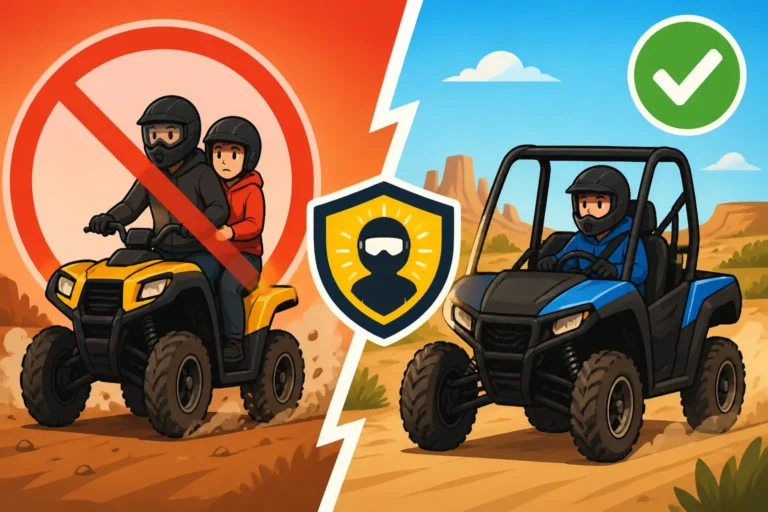
Another area where parents can inadvertently incur penalties involves the rules around carrying passengers, especially when a minor is operating the OHV. Many ATVs are designed for a single rider, and carrying an additional passenger, regardless of age, can be a safety hazard and a legal violation. Side-by-sides (UTVs) are designed to carry passengers, but even then, there are rules. For example, [New Mexico Passenger Rules for Young Riders] often prohibit a minor operator from carrying any passengers at all, even if the machine is designed for multiple occupants.
The intent behind these regulations is to reduce the risk of accidents and injuries. A minor operator, even an experienced one, may have less control or judgment when an extra passenger alters the machine's balance or takes their focus. If your child is observed operating an OHV with a passenger when the law prohibits it, you, as the parent or guardian, will likely receive the citation. It's a critical detail that's easy to overlook when heading out for a family ride, but one that carries real consequences. Always check the specific regulations for your machine type and the age of the operator before allowing anyone to ride as a passenger with a minor at the controls.
Parental Responsibility Under New Mexico OHV Law
This is where the rubber meets the road for parents. New Mexico's legal framework makes it clear that while children might be the ones behind the handlebars, the ultimate responsibility for their compliance and safety rests squarely with the adults in their lives. The notion of "sharing the penalty" isn't just a turn of phrase; it's a legal reality that can have significant financial and personal implications for parents and guardians. Understanding this principle is key to protecting your family and your finances.
Why Parents Share the Penalty
The primary reason [New Mexico Penalties for a Parent] often mirror those of the minor rider stems from the legal concept of parental responsibility. In many jurisdictions, including New Mexico, minors are not generally held directly liable for fines and penalties in the same way adults are. Instead, the legal system looks to the adult who is responsible for supervising the minor or who entrusted the minor with the operation of the vehicle. This means that if a minor commits an OHV violation, such as riding without a helmet or on restricted land, the citation will often be issued to the parent or legal guardian.
This isn't just about paying a fine; it's about the expectation that parents will ensure their children are educated, properly equipped, and legally compliant before operating an OHV. The state views the parent as the gatekeeper, responsible for enforcing the rules and preventing unsafe or illegal behavior. For example, if your child is riding a modified quad with SuperATV aftermarket parts, you are responsible for ensuring that any such modifications still comply with New Mexico's width or sound limits, and that your child has the required safety gear and permits. If a law enforcement officer encounters a minor in violation, they see it as a failure of parental oversight, leading to the parent sharing the penalty.
Financial and Legal Implications for Parents
The financial implications of a minor's OHV violation can extend far beyond the initial fine. While a basic citation might range from a few dozen to several hundred dollars, repeated offenses or involvement in an accident can escalate the costs dramatically. Parents could face higher fines, court costs, and even legal fees if the situation requires court appearances or more complex legal defense. In severe cases involving property damage or injury, the parent's liability could extend to civil lawsuits, leading to substantial financial judgments against them.
Beyond the monetary aspect, there are legal implications that can affect a parent's record. Depending on the severity and nature of the violation, a parent could potentially face misdemeanor charges, especially if there's an element of gross negligence or repeated disregard for safety laws. While less common for minor infractions, it's a possibility that highlights the seriousness of parental responsibility in OHV operation. It's not just about a ticket; it's about potentially affecting your legal standing and future. The financial burden and legal stress can be immense, making proactive prevention much more appealing than reactive damage control.
When Liability Extends to Other Adults
It's important to recognize that the concept of adult responsibility isn't always limited to biological or adoptive parents. Any adult who is acting in loco parentis – essentially, "in the place of a parent" – or who knowingly entrusts a minor with an OHV can assume similar liability. This could include grandparents, aunts, uncles, or even friends who are supervising a minor on an OHV ride. If you're an adult taking a group of kids out, some of whom are not your own children, you could still be held responsible if one of them commits a violation under your supervision.
The key factor often comes down to who had direct control or supervisory responsibility at the time of the infraction. If you lend your OHV to a friend's teenager for a ride, and that teenager then violates a safety rule, you as the owner and entrusting adult, along with the teenager's parents, could potentially share in the liability. This broadens the scope of responsibility and emphasizes that anyone overseeing minor OHV riders must be fully aware of New Mexico's laws and actively ensure compliance. It’s a collective responsibility to keep young riders safe and legal on the trails.
Preventing Fines and Ensuring Safe Riding
Nobody wants to face fines or legal trouble, especially when it involves their kids enjoying a recreational activity. The good news is that most penalties are entirely avoidable with a bit of foresight, education, and consistent adherence to the rules. By taking a proactive approach, parents can not only protect their finances but also instill responsible riding habits in their children that will last a lifetime. This section will guide you through the practical steps to ensure everyone in your riding group stays safe and legal.
Education and Training are Key
The most effective way to prevent violations and ensure safety is through comprehensive education and training. For minor riders, this isn't just a good idea; it's a legal requirement. New Mexico mandates an OHV safety permit for riders under 18, which requires completing an approved safety course. This course covers essential topics like safe operating procedures, understanding trail signs, environmental awareness, and specific New Mexico laws. Enrolling your child in one of these courses is a crucial step in fulfilling your parental responsibility and equipping them with the knowledge they need to ride safely and legally. Find out more about [New Mexico OHV Safety Permit Requirements].
But education isn't just for the kids. Parents and supervising adults should also take the time to familiarize themselves with current New Mexico OHV laws. Regulations can change, and what was permissible a few years ago might not be today. Regularly reviewing the state's OHV handbook, checking the MVD website, or consulting resources from organizations like the New Mexico Department of Game and Fish can help you stay up-to-date. Understanding the nuances of where you can ride, required equipment, and specific age restrictions empowers you to make informed decisions and guide your children effectively. A well-informed family is a safe and compliant family on the trails.
Pre-Ride Checks and Equipment Compliance
Before every single ride, taking a few minutes for a thorough pre-ride check can prevent a host of problems, from mechanical issues to legal infractions. This check should include ensuring that your OHV is properly registered and that its decals are current and correctly placed. Different machines have different decal placement rules; for instance, [Where a Quad's Decal Goes] might differ significantly from [Where a Side-by-Side's Decal Goes]. Incorrect decal placement, even if registered, could draw unwanted attention from law enforcement. Always refer to the official guidelines for precise decal placement on your specific machine type.
Beyond registration, inspect all required safety equipment. For minors, this means ensuring they have an approved helmet that fits properly, adequate eye protection (like goggles), and appropriate riding gear. For the machine itself, check that all lights are working, especially if you anticipate riding near dusk or in low-light conditions. If your OHV has been modified, perhaps with performance parts from SuperATV, ensure those modifications don't push the machine beyond legal limits for width or sound in the areas you plan to ride. For example, some trails have width restrictions, and a wider suspension could lead to a violation. It’s better to confirm compliance before you leave the staging area than to find out the hard way on the trail.
| Violation Category | Common Examples | Parental Responsibility | Preventive Action |
|---|---|---|---|
| Registration/Decals | Unregistered OHV, missing/improper decals | Ensure all family machines are registered and decals are correct. | Check registration validity and decal placement annually. |
| Minor Age/Supervision | Underage riding, unsupervised minor | Know and enforce age limits; provide direct adult supervision. | Review [New Mexico Minimum Age to Ride Off-Road]. |
| Safety Gear | No helmet, no eye protection for minors | Provide and enforce use of approved helmets/eye protection. | Ensure correct fitting helmets and goggles for all minors. |
| Safety Permit | Minor riding without a valid permit | Ensure minor completes required safety course and carries permit. | Enroll minor in an approved OHV safety course. |
| Passenger Rules | Minor operating with an illegal passenger | Understand passenger restrictions for minor operators. | Explain passenger rules to minor operators; enforce strictly. |
| Illegal Road Use | Riding on closed paved roads, highways | Educate on designated routes; teach proper road crossing. | Review [New Mexico Rules for Riding a County Road]. |
| Machine Equipment | No spark arrester, excessive noise, no lights | Inspect machine for required equipment and compliance. | Pre-ride check all lights, exhaust, and required safety features. |
Leading by Example
Finally, one of the most powerful tools a parent has in fostering responsible OHV behavior is leading by example. Children are incredibly observant, and they learn not just from what you say, but from what you do. If you consistently wear your helmet, adhere to speed limits, stay on designated trails, and respect private property, your children are much more likely to adopt those same habits. Conversely, if you occasionally bend the rules, they might interpret that as an invitation to do the same, with potentially serious consequences.
Demonstrate respect for the environment by staying on marked trails and avoiding sensitive areas. Show consideration for other trail users by slowing down and yielding when appropriate. When encountering livestock, exemplify proper etiquette by giving animals a wide berth and closing gates behind you if you find them that way. These actions not only prevent potential fines for environmental or trespass violations but also teach valuable lessons in responsible outdoor recreation. Your behavior is a blueprint for your children's riding future, making responsible conduct on every ride an investment in their safety and legal compliance.
What to Do If You Receive a Citation
Despite your best efforts, sometimes a citation happens. It could be for a minor oversight, a misunderstanding of a specific rule, or even something seemingly out of your control, like a child making a mistake despite your supervision. When that happens, it's important to know how to react calmly and proceed effectively. Panicking or arguing excessively at the point of contact usually won't help the situation. Instead, focus on understanding the situation and your options.
Understanding the Citation and Your Rights
If you receive an OHV citation in New Mexico, the first step is to calmly and thoroughly read the document. It will detail the specific violation, the date and location it occurred, the issuing agency, and the associated fine. It should also clearly state your options: either pay the fine by a specified date or appear in court to contest the charge. Do not ignore the citation, as failing to respond within the allotted time can lead to additional penalties, increased fines, or even a warrant for your arrest in some cases.
You have the right to contest any citation you believe was issued in error or unjustly. This might involve gathering evidence, such as proof of current registration, photographs of decal placement, or documentation of a minor's safety permit. If you decide to go to court, be prepared to present your case clearly and respectfully to the judge. Understanding your rights and the details of the charge is crucial, whether you choose to accept the penalty or challenge it. Sometimes, simply clarifying a misunderstanding can make a difference, especially if you have valid proof of compliance that wasn't immediately available to the officer.
Dealing with Penalties and Future Steps
If you decide to pay the fine, follow the instructions on the citation precisely to ensure it is processed correctly. This typically involves mailing a payment or paying online through the appropriate municipal or county court system. Once the fine is paid, the immediate legal obligation is usually satisfied. However, it’s important to see this as a learning experience and take steps to prevent future incidents.
This might involve reviewing the specific law that was violated, ensuring all family members understand it, and rectifying any issues that led to the citation. For example, if the citation was for an expired registration, prioritize renewing it immediately. If it was due to improper safety gear for a minor, ensure they have and use the correct equipment moving forward. If you've modified your machine with SuperATV components, and the citation was related to a compliance issue with those parts (like being too wide for certain trails), you may need to reconsider where and how you ride, or even adjust your setup to meet regulations. Taking proactive measures to ensure future compliance is not only about avoiding future fines but also about reinforcing safe and responsible riding habits for yourself and your family.
Disclaimer
This article is for general informational purposes only and does not constitute professional advice. Laws, prices and regulations vary by location and change over time. Consult a qualified professional for guidance on your specific situation.