What Happens at Red Sands Race Weekend in February
A February race weekend at Red Sands can mean busy staging areas, changing access, and plenty of dust—not simply an ordinary day of riding. The event schedule, course access, and spectator setup can vary, so arriving without a plan may leave you parked in the wrong place or riding toward a closed route. This guide explains what to expect and how to prepare.
What a Red Sands race weekend may look like
Expect a busier desert riding area
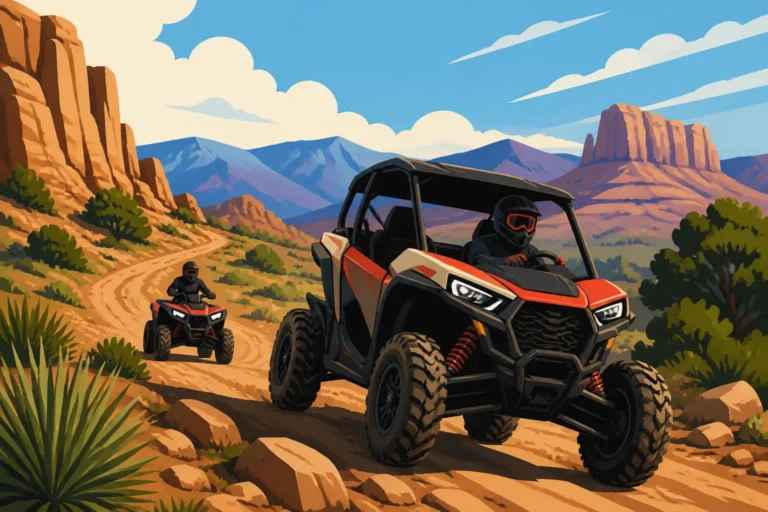
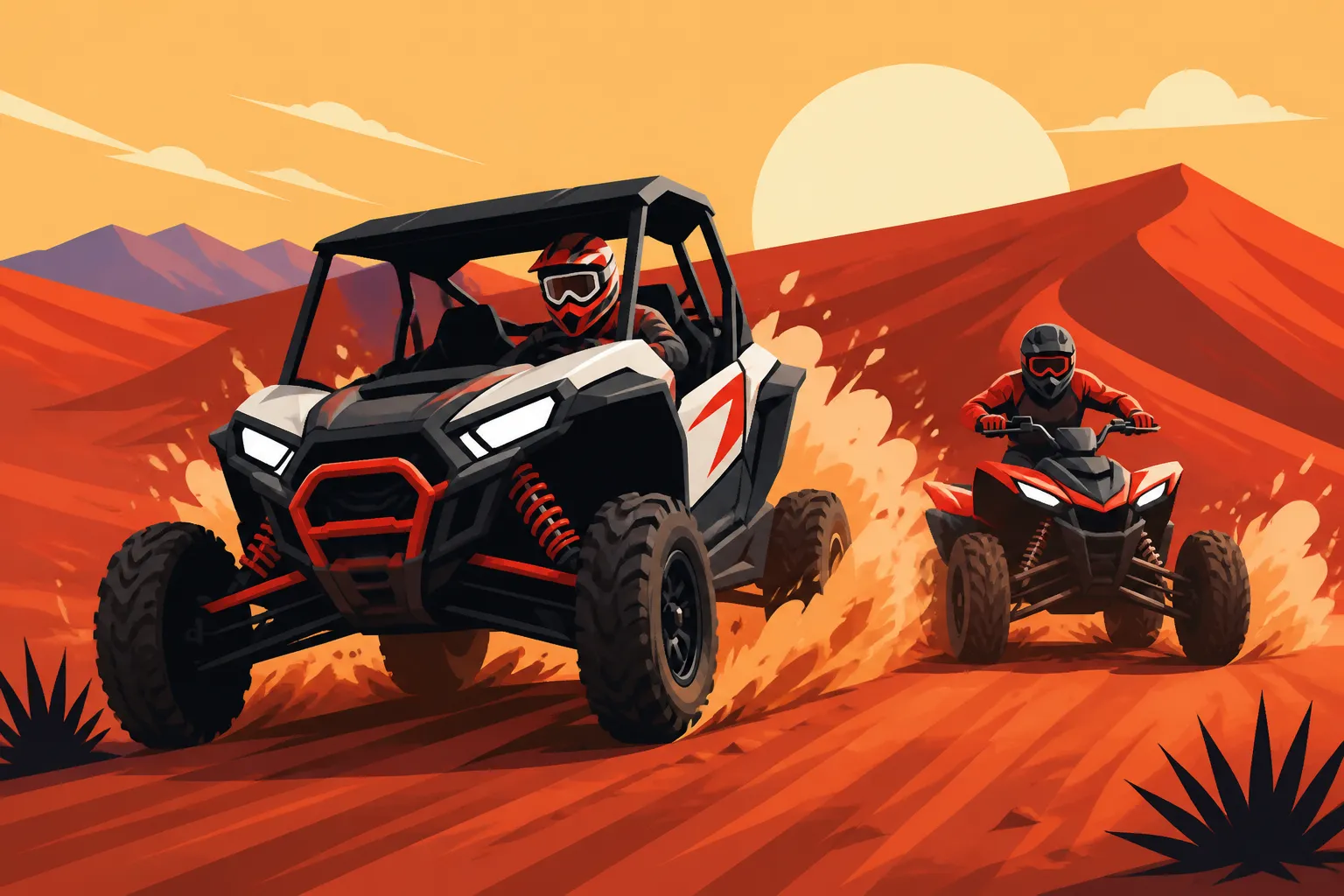
Red Sands is a popular riding area in southern New Mexico, known for open desert terrain and mesquite-covered dunes. On a race weekend, you may encounter more trailers, support vehicles, spectators, and riders than you would on a typical visit. The exact size and layout of the crowd depend on the event, so it is worth treating the area as a changing event site rather than assuming your usual riding routine will work.
A race can bring activity well beyond the course itself. Riders may be unloading, making repairs, checking equipment, or waiting for their start, while spectators look for a place to watch. Those groups can share access roads and staging areas, so slow down when you approach parked vehicles and keep an eye out for people walking between them.
If you have not visited before, start with [Red Sands OHV Area in Southern New Mexico] and [Red Sands and Its Mesquite Coppice Dunes]. Knowing the broad shape of the landscape can help you understand why a short drive across apparently open ground may still take you through soft sand, vegetation, or a busy staging area.
Race activity and regular riding are not always the same thing
A race route may use only part of the riding area, and access can change while an event is underway. Do not assume that a trail you rode on a previous trip remains open, or that an open-looking track is available to casual riders. Event organizers or land managers may direct traffic, mark a course, or restrict access to protect racers and spectators.
The safest approach is to ask where regular riding is permitted before unloading. Look for event signs and follow directions from staff or officials, even if a route appears empty at that moment. A course can become active quickly, and a casual rider entering it may create a serious hazard for both themselves and the racers.
If you are mainly there to ride, consider whether the event’s schedule and access plan match your goal. A busy race day might be exciting for watching and socializing but less relaxing for exploring. For a quieter outing, a different date may be a better fit; [Riding Red Sands on a Spring Morning] offers a useful contrast in the kind of planning that can make a regular visit more enjoyable.
Planning your arrival and staging
Confirm the route and access before you tow out
Red Sands is a desert destination, not a paved recreation complex with one guaranteed entrance and a clearly separated parking lot for every activity. Before leaving, confirm the event’s location, any designated entrance or staging area, and whether spectators and recreational riders are expected to use different access points. A map pin alone may not tell you where to park or whether a road is suitable for a trailer.
If you are approaching from US 54, plan the final portion of the drive carefully. The area and its access points can be easy to misread if you are following a general map rather than event-specific directions. Review [Getting to Red Sands Off New Mexico's US 54] and [Mile Marker 44 on the Way to Red Sands] before you set out, then use the organizer’s directions for the actual event location.
It also helps to save your destination and any meeting point before leaving town. Cell coverage and navigation performance can vary in open desert terrain, and it is frustrating to arrive near the area only to discover that the group is using a different staging spot. An offline map in onX Offroad can help you orient yourself, but it should supplement—not replace—event instructions, posted closures, and land-management signs.
Give your trailer and tow vehicle room
Race weekends can concentrate parked vehicles in a small area. If you arrive with a trailer, avoid blocking entrances, turning areas, access roads, or space that may be needed by emergency or event vehicles. Before unloading, check that you are parked in a place where you can leave without backing into moving traffic or crossing a busy pedestrian path.
A little patience during arrival can prevent a stressful departure later. If other vehicles are unloading, wait until you can pull fully into a safe space instead of stopping in the travel lane. Keep children close while moving machines off a trailer, and do not let anyone walk behind a vehicle that may need to reverse.
Use the organizer’s staging directions where available. If the area is crowded and you cannot tell whether a space is appropriate, ask an event representative rather than guessing. For broader desert-trailhead planning, [Parking a Trailer at a Desert Trailhead] covers the practical details that matter when maneuvering a tow rig in an open, lightly developed area.
| Before you leave | At the event area | Before you ride |
|---|---|---|
| Confirm event directions and access rules | Follow signs and staff instructions | Check which routes are open to recreational riders |
| Save the meeting point and map offline | Park without blocking traffic or emergency access | Stay off marked race courses and closed routes |
| Check machine, trailer, and tie-downs | Keep children away from moving machines | Carry water, basic tools, and required riding documents |
| Pack for changing desert weather | Keep dust and visibility in mind | Agree on a regroup point and return time |
Watching the race safely
Choose a viewing spot instead of following the course
It can be tempting to follow racers in your own ATV or UTV, especially if the route appears to run across open ground. Unless the event specifically permits it, stay out of the race course. Racers may be moving quickly, and their line of sight can be limited by dust, terrain, or other vehicles. A spectator trying to keep up can also create confusion for officials and other riders.
Use designated spectator areas if the event provides them. If there is no clear viewing zone, ask before choosing a place to stand or park. Stay well clear of the racing line, turns, jump areas, and any place where a machine could slide or change direction. Do not stand on a dune crest or in a low spot simply because it offers a good view; racers may approach from a direction that is hard to see.
Keep children and pets close, and make sure they understand that a race area is not a playground. A small child can disappear behind a parked truck or step into a machine’s path faster than an adult can react. Set a clear boundary for your group and choose a meeting point in case anyone gets separated.
Treat dust as a visibility hazard
A race or a busy riding day can create substantial dust, especially when several machines use the same route. Dust can hide people, vehicles, and uneven ground. If visibility drops, do not continue at your normal pace just because you know the trail. Slow down, increase your following distance, and stop somewhere safe if you cannot see clearly.
For spectators, this means avoiding spots where wind or passing machines send dust directly into a crowd. Protect your eyes and breathing comfort with suitable gear, and keep food and drinks covered. If you are taking photos, do not step backward into a route or move closer to the course to get a better angle.
Riders should make themselves visible and predictable. Use lights when appropriate, avoid abrupt turns near other machines, and never assume that a driver can see you through a cloud of dust. [Dust and Visibility on a Desert Trail] is useful background for thinking through this risk beyond race weekend.
Preparing your ATV or UTV for February
Plan for a cold start and a warm afternoon
February in southern New Mexico can feel very different from one part of the day to another. Early arrival may mean chilly conditions, while direct sun and physical activity can make the afternoon feel much warmer. Wind can add another layer of discomfort, and a change in weather can affect both the ride and the time you want to spend watching.
Dress in layers that are easy to adjust, and bring more water than you expect to use while standing around or riding. A warm hat or gloves can make the early hours more comfortable, while eye protection and a face covering can help when the wind picks up dust. Pack a dry layer in case your clothing gets damp or dirty.
Check the forecast shortly before you leave and think beyond the headline temperature. Wind, cloud cover, and the amount of time you will be exposed outdoors all matter. If you are bringing children or less experienced riders, build in a warm-up break and do not treat discomfort as something they simply have to push through.
Give the machine a practical once-over
A race weekend is a poor time to discover a weak battery, loose tie-down, damaged tire, or missing tool. Before departure, check the basics: tires, brakes, steering, lights, fuel, and any safety equipment required for your planned use. Make sure your trailer is road-ready too, including its tires, lights, and hitch connection.
Bring a small repair kit suited to your machine and the ride you expect to take. You may not need every tool, but a tire repair item, basic hand tools, and a way to contact your group can be valuable if something goes wrong away from the staging area. Do not count on a nearby event mechanic being available for every recreational rider or every problem.
If you plan to explore beyond the event area, carry a navigation option that works offline. onX Offroad can help you inspect mapped routes and keep track of your position, but map lines do not guarantee a route is open, legal, passable, or part of the event. Use it alongside current signage and official directions, and turn around if the route is closed or conditions are beyond your machine or group’s ability.
Choosing between a race visit and a riding day
Decide what you want from the weekend
A race weekend can be a good choice if you enjoy watching competition, meeting other riders, and seeing the activity around a motorsport event. It may be less appealing if your ideal day is a quiet ride with long stretches of open trail and few vehicles. Neither preference is wrong; the key is matching your expectations to the event.
For a spectator-focused visit, plan around arrival, parking, viewing, and a warm place to take breaks. For a riding-focused visit, confirm whether casual riding is allowed and where it is permitted before bringing your machine. If access is restricted or the area feels too crowded, treat that as a reason to change plans rather than trying to find an unofficial route around the event.
Groups with mixed interests can split the day thoughtfully. Some people may watch while others take a permitted ride elsewhere, but only if the locations and access rules are clear and everyone has a reliable way to reconnect. Agree on a time and meeting point before separating, not after cell service becomes unreliable.
Make a simple plan for the day
A flexible plan works better than a tightly packed schedule. Decide when you want to arrive, where your group will meet, what you will do if the first parking area is full, and when you will regroup. Tell someone outside your riding party where you expect to be, particularly if your group plans to leave the main event area.
Use a map to understand the broad area, but do not treat it as permission to travel anywhere that looks open. onX Offroad may be useful for preparing an offline map and seeing your location, while event instructions and on-site signs should guide access decisions. If the map and posted directions seem to conflict, pause and ask an event representative or land manager instead of choosing the route that looks easiest.
Before leaving, check that everyone has their gear, water, keys, and a way to communicate. Keep the return drive in mind too: loading after a dusty day takes time, and tired riders are more likely to overlook a loose strap or forgotten item. For more general preparation, [New Mexico Trail Maps Worth Carrying] and [New Mexico Trail Etiquette on Shared Ground] can help you plan responsibly for the riding portion of a visit.
Common questions about Red Sands race weekend
Can I ride while a race is happening?
Possibly, but do not assume that recreational riding is allowed across the entire area during an event. Course boundaries, temporary closures, and staging arrangements can change. Check the event’s directions and signs, then ask staff where casual riders may go. If no area is clearly designated for regular riding, stay off the course and do not use an unmarked route as a workaround.
Even when riding is permitted nearby, keep a generous distance from racers, spectators, and parked vehicles. Avoid crossing a course unless officials direct you to do so. If you are uncertain whether a route is open, the safest choice is to stop and confirm before proceeding.
What should I bring if I am only watching?
Bring layers, water, eye protection, and footwear that is comfortable on uneven ground. Consider a hat, sunscreen, and a face covering for dusty conditions, even if the morning feels cool. A folding chair may be useful only if the event allows it in the viewing area and it can be placed well away from travel routes.
Keep your phone charged and save the meeting point before arriving. If you are attending with children, agree on what they should do if they lose sight of your group and identify a clear meeting location. Avoid bringing anything that could blow away or obstruct other people’s view.
What if weather or dust changes the plan?
Be ready to shorten or change the day. Wind can reduce visibility, and rain can change the feel of desert surfaces and access roads. A route that seemed manageable at the start may become uncomfortable or unsuitable for a particular machine or rider. Do not press on simply because you have already driven out.
Listen for event updates and follow any closure instructions. If you cannot see safely, move out of traffic and wait for conditions to improve; if they do not, return by a known, open route. Keeping the schedule flexible is part of enjoying the weekend, not a sign that the trip has gone wrong.
Disclaimer
This article is for general informational purposes only and does not constitute professional advice. Laws, prices and regulations vary by location and change over time. Consult a qualified professional for guidance on your specific situation.